.webp)
For one night in June 2004, Alexander McQueen turned the London catwalk into a hall of his own ghosts, restaging the moments that made him beneath a downpour that would not stop.
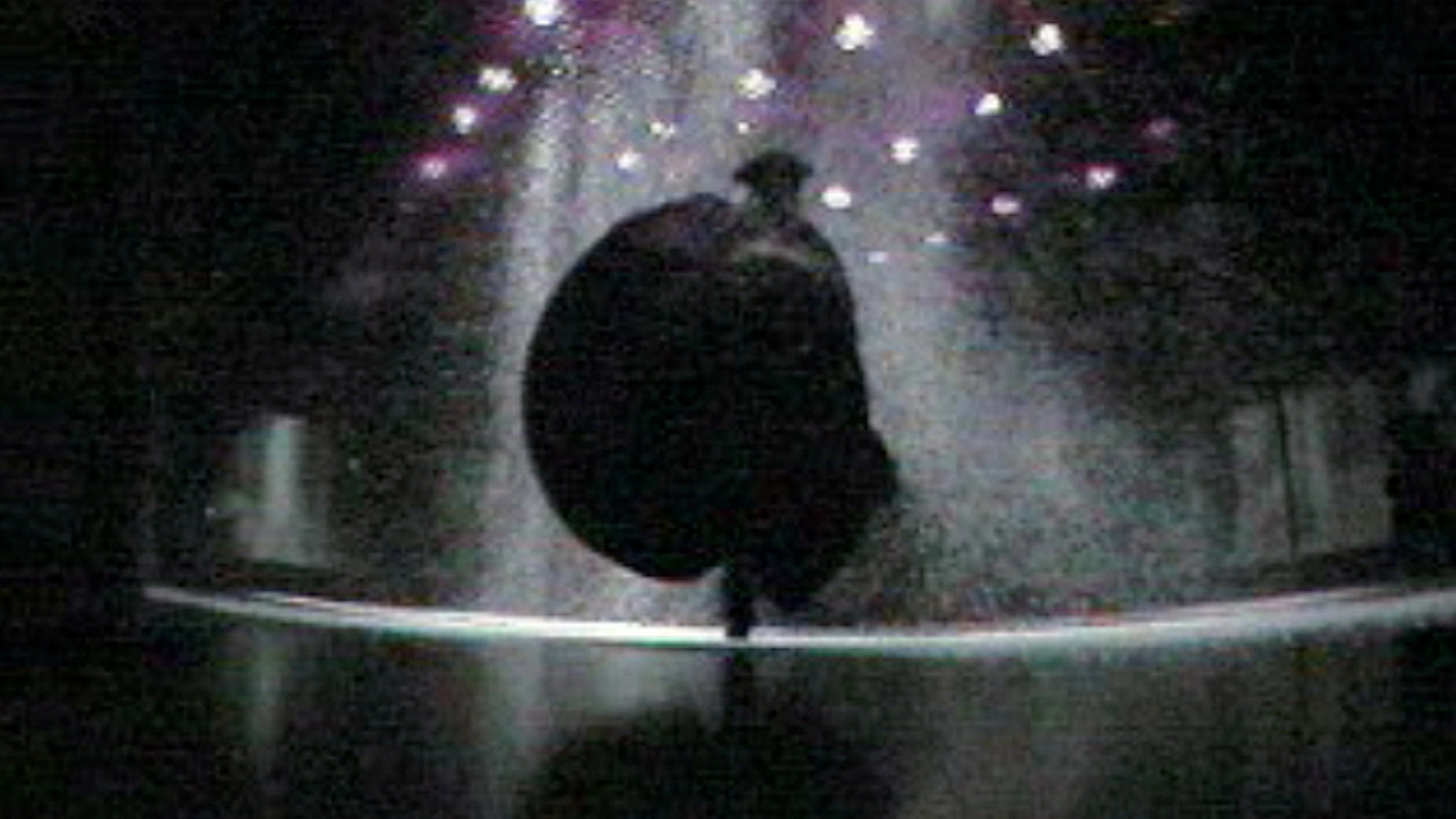
The water comes first. It falls in a hard, silver curtain over a floor gone white with salt, and a woman walks through it in a bias-cut sheath that the rain has fused to a second skin. On her head, a crown of black thorns. Her plaits hang like wet rope. She tilts her face up into the deluge as if it were absolution, and behind her, half-dissolved in the spray, a second figure waits her turn. Nothing about this reads as a fashion show. It reads as a rite.
“Black” was staged with American Express to mark five years of its black Centurion card, McQueen's first appearance on the London runway after a three-year absence. What the press text calls “an ambitious performance that re-staged many of the defining moments of McQueen's legendary fashion shows” was, in plainer terms, a man conjuring his own back catalogue: the rain and the crown of thorns, the skull-printed chiffon, the figures who collapse mid-walk onto wet marble as though the choreography kept a body count.
Kate Moss enters in a slip of sheer black scattered with gold skull medallions, the motif that had already become McQueen's signet, memento mori worn as evening wear. Elsewhere a body in black lace and thigh-high leather stands in a blizzard of white, ash or snow or salt, it hardly matters which. A masked figure in wet silk moves under blue light like something exhumed and dressed for the occasion. Black, here, is not a colour. It is a grammar of mourning, glamour, and refusal, and every look is conjugated in it.

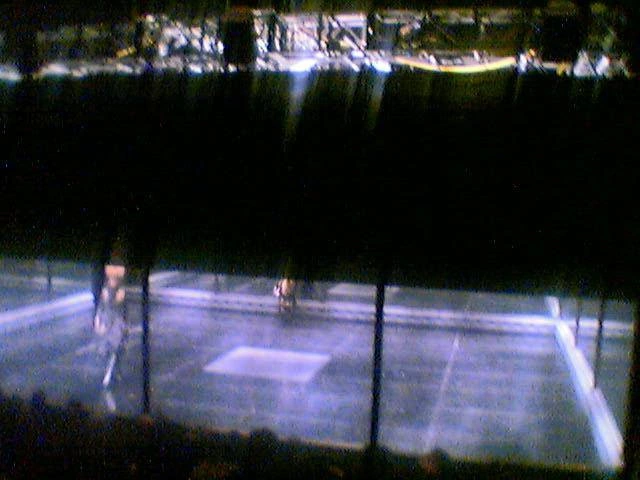
The evening opened not with clothes but with movement. Michael Clark, the choreographer McQueen loved for his mixture of ballet training and punk contempt, danced a duet to warm a room that had come to be seduced. Seen from the far seats, on the impromptu cameraphone footage that survives, the stage is a lit rectangle in an ocean of dark, two small bodies circling each other before the deluge begins. The reportage is grainy, underexposed, closer to séance than to document.
Then the auction. Artists “from music, art and film”, in the organizers' phrasing, had made black-inspired works to be sold in aid of the HIV and AIDS charity Lighthouse: Elton John, Madonna, David Bailey, Vivienne Westwood, Vanessa Redgrave. The cameraphones catch the lots under glass, a silver egg lit like a relic, a live mouse picking its way across a sculpture of silver bones. Death and its small survivors, priced and sold, the proceeds turned toward keeping other bodies alive.

There is something vertiginous in a designer curating his own retrospective while still at the height of his powers, staging his greatest endings as a single night's spectacle. McQueen was memorialising no one yet. And still the whole thing carries the charge of a wake: the funereal palette, the crowns, the collapsing figures, the rain that washes mascara into long black tears down a model's face. Six years before his death, he built a room in which his own iconography could be mourned in advance.
What lingers is not the clothes but the weather. McQueen understood that a garment is only ever half the work; the other half is the sky you make fall on it. Black is what remains when the rain stops and the salt dries and the room empties, the colour of everything that was, for one night, exactly here.