Sofiia Yesakova, Céline Struger, and Anzhelika Palyvoda occupy FAVU Gallery in Brno with a group exhibition curated by Massimiliano Maglione that takes the anatomical theatre as its central device: a space in which knowledge is produced through the arrangement of bodies, gazes, and hierarchies.
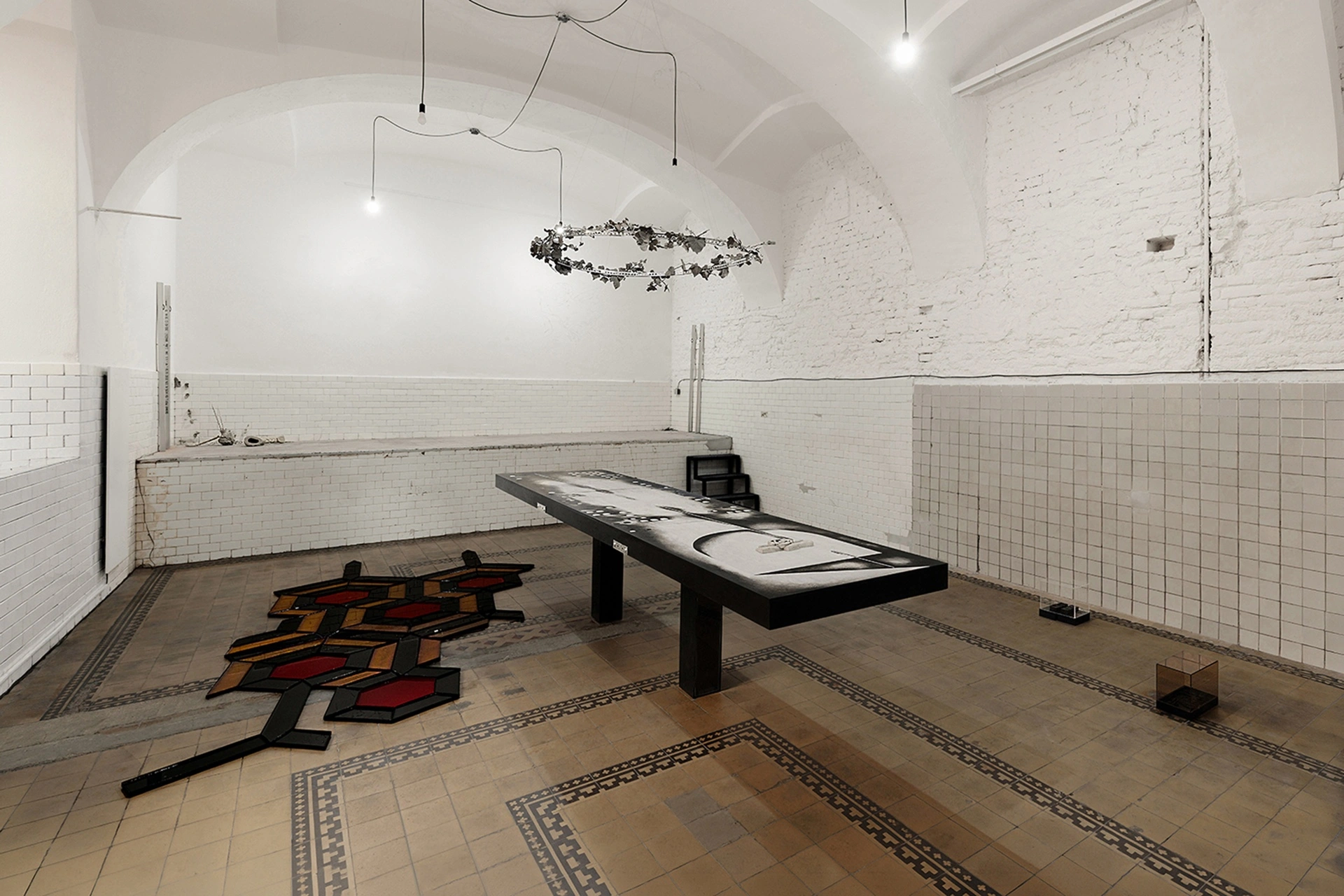
The premise is not metaphorical. Trauma does not survive as content, the exhibition's curatorial text insists; it is “inscribed in the very devices of perception, producing a progressive normalization that weakens its recognizability without removing its force.” The space at FAVU is laid out accordingly. An elevated architectural ledge in the main hall places the public in the position of the observer above the table. Steps are provided. The invitation to ascend is the exhibition's first argument.
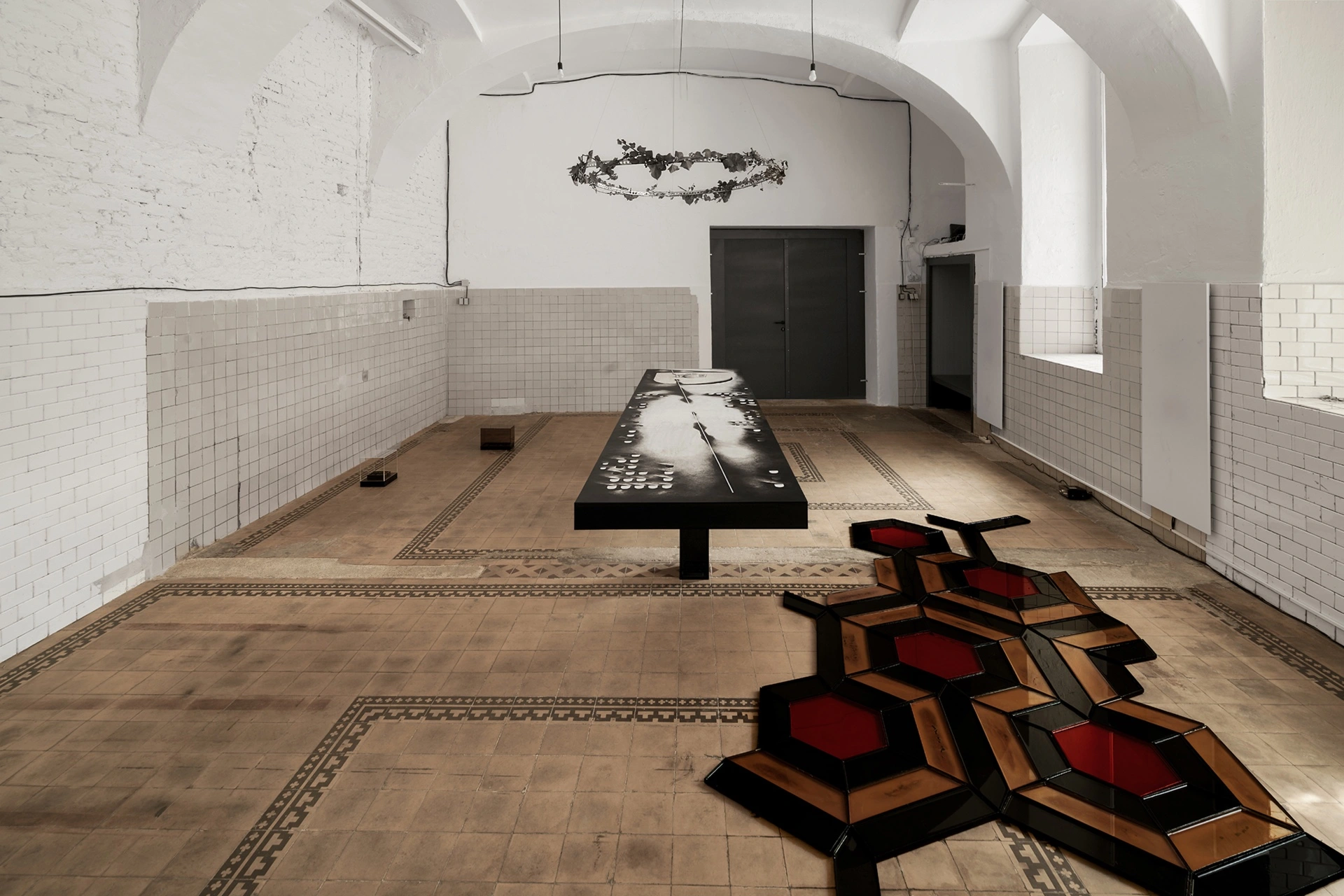
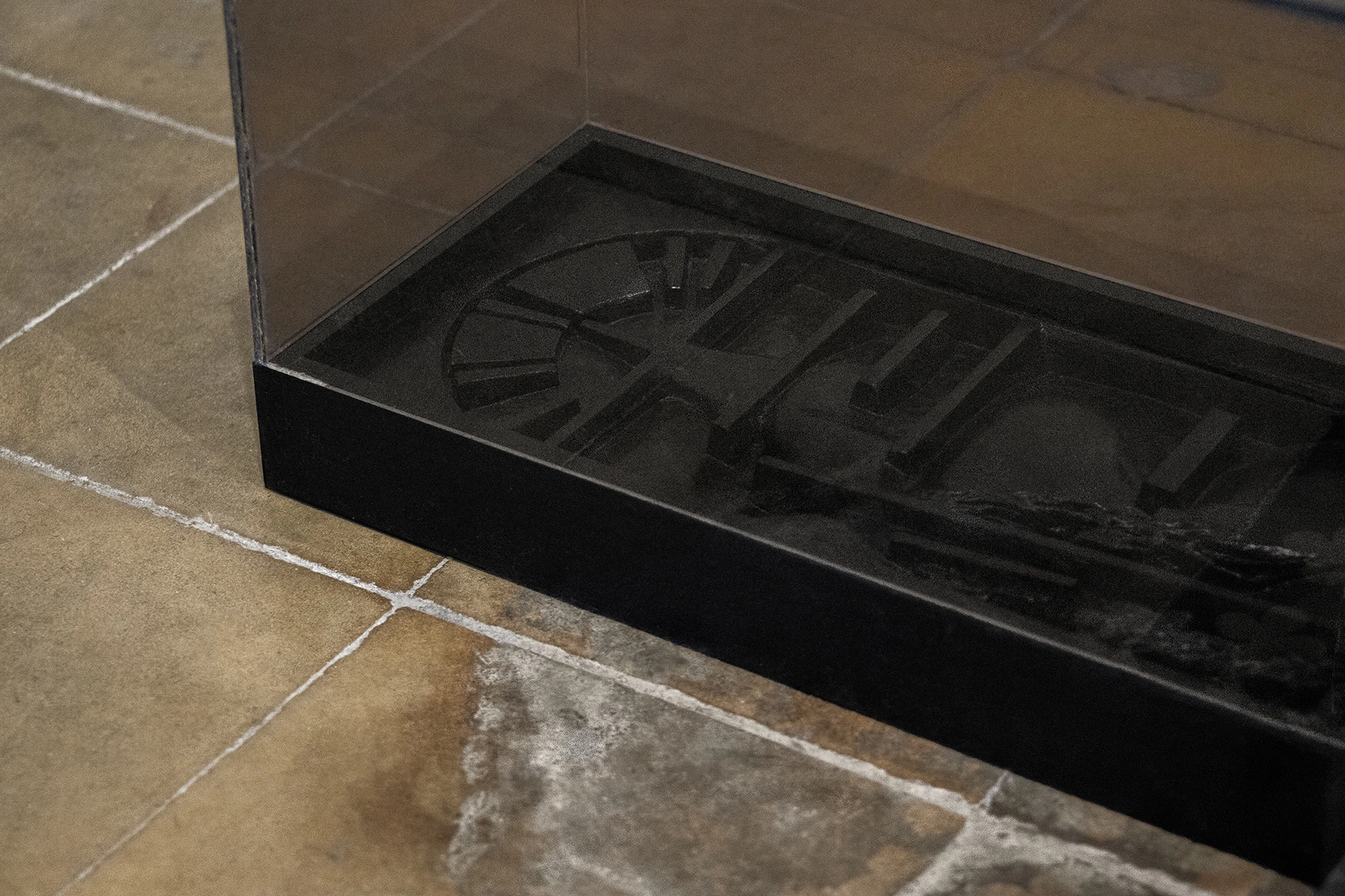
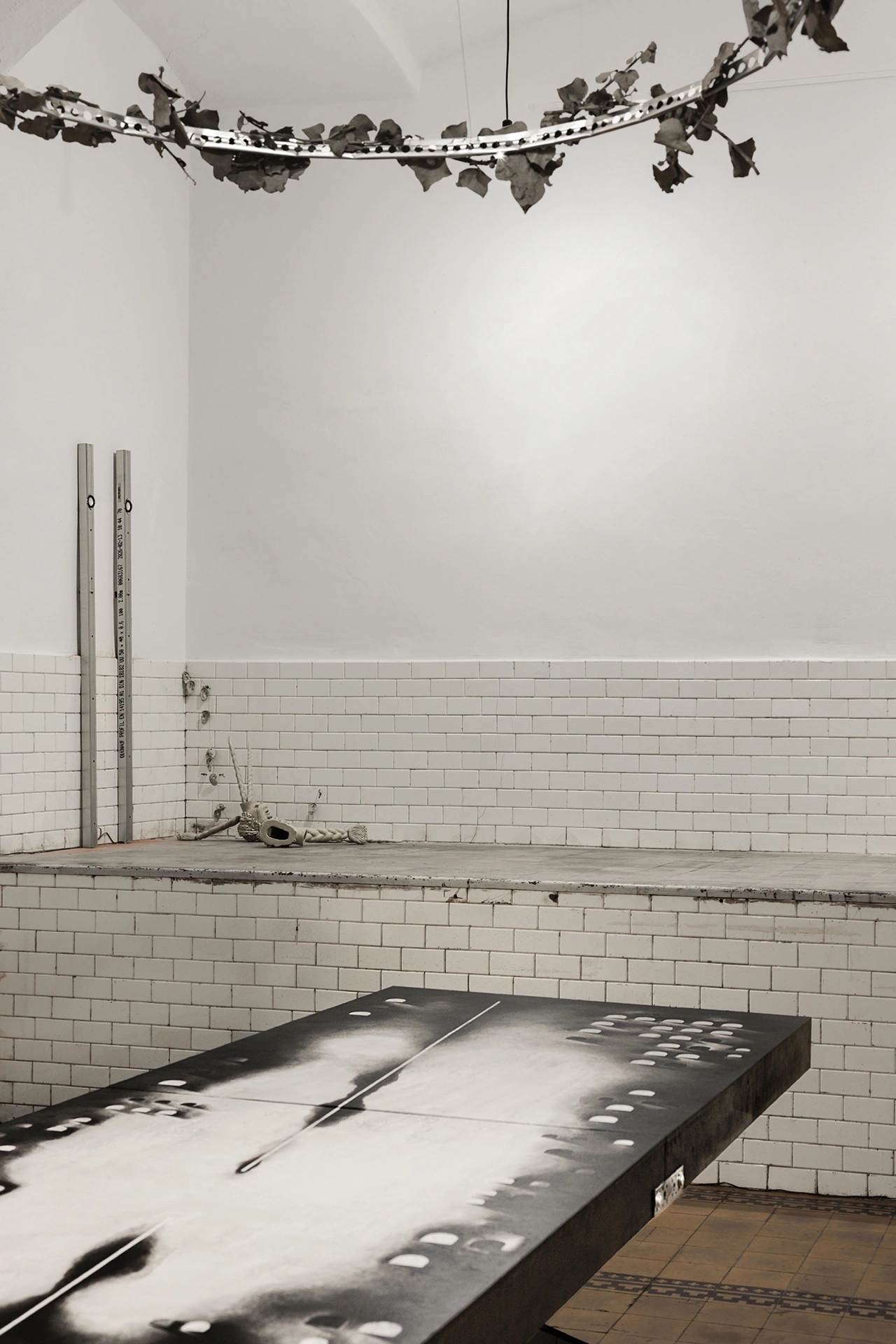
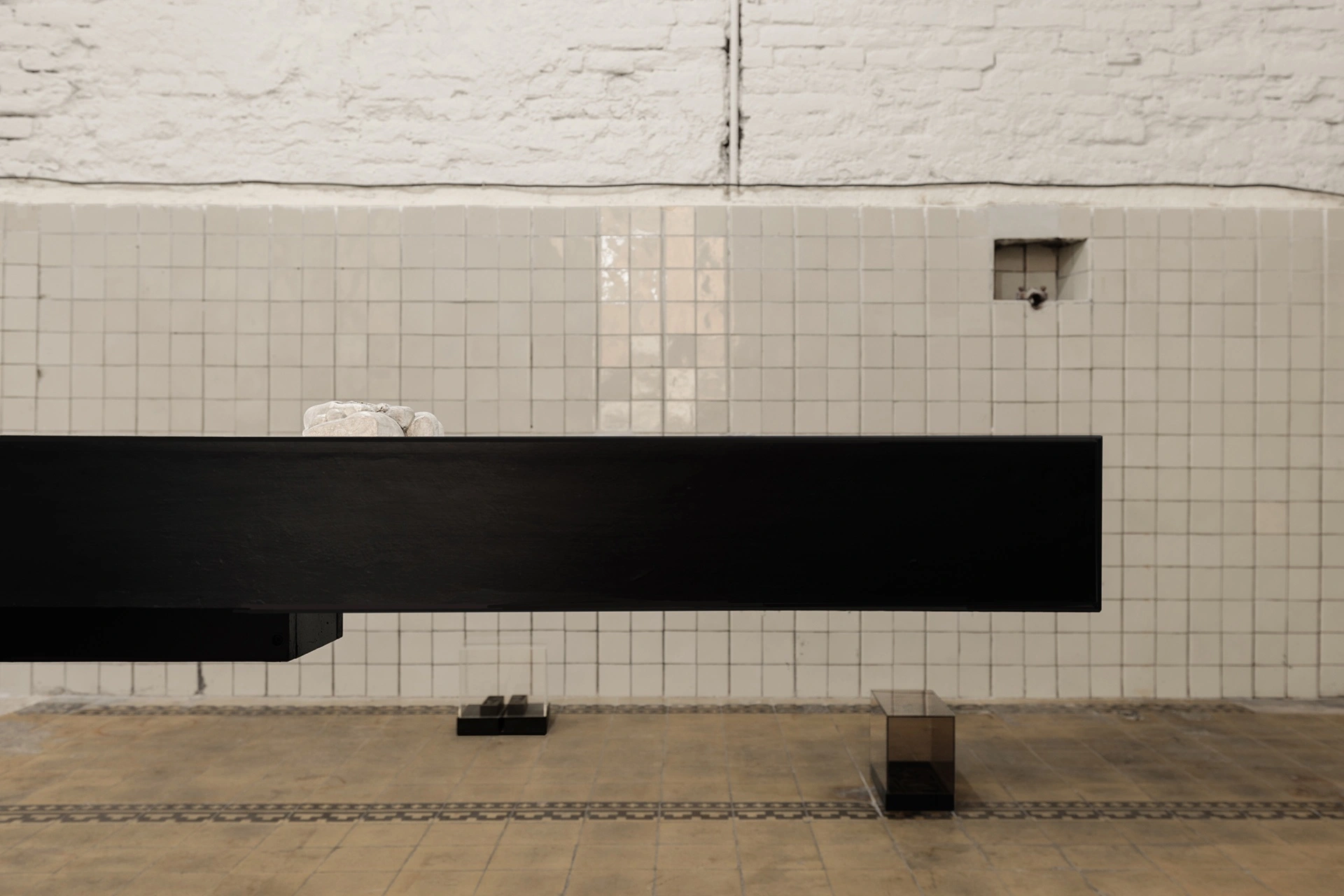
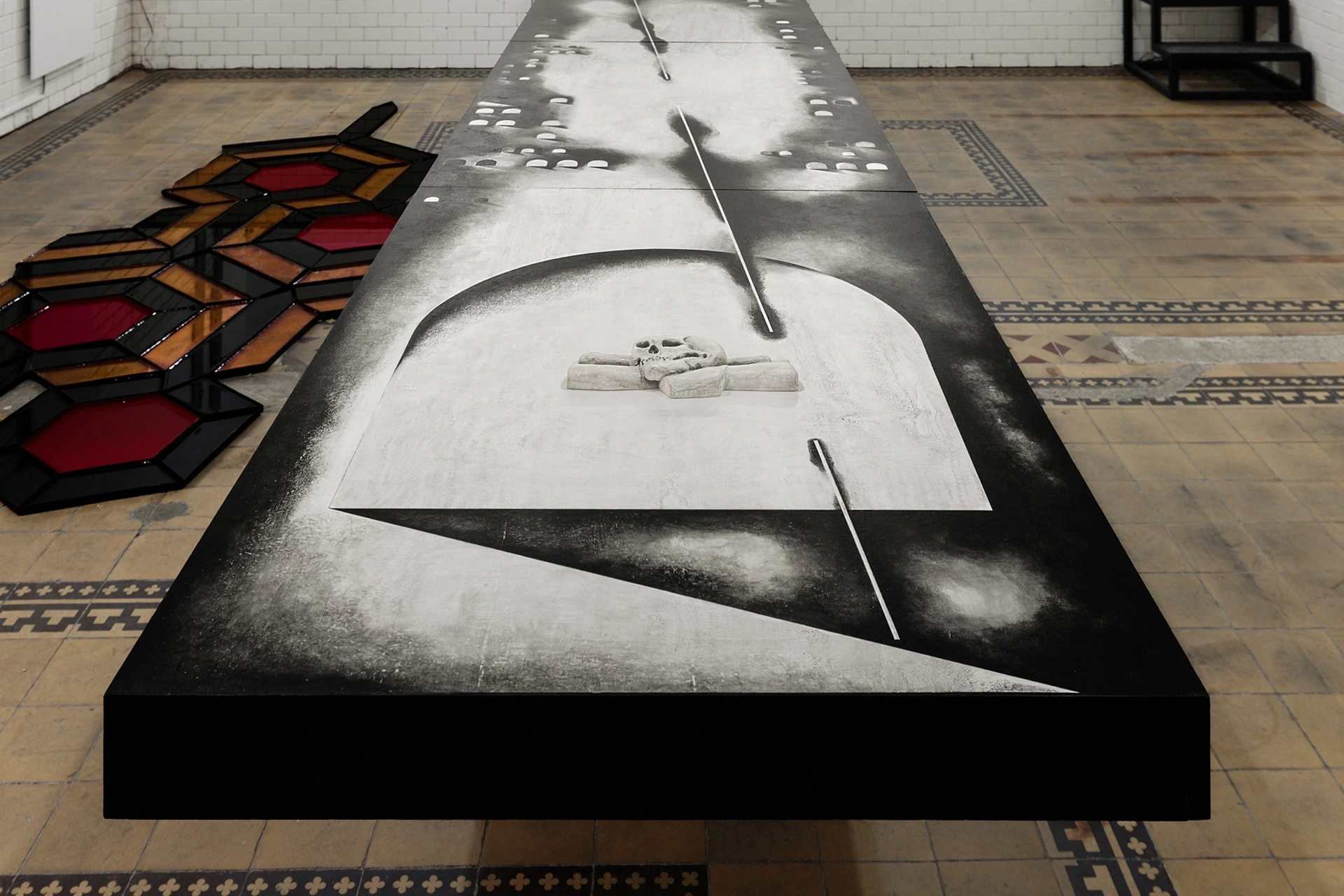
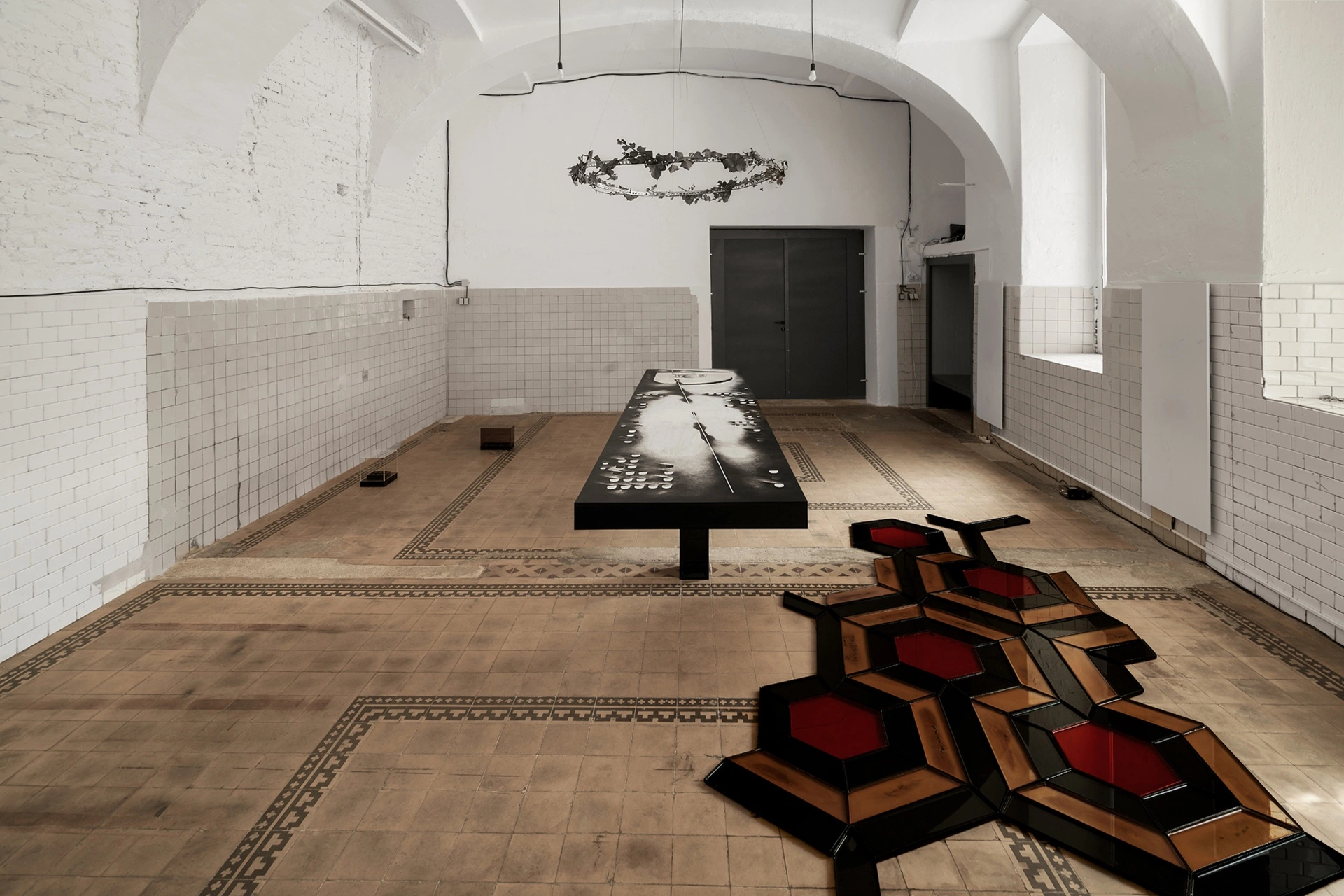
Yesakova's contribution is the table itself: a long black plinth whose upper surface carries a large-scale painted composition that conflates the dissection table with a landscape of procedure. Scalpels bisect fields of charcoal smoke; white circular forms suggest organs or apertures; a small sculpted skull rests at the center. The painting refuses the clinical neutrality the format implies. What is produced on this surface is less knowledge than the aestheticization of knowledge-production, investigation hardened into ritual, the curatorial text notes, regulated by “precise, shared, almost automatic modes.”
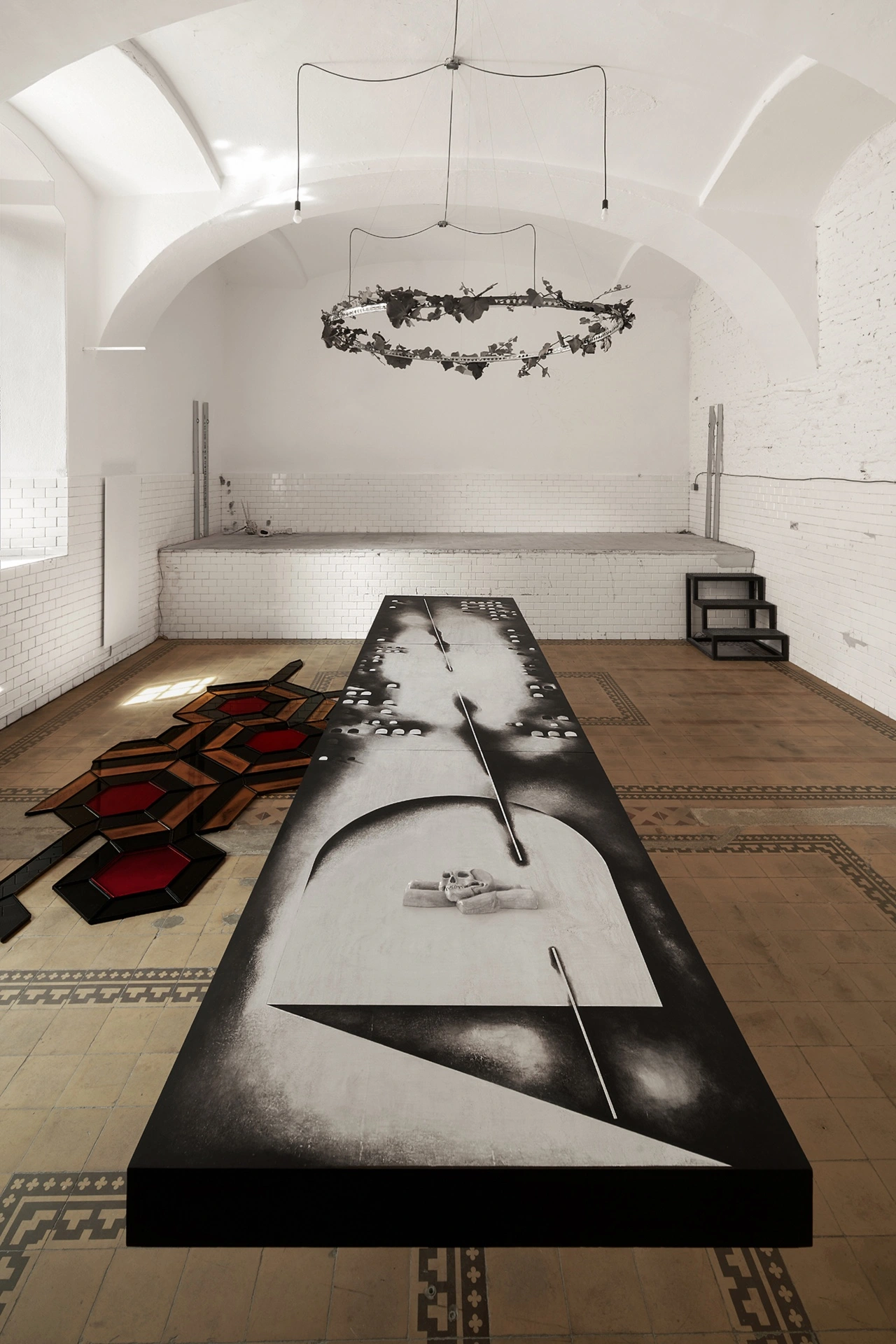
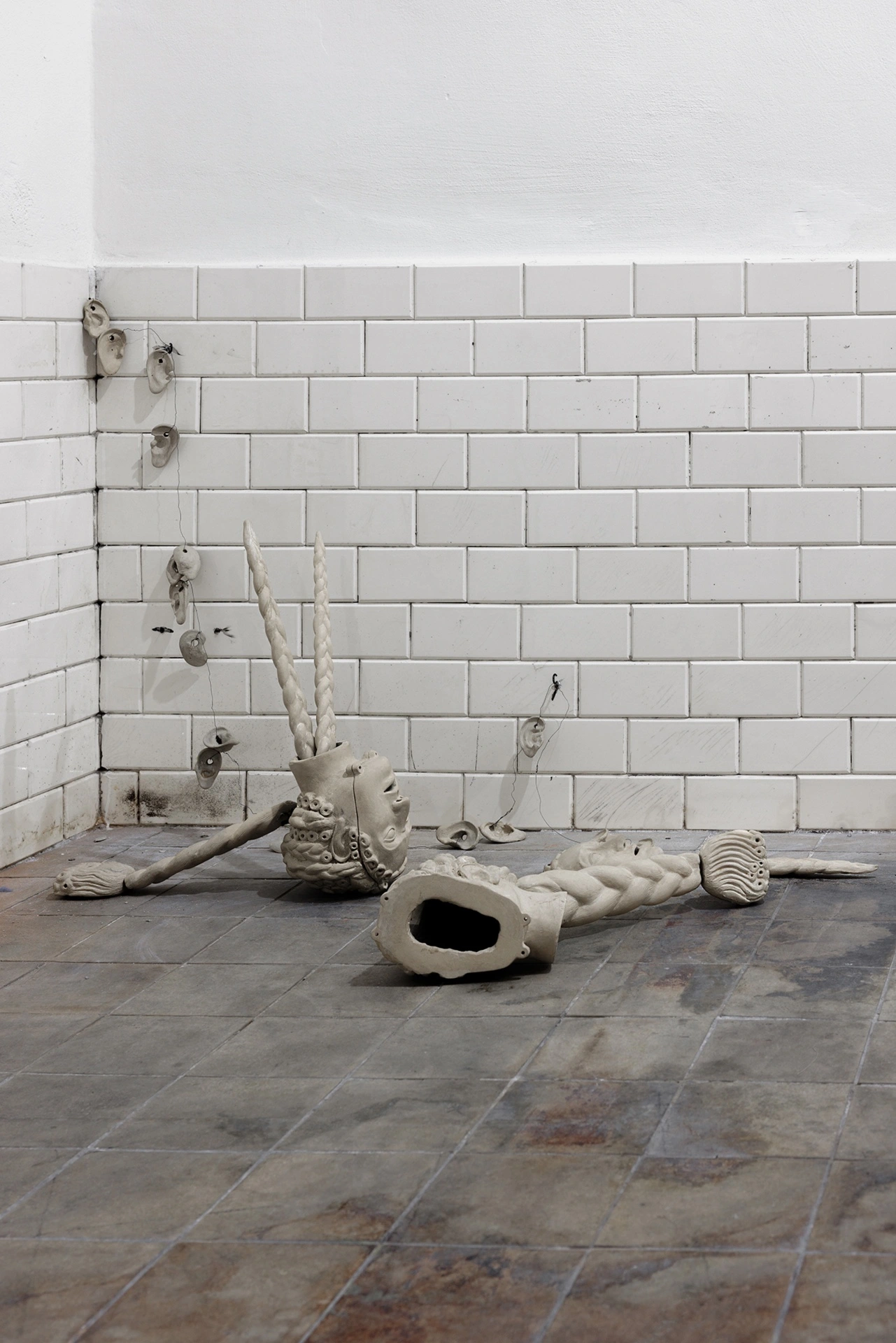
Struger's Equalizer series surrounds the table with a different order of remains. Ceramic heads appear in fragmentary groupings across the floor: braided horns, hollow eye sockets, disjointed facial planes. Where Yesakova's table operates through regulated procedure, Struger's ceramics stage the aftermath, what history leaves when it is done with a form. “Arranged like disjointed parts,” the curatorial text observes, “they evoke a condition in which what survives from the past does not appear as continuity, but as a manipulated fragment, exposed through a gaze that reorganizes it.” On the floor, her hexagonal modular grid, the interlocking pattern recognizable from David Hicks's carpet rendered iconic by Stanley Kubrick in The Shining, extends from beneath the ceramic clusters in lacquered black, brown, and deep red panels. The geometric logic does not stabilize the space. It implicates it. To stand on or near that pattern is to occupy a coordinate that someone else designed.

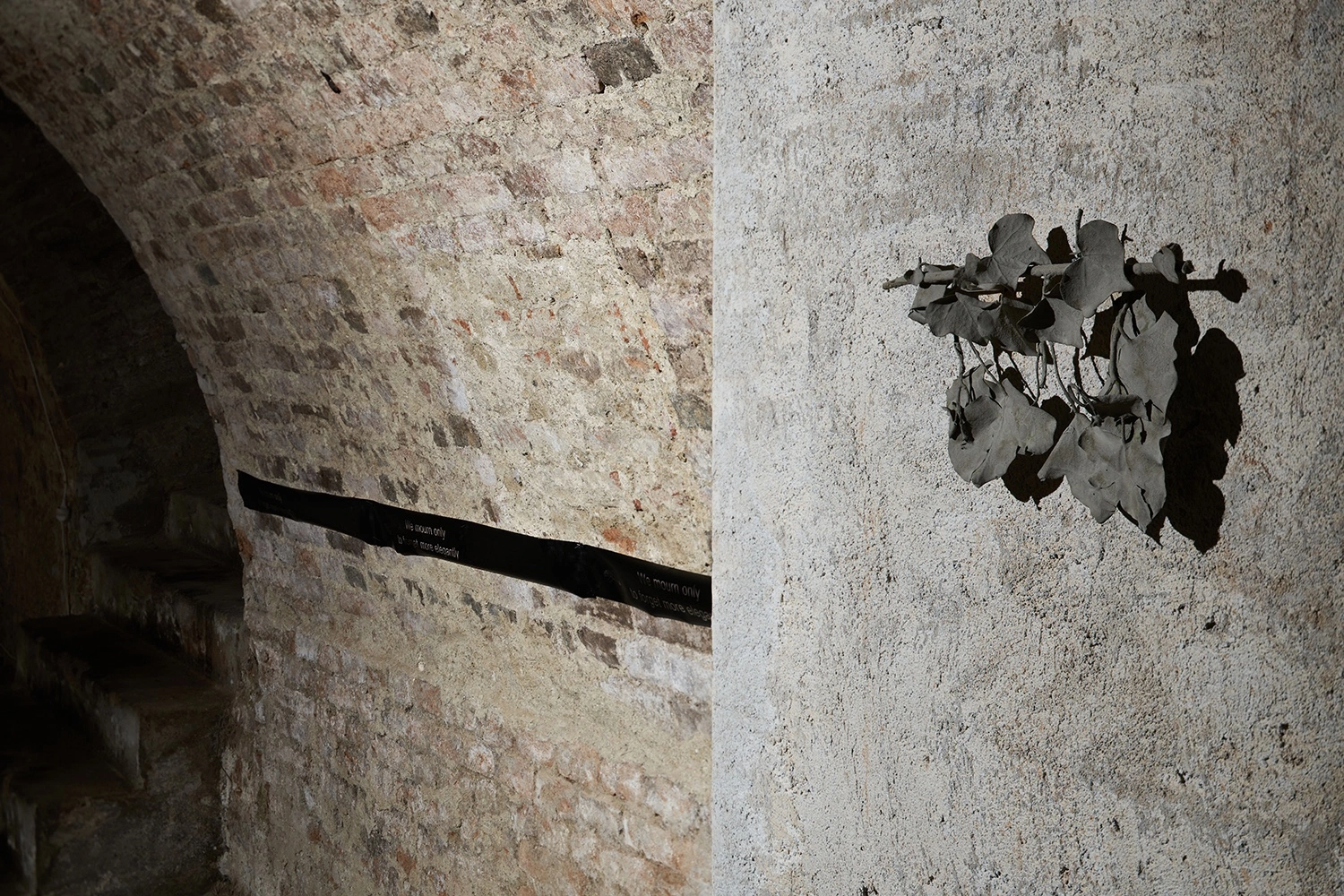
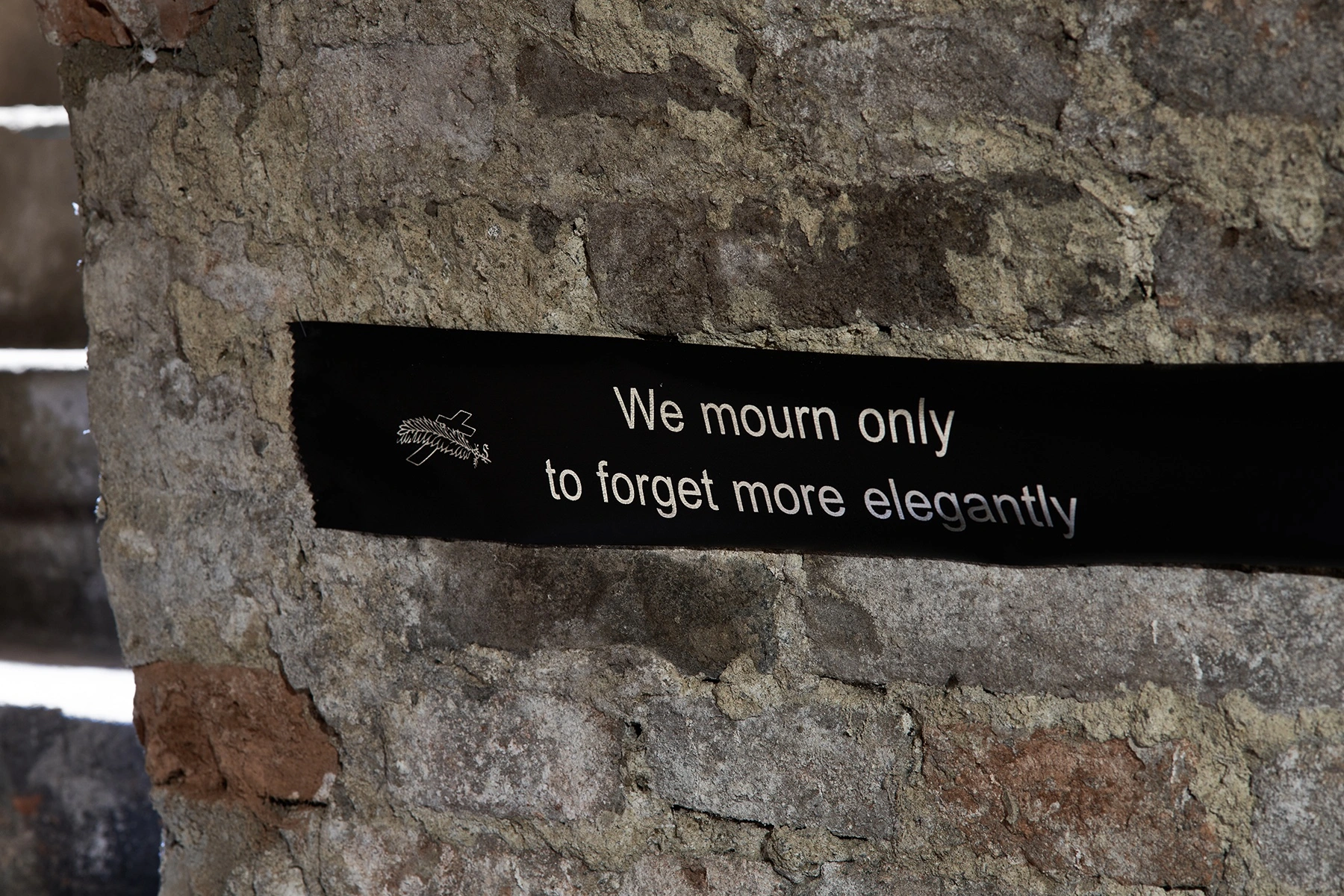
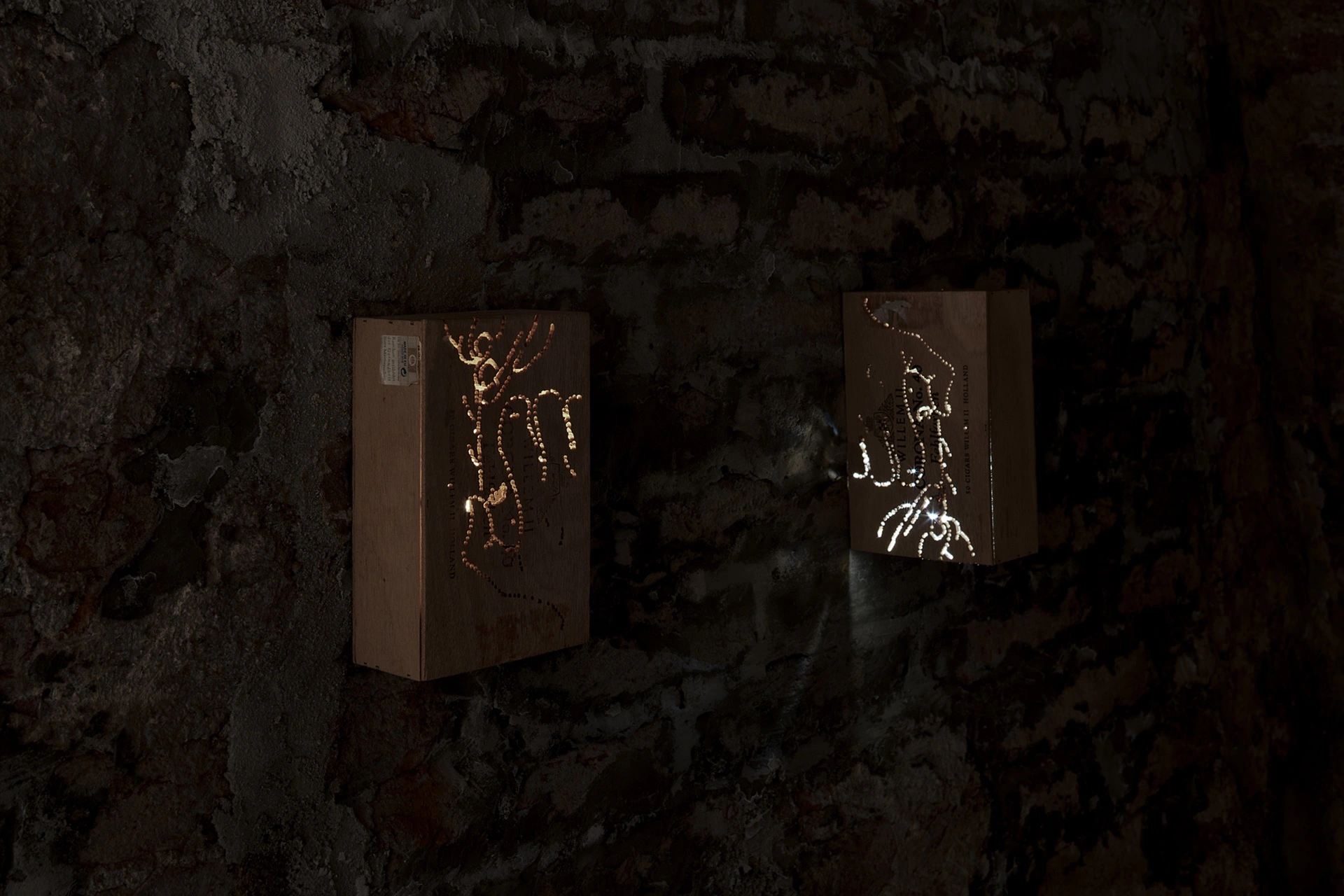
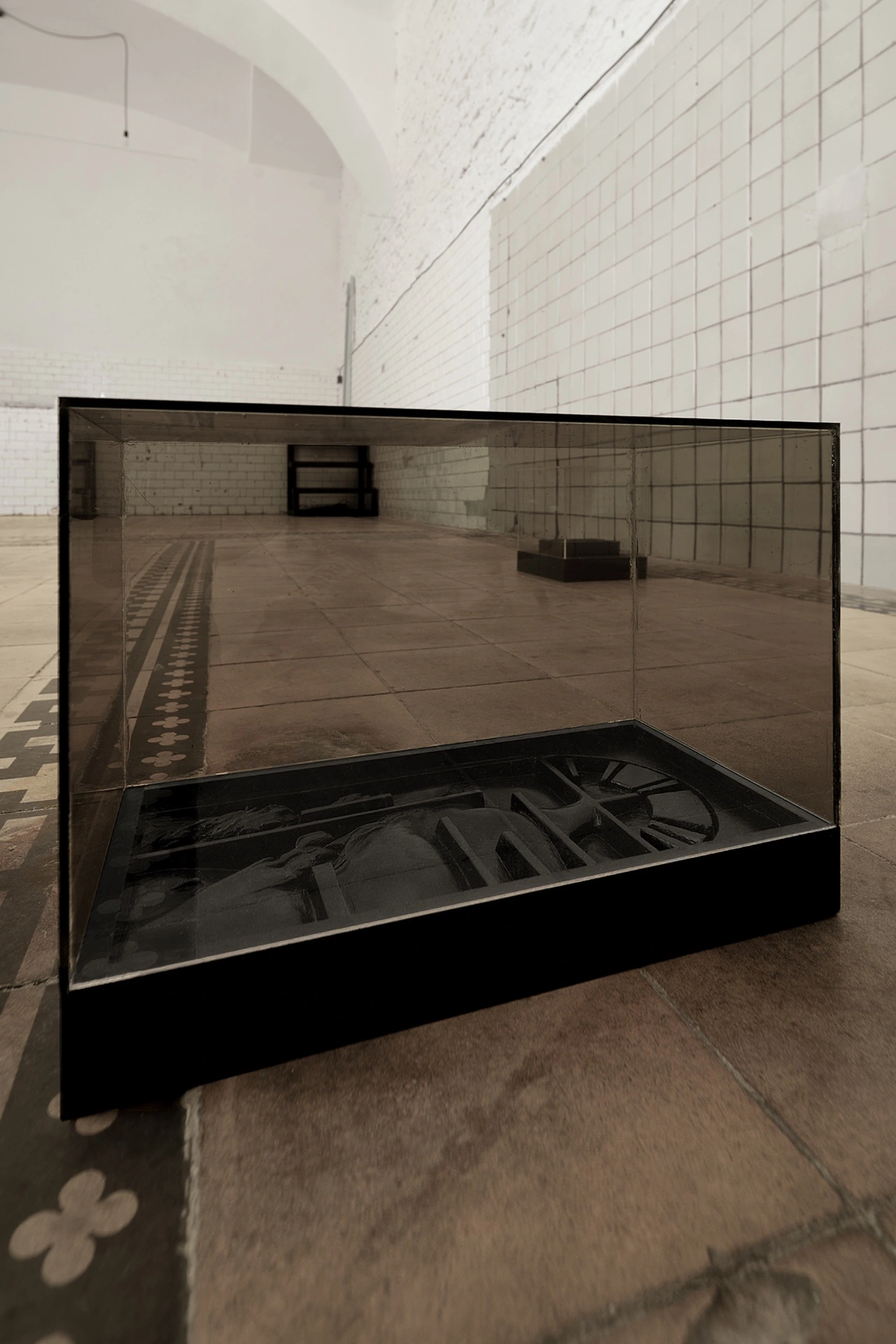
Palyvoda works across two registers in the exhibition: the upper hall and a separate vaulted underground passage. In the main space, she contributes small wall-mounted works whose presence is almost illegible at first, pinhole drawings pressed into plaster, fragmentary figures barely distinguishable from the wall's texture; cardboard boxes pierced with figurative silhouettes backlit by internal light, their shapes cast as shadows on ancient brick. These are works about the threshold of visibility, about what the gaze can be made to recognize and what it learns to pass over. A text panel mounted on brick near the passage reads: We mourn only to forget more elegantly.
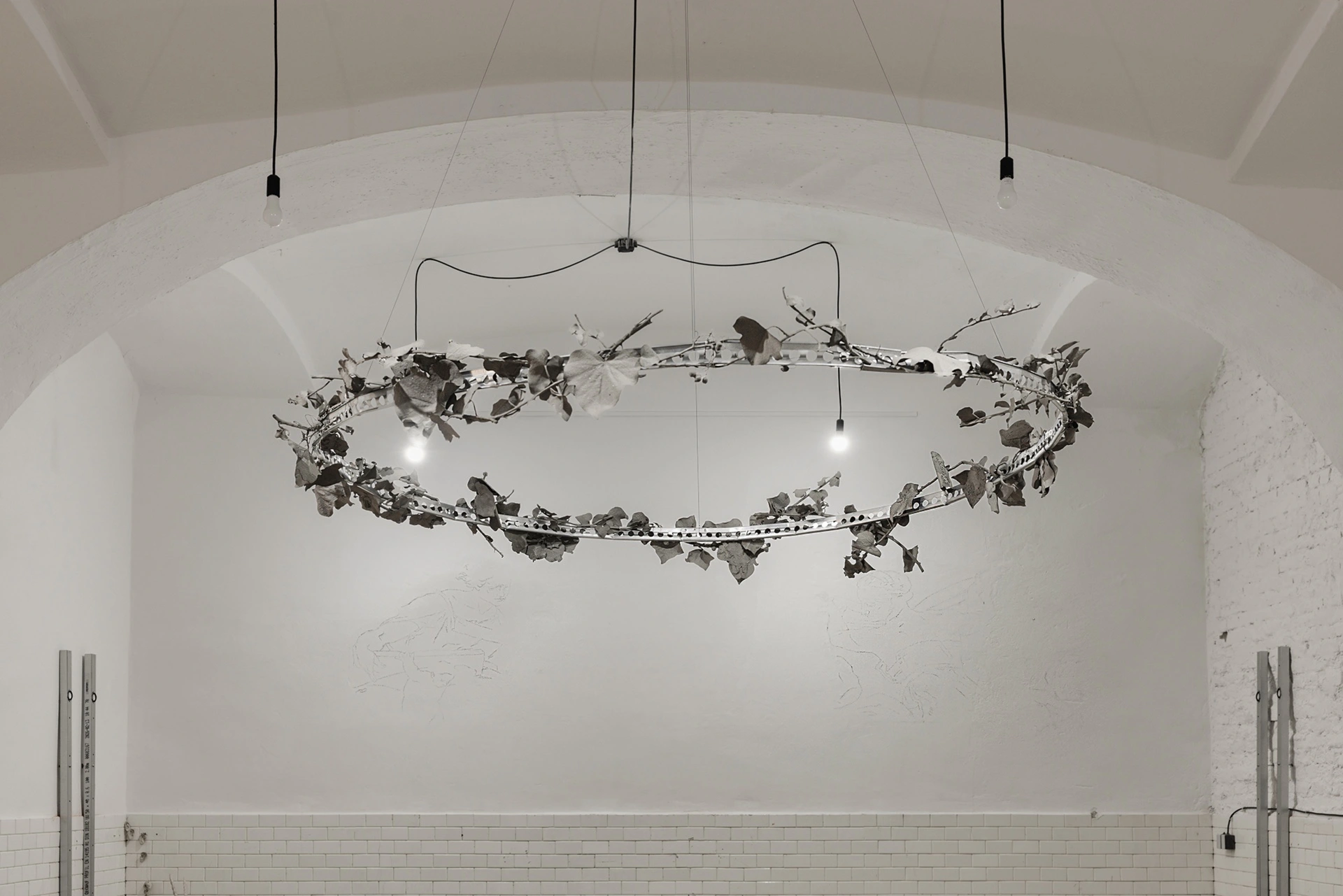
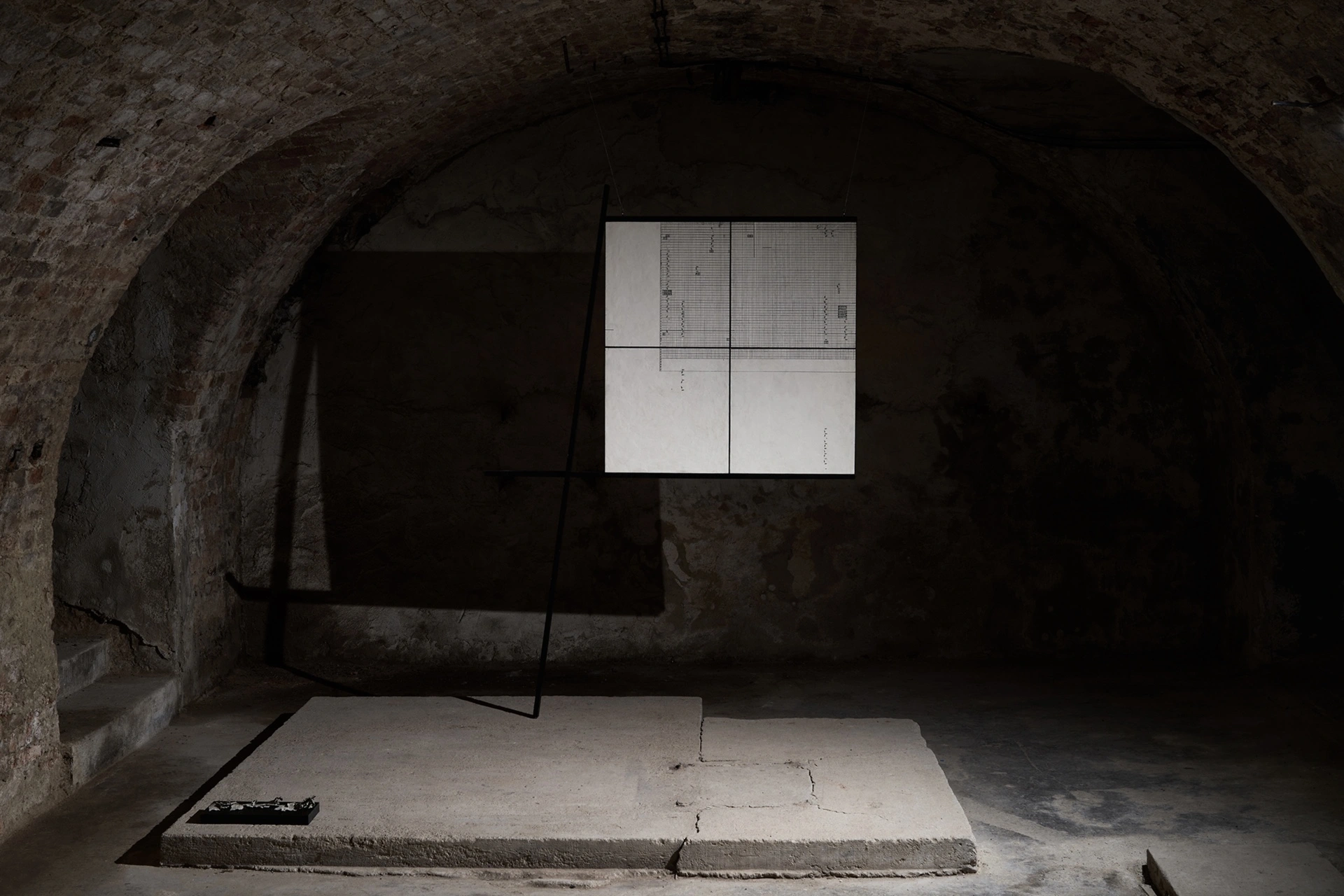
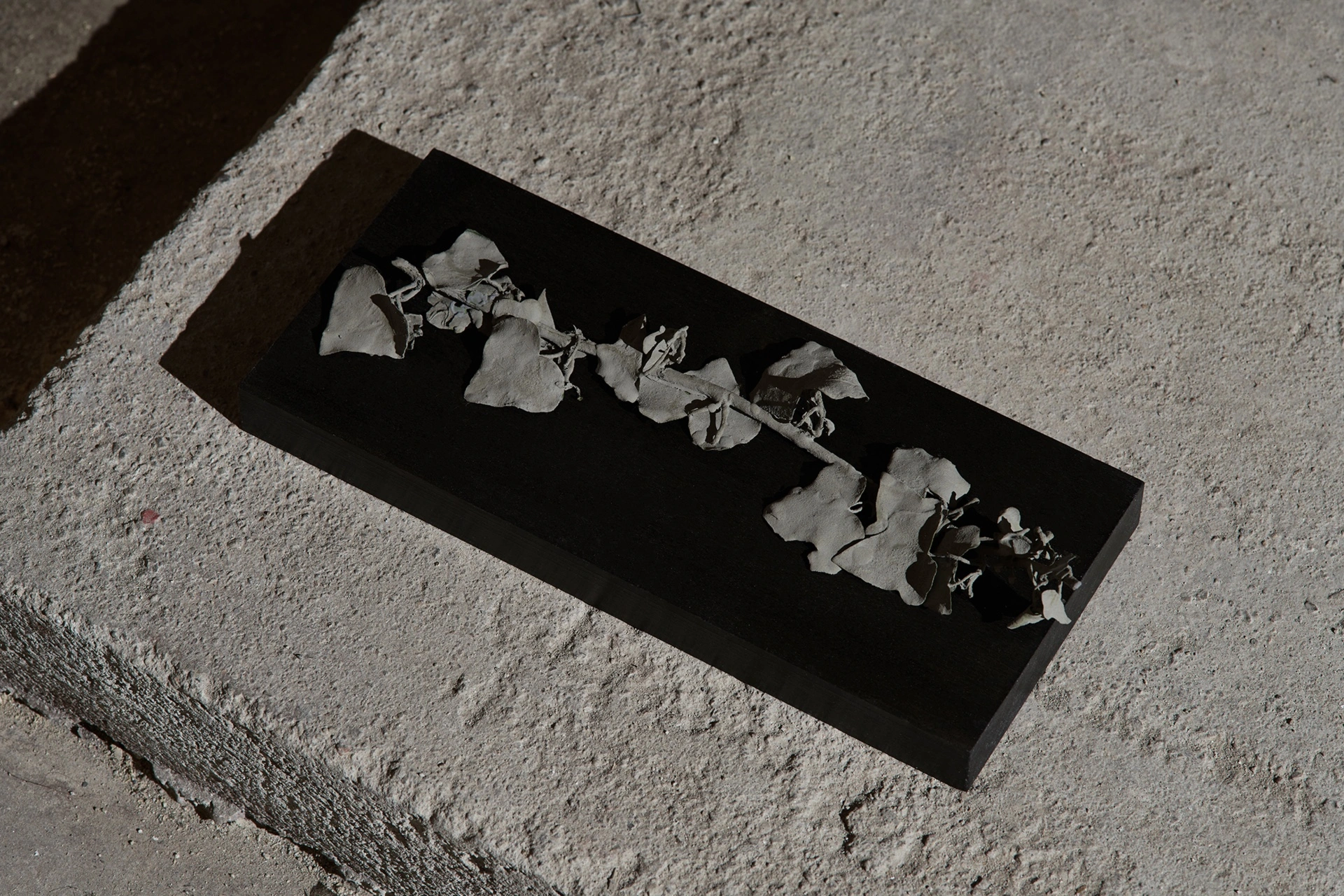
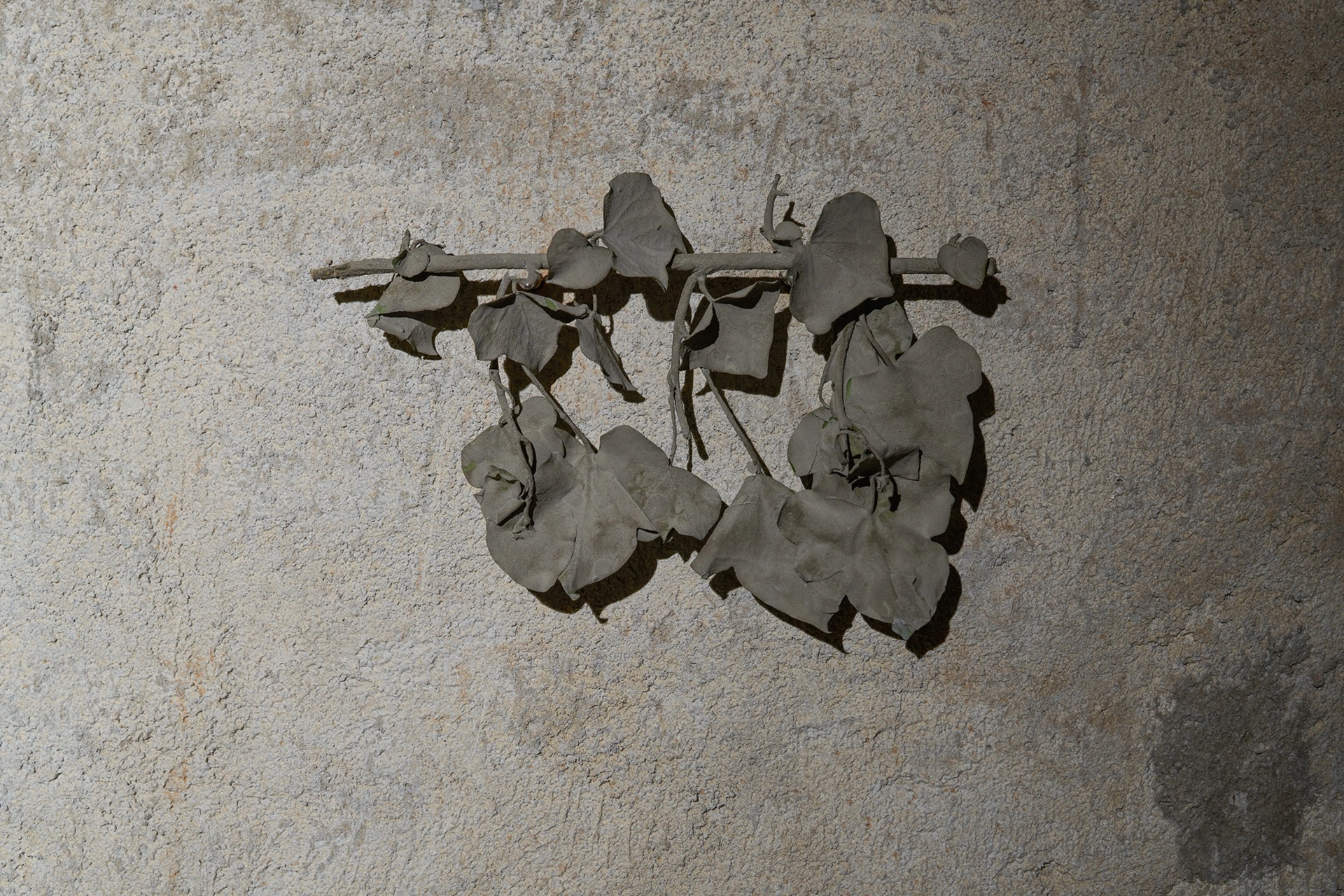
Suspended above the main space, Palyvoda's chandelier-wreath, a steel ring strung with dried leaves and bare filament bulbs, turns the vaulted ceiling into an anachronistic crown. The botanical material is oxidized, grey-black; the light it frames is cold and bare. Its circularity echoes the anatomical theatre's tiered seating, the ring of observation, the crown of thorns. None of these readings cancels the others. The piece holds them in suspension, which is its method.
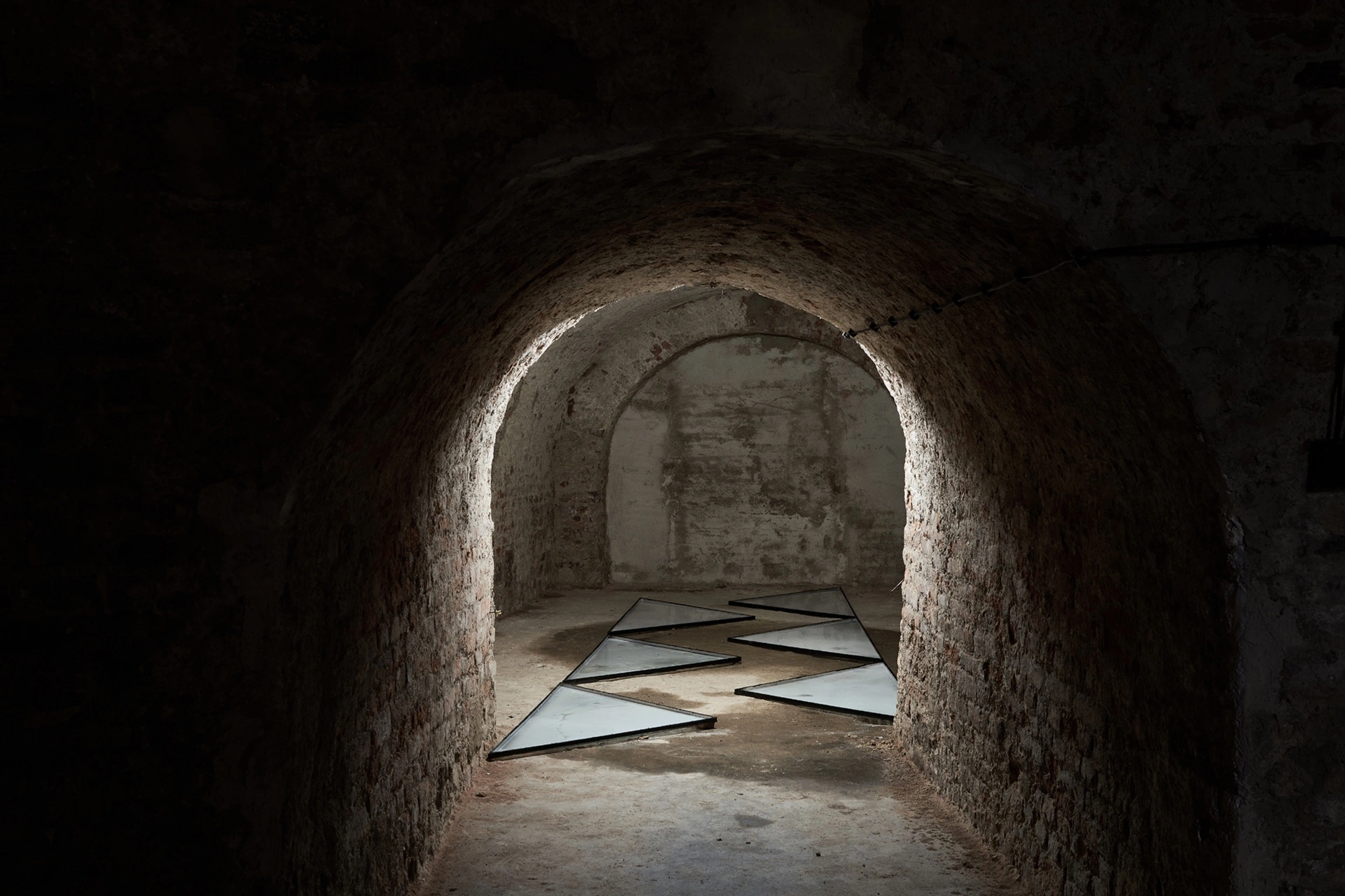
In the underground passage, Palyvoda lays triangular framed mirrors flat across the stone floor, their angles forming a shattered geometry that cuts into the vault's throat. To enter is to see your own feet fragmented across multiple planes, your posture redistributed. The tunnel's barrel vault concentrates sound and shadow; the mirrors concentrate you. Palyvoda treats mirroring not as revelation but as a structural trap, a device for multiplying the gaze until it loses its single point of origin. Power, the exhibition insists, works similarly: not from a position you can identify and refuse, but from everywhere at once, until the act of looking becomes complicity.
The exhibition's question, posed by its own open structure, is the one the curatorial framing frames but does not answer: who determines the conditions of seeing? The three practices here refuse to agree on a single site of that determination. Yesakova locates it in procedure, in the table and its painted protocols of dissection. Struger locates it in pattern, in the grid that organizes a room before any body enters. Palyvoda locates it in architecture itself, in the vault and the passage and the tunnel that funnel vision before you choose to look. Together, they propose that these are not three different answers but three registers of the same answer: distributed, normalized, and still operative.