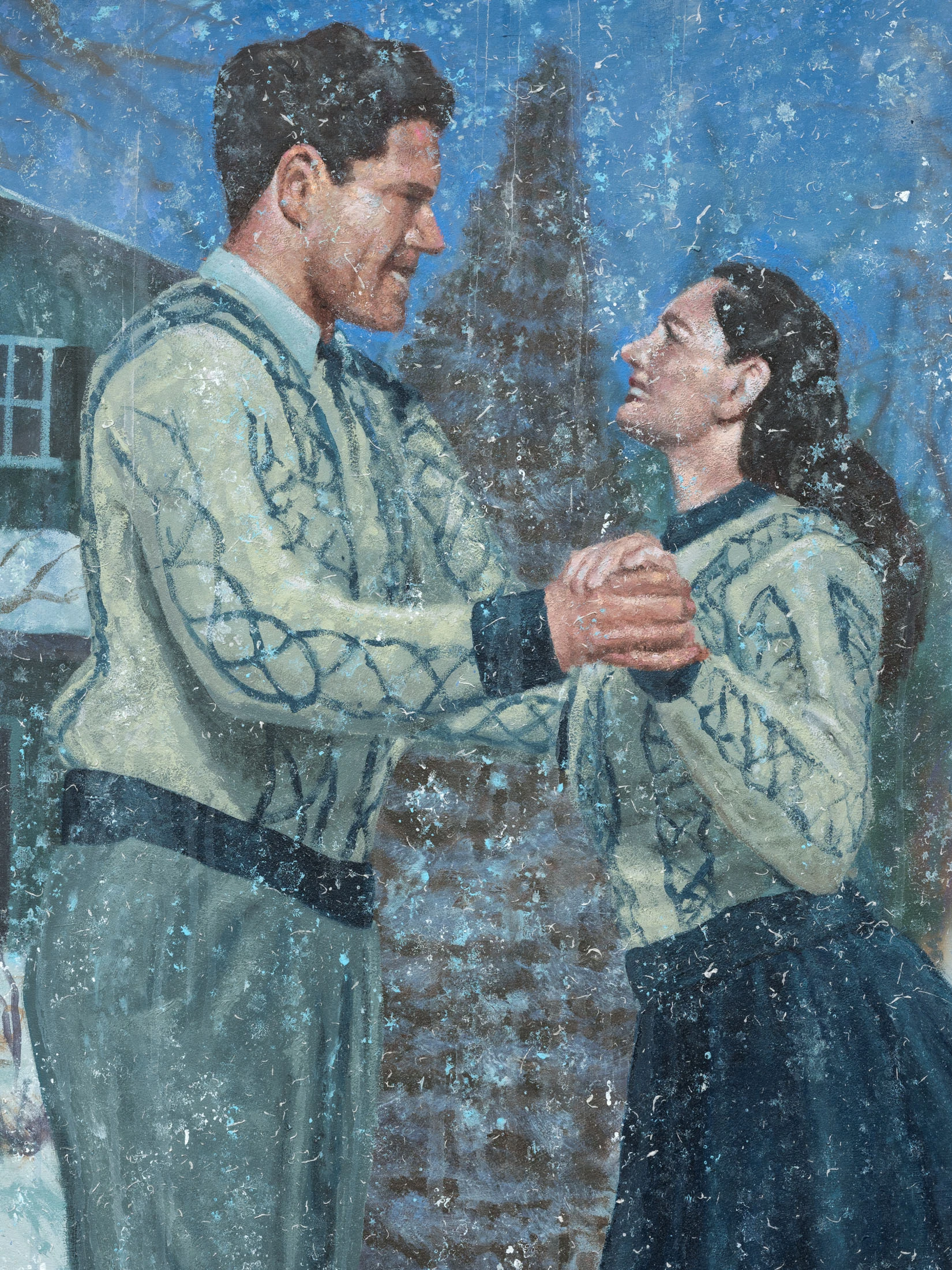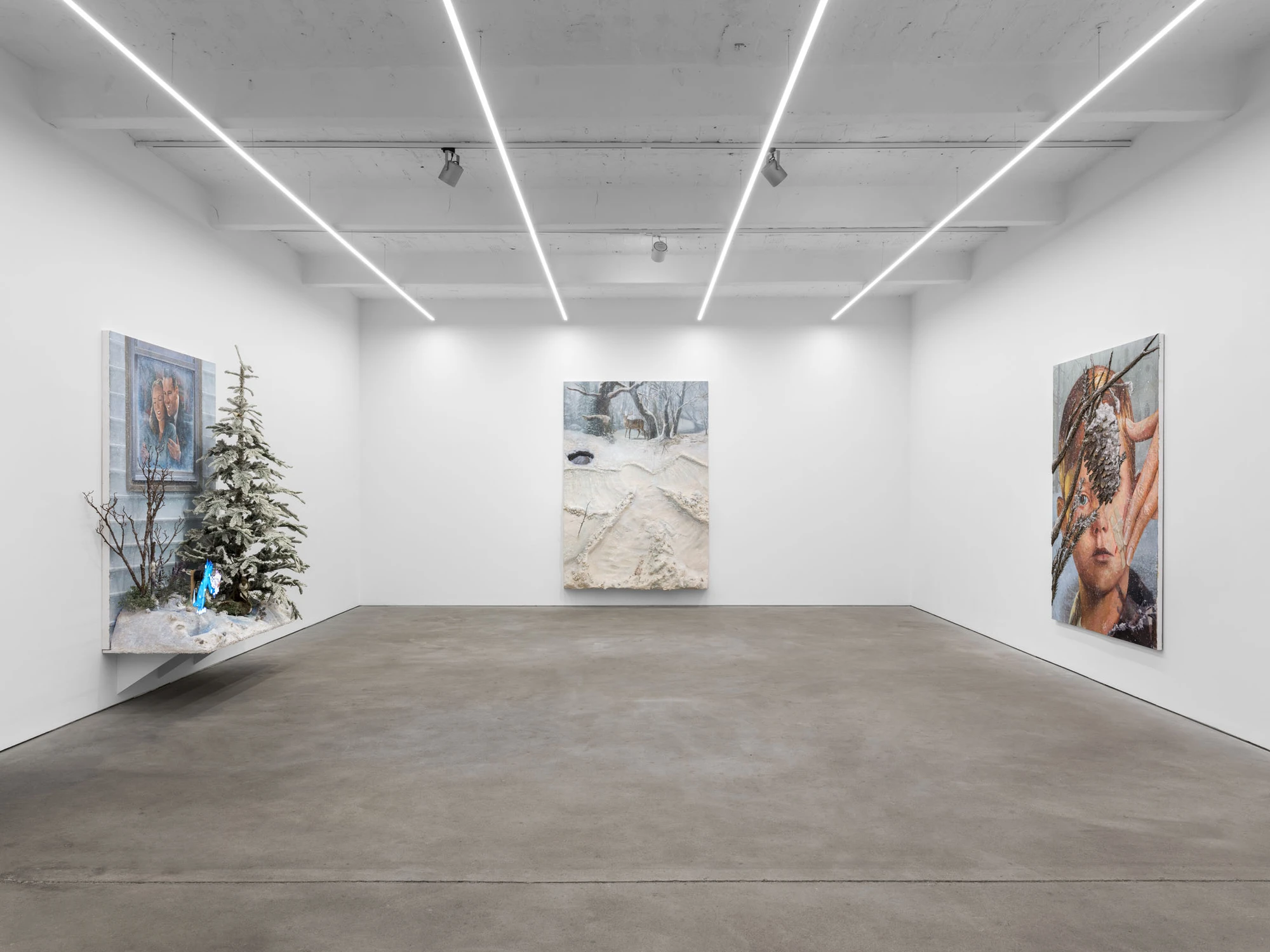
At Kraupa-Tuskany Zeidler, winter arrives not as meteorology but as mood engineering. In Cold Front, Trey Abdella stages his first solo exhibition with the Berlin gallery as a choreographed freeze-frame of American domestic fantasy. Snow, ice, pine, angels, skaters—these are not motifs but pressure points. Abdella understands winter as a visual regime: a season that aestheticizes deprivation, sanctifies consumption, and scripts tenderness with a Hallmark precision that verges on the menacing.
Raised in West Virginia among theme parks, hunting trips, and the spectacle of seasonal décor, Abdella approaches image-making as an architecture of affect. Trained as a painter yet suspicious of painting’s polite flatness, he works cinematically—building surfaces that bulge, flicker, and hum. Resin becomes ice; lenticular prints warp perspective; hologram fans exhale ghostly apparitions. The lineage is less medium-specific than psychic: the domestic uncanny of Robert Gober colliding with the slapstick elasticity of Tex Avery. Abdella’s tableaux hover between sincerity and sabotage.
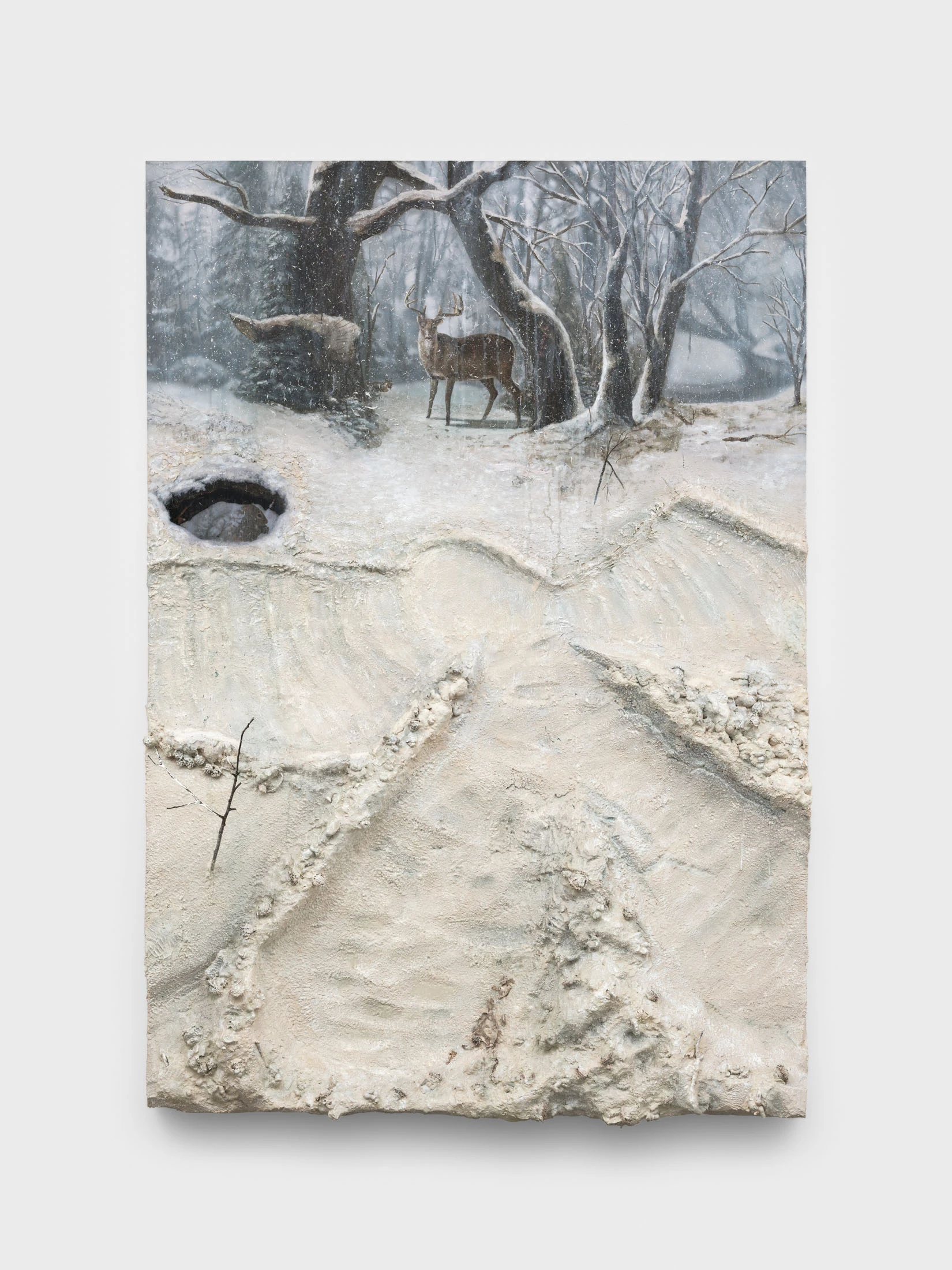
Snow Angels, 2025
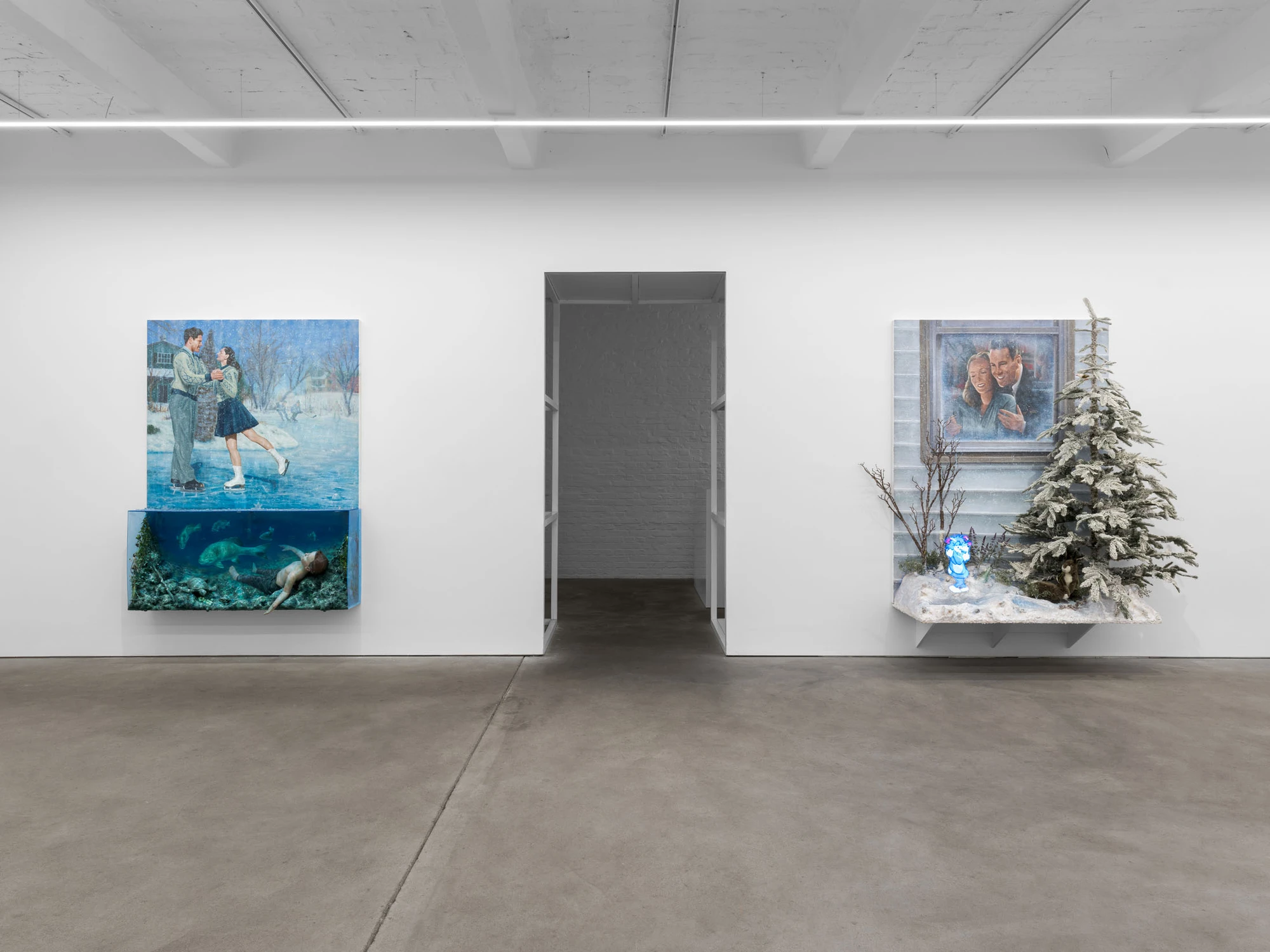
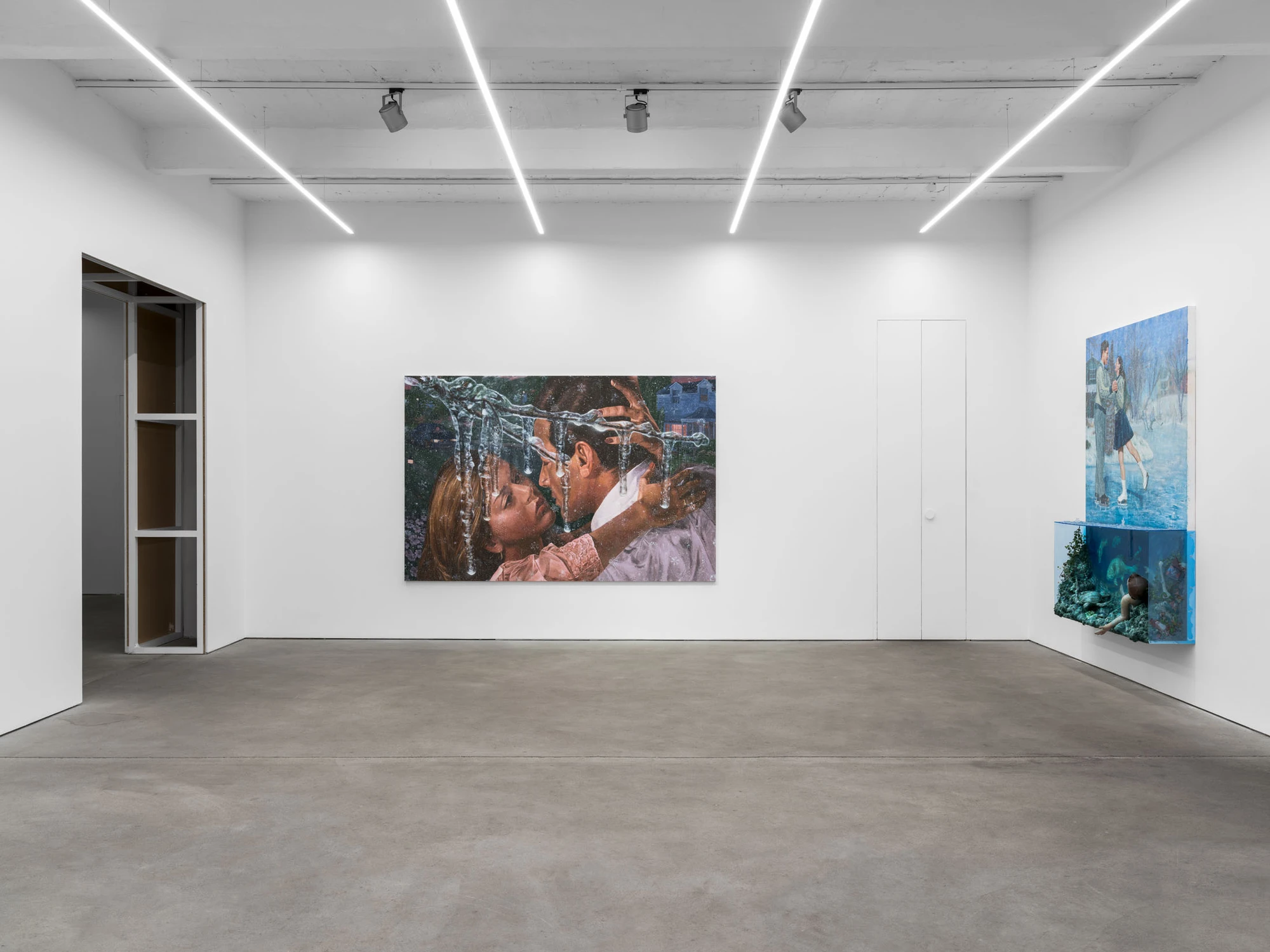
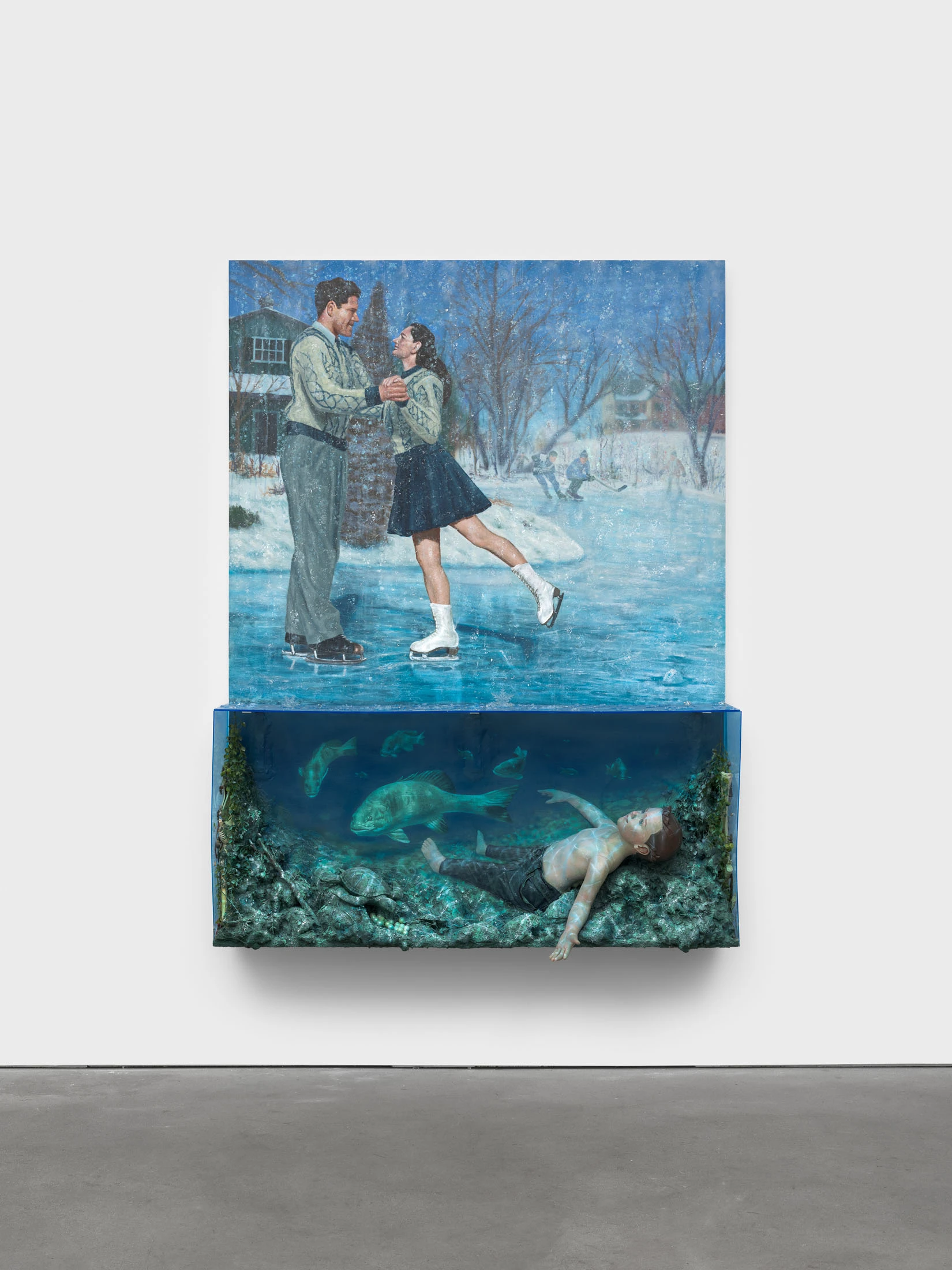
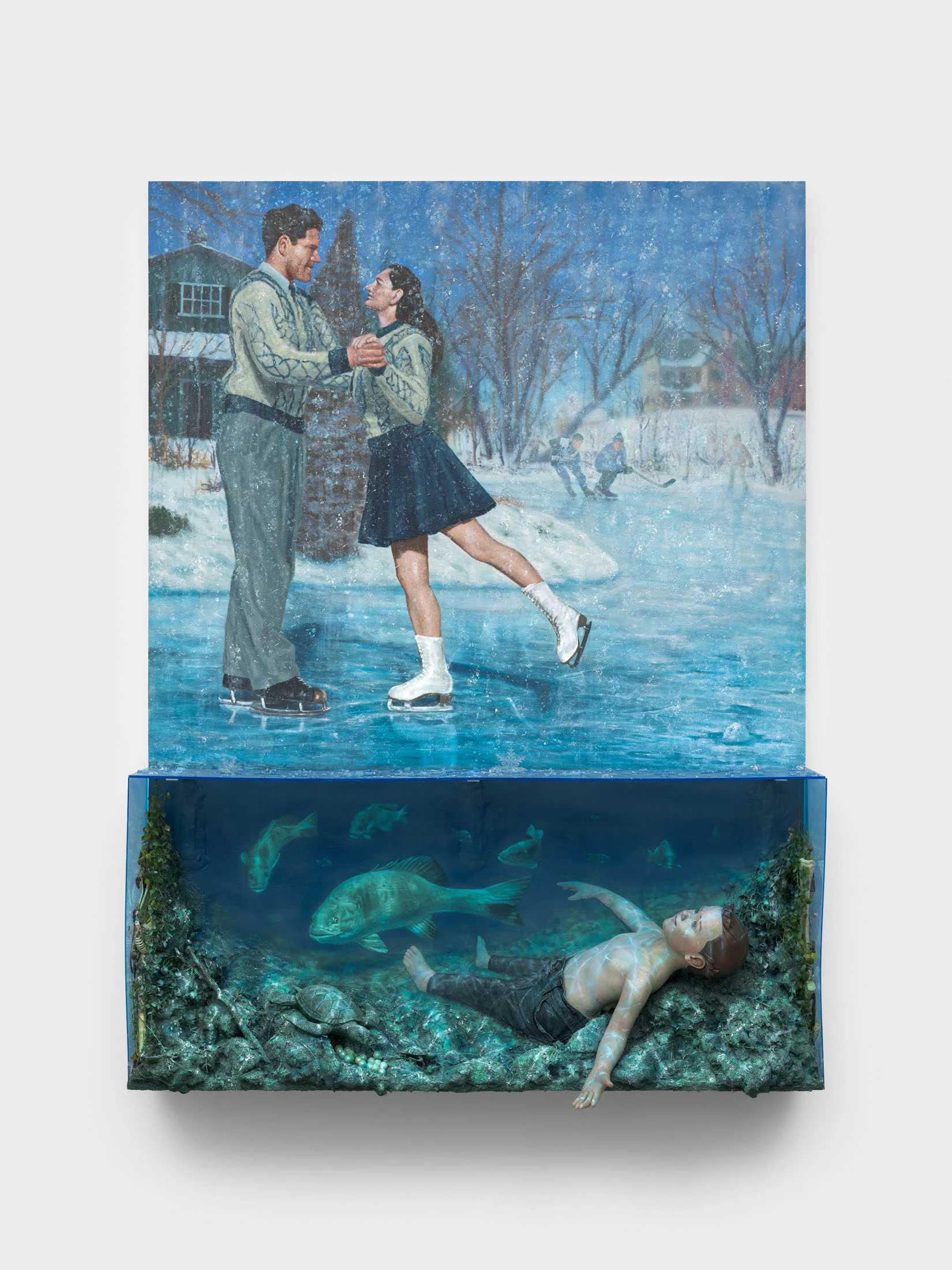
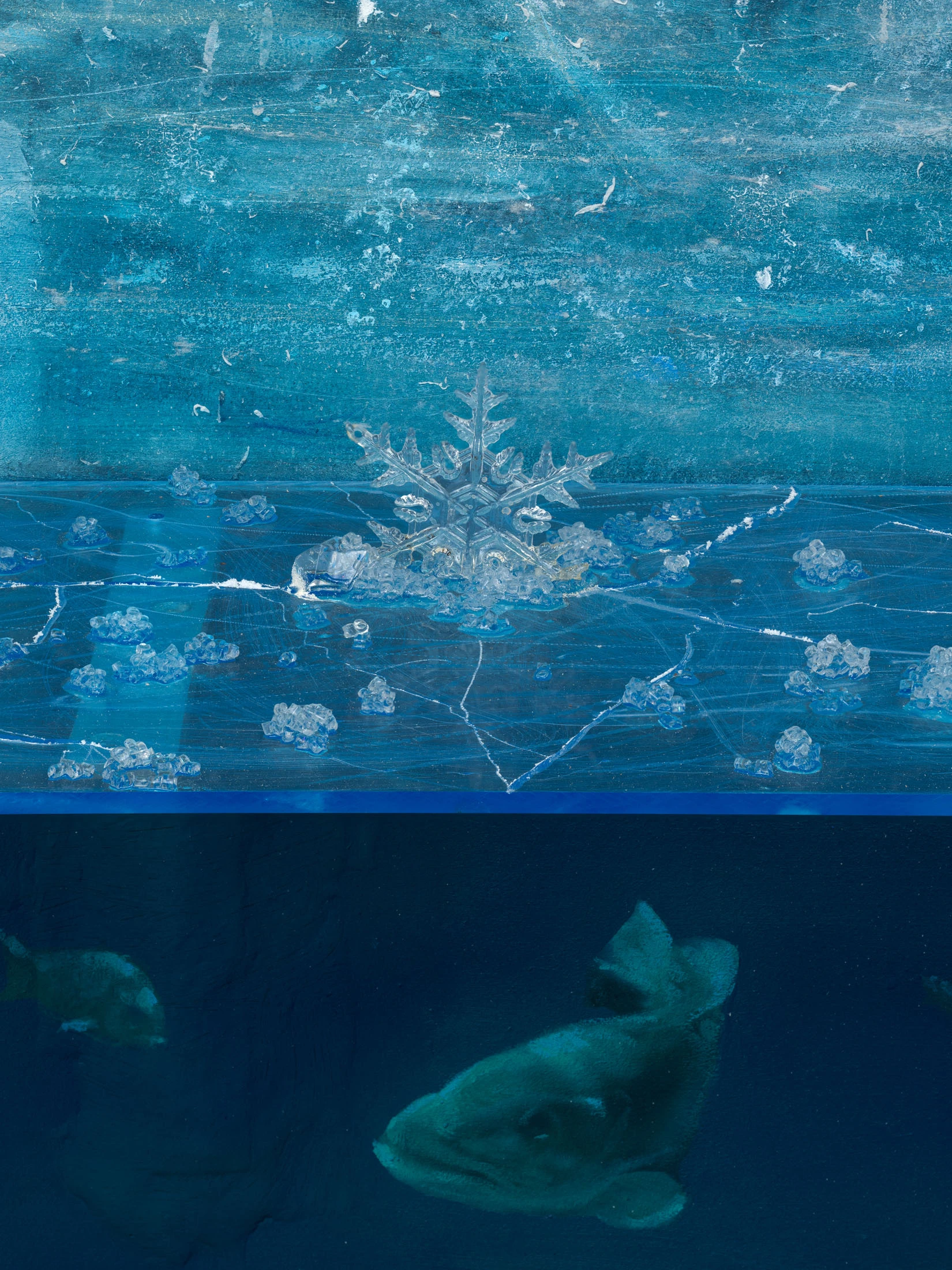
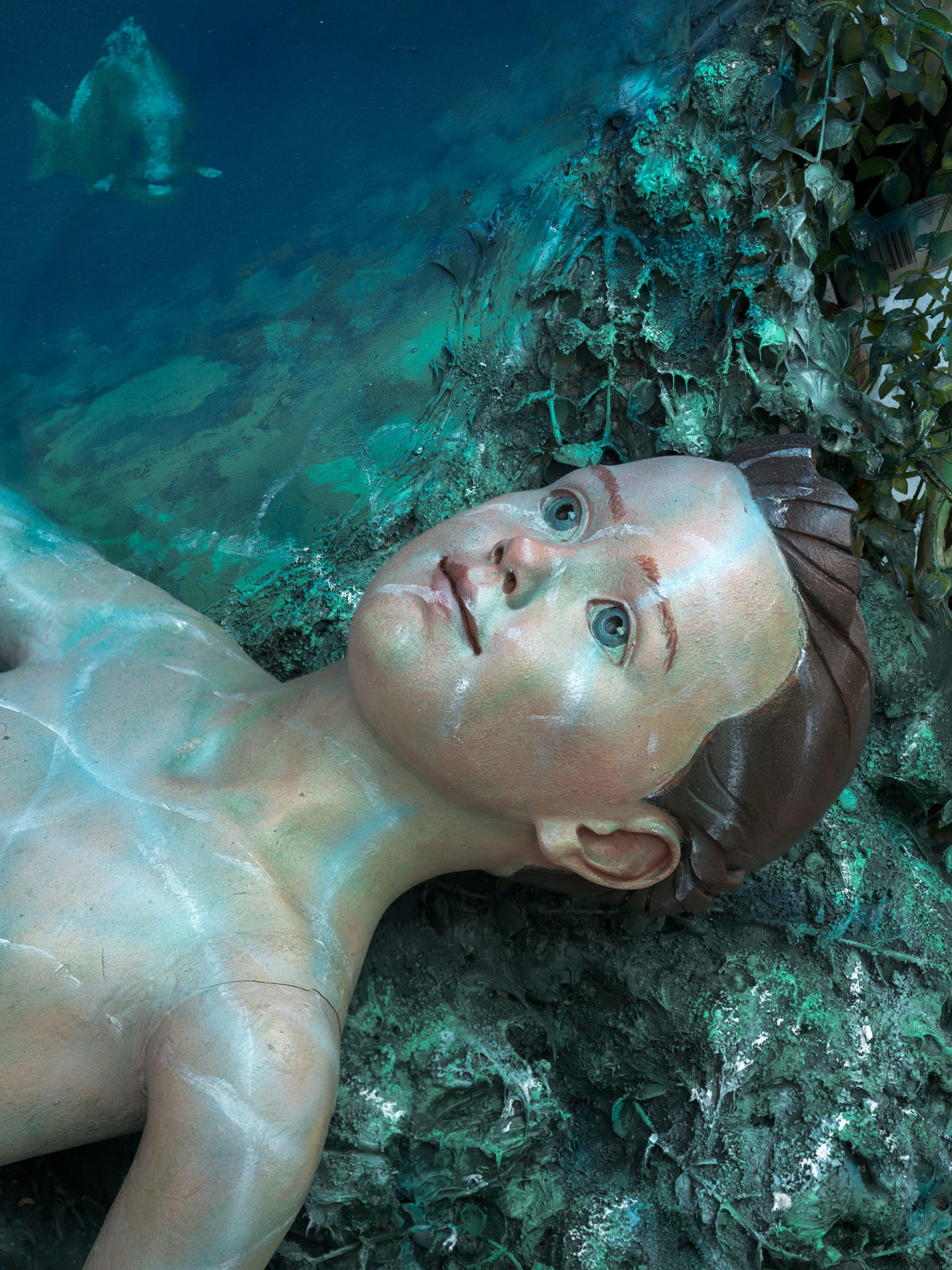
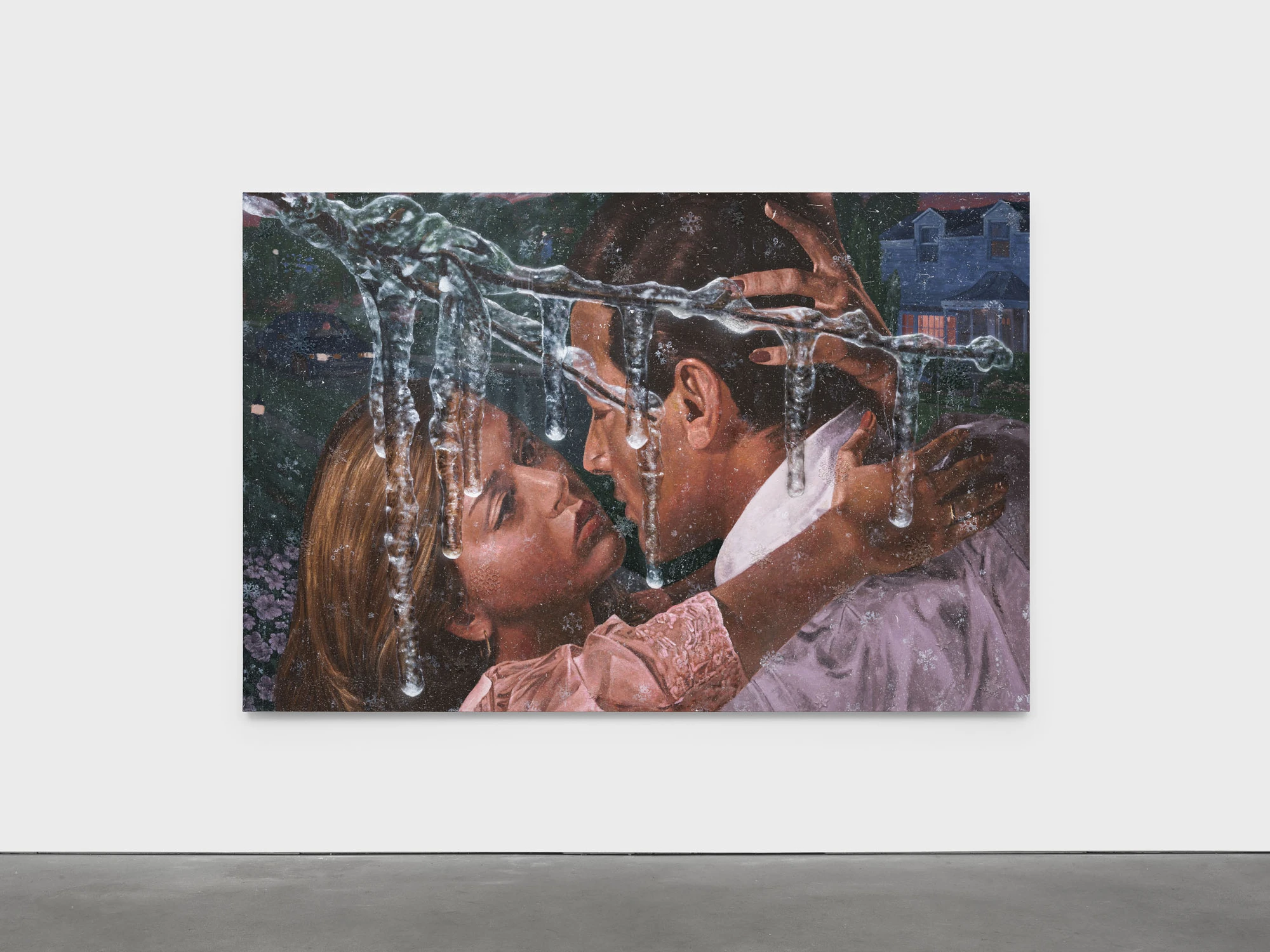
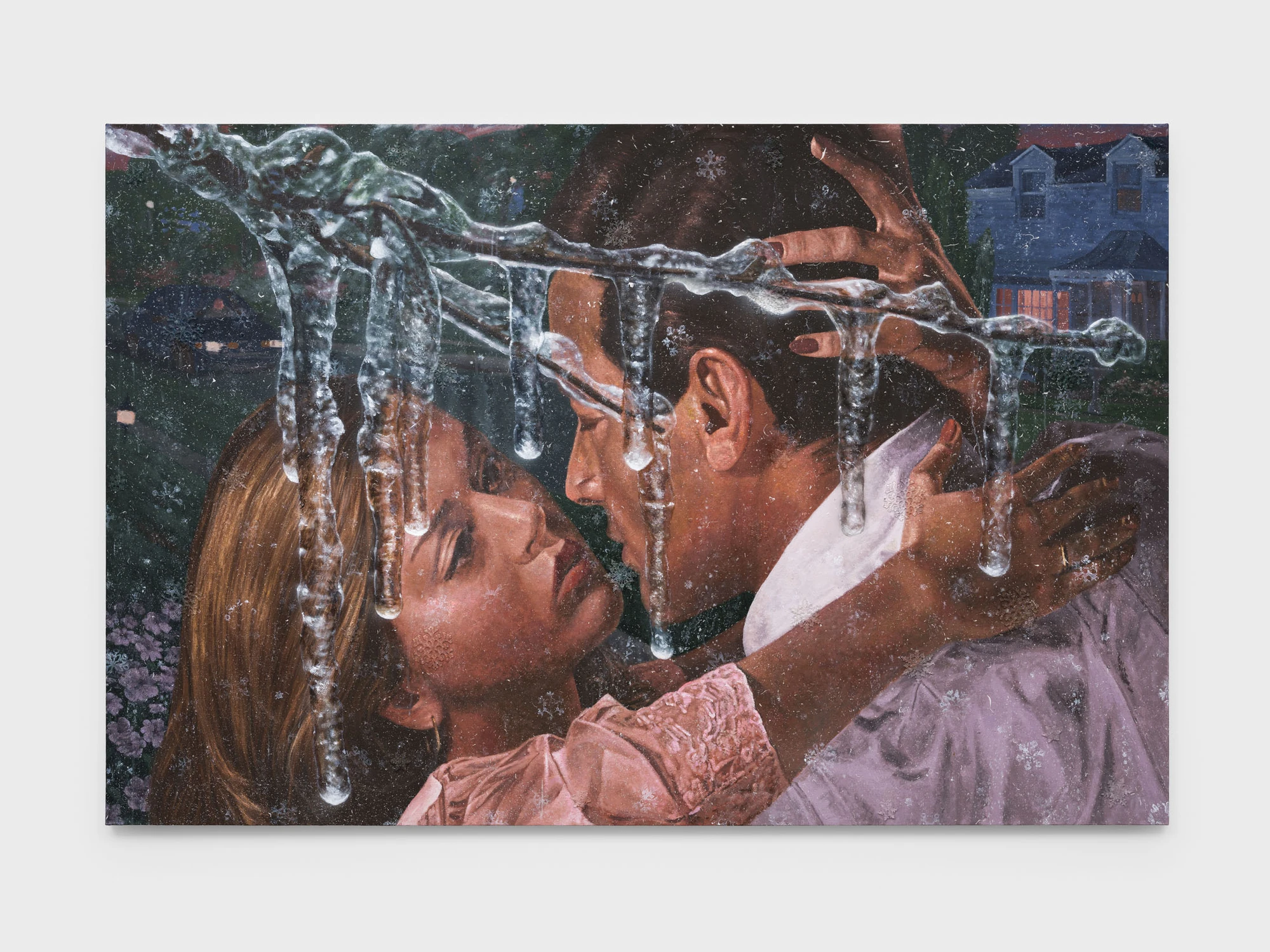
In Thin Ice (2025), romance glides across catastrophe. A pair of skaters drift elegantly over a frozen pond while, beneath the resinous surface, a submerged body floats in suspended clarity. The work literalizes the exhibition’s thesis: intimacy is always already layered over erasure. The resin glistens “like ice,” but its sheen also functions as a membrane, a cosmetic sealing of trauma. Winter here is not purity but preservation.
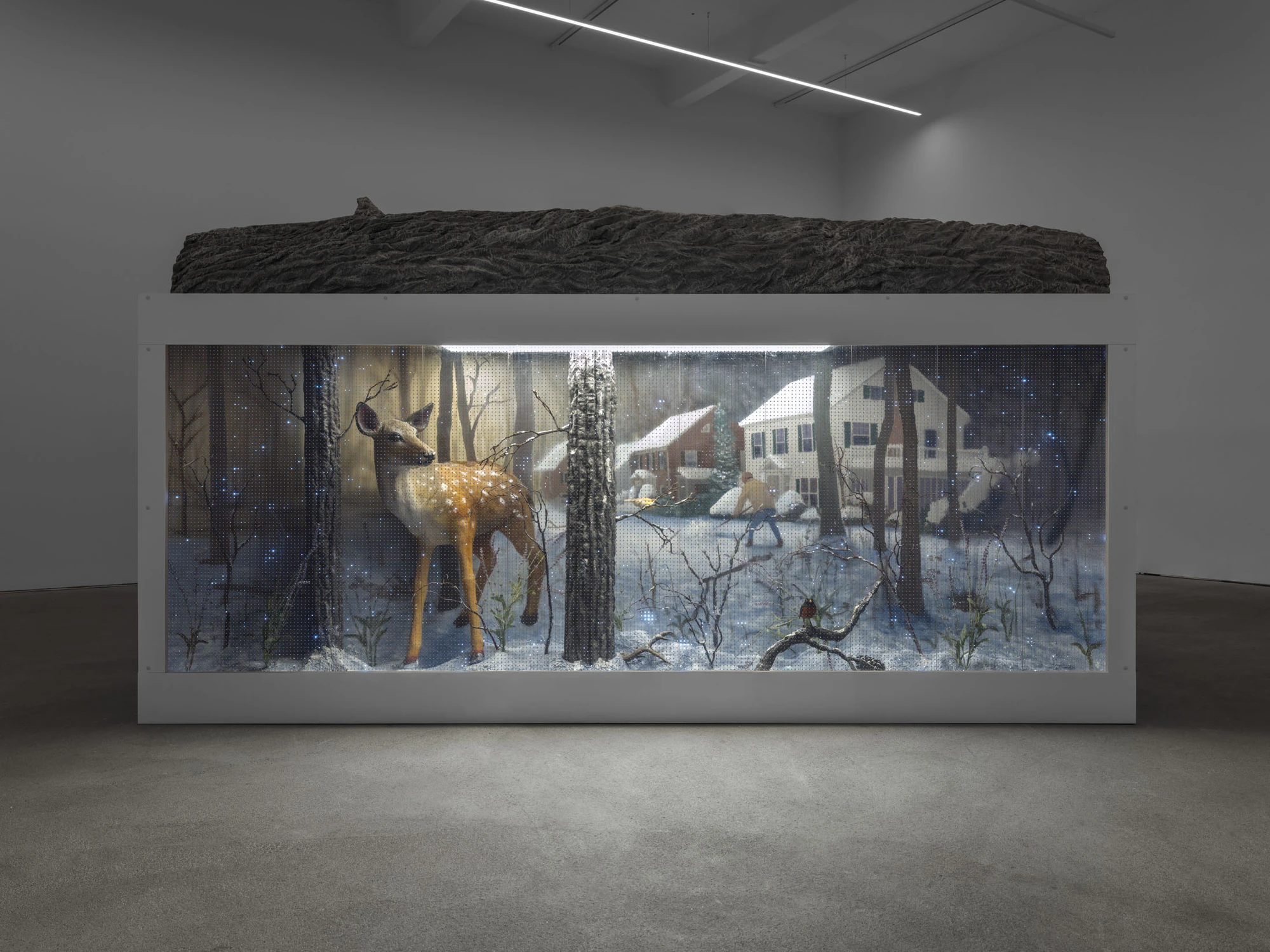
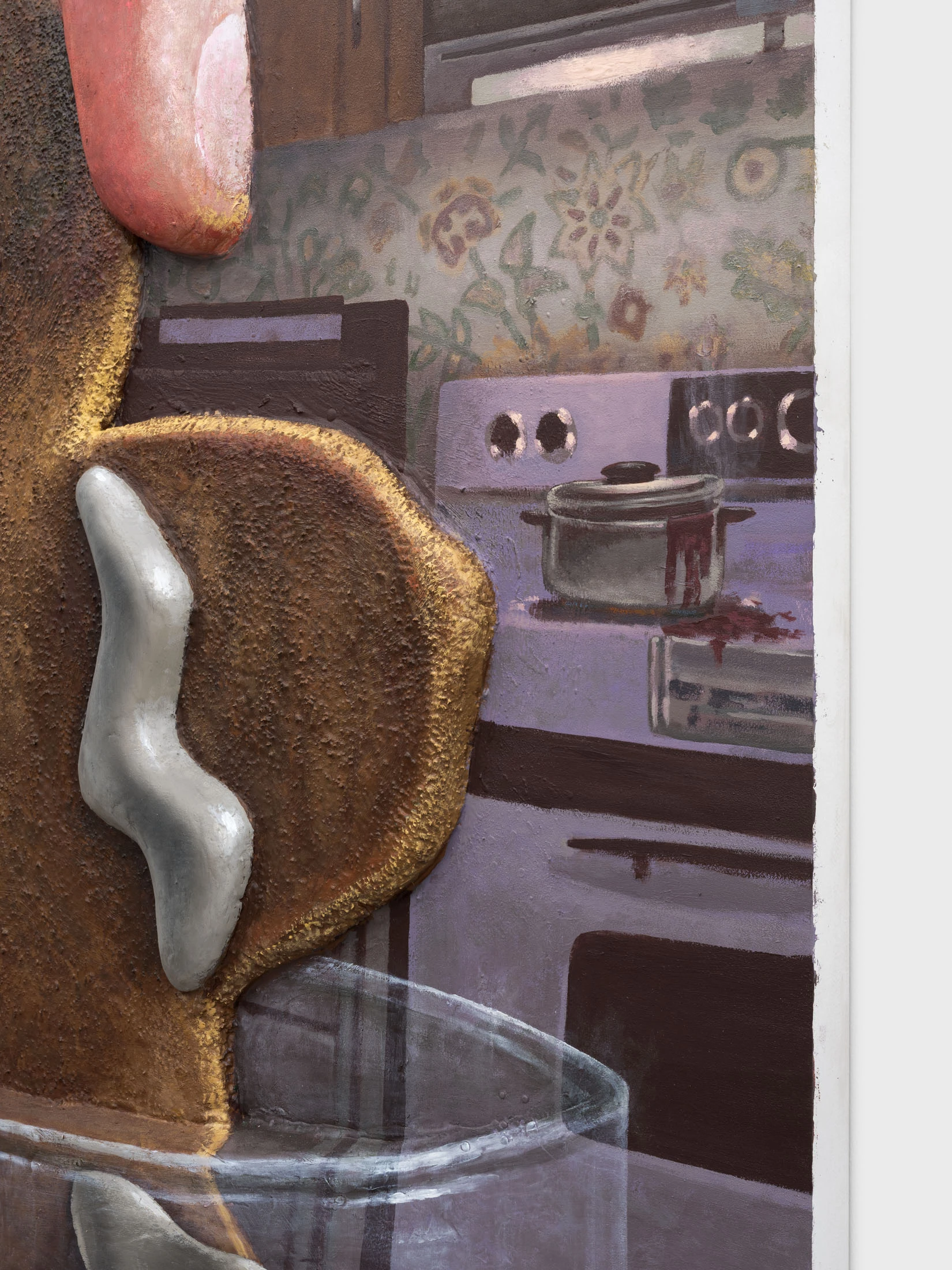
Outdoor Cat (2025) sharpens the cruelty of warmth. A couple, framed by domestic coziness, gazes outward at a cat freezing beyond frosted glass. Artificial pine needles and animatronic rabbits construct a pastoral simulation; a hologram fan projects a spectral flicker beside them. The scene feels almost devotional, yet its devotion is outsourced to machinery. Abdella exposes how rituals of care—Christmas décor, hearthside romance—depend on a calibrated exclusion. Someone or something is always left outside.
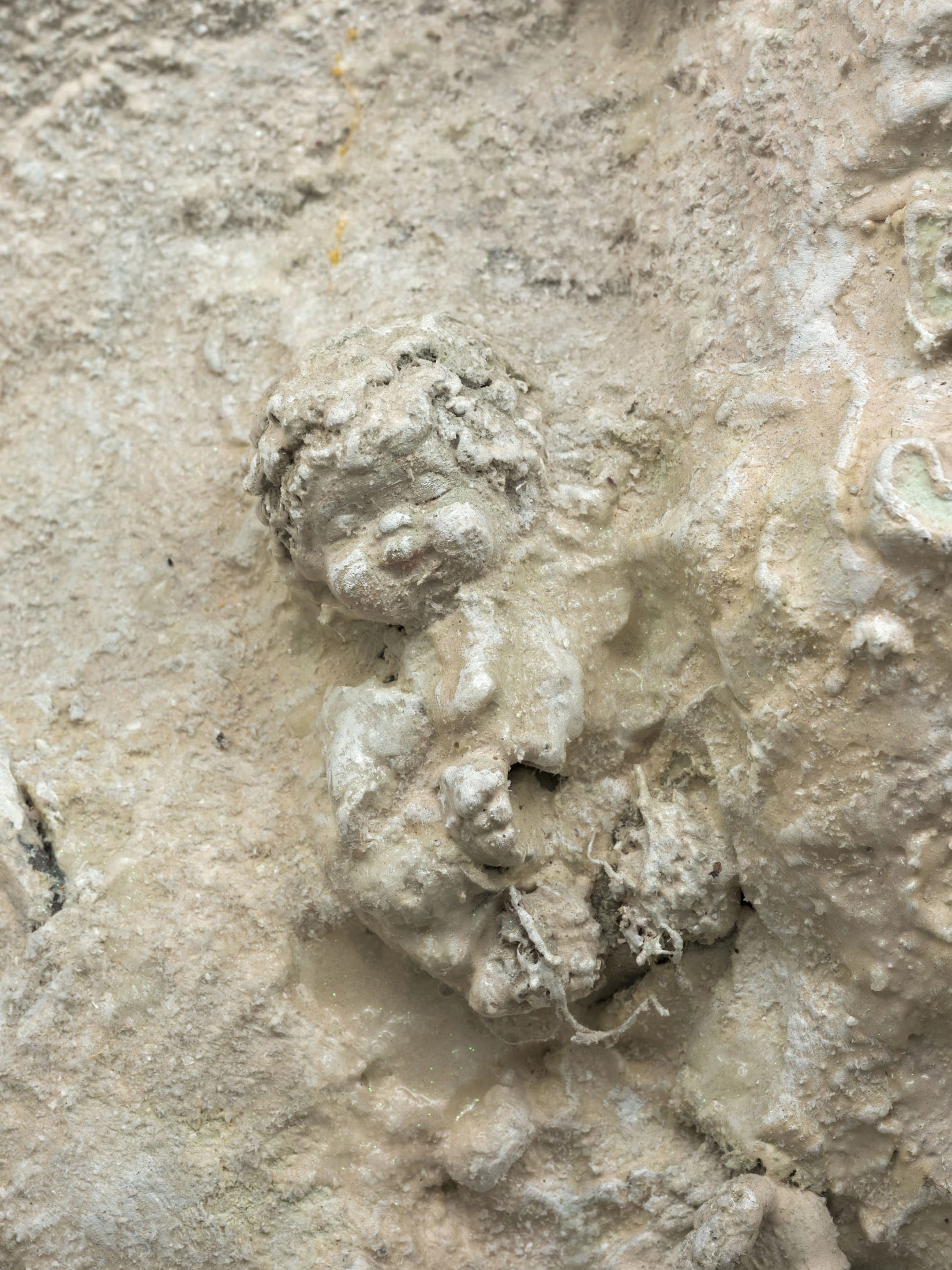
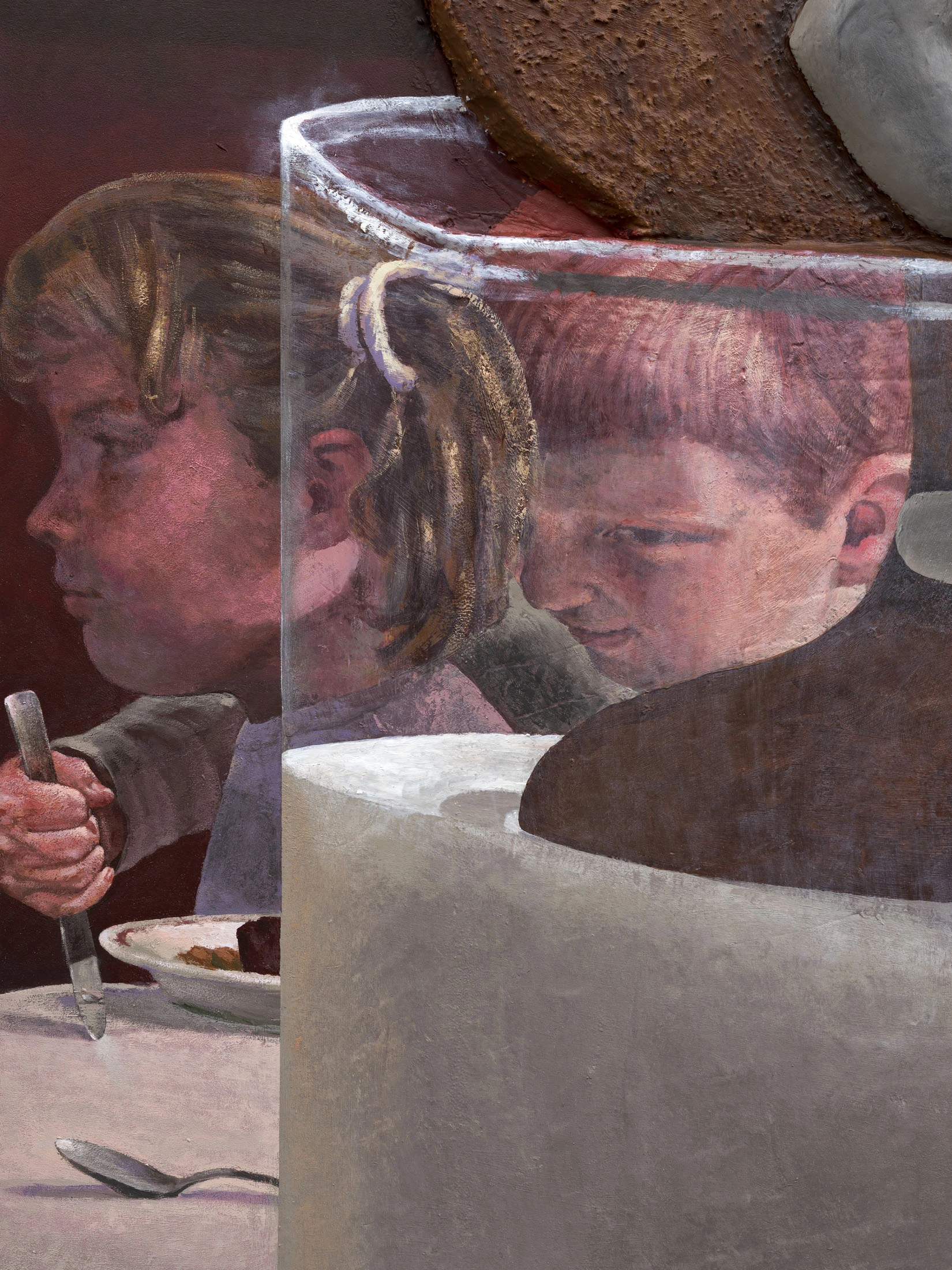
Elsewhere, childhood curdles. The ceramic angels of Snow Angels (2025) lie fractured and half-buried, their devotional innocence chipped into kitsch debris. In Run, Run As Fast As You Can (2025), a young boy grips a knife with storybook determination, collapsing fairy-tale cadence into threat. Abdella is alert to how American narratives of innocence metabolize violence, how the seasonal script of joy requires an undercurrent of fear to feel convincing.
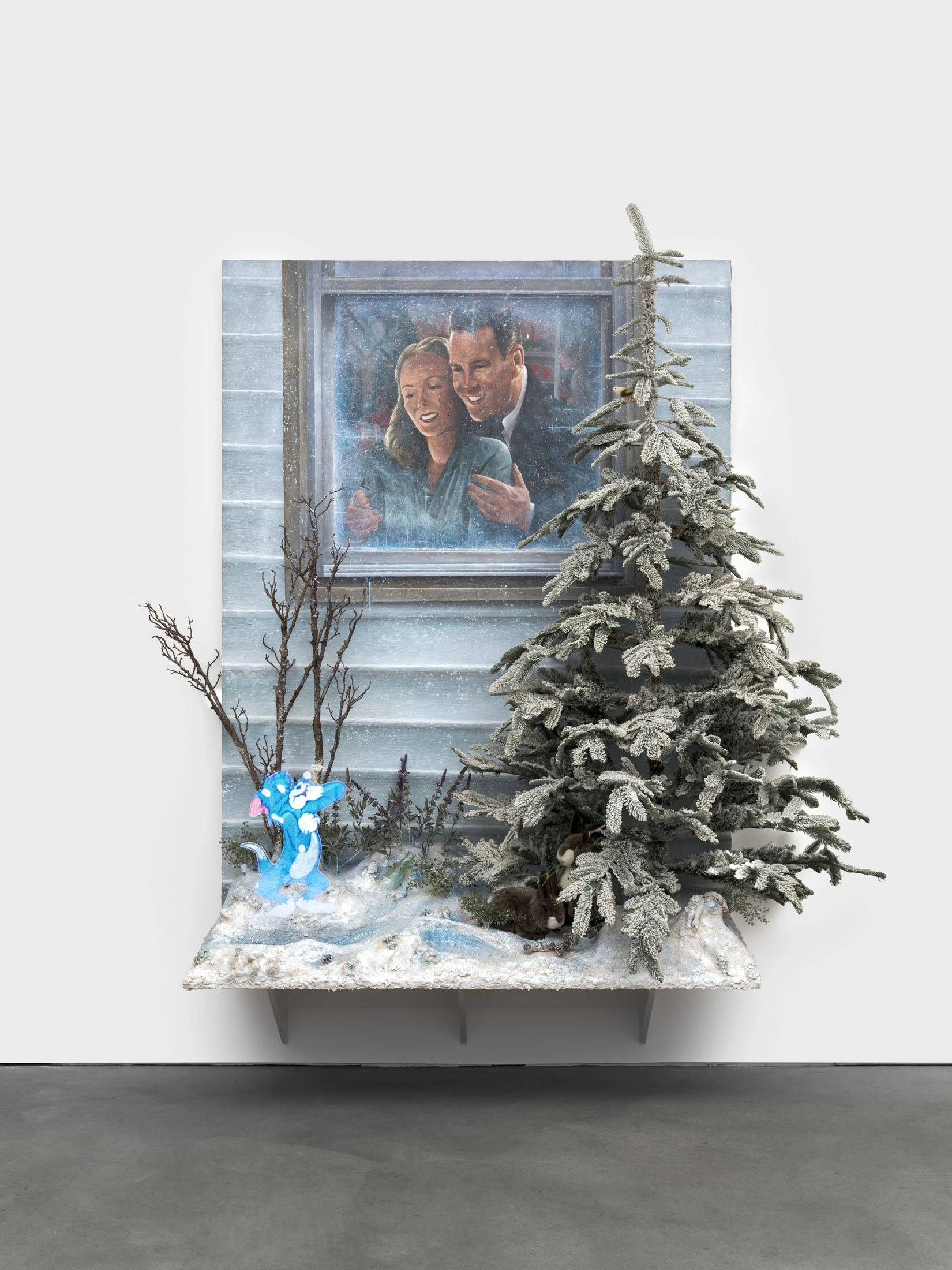
Outdoor Cat, 2025
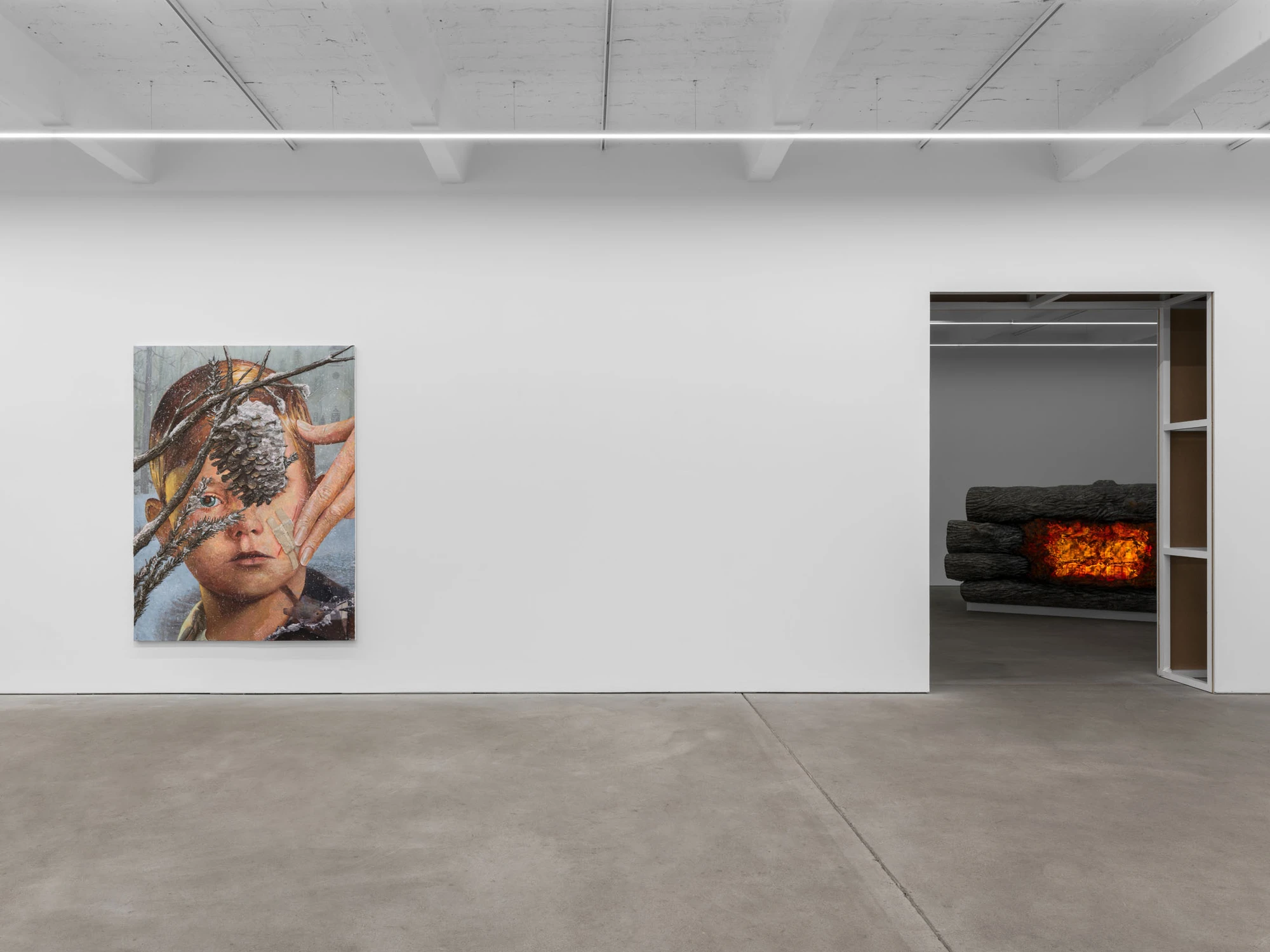
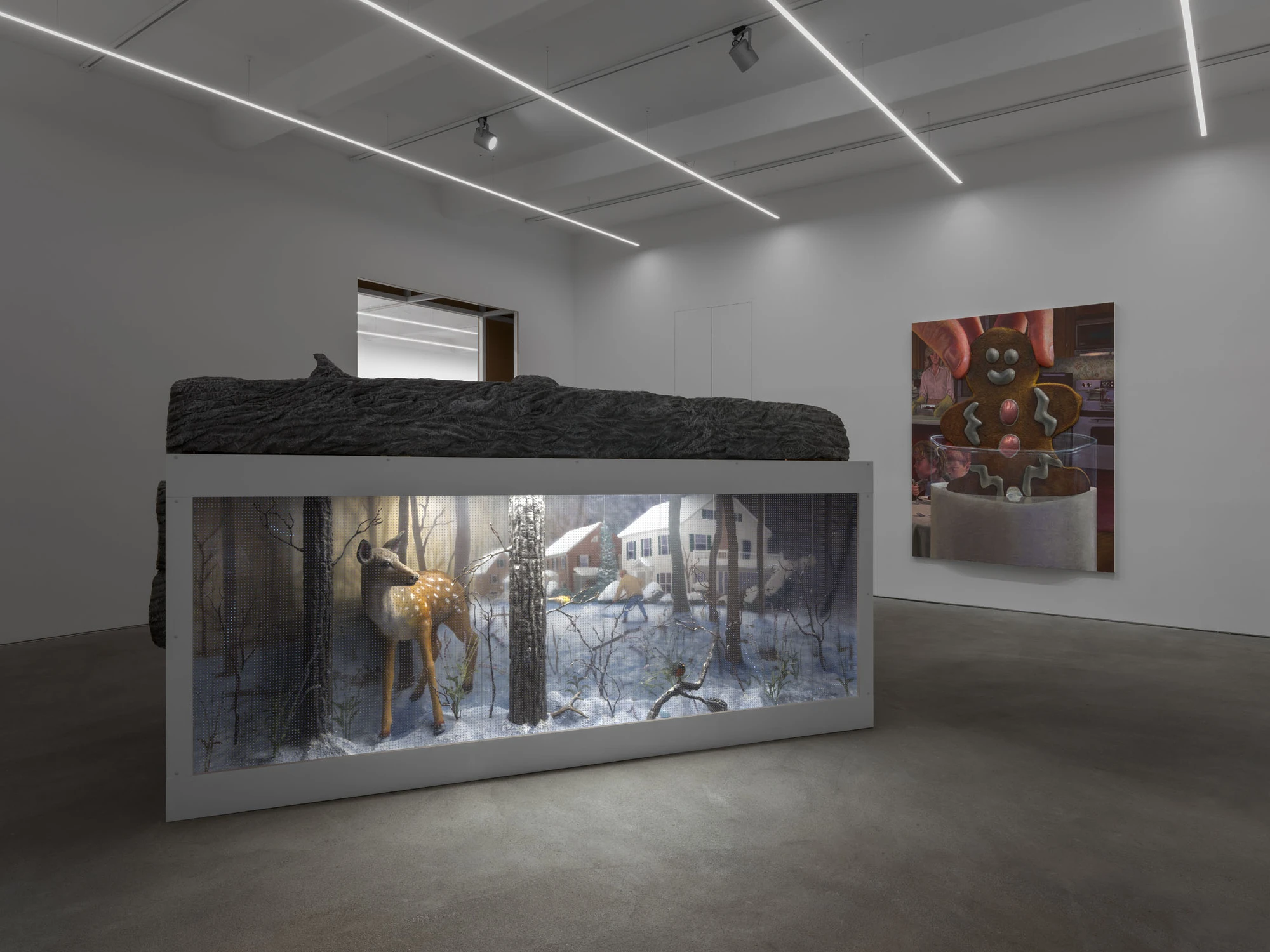
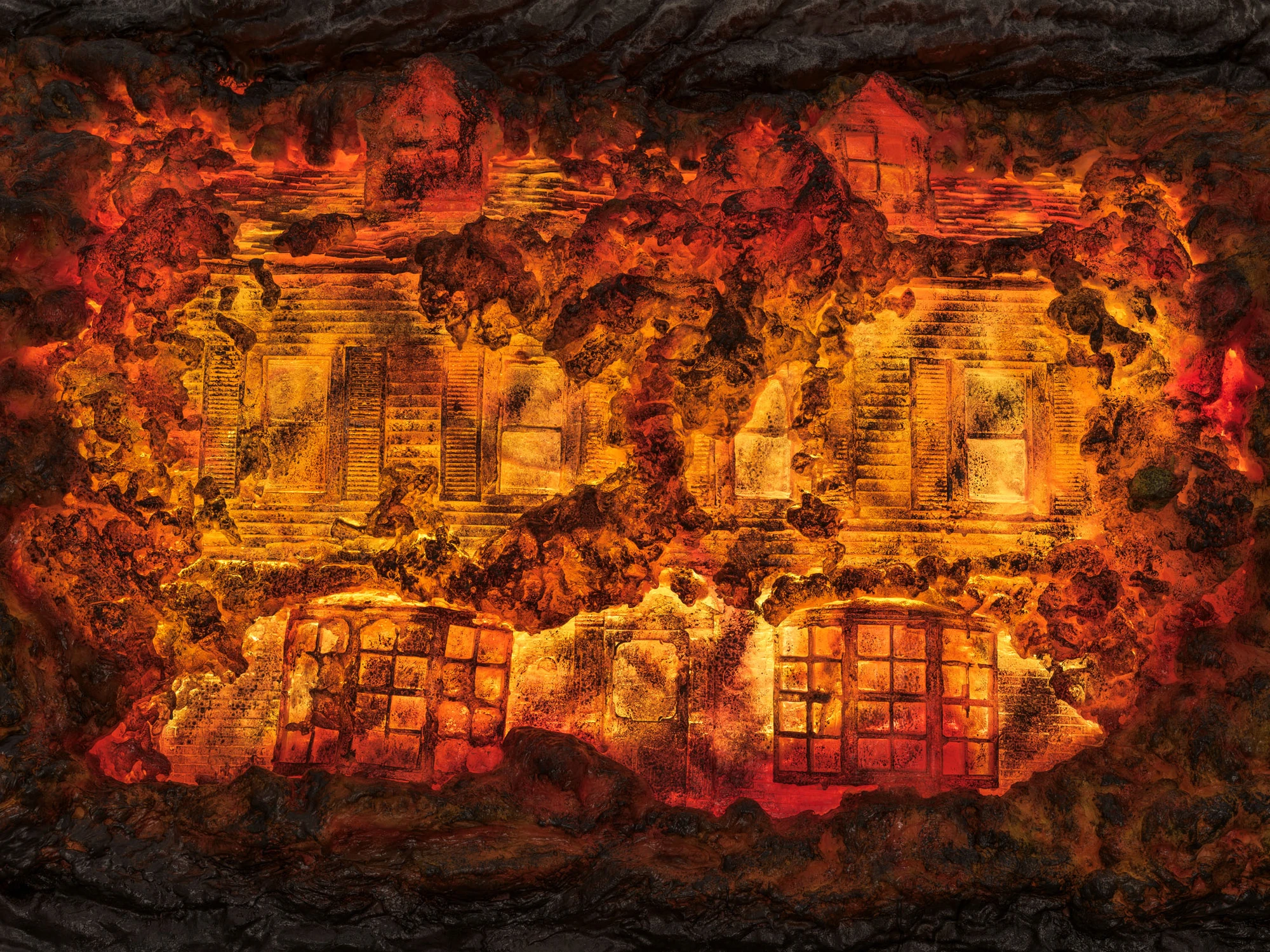
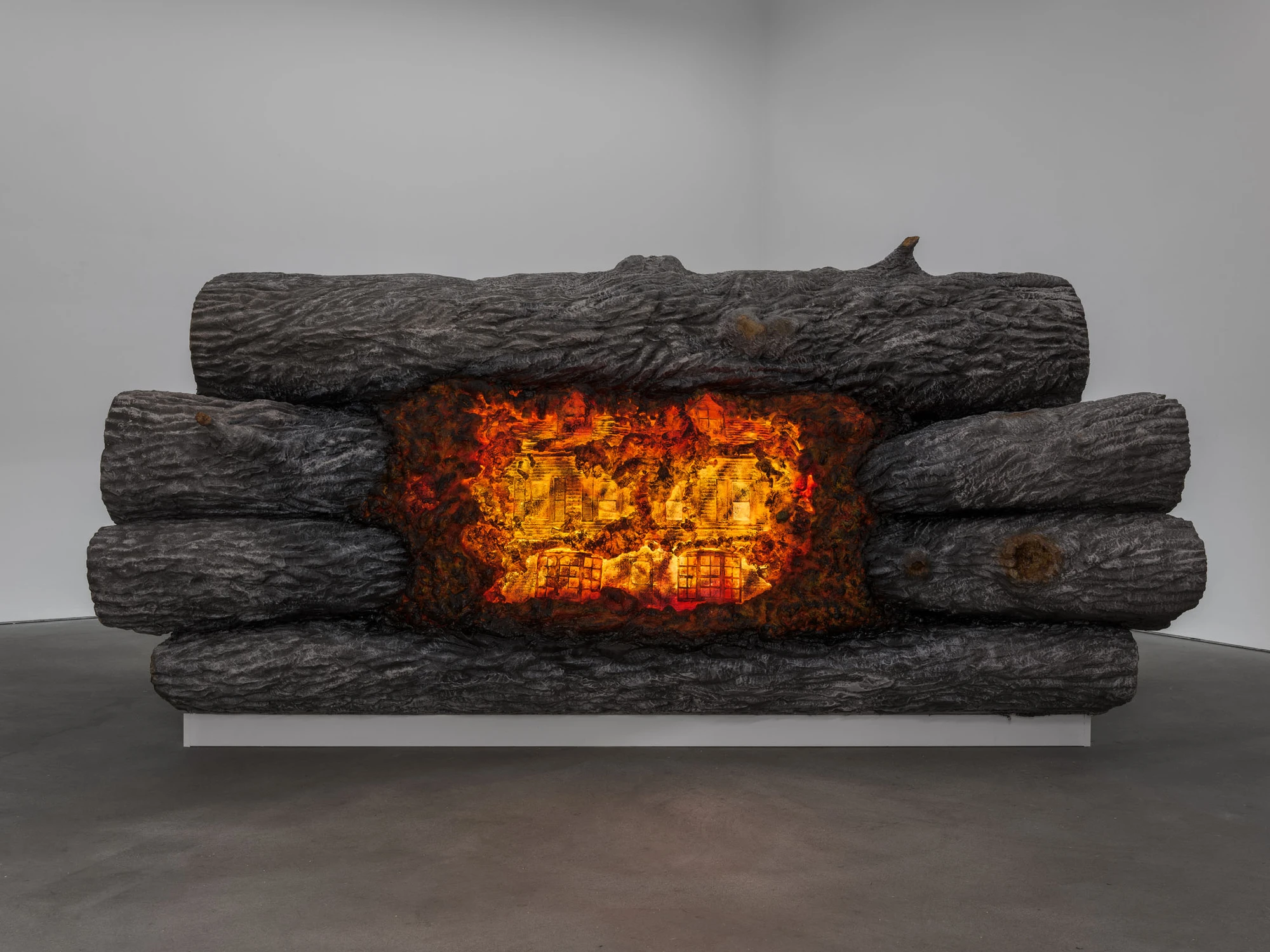
His materials—eBay relics, junk-store ornaments, suburban leftovers—arrive preloaded with sentiment. Abdella doesn’t simply appropriate them; he metabolizes them. Acrylic, fiberglass, glitter, broken ceramic, LED motors: these elements accumulate like emotional sediment. In When Hell Freezes Over (2025), sculpted foam logs and metallic tinsel simulate the flicker of fire, a hearth powered by artifice. The title reads like a cliché, yet in Abdella’s hands it becomes a structural principle. Hell does freeze over—precisely when spectacle becomes indistinguishable from solace.
What makes Cold Front compelling is not its flirtation with horror but its refusal to resolve tone. Abdella lingers in the unstable space between tenderness and unease, refusing viewers the comfort of irony. The works feel “hyperreal,” yet their hyperreality is never immersive in a theme-park sense; it’s abrasive. The surfaces seduce, then stall. Emotion remains caught beneath the gloss, visible but untouchable.
In Berlin—a city fluent in ruin aesthetics and post-industrial cool—Abdella’s Americana reads almost exotic. But the exhibition resists easy geopolitics. Instead, it suggests that the American dream is less a national myth than a material technology: a system of surfaces designed to smooth over longing, loss, and imitation. Winter becomes its most elegant interface. Beneath the glittering frost, something is always drifting, waiting to be seen.