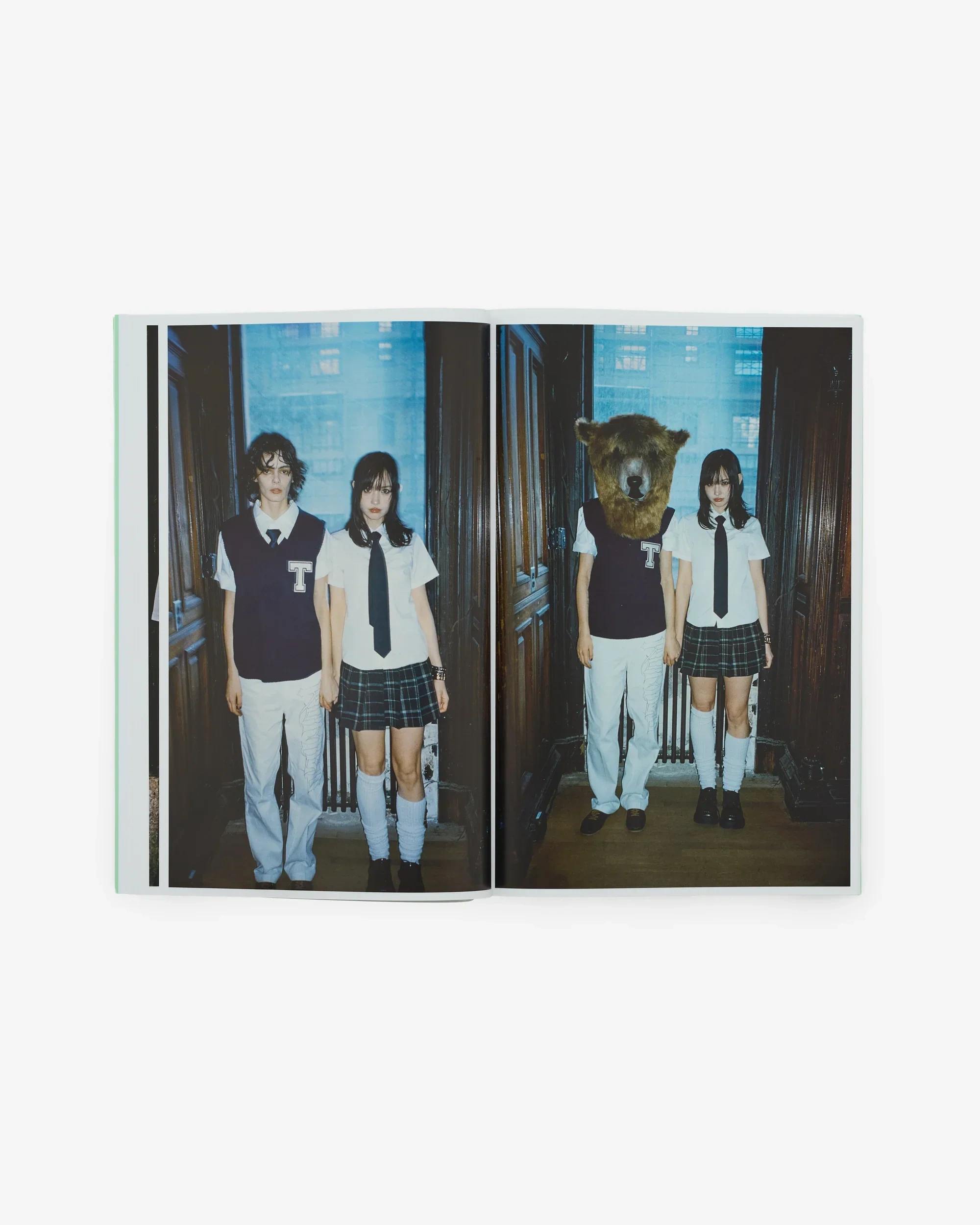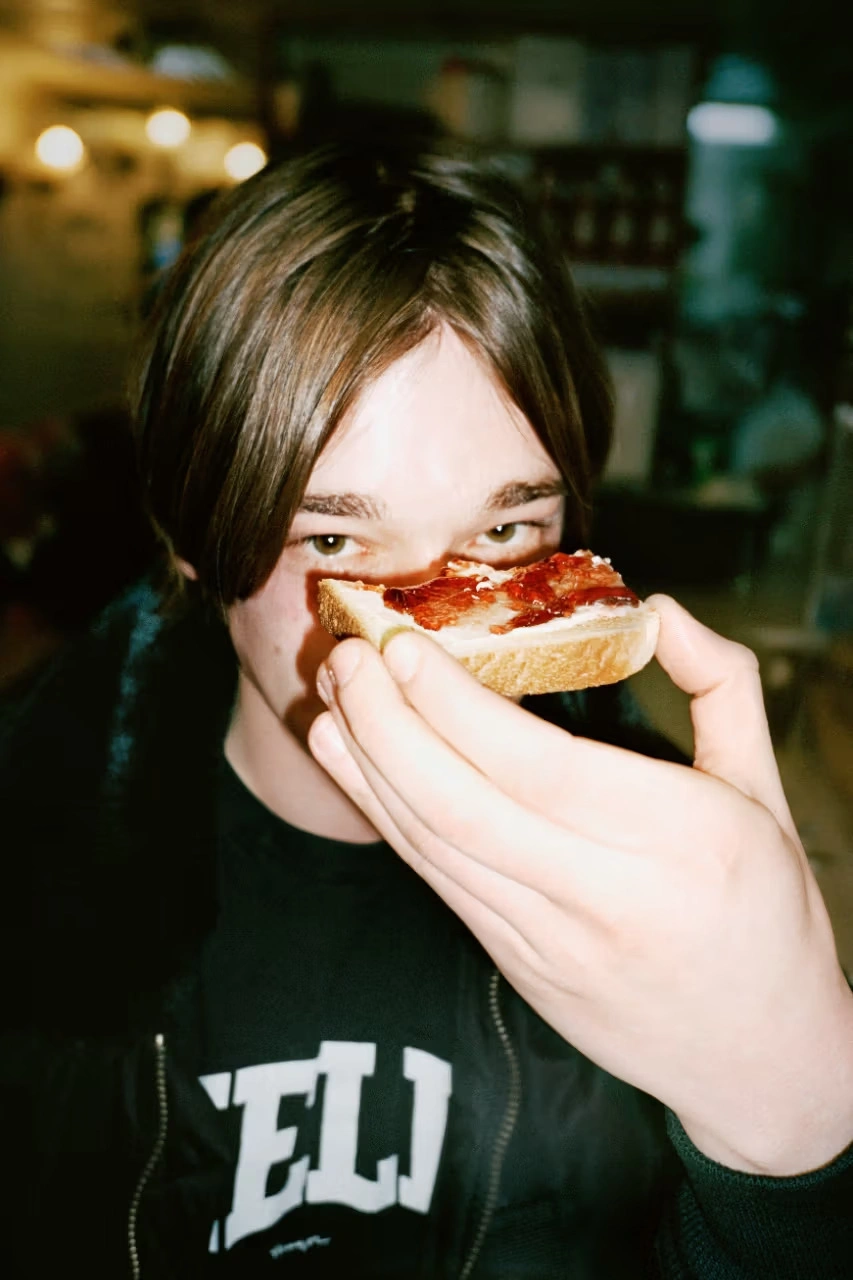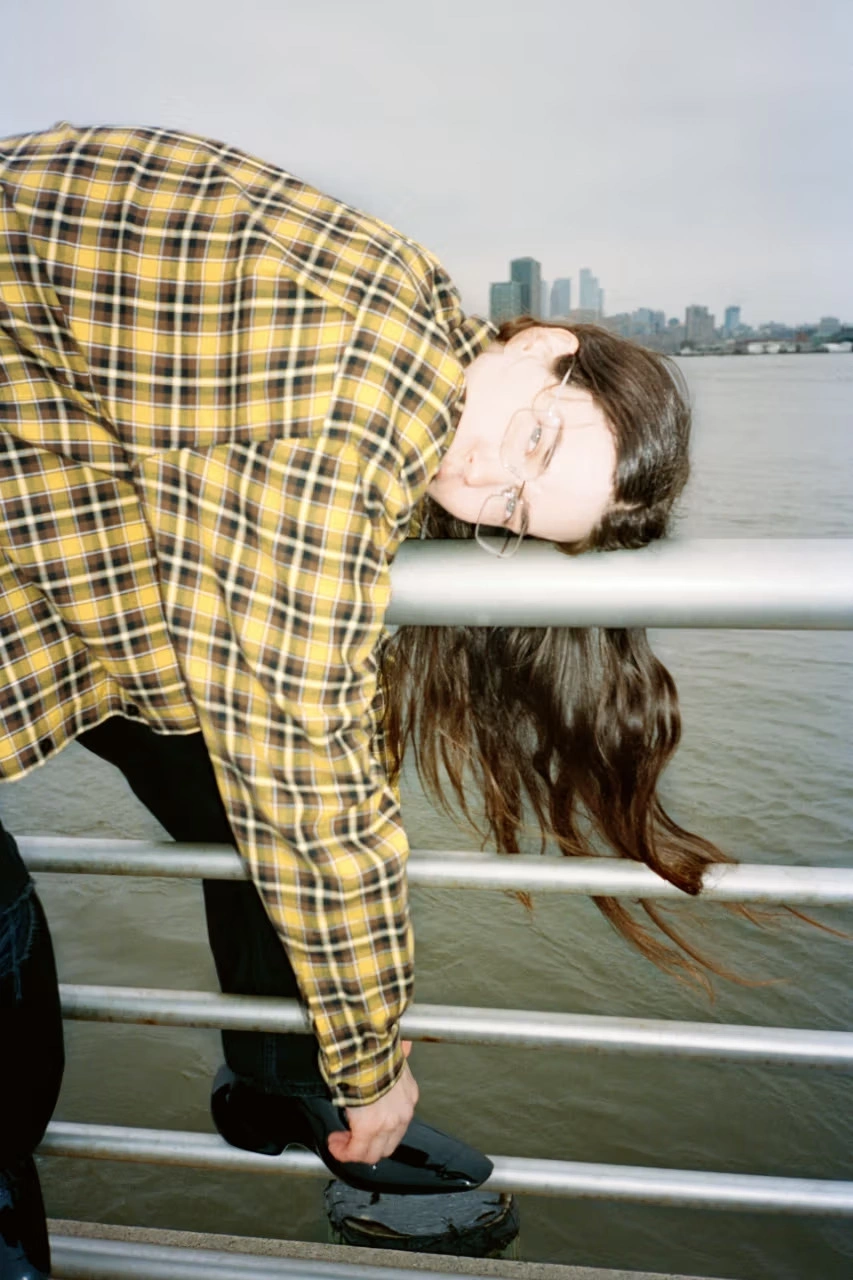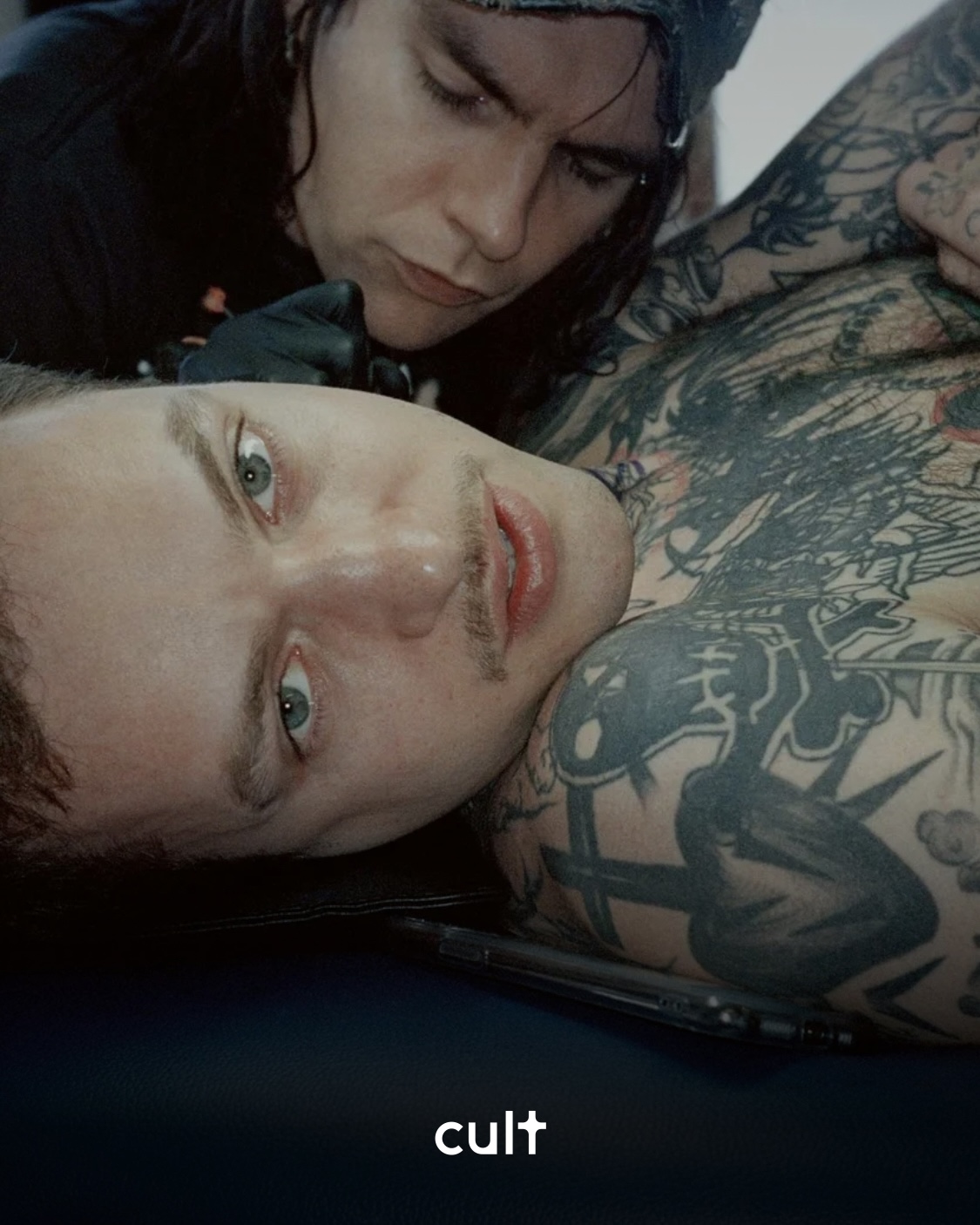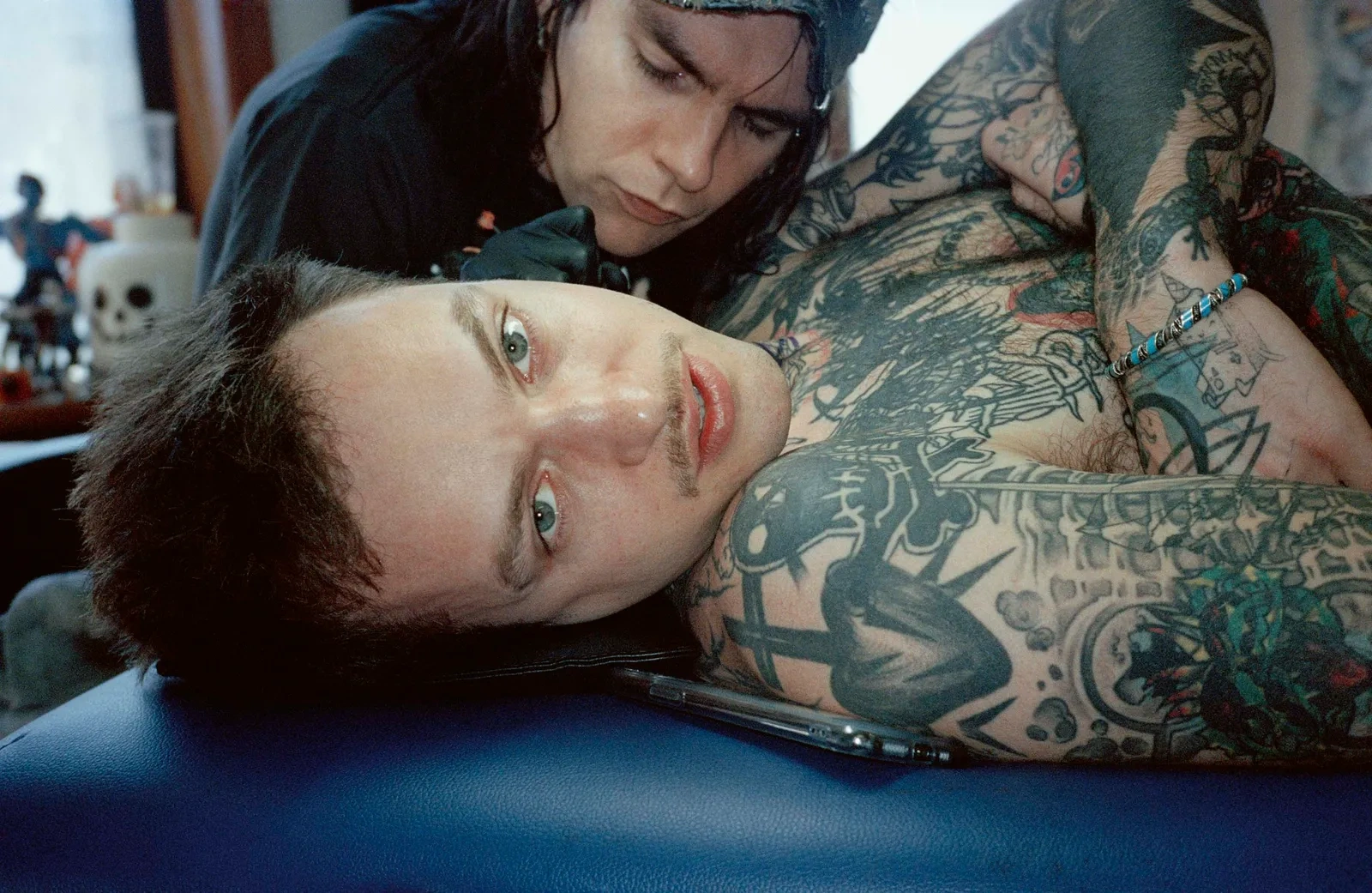
There’s a peculiar quiet that lingers in the photographs of DOOM, Anne Imhof’s sprawling, three-hour performance at New York’s Park Avenue Armory — not the quiet of absence, but of aftermath. Tess Petronio’s photo book, DOOM: House of Hope, published by IDEA, moves through this silence with a subtle but piercing intimacy. What began as an internship—an art student’s leap of faith—unfolded into a document of radical proximity: between artist and subject, between art and exhaustion, between love and its disintegration.
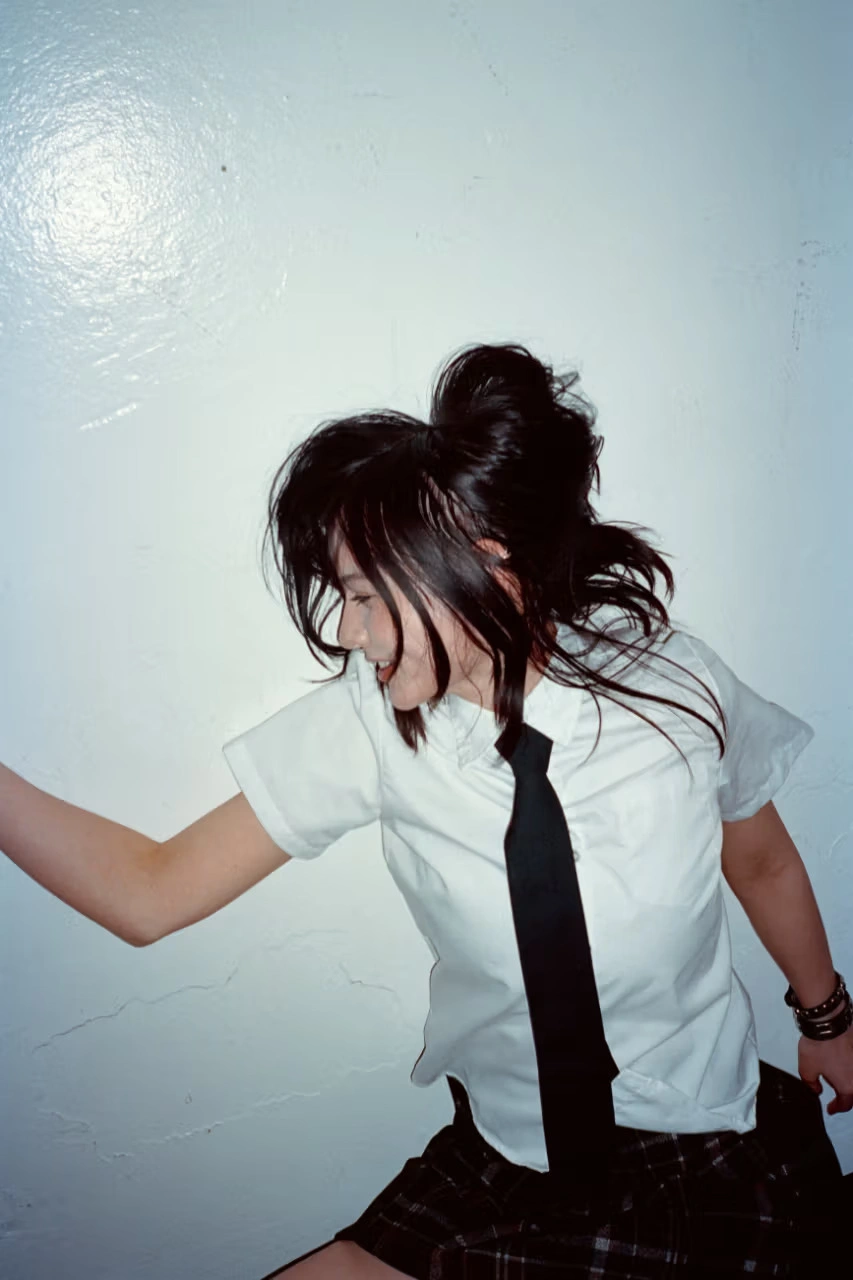
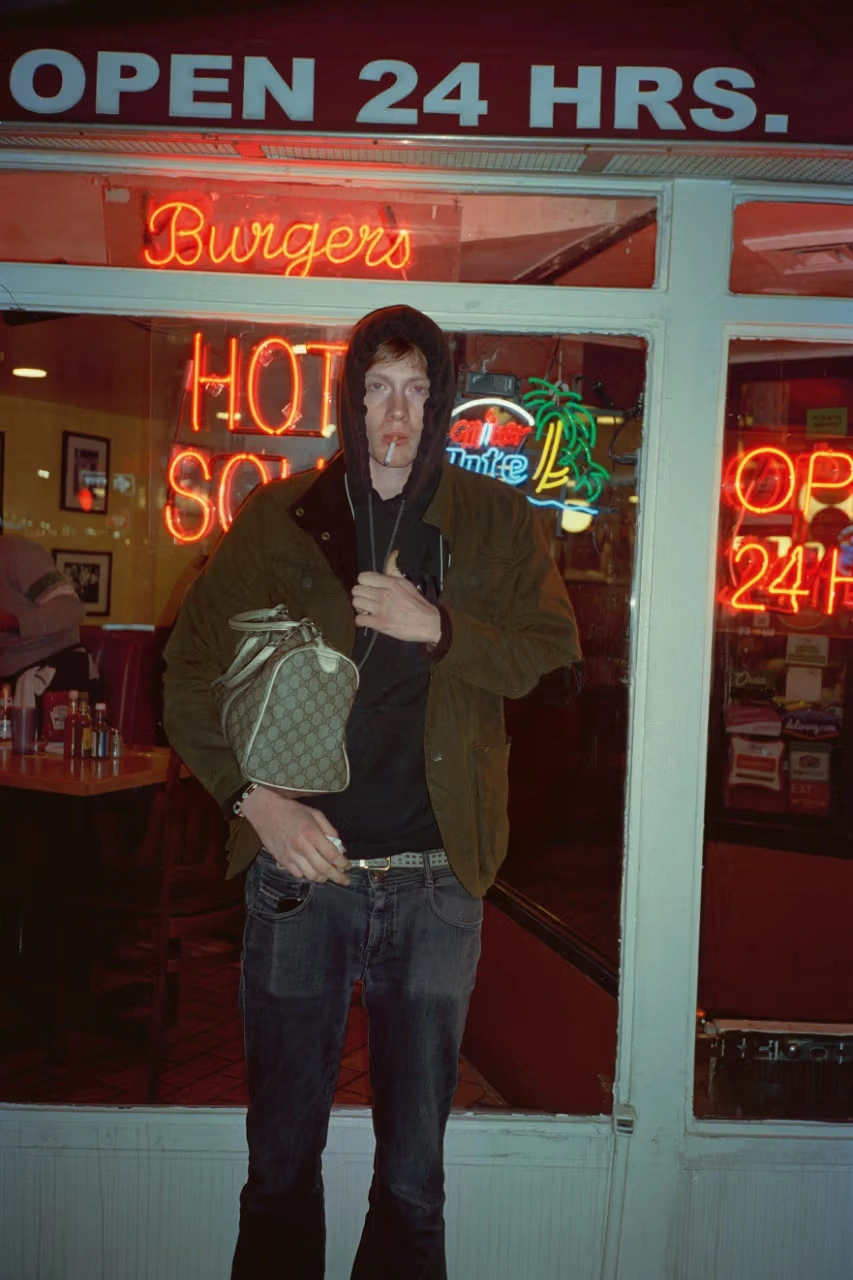
Imhof’s DOOM has been described as a contemporary tragedy, “loosely based on Romeo and Juliet.” But Petronio’s photographs remind us that tragedy doesn’t only happen on stage—it seeps into the downtime, the post-rehearsal hangouts, the cigarette breaks, the dimly lit diners where the cast gathers under fluorescent light. These images form what Petronio calls “character research,” but they feel more like emotional residue—half-performed moments where the performance’s aesthetic vocabulary mutates into something almost tender.
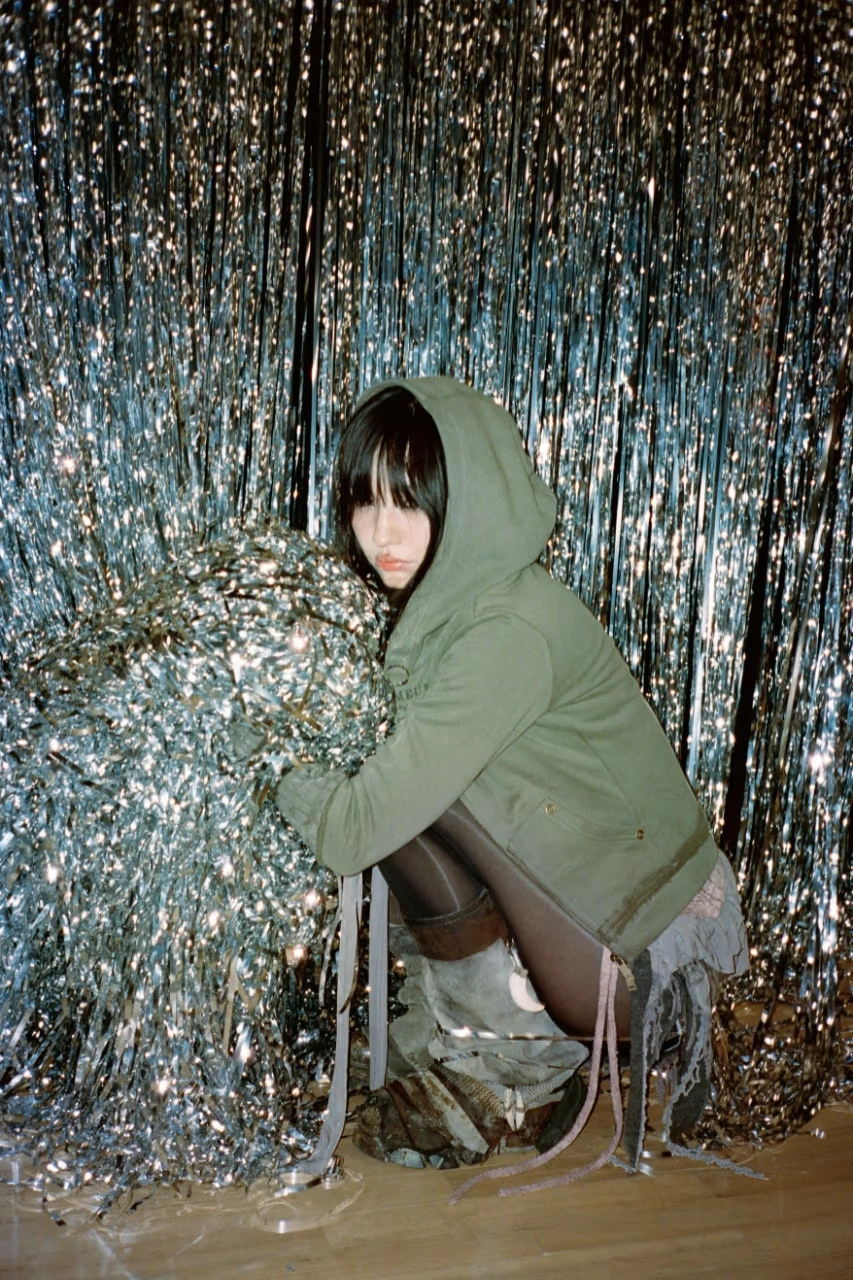
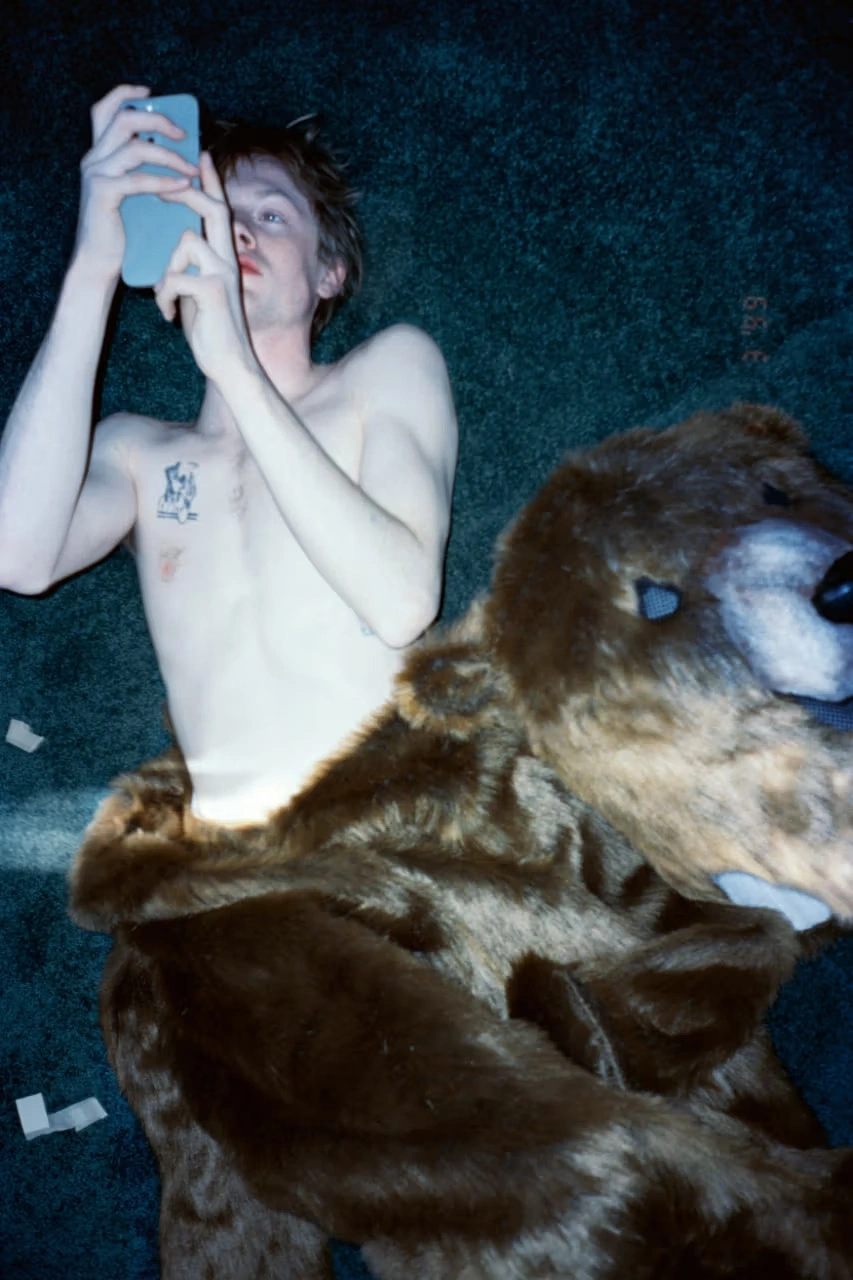
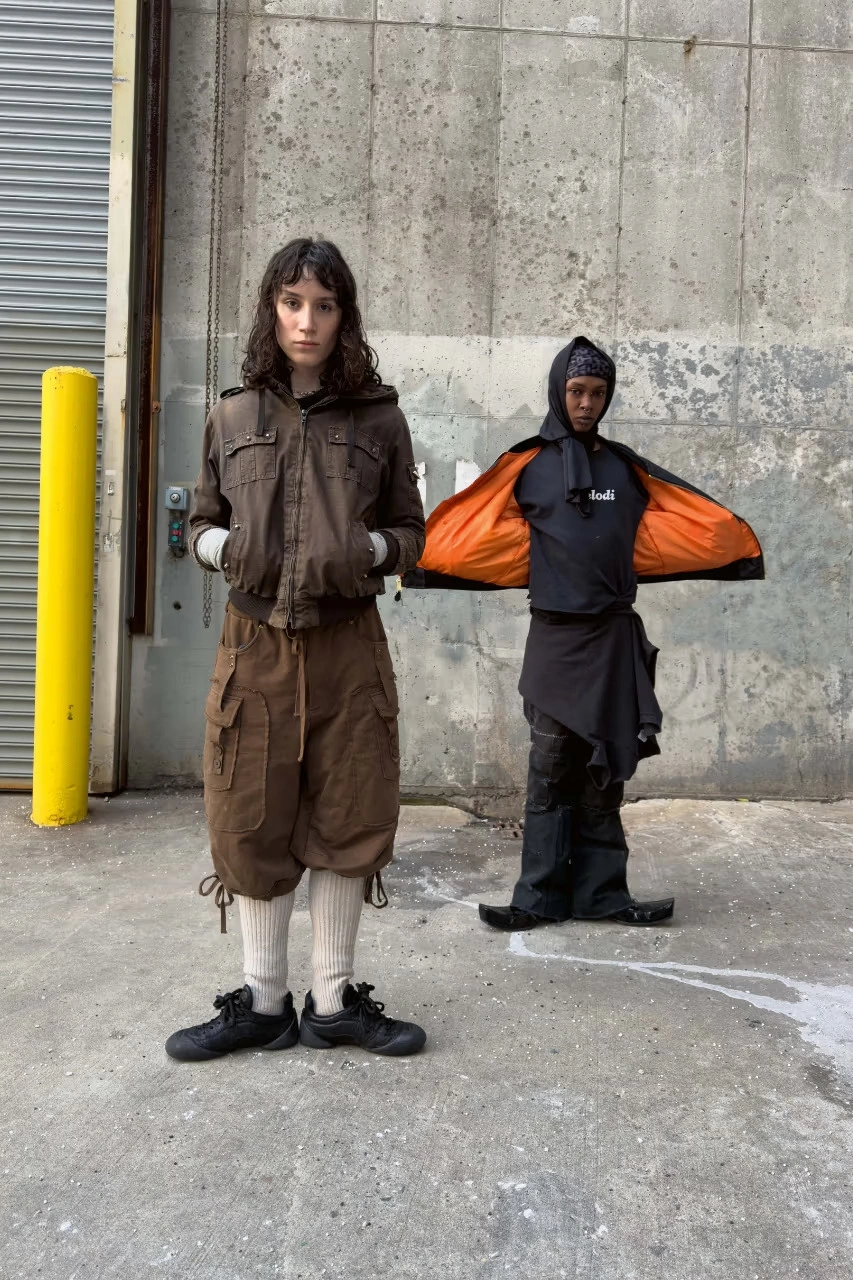
A girl in an olive hoodie crouches against a glittering wall, as if hiding inside a chrysalis made of tinsel. A shirtless man scrolls through his phone, half-covered by a bear suit, a gesture that lands somewhere between apathy and metamorphosis. Elsewhere, the cast lounges in banal spaces: tiled diners, concrete corners, a dance studio’s fluorescent geometry. In these fragments, DOOM’s dystopian romanticism becomes startlingly human. The performers appear both part of and apart from the world—a generation rehearsing for intimacy inside a digital haze.
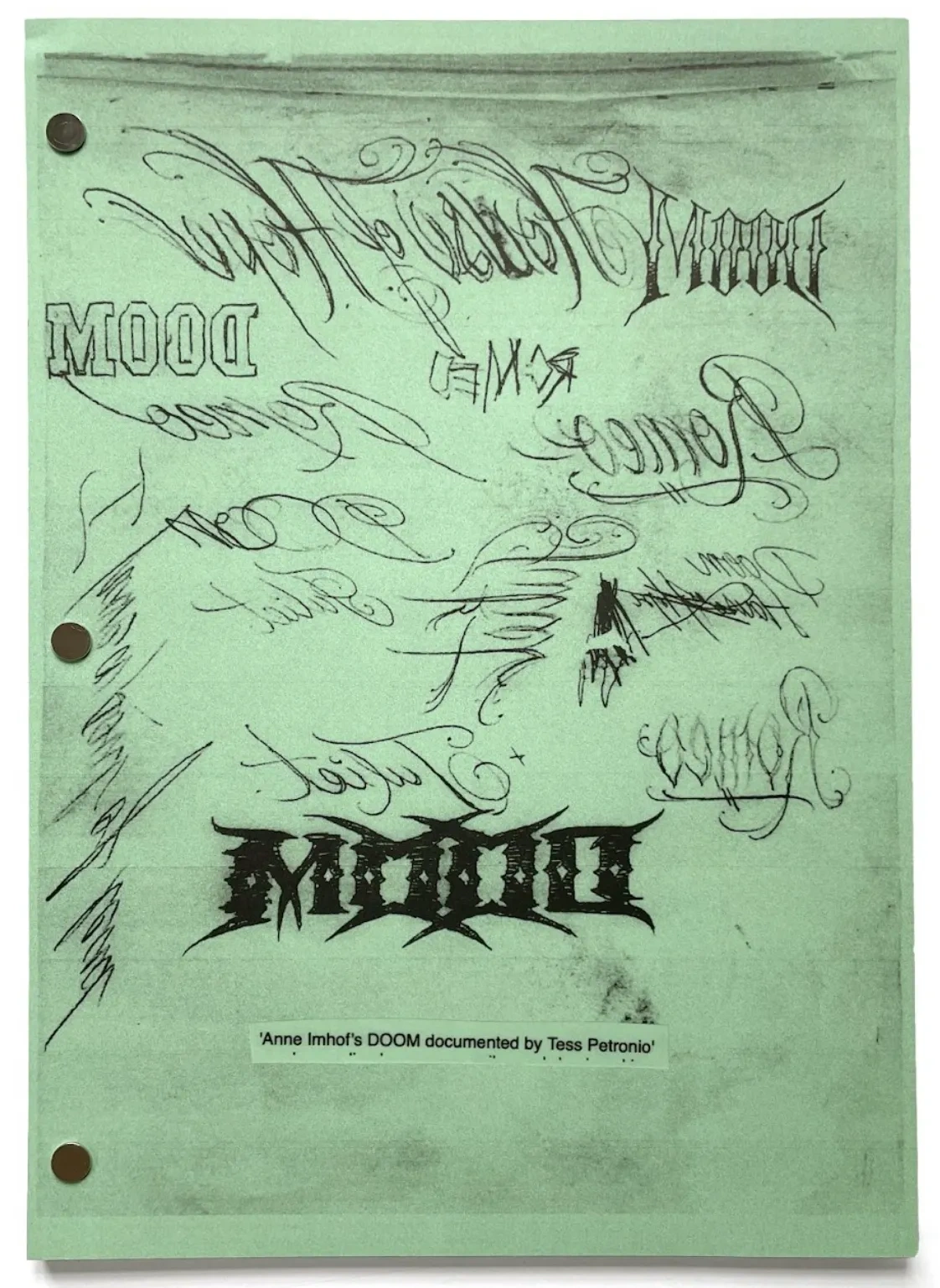
The book itself is constructed like a relic of process: bound like a screenplay with three Chicago screws, its green cover etched with gothic calligraphy by tattoo artist Dean Violante. It feels like an artifact pulled from an artist’s desk, still smudged with graphite, the edges soft from handling. “Serving as snapshots or film stills of life beyond the Armory,” the book functions as both archive and confession. It carries the fragile ecstasy of collaboration—the kind that dissolves as soon as the lights go down.
Imhof’s performances have always explored the threshold between art and lived experience, where bodies oscillate between endurance and collapse. Petronio’s images capture that in-between. Her lens, unintrusive yet unflinching, sees the performers not as mythic figures in Imhof’s dystopian cosmology, but as co-conspirators—friends, lovers, ghosts of the same project. The camera doesn’t monumentalize; it lingers. Every frame is haunted by the sense that something is already ending.
What makes DOOM: House of Hope so compelling is how it sidesteps documentation in favor of empathy. It’s not about what happened at the Armory—it’s about what happens after art has been performed and the artist has left the room. It’s about what remains: the damp T-shirt, the leftover glitter, the fatigue that feels like devotion.
Petronio’s story is itself a parable of initiation: “From intern to published photographer,” she recalls, “I learned that if you don’t ask, you don’t get.” This refusal of hesitation—this reaching out toward an idea, a person, an experience—is what fuels both her project and Imhof’s world. In DOOM, vulnerability isn’t staged; it’s lived.
The photographs, suspended between friendship and theatre, show what happens when the machinery of performance collapses into ordinary life. They are love letters to collaboration, to failure, to the temporary architecture of hope. In a time when much of art feels algorithmically mediated, Petronio’s images reassert the human as a fragile but necessary fiction.
DOOM was always about love—messy, ungovernable, performative love. In Petronio’s hands, it becomes something else: a visual eulogy for a generation trying to feel in real time.