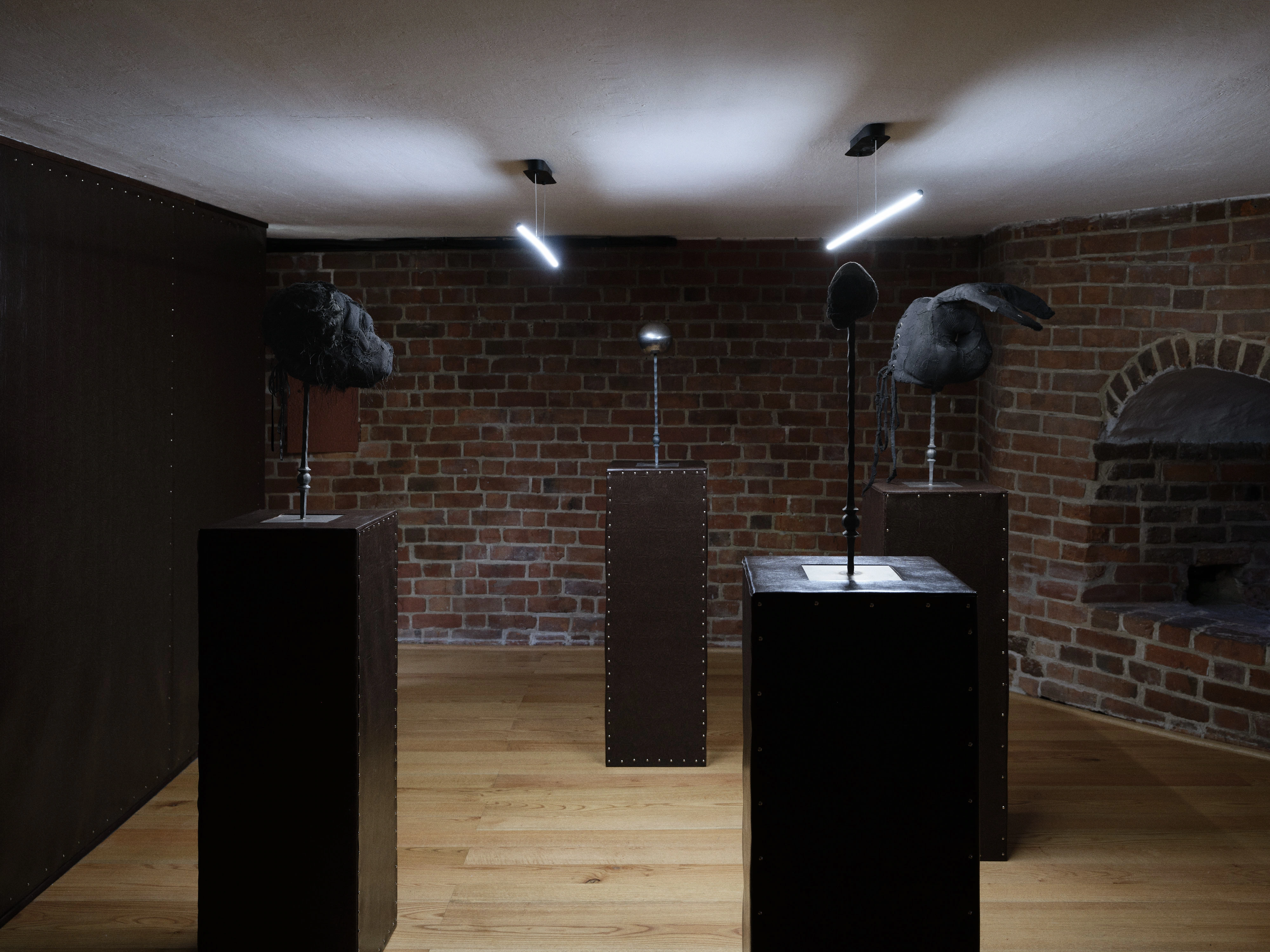
In an old brick tower at the Baltic Gallery of Contemporary Art in Słupsk, Jan Baszak lines the walls with fake leather and fills the rooms with animals reduced to their own coverings.
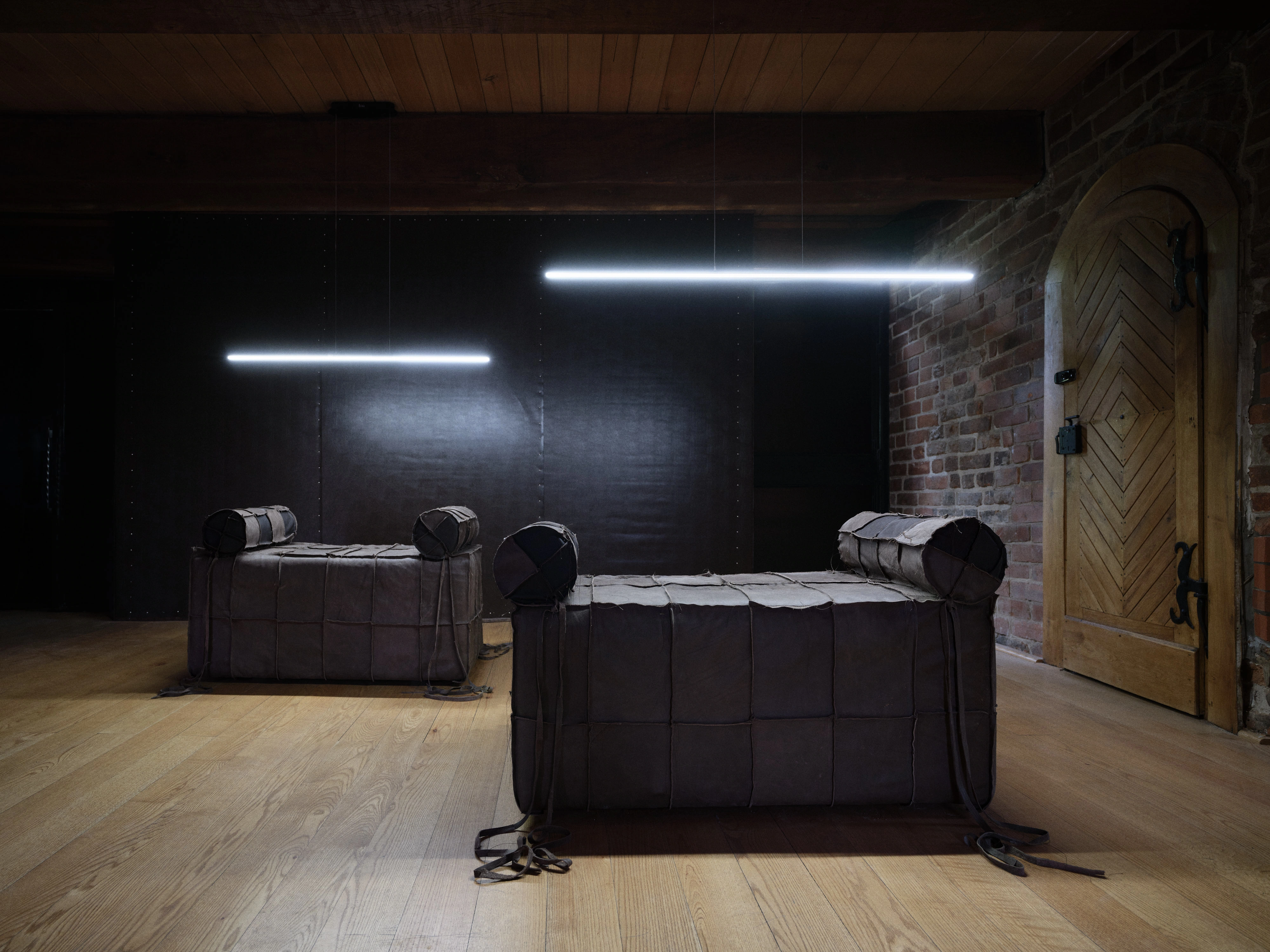
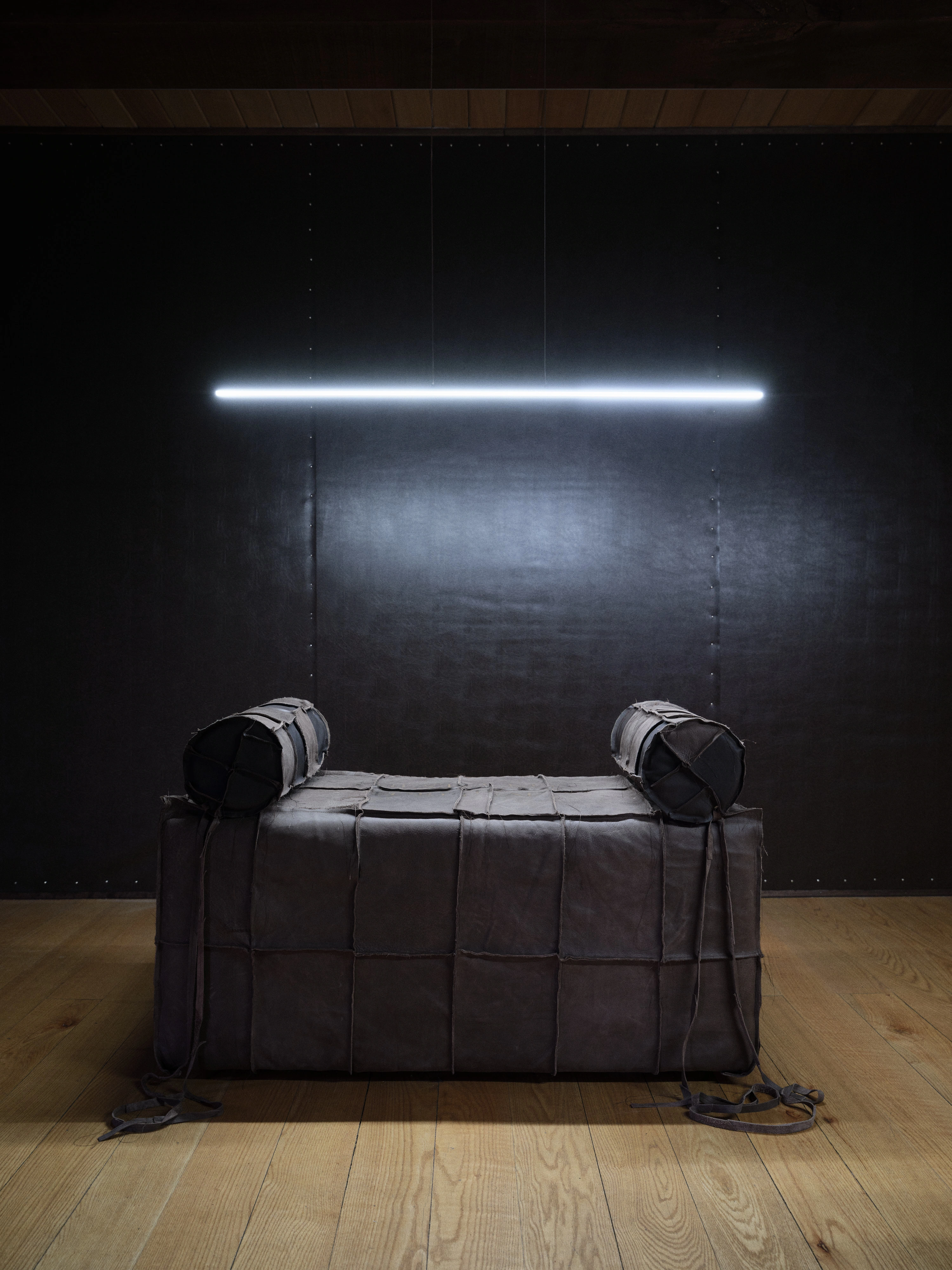
Skin is the argument. Not the animal, not the body it once carried, but the tanned covering that outlives both and keeps their weight inside it. Two low padded biers stand in the first room under a single suspended tube of light, their leather ties left long enough to pool on the pale wooden floor. Nothing lies on them. That is the condition.
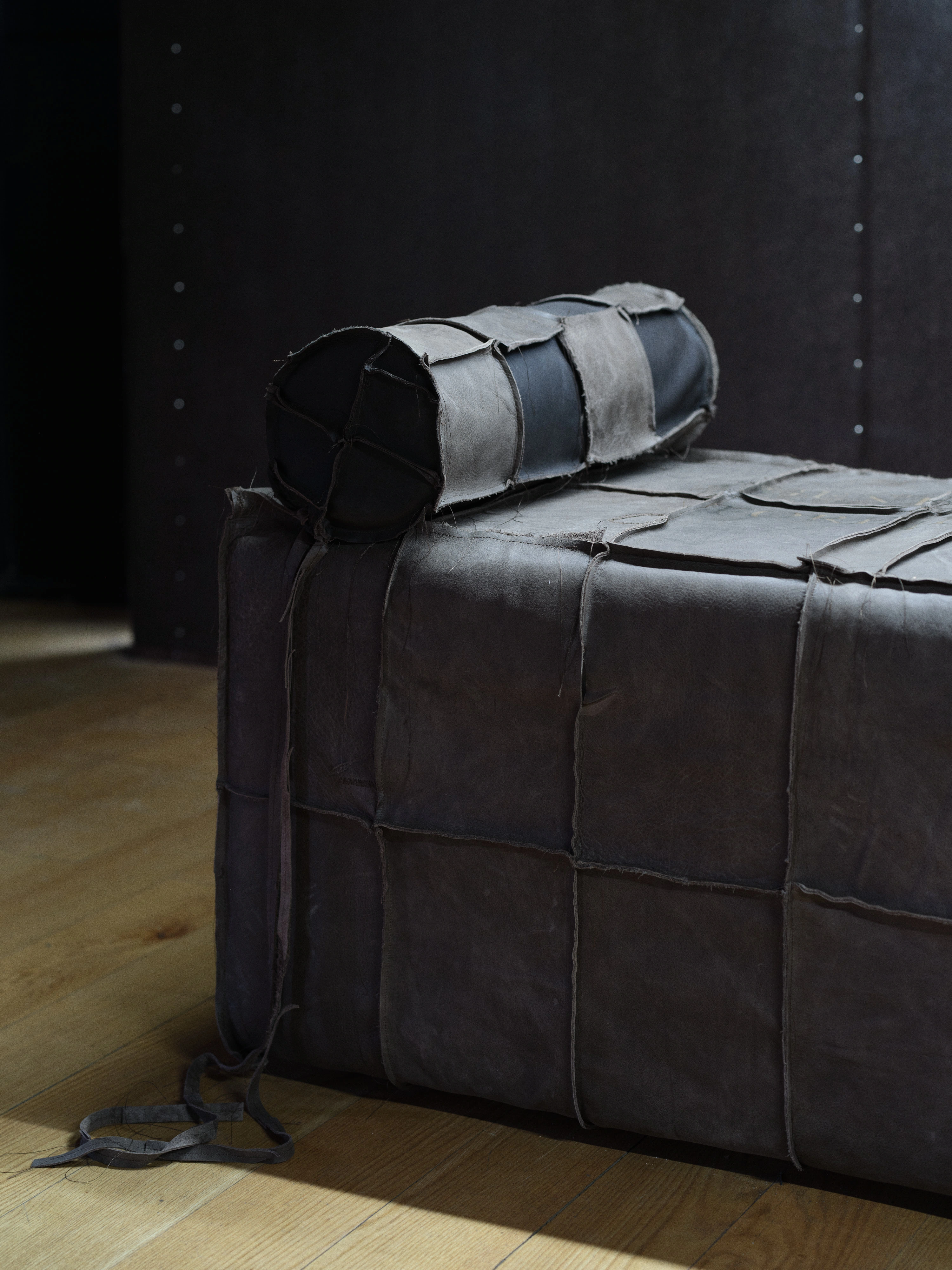
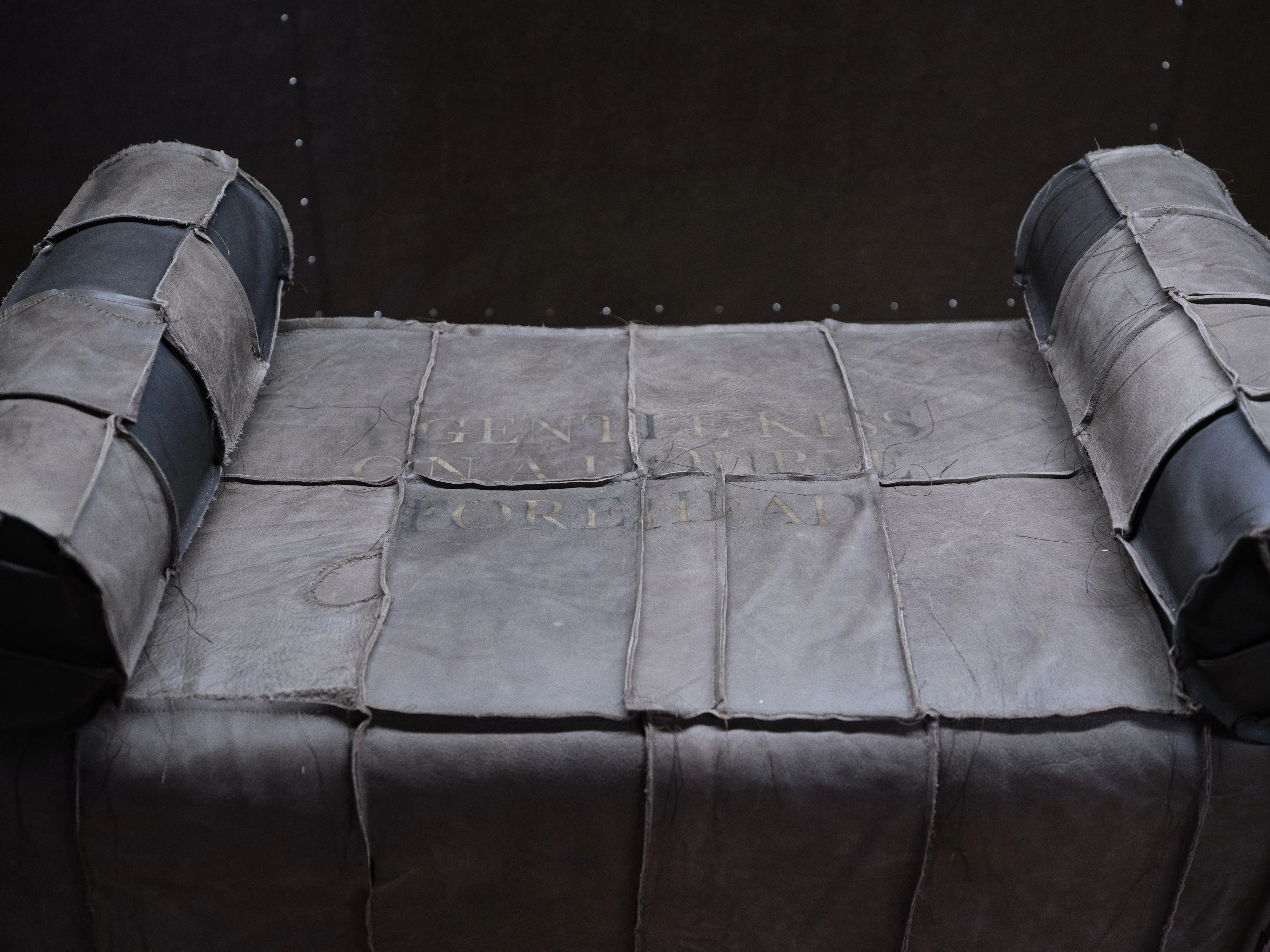
The two works titled Catafalque are patched from recycled cowhide over MDF board, upholstery foam, wadding and velour, with metal and USB sockets in the build. Baszak leaves the seams raised and turned outward, so each panel reads as a separate piece of an animal rather than a continuous surface. A bolster sits at either end, suggesting a headrest, or two heads. Into the grey top panel a laser has burned the sentence that names the exhibition, legible only when light rakes across the hide at an angle. Exhibition furniture that has learned funerary manners: the objects hold both registers at once and refuse to settle into either.
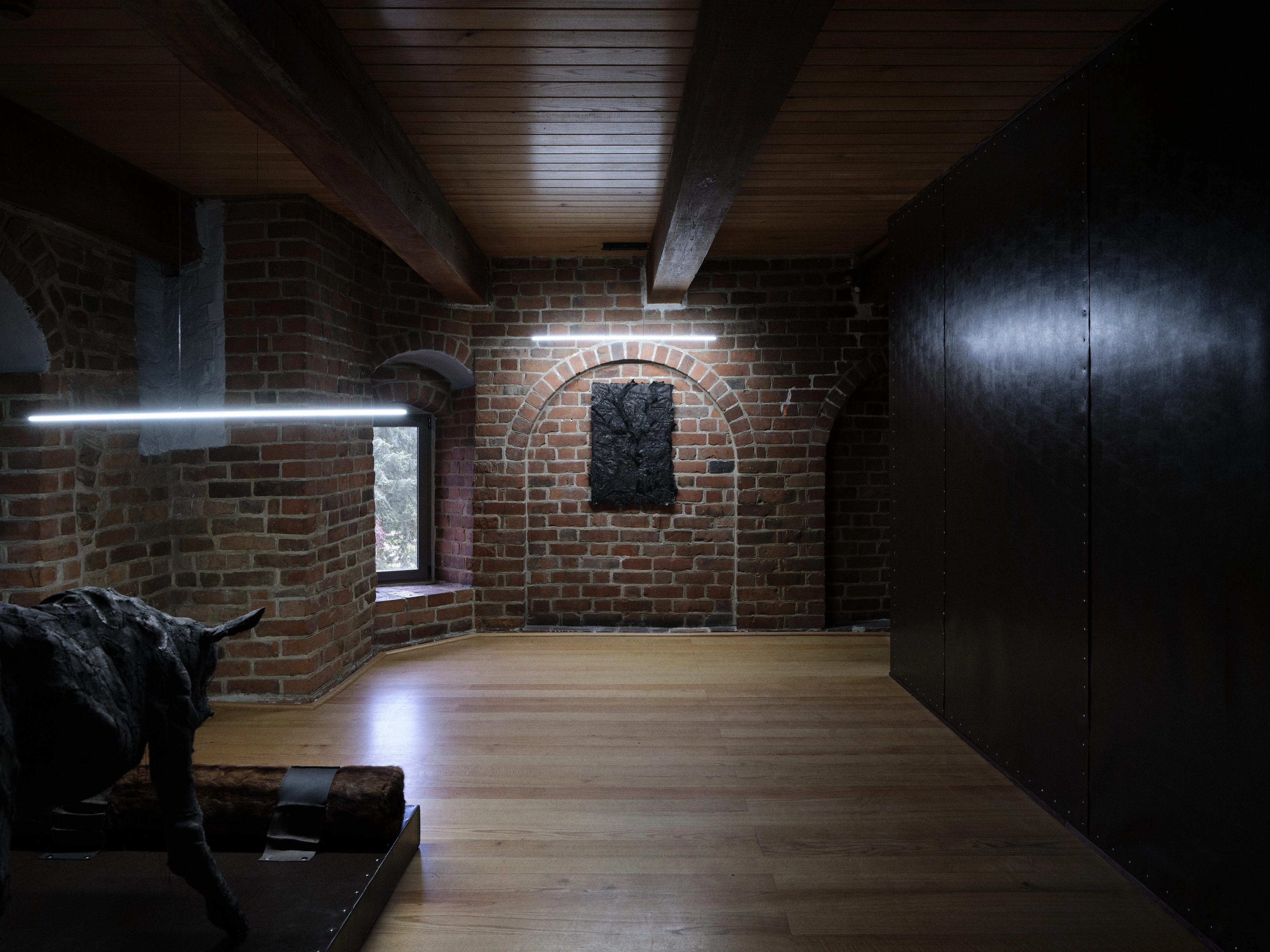
The rooms are lined to match. Dark panels, riveted at even intervals, climb the walls and turn brick into upholstery; the plinths on the floor above wear the same skin. None of it is leather. It is faux, and the curatorial text hangs its whole argument there, on a substitute that supplies the space with its own fakeness and a suggestion of memory. Real hide carries a death in it. The imitation carries the idea of that death, which is a stranger and more demanding kind of proximity. The essay opens on a line borrowed from Simone Weil: “Attention is the rarest and purest form of generosity.” The fake wall is where that generosity gets tested.
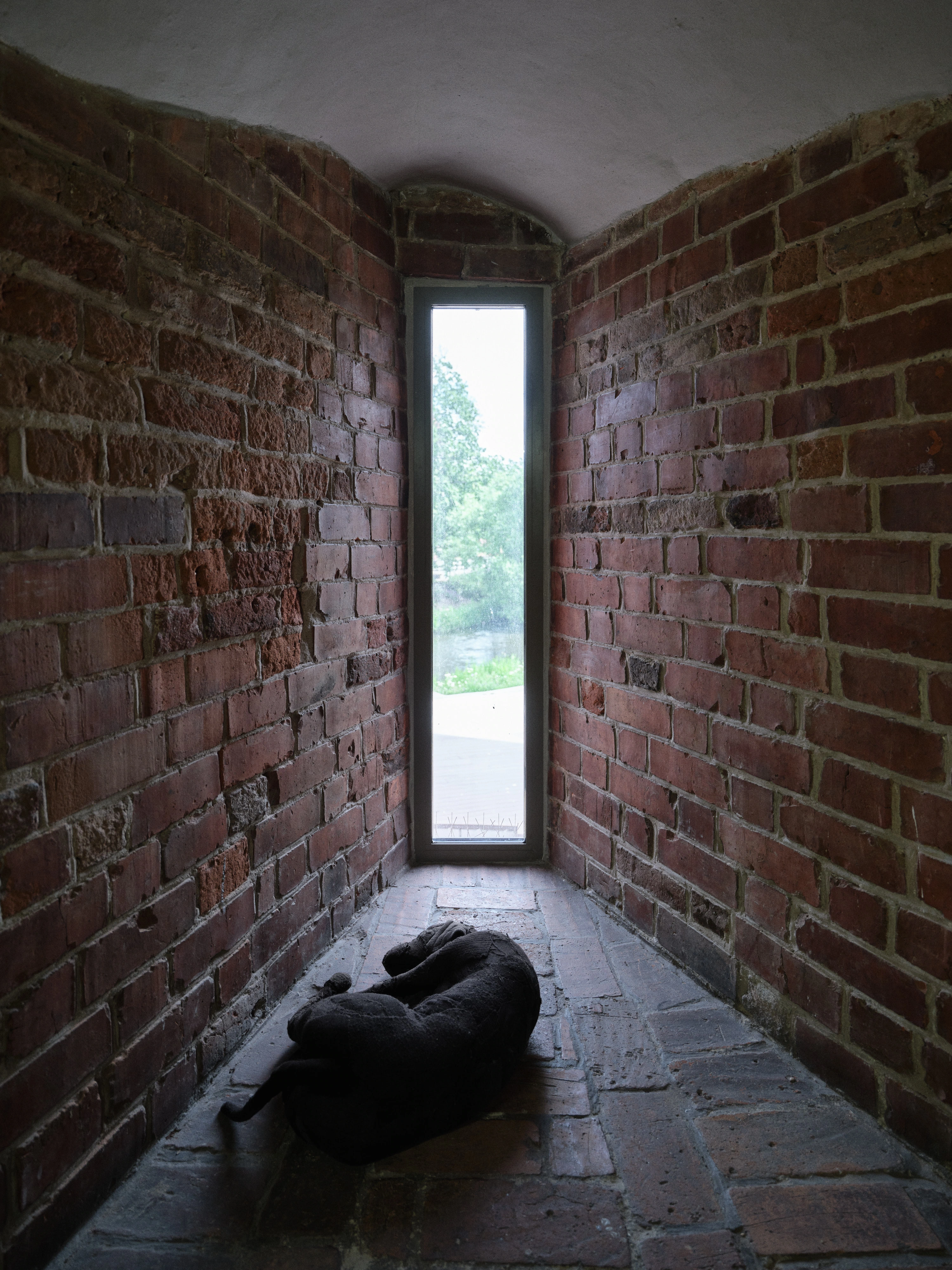
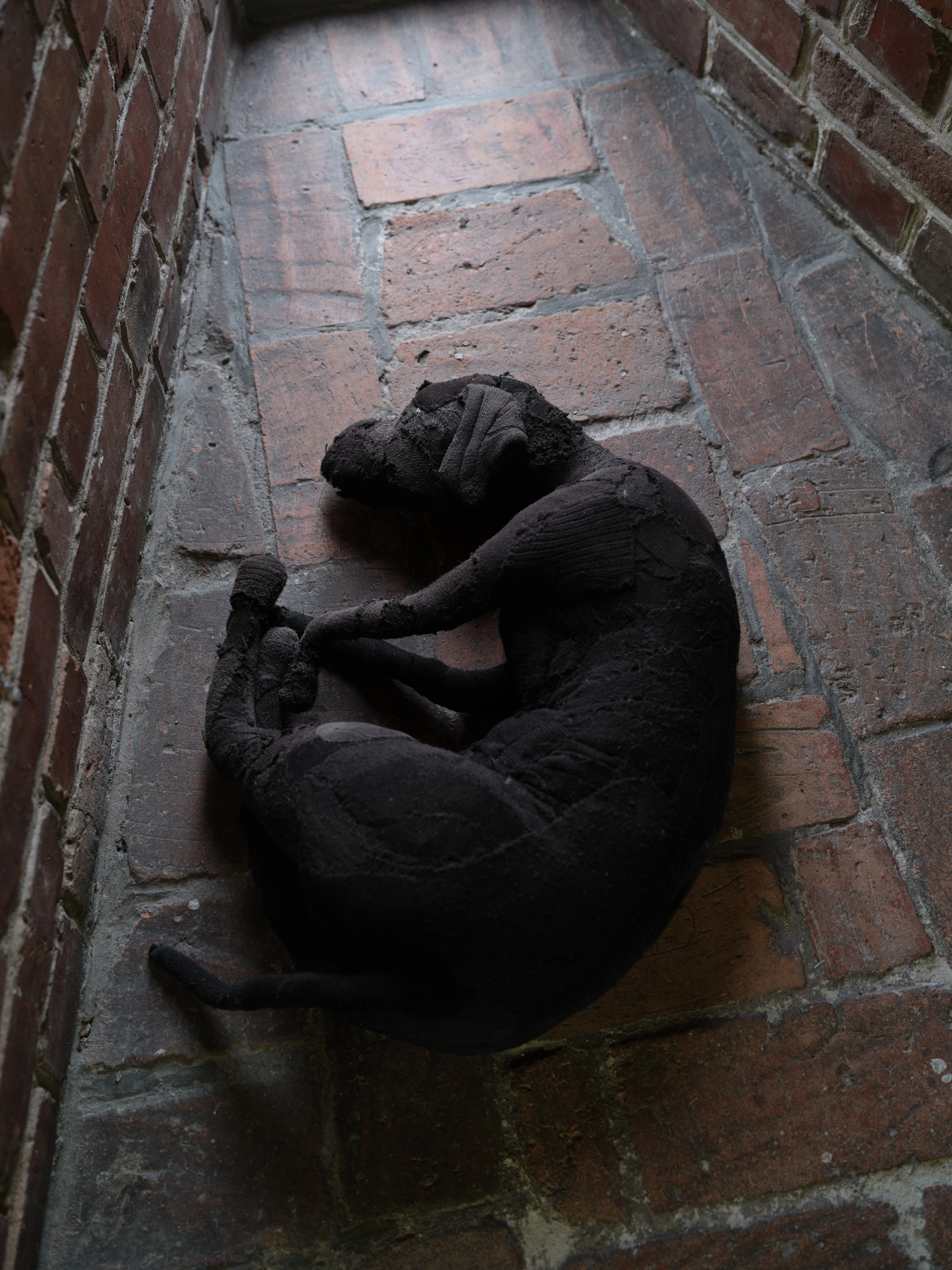
At the end of a passage, where the brick narrows around a slit of window, Dog lies curled on the floor. It is built from used black socks over wood and PVC pipe, with glass eyes, and the ribbed cuffs remain readable in the paws. From above it barely separates from the shadow it occupies. The curatorial text calls it “more a collection of surfaces than a representation of an animal”, and the fabric keeps the memory of the feet that wore it, which makes this the warmest object in a cold building.
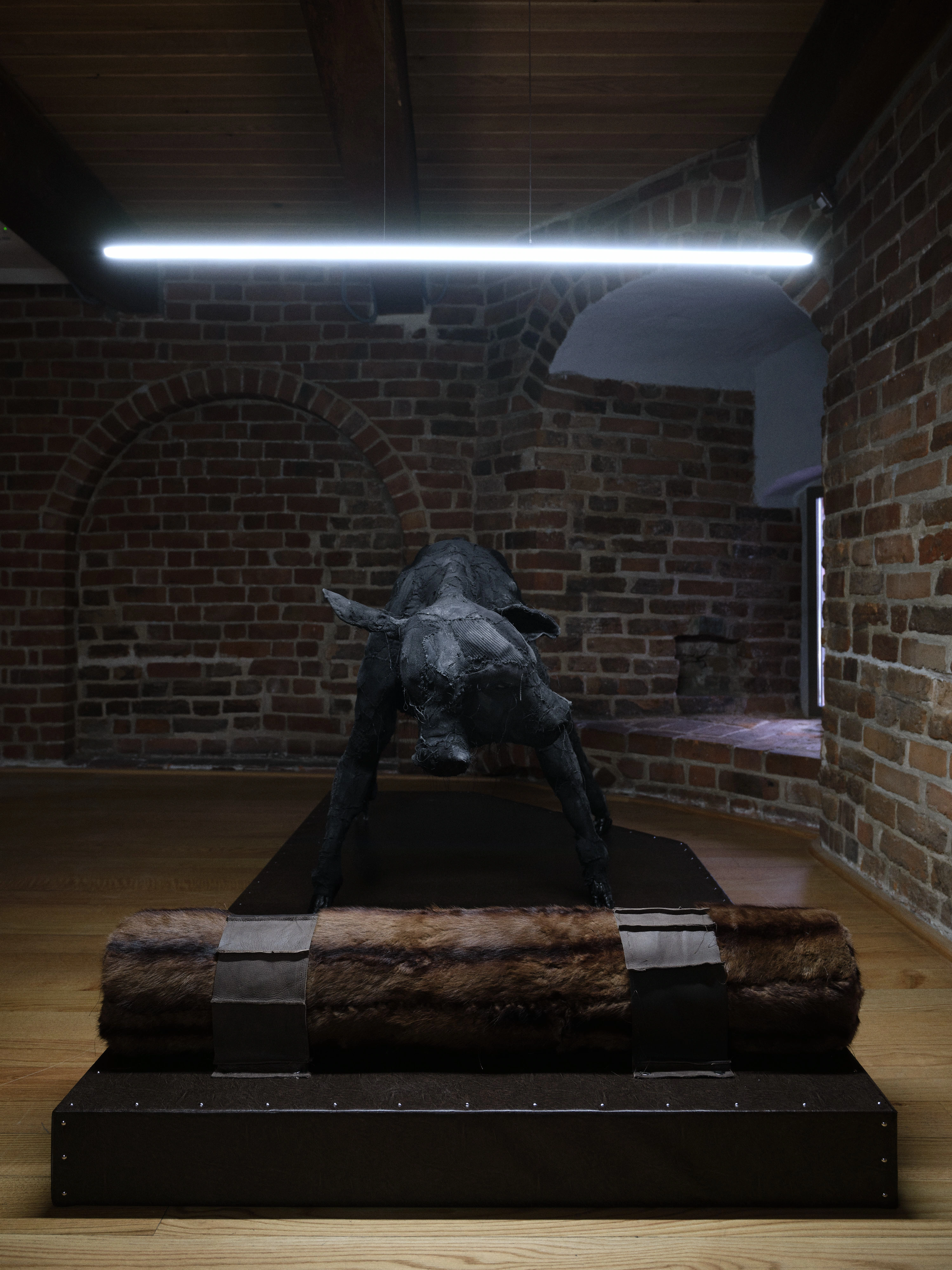
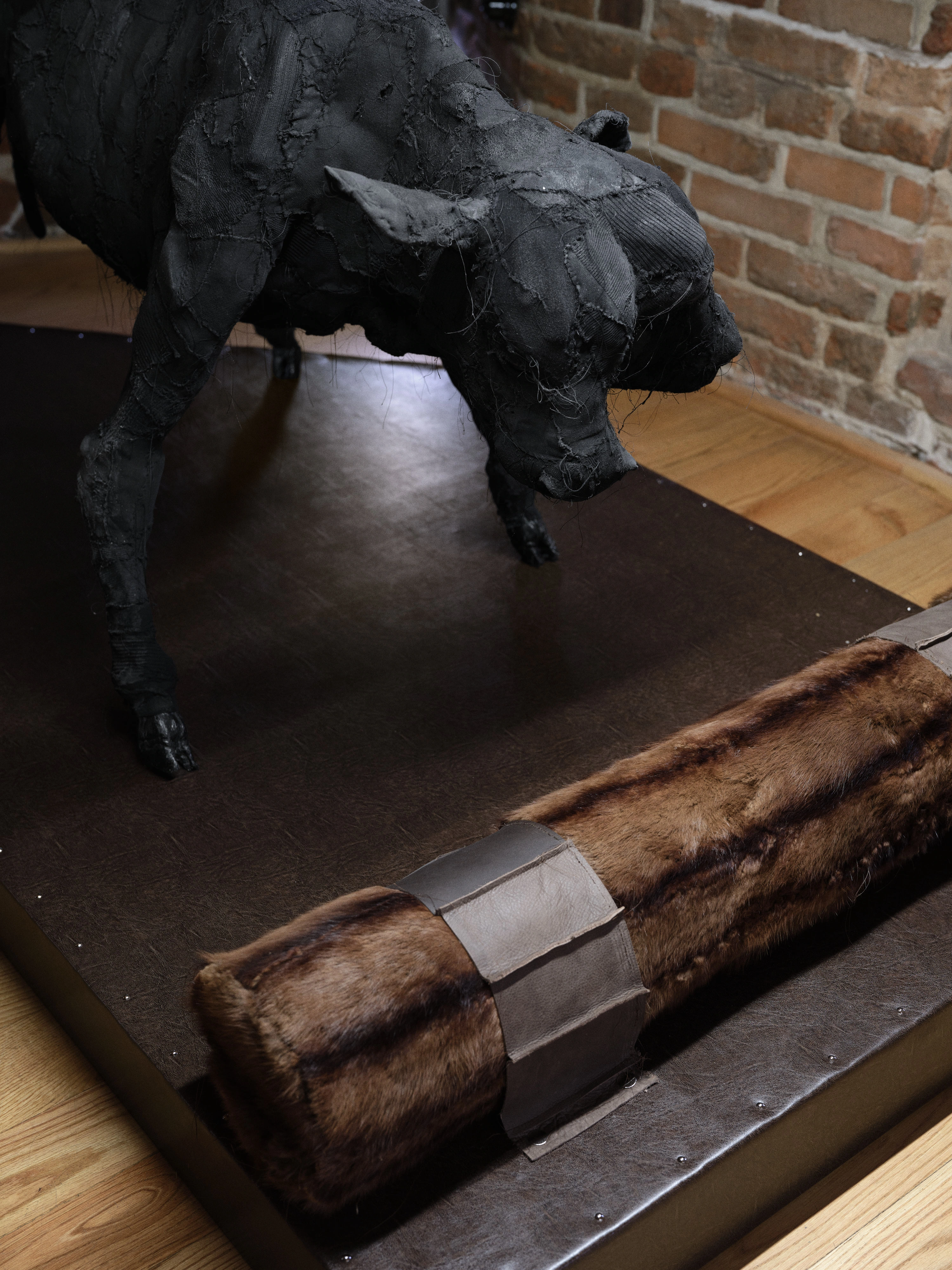
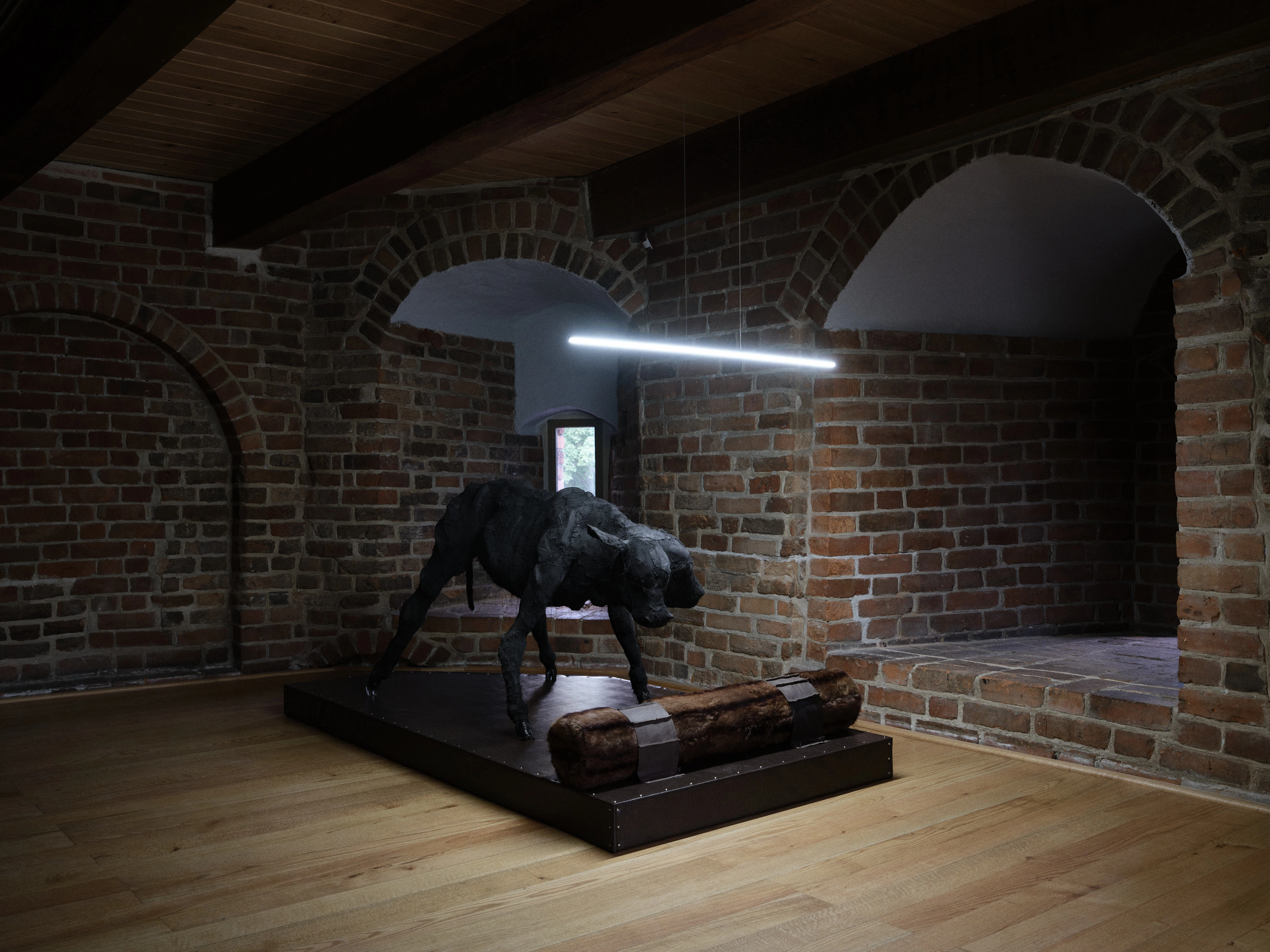
One floor up, Two-Headed Calf stands on a low dark platform beside a rolled fur bolster banded with leather strapping, lit by a single white bar. Two skulls share one neck. In livestock farming such a body is surplus, an error scheduled for early death, and the sculpture keeps that fact present without illustrating it. The animal is stitched from the same black socks, so its hide is a garment and its legs end in hooves that could be gloves. Attention paid here is compromised before it starts, since looking at the calf cannot be cleanly separated from knowing what it is worth as breeding stock.
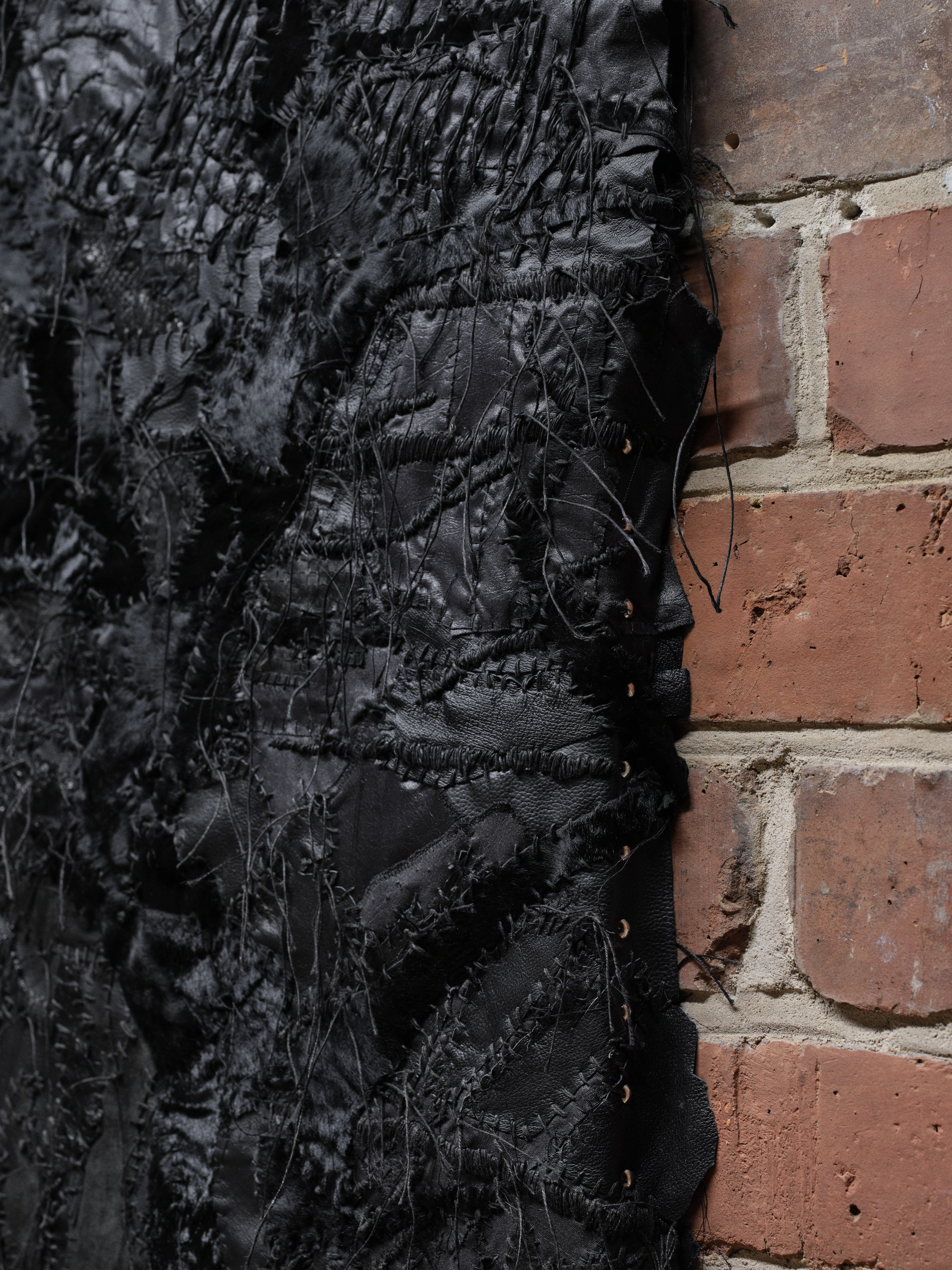
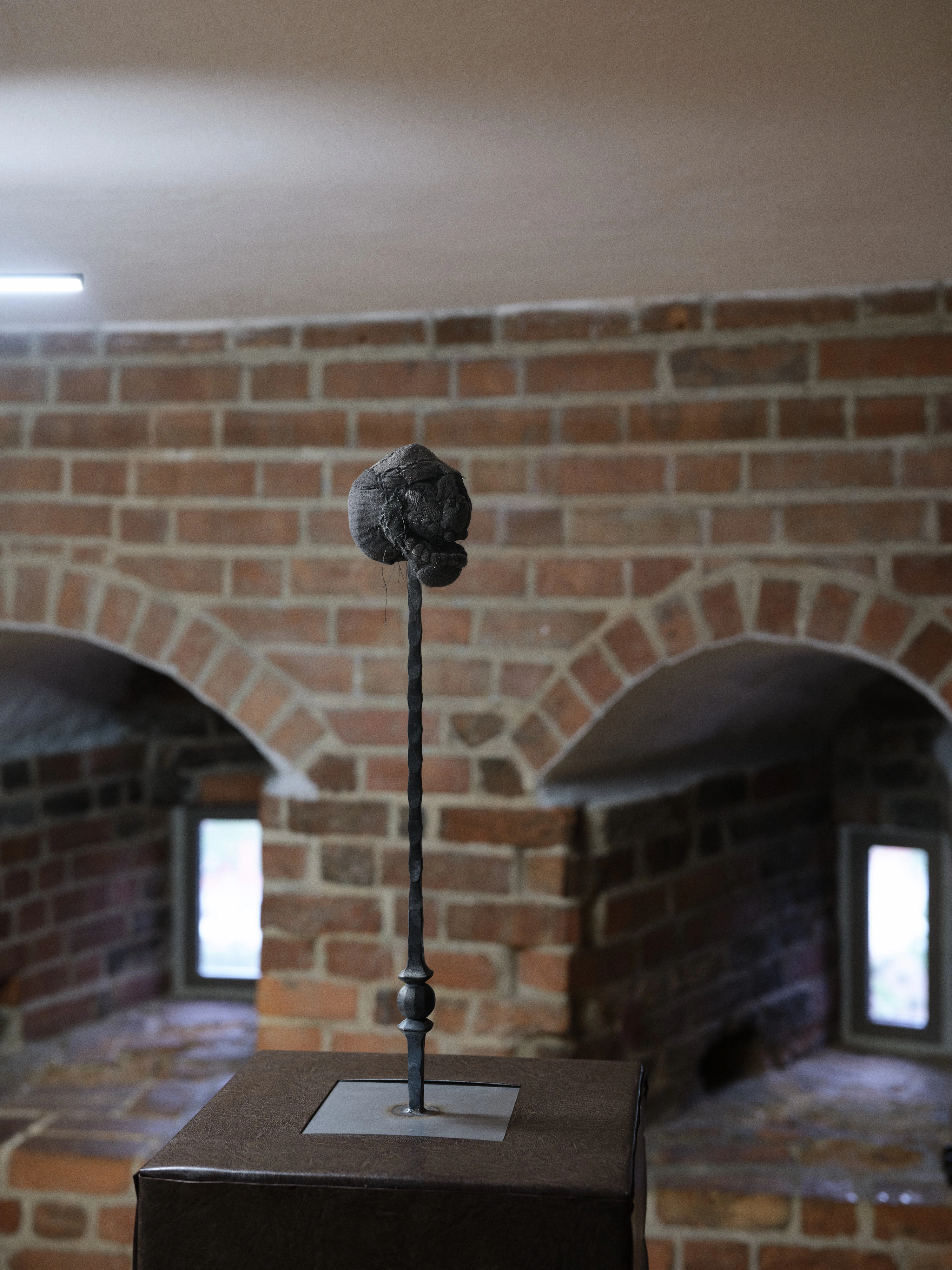
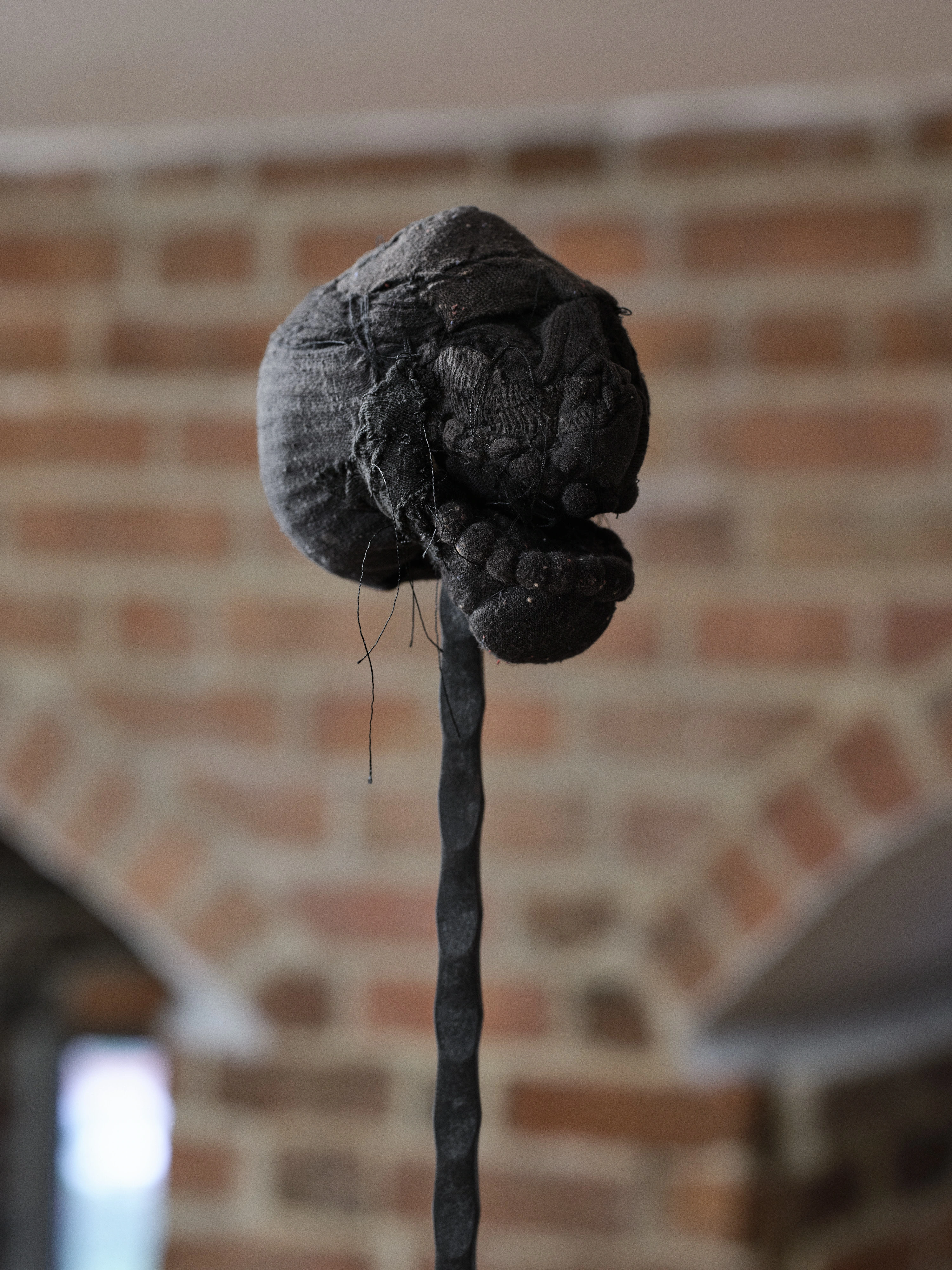
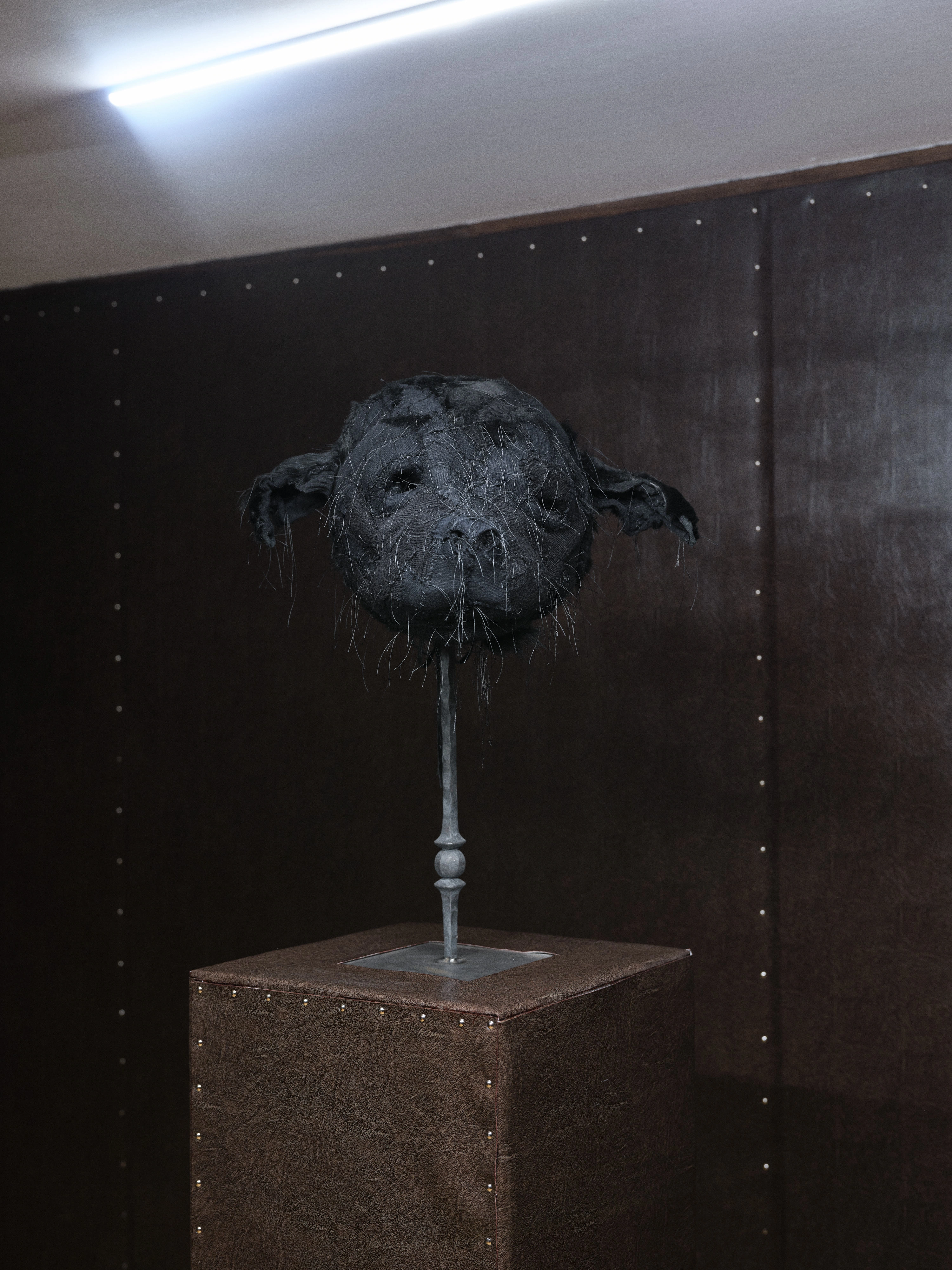
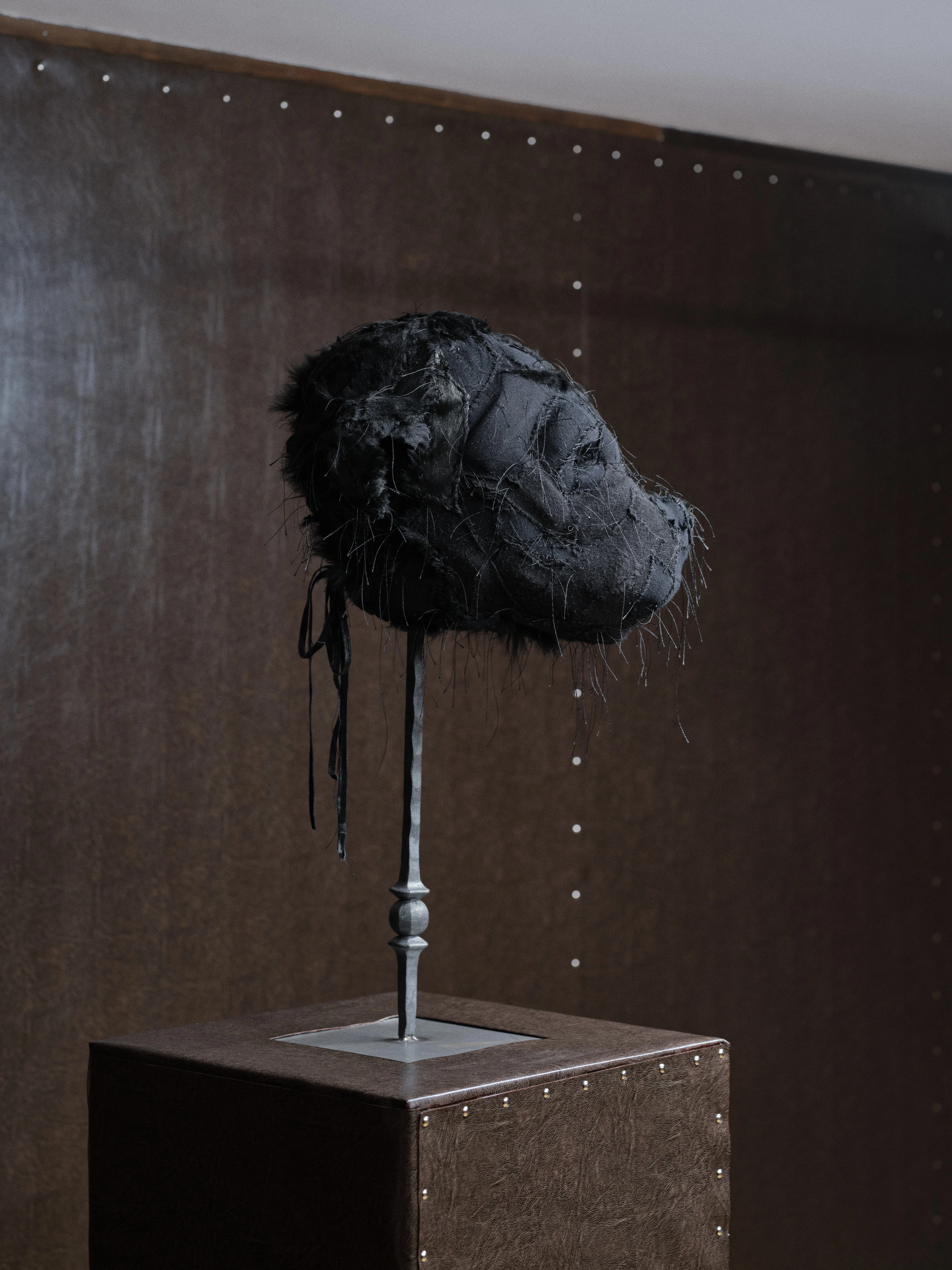
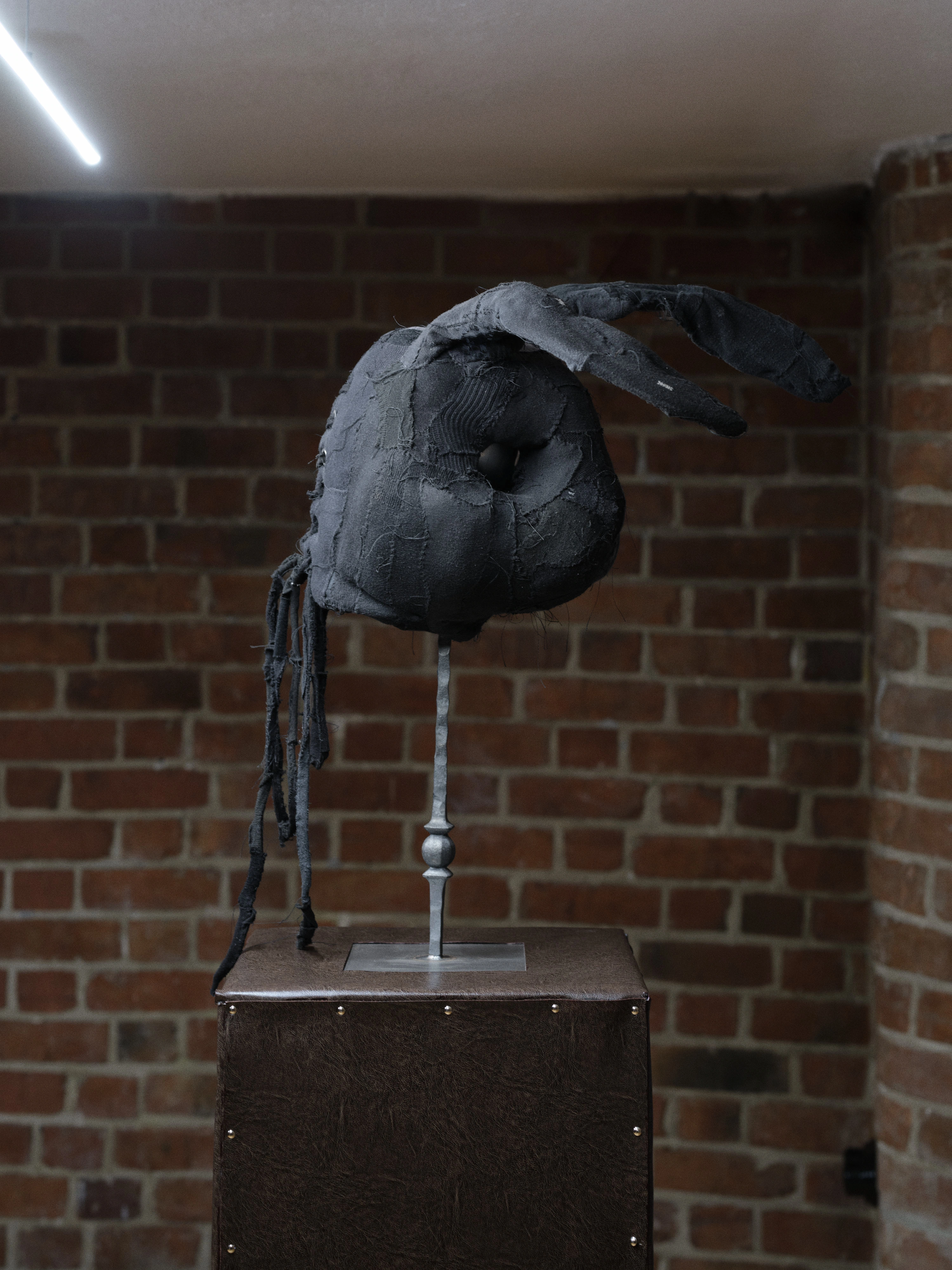
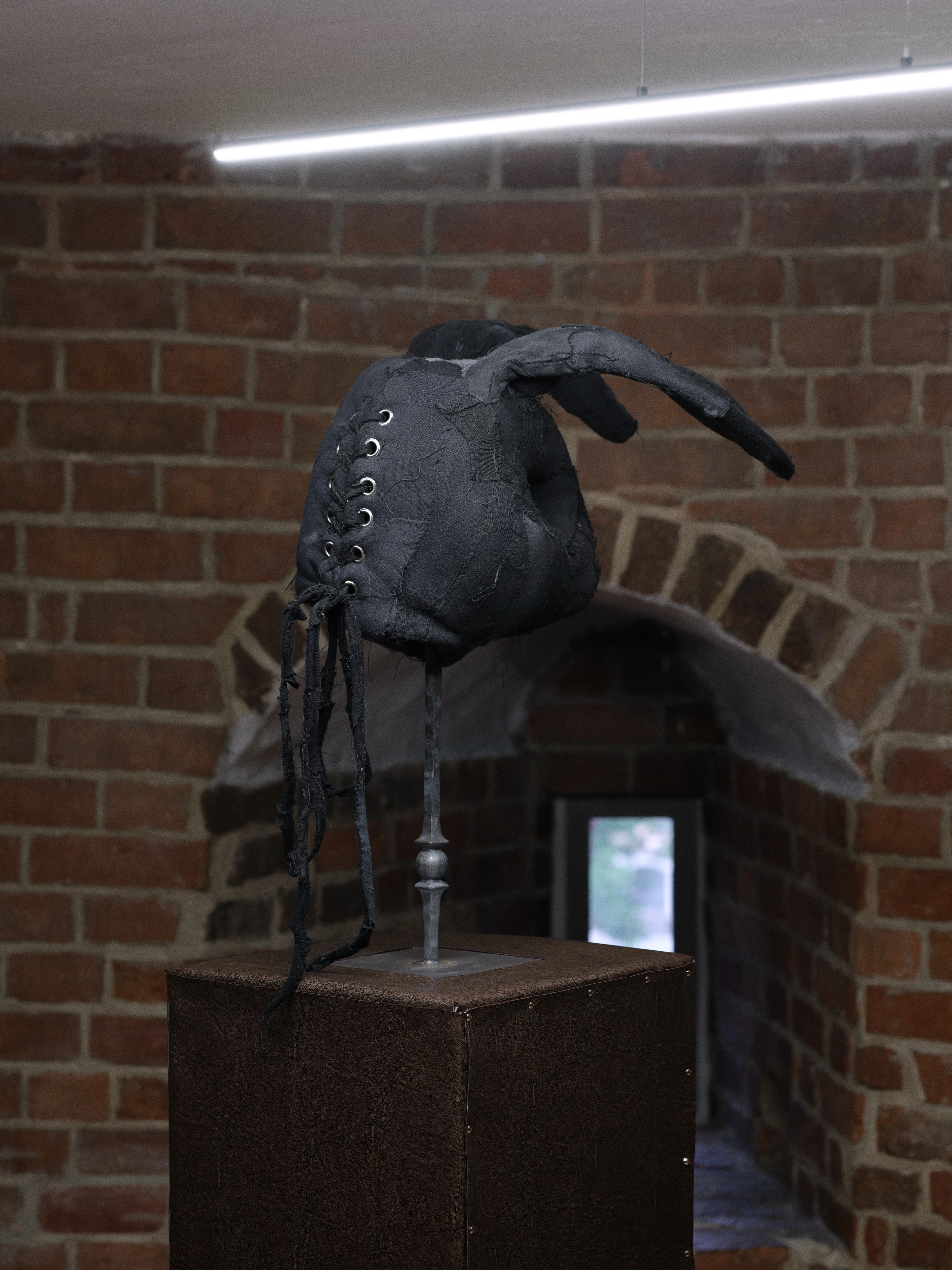
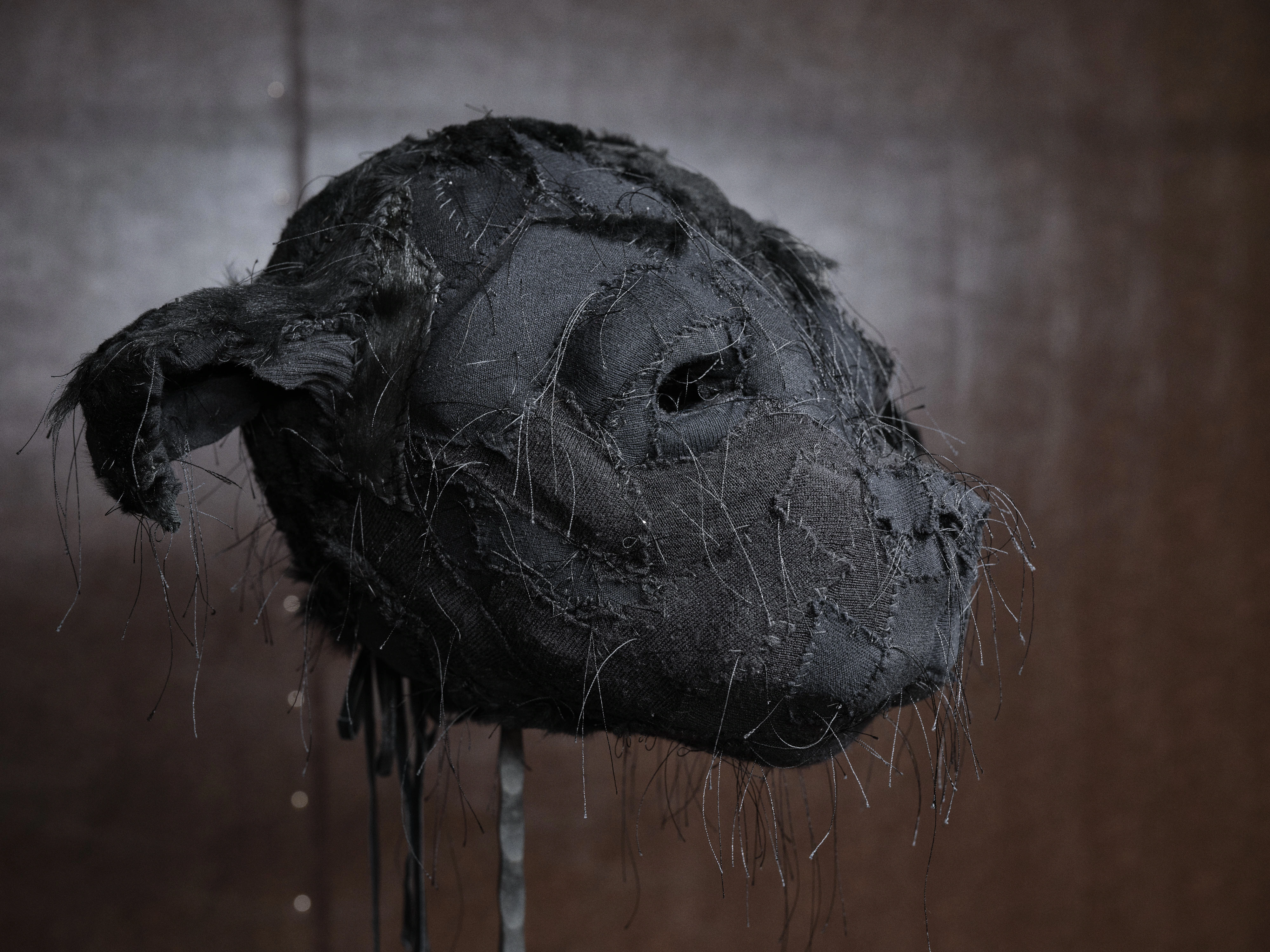
Tree of Crows hangs across the same room in a bricked arch, a black rectangle of recycled cowhide sewn with butcher's twine, threads left dangling below the bottom edge like roots, or rain. A floor higher the tower becomes a dressing room. Heads sit on slender metal stands with turned collars, mounted the way milliners mount hats and hunters mount trophies. Rabbit Mask folds one ear up and lets the other fall, laced at the back through eyelets and ribbons. The two Chihuahua Masks carry fur at the nape and thread whiskers that catch the light, their eye sockets open onto nothing. Laughing Head, smallest of them, is raised on the tallest stand. They are, in the curators' phrase, “eyeless heads tied behind like theatrical props”.
Nothing here is resurrected. The masks wait for heads that will not arrive, the biers hold no body, the calf's second face looks where the first cannot. This is not a memorial and not a menagerie but an arrangement in which looking is asked to stay longer than it wants to. Hide keeps the shape of the animal it left. Sock keeps the shape of the foot. The tower keeps the shape of a rite nobody performs, and attention, which cannot be returned, is given anyway.