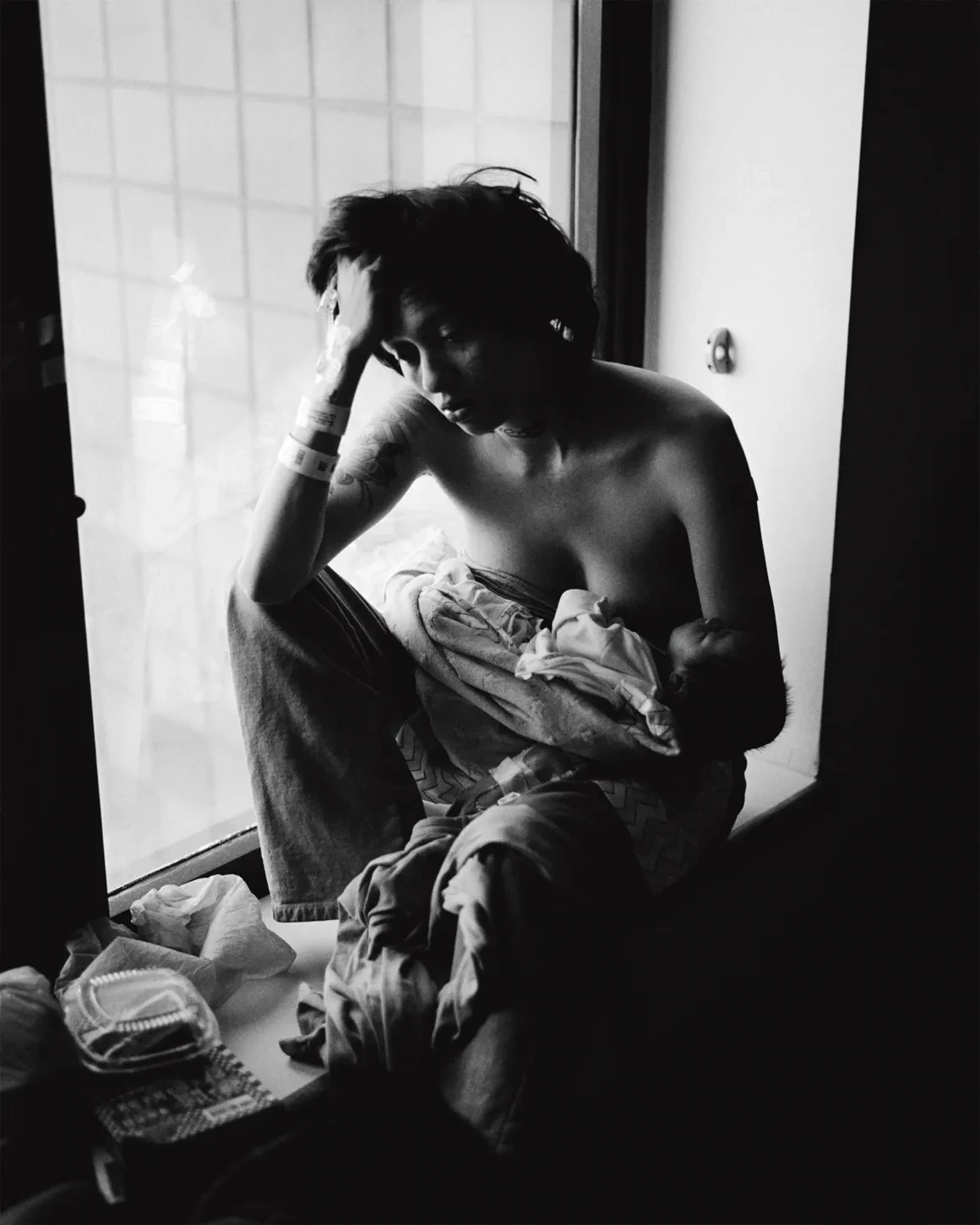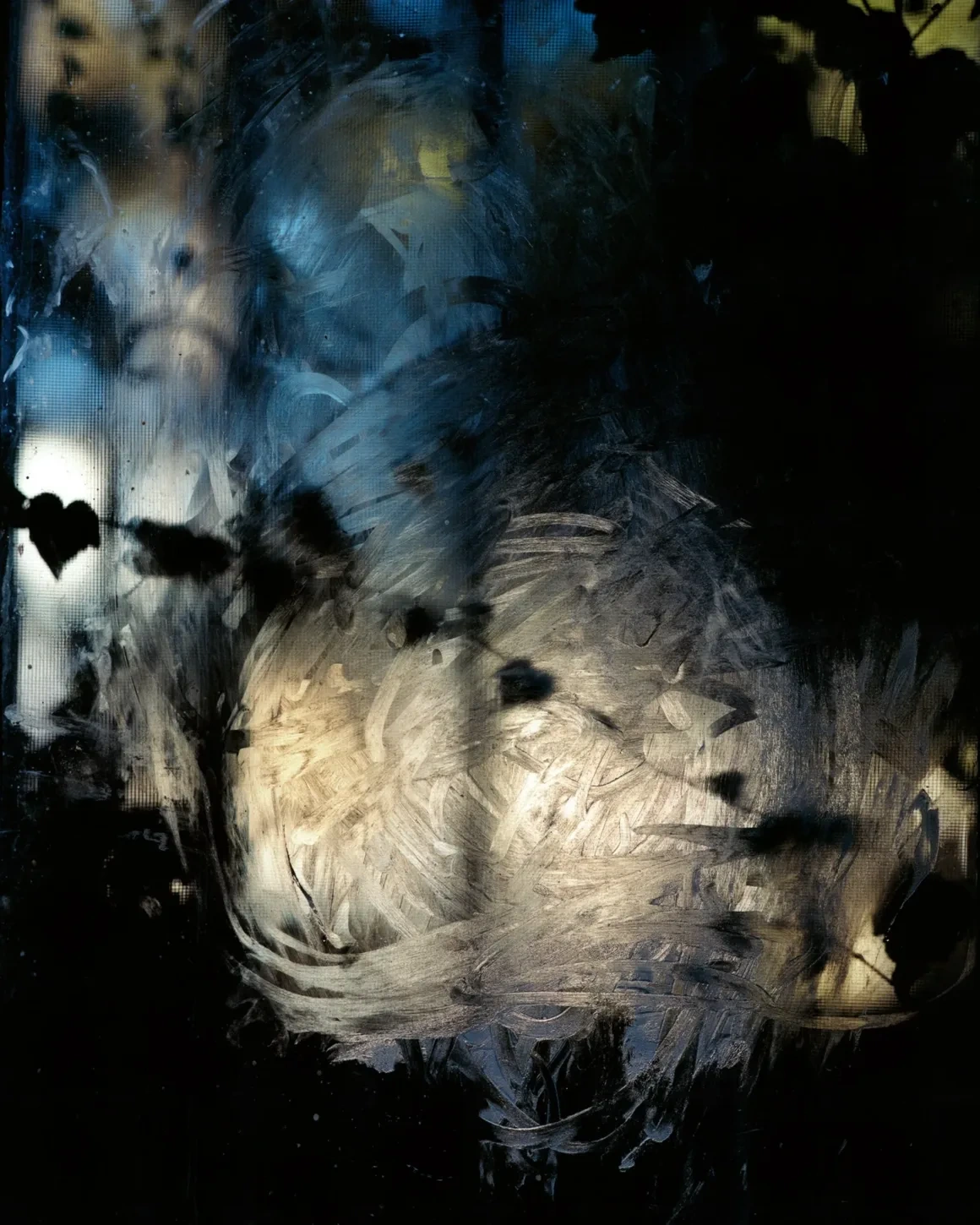
Over four years between 2022 and 2025, Abdulhamid Kircher followed Sierra Kiss and her young family through the corridors of the American care system, through shelters, hospitals, churches and single-room apartments in Los Angeles, producing with Loose Joints a book that is less document than a four-year cohabitation with the slow arithmetic of institutional neglect.
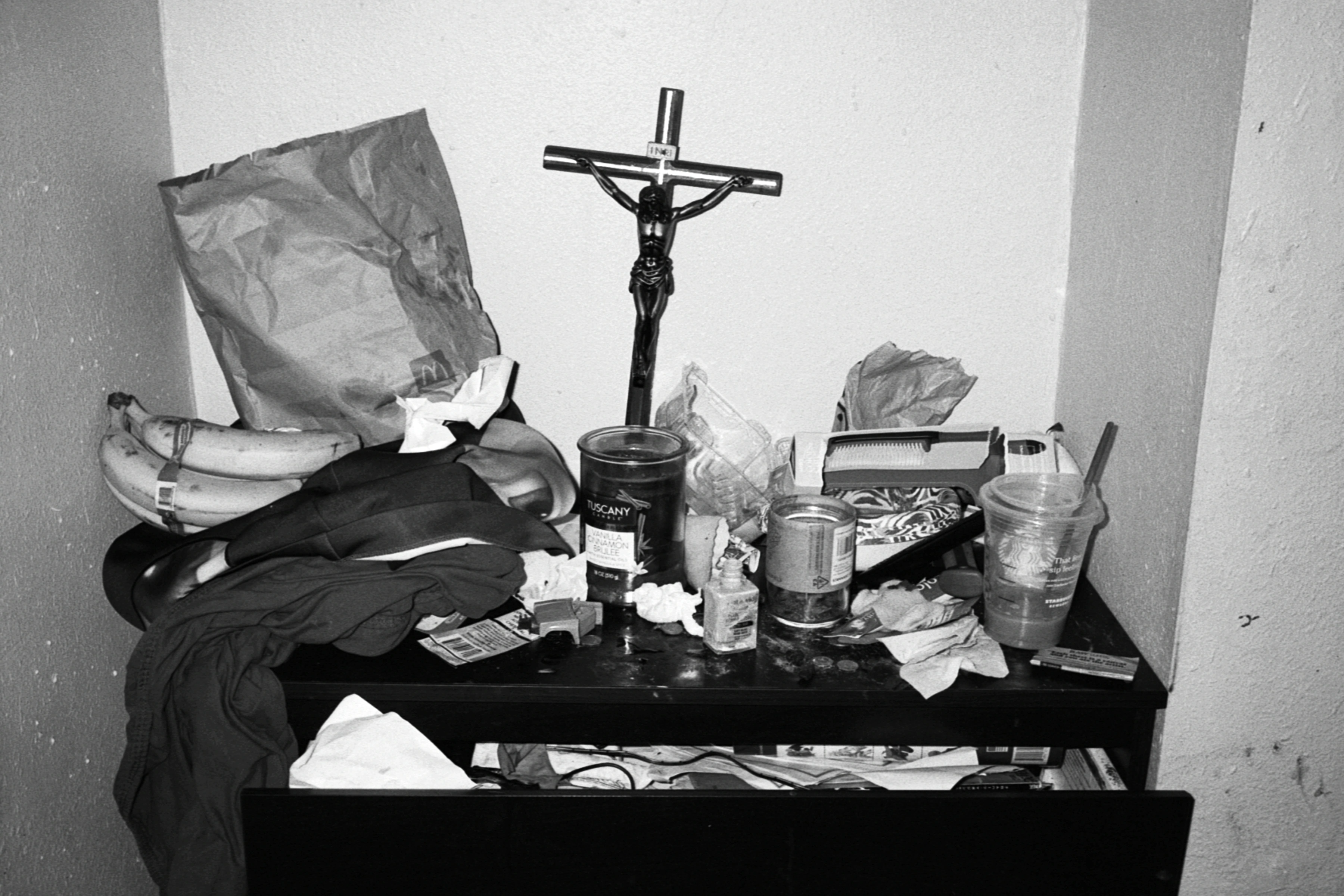
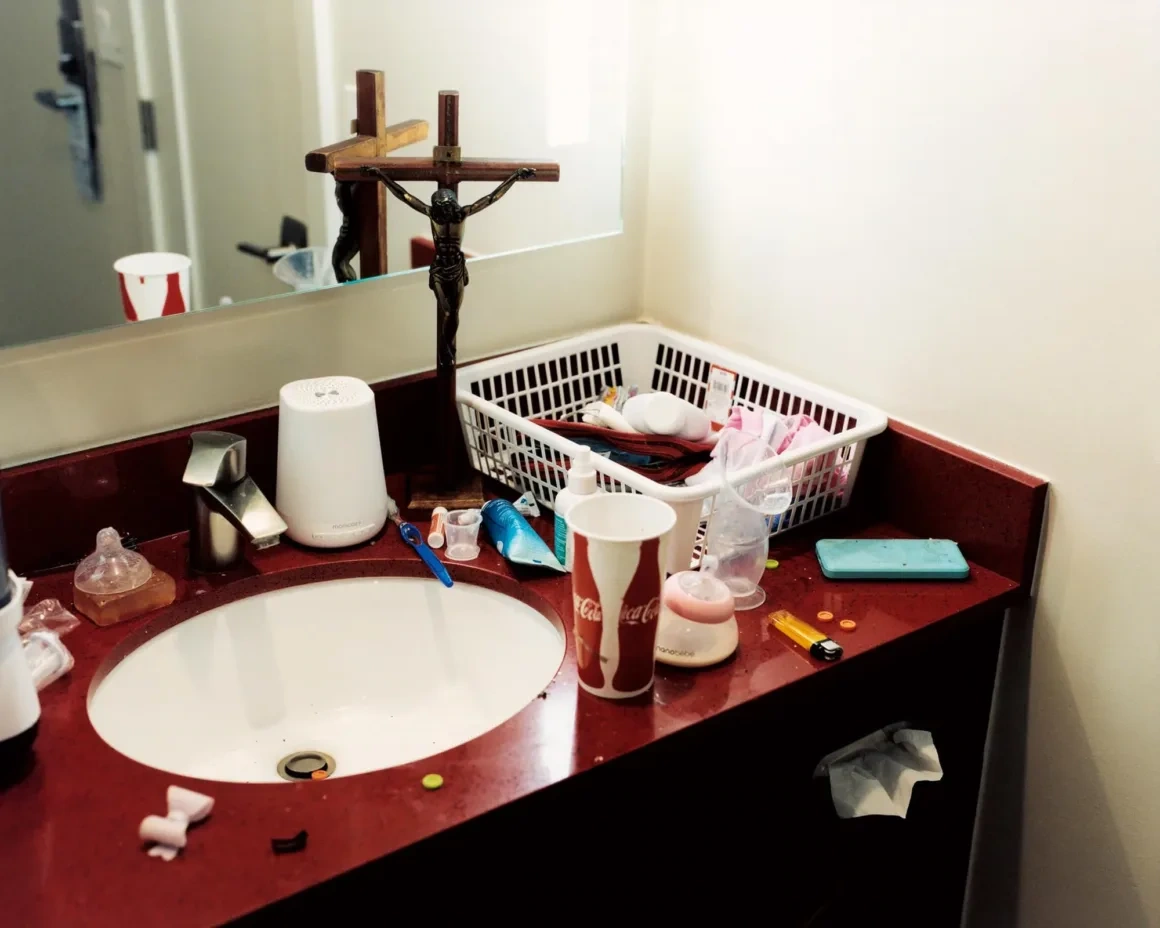
The first room of the book is a sink. A bathroom counter photographed straight on, dark red composite stone crowded with the infrastructure of early motherhood: a crucifix propped against the mirror, a white plastic basket spilling breast pump parts, a styrofoam coca-cola cup, an orange bic lighter, an infant's bottle, a pacifier, a yellow pill dropped against the drain. The cross and the lighter share the same surface. The frame refuses the separation between the sacred and the pharmaceutical, the domestic and the bureaucratic. Nothing is staged. Everything is testimony.
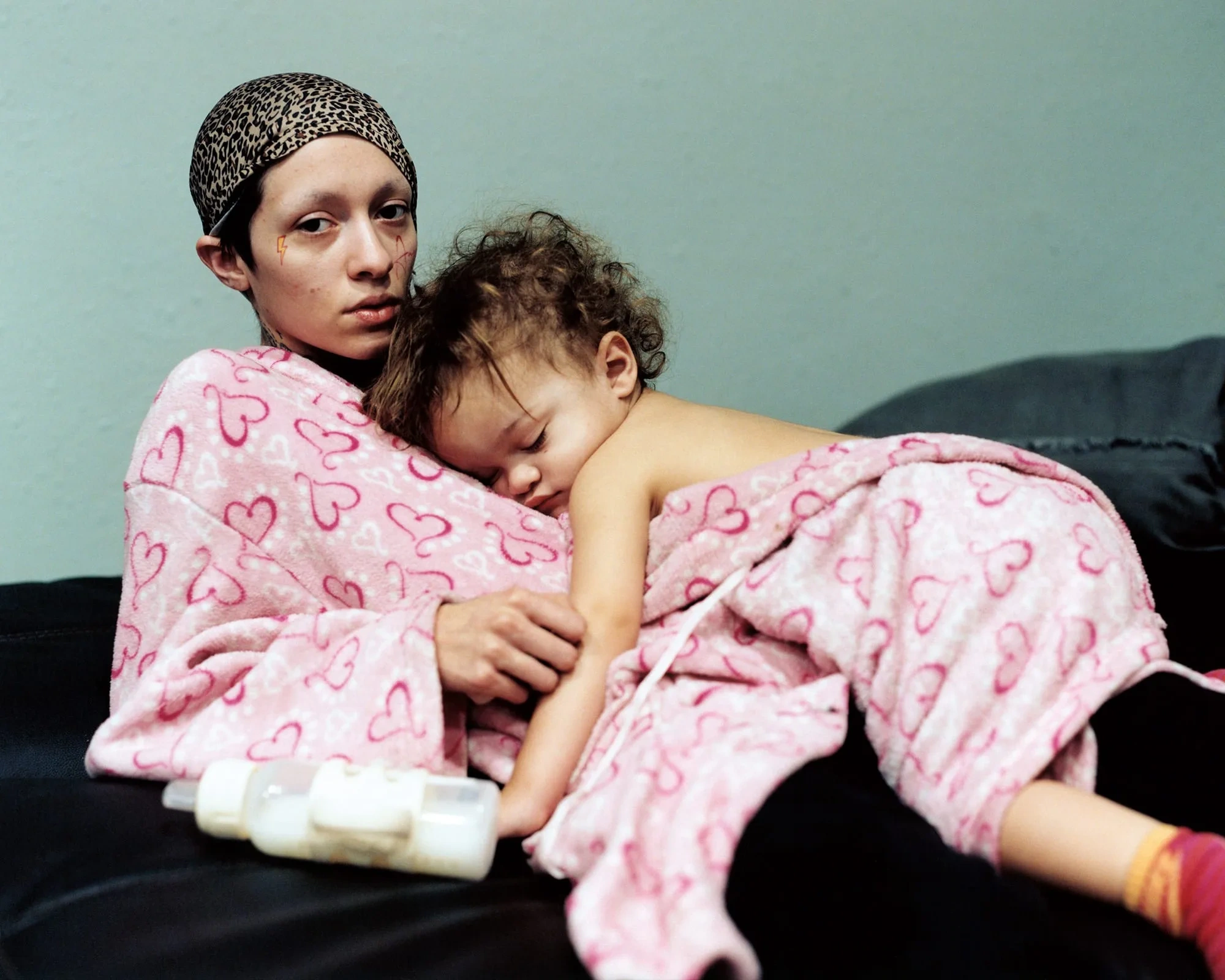
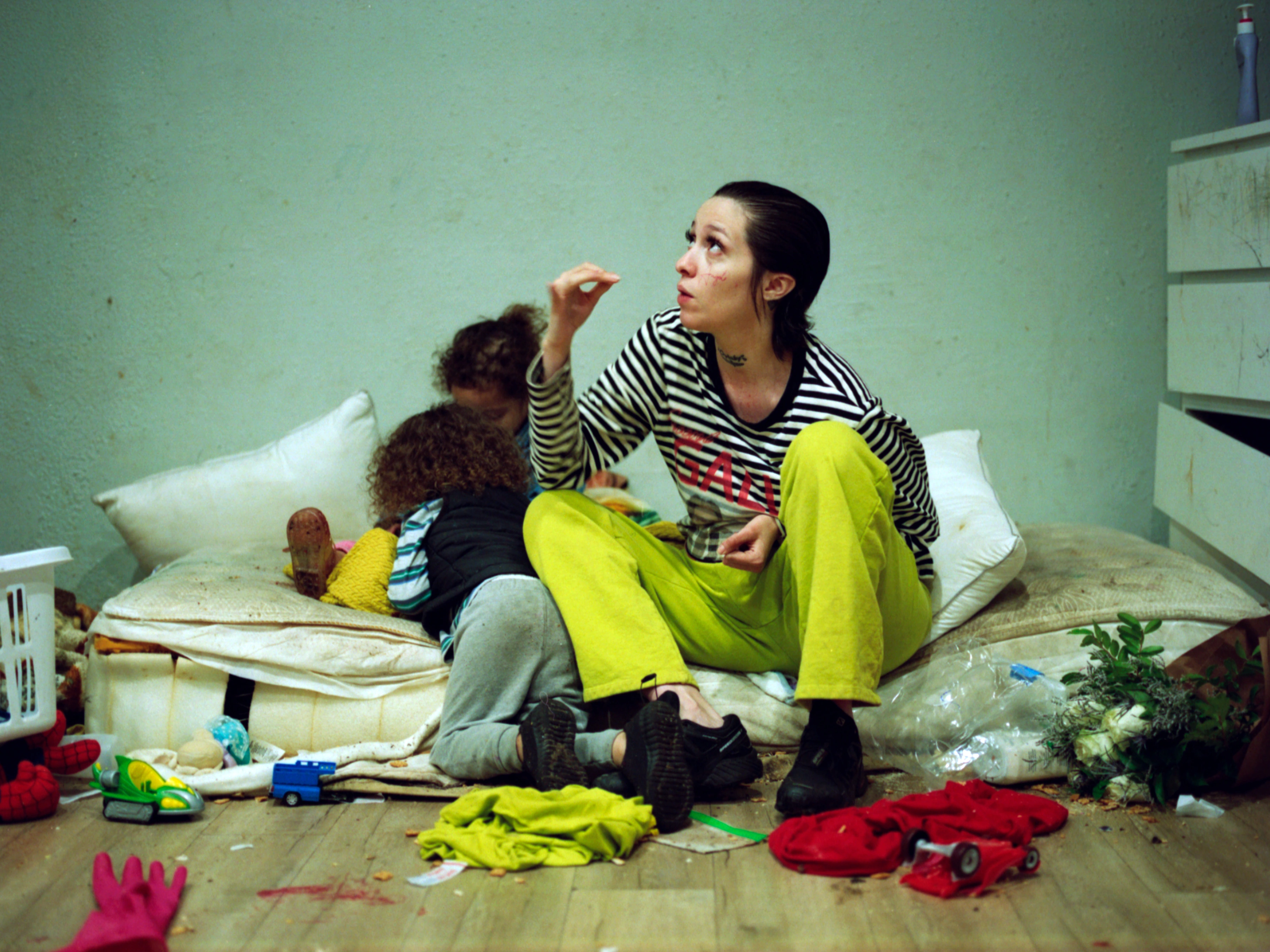
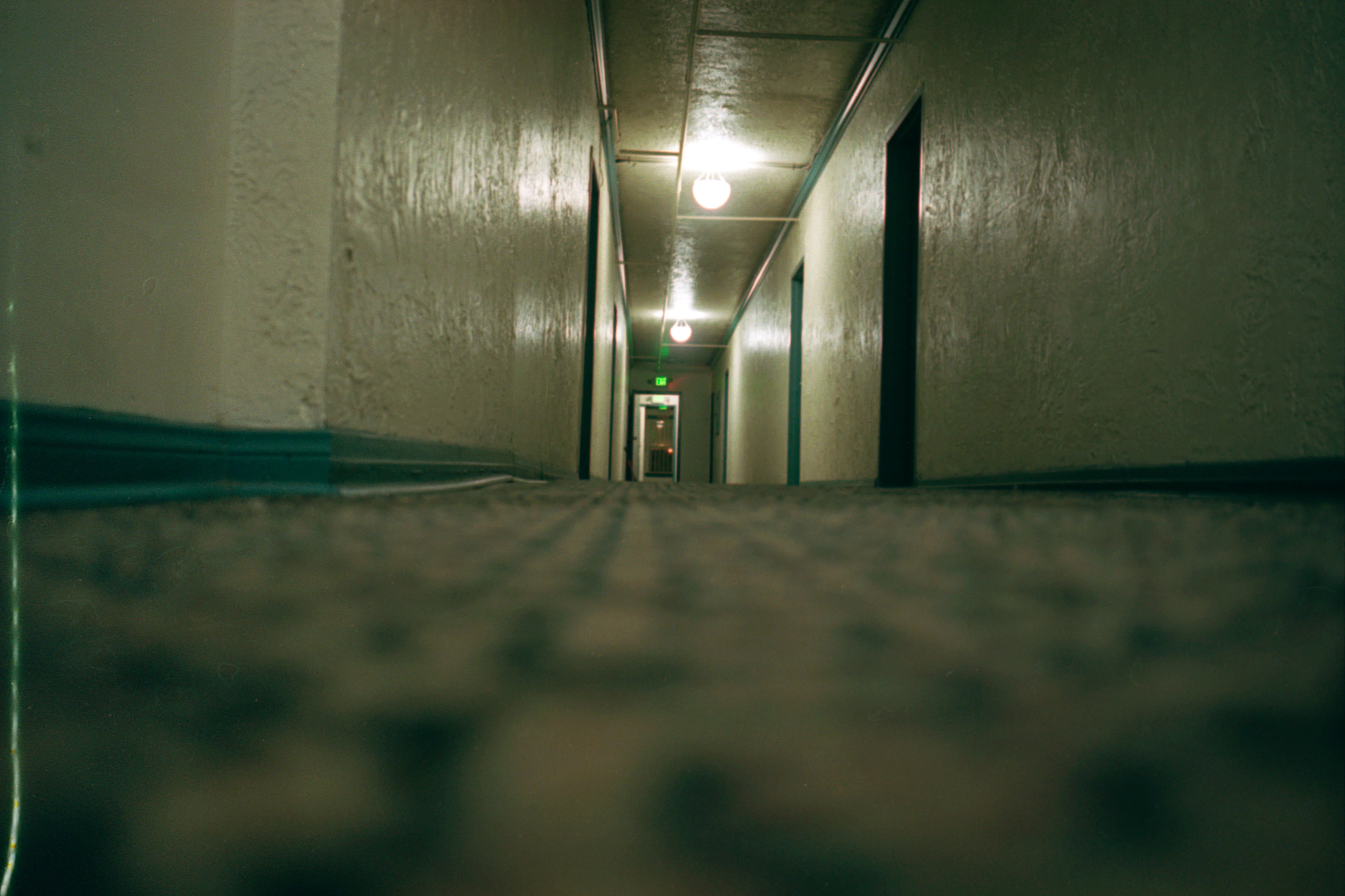
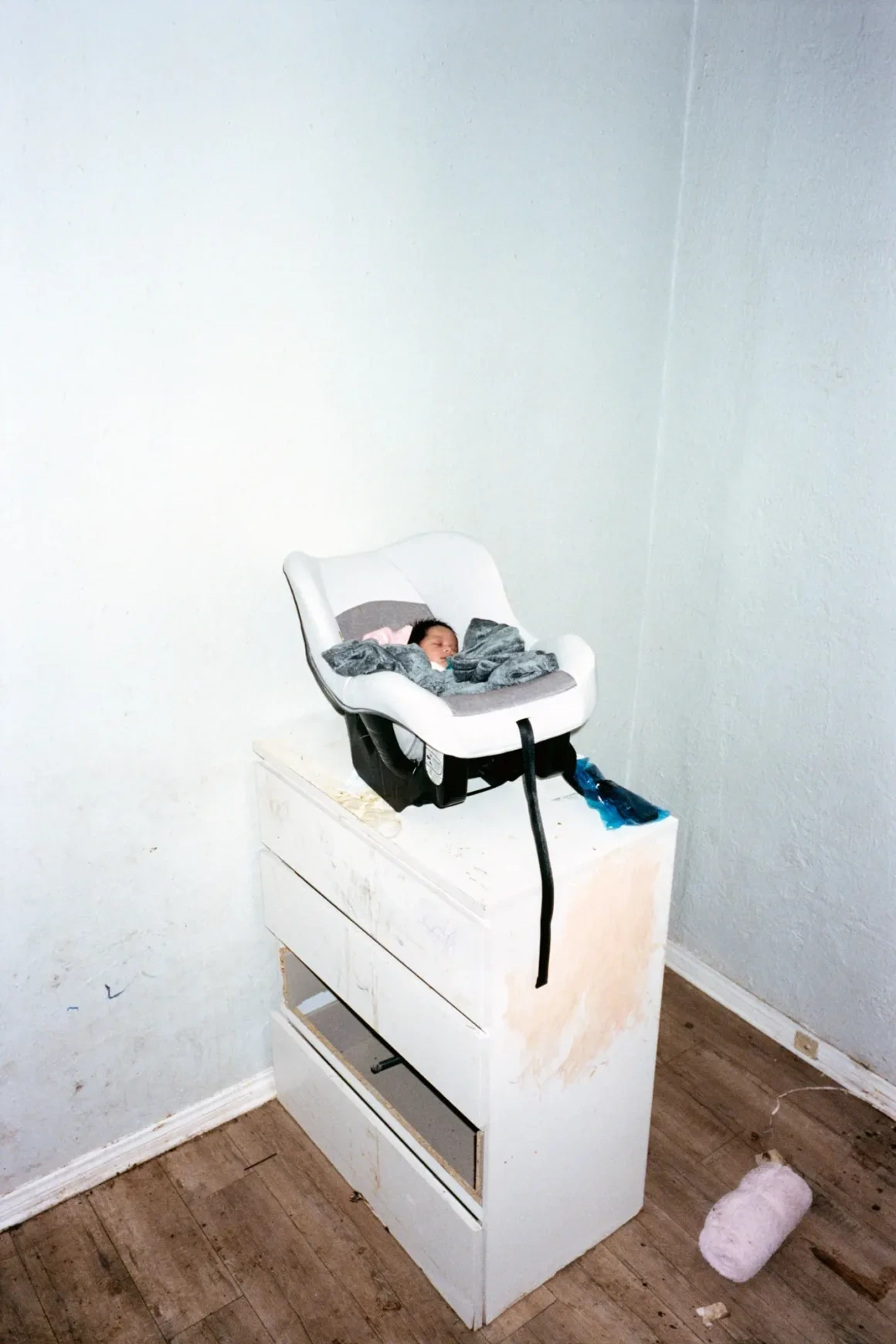
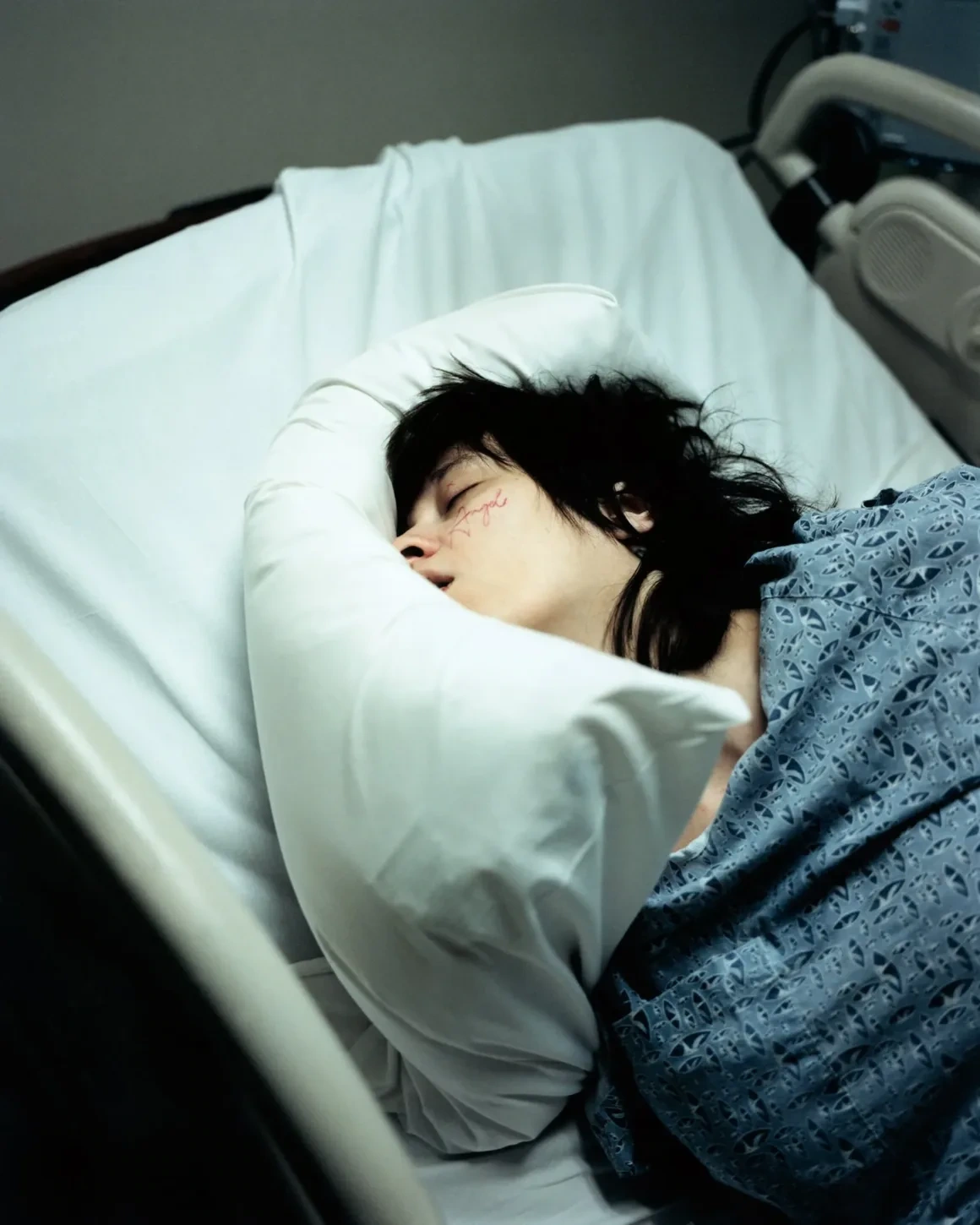
Kircher moves through these interiors the way a patient nurse moves through a ward, slowly, without the need to anaesthetise what he sees. A hallway carpet shot at ankle height recedes toward a distant green exit sign, the walls a sickly fluorescent green. A child's car seat sits on top of a stained ikea dresser, strap dangling, the floor scuffed to bare wood. A woman sleeps in a hospital gown, a pink word drawn on her cheek in eyeliner. The pictures do not editorialise. They hold still long enough for the room to speak.
In the New Genesis sequencing, sierra's own voice arrives as textual interludes pulled from her Instagram stories. Her captions sit beside kircher's photographs as a parallel testimony, a first-person register that the camera, by discipline, cannot provide. “you are allowed to be both a masterpiece and a work in progress simultaneously”, she writes in one. Elsewhere: “i'm not okay but i'm still here.” the stories are not ornament. They are the work's second track, the internal monologue against which the external evidence plays.
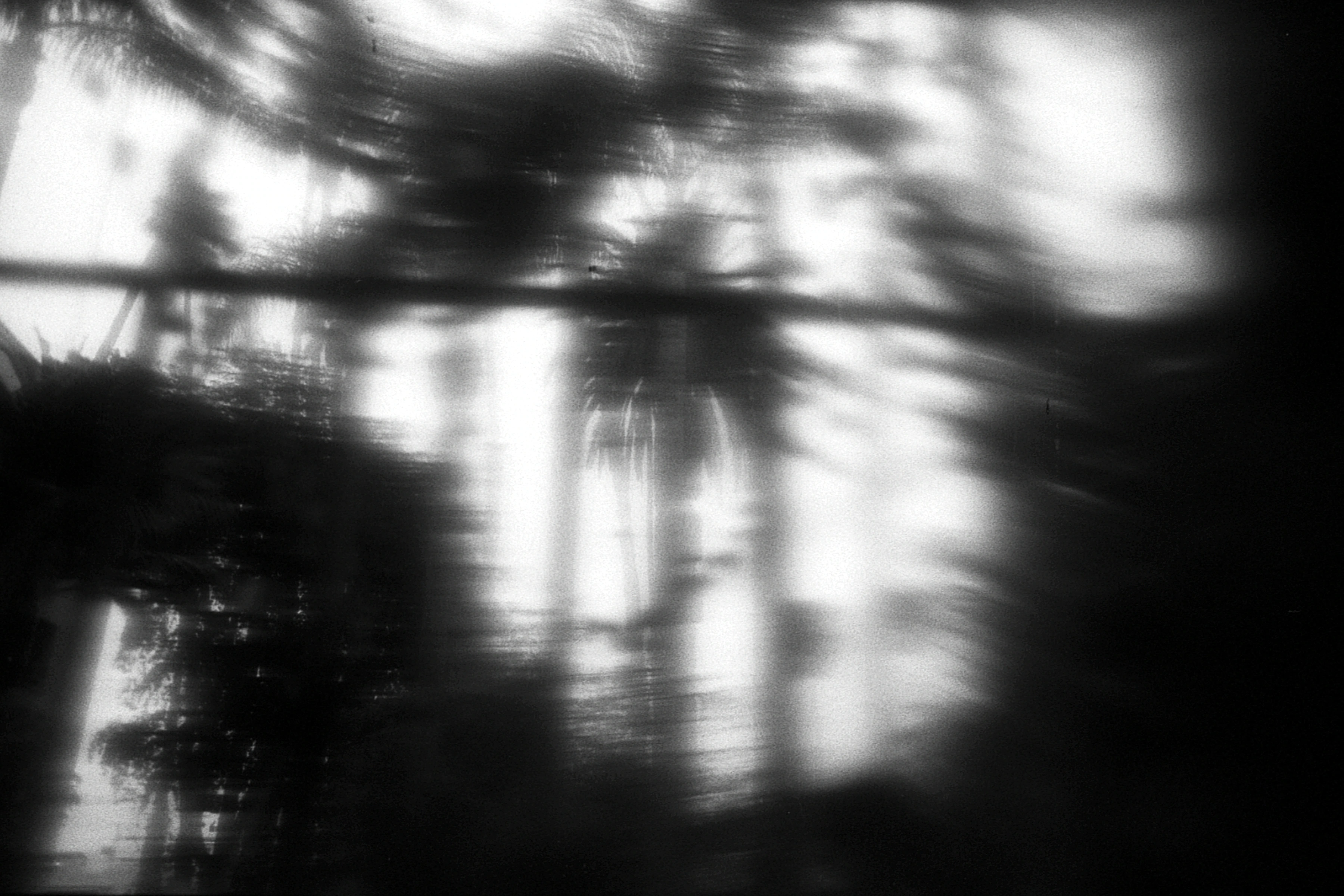
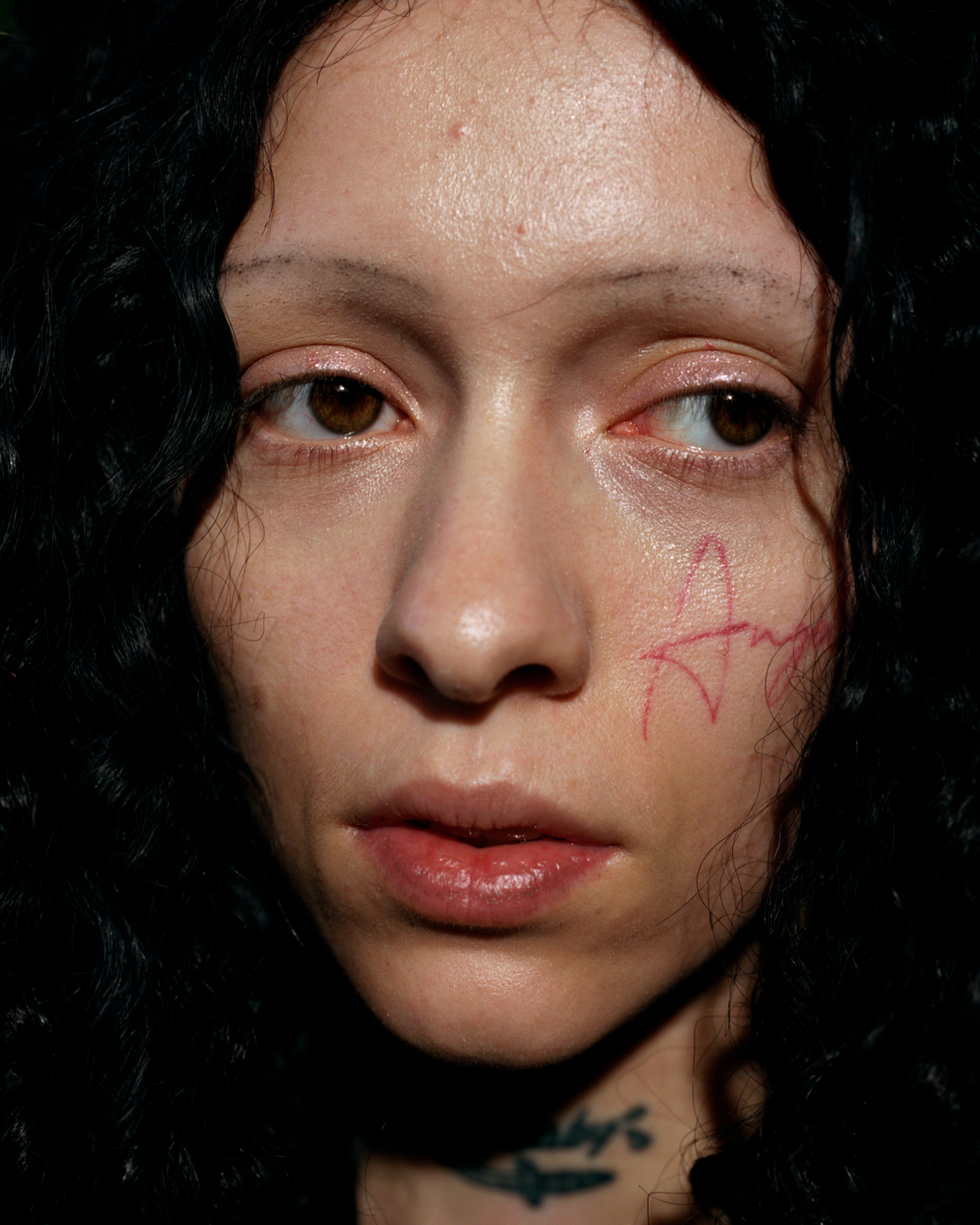
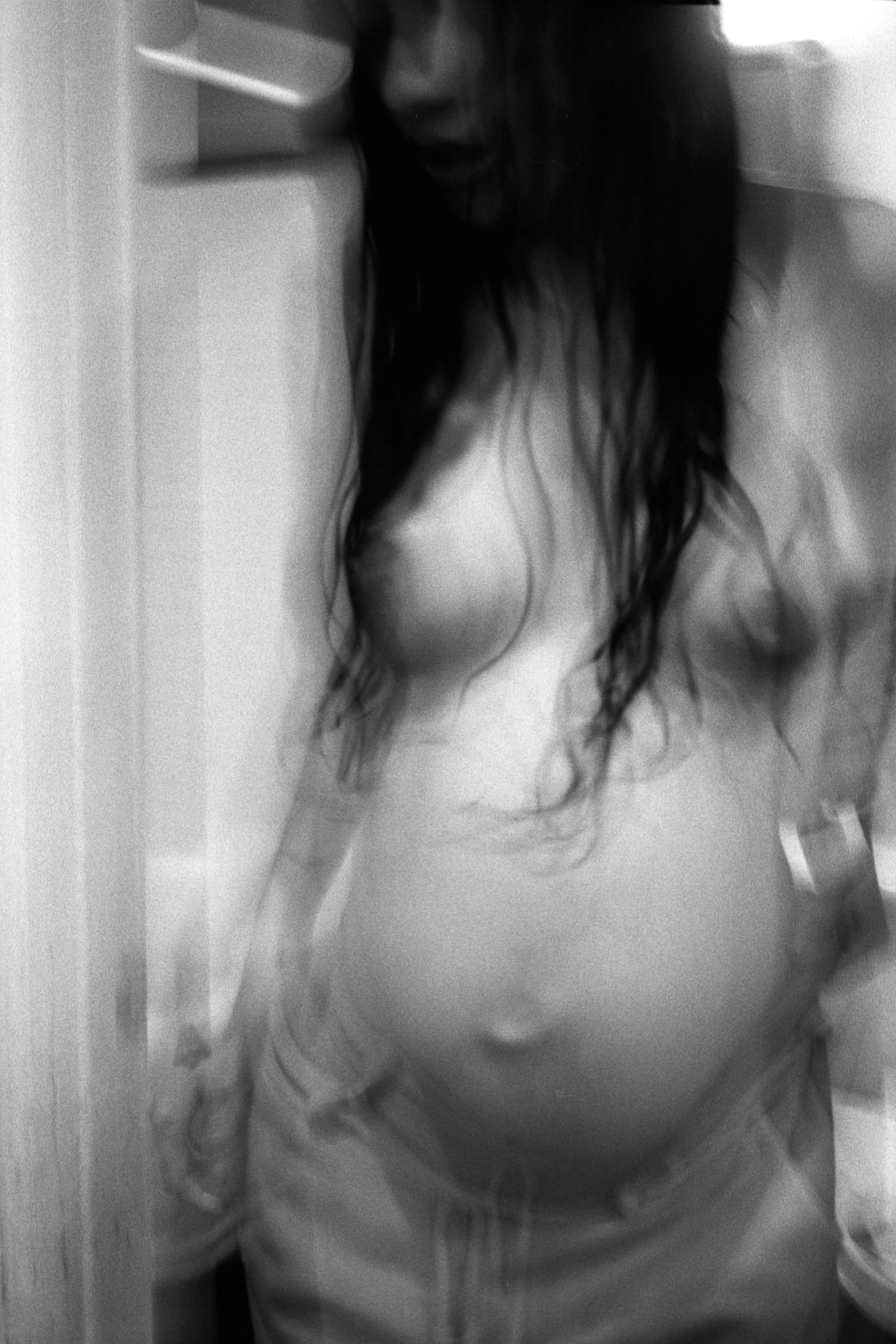
The portraits of sierra are the book's spine. A close-up of her face, eyeliner scribbled across the cheekbone spelling angel, pupils held steady in the flash. A black-and-white frame of her head shaved, eyes closed, leaning into a cinder-block wall, throat tattooed with a crown of thorns. The angel keeps returning, scrawled, drawn, re-drawn, as if the word itself is being worked through the skin. Kircher's formal control is total, and the formal control is what allows the tenderness to hold. Nothing is sentimental. Nothing is sensationalised. The dignity of the frame is the argument.
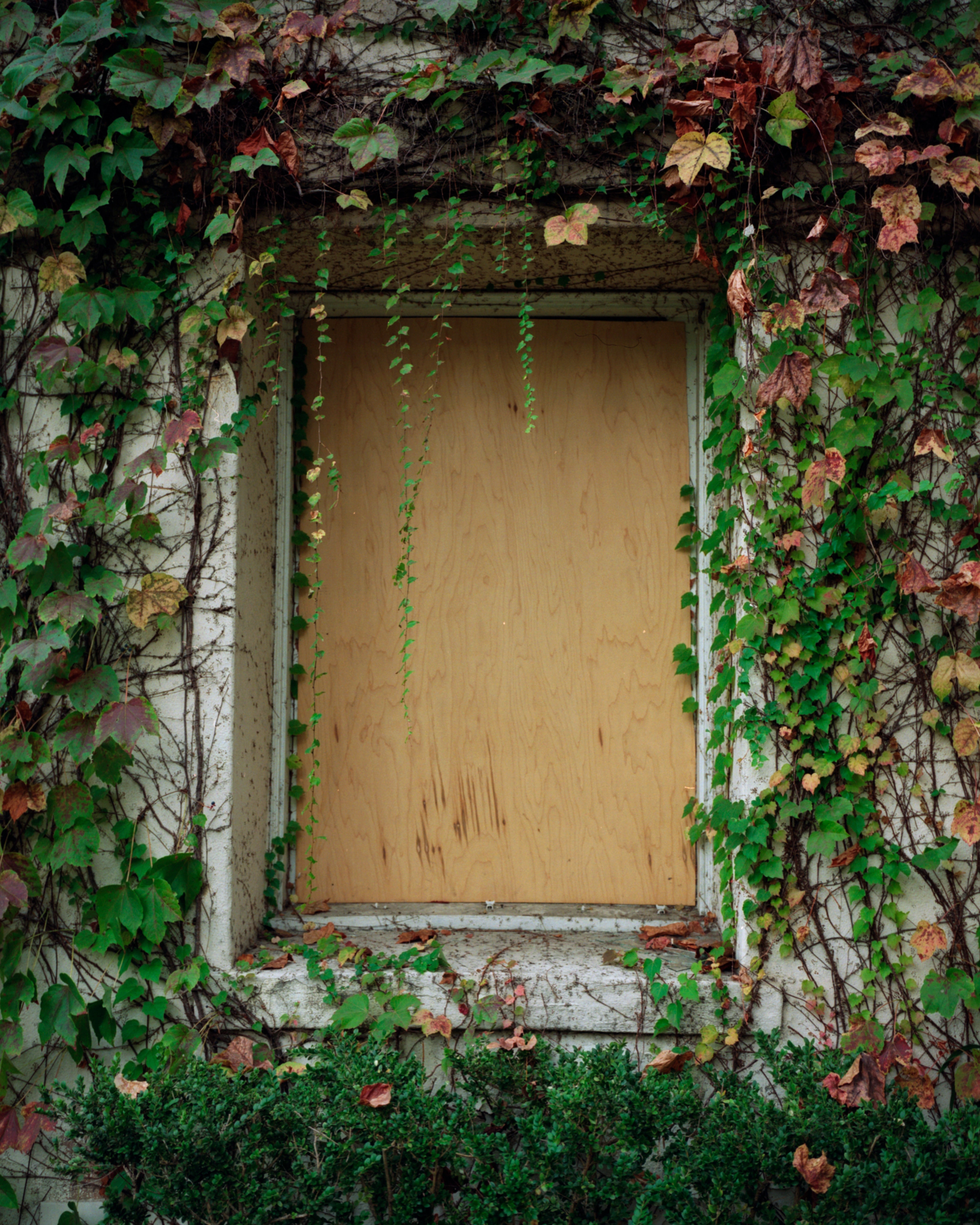
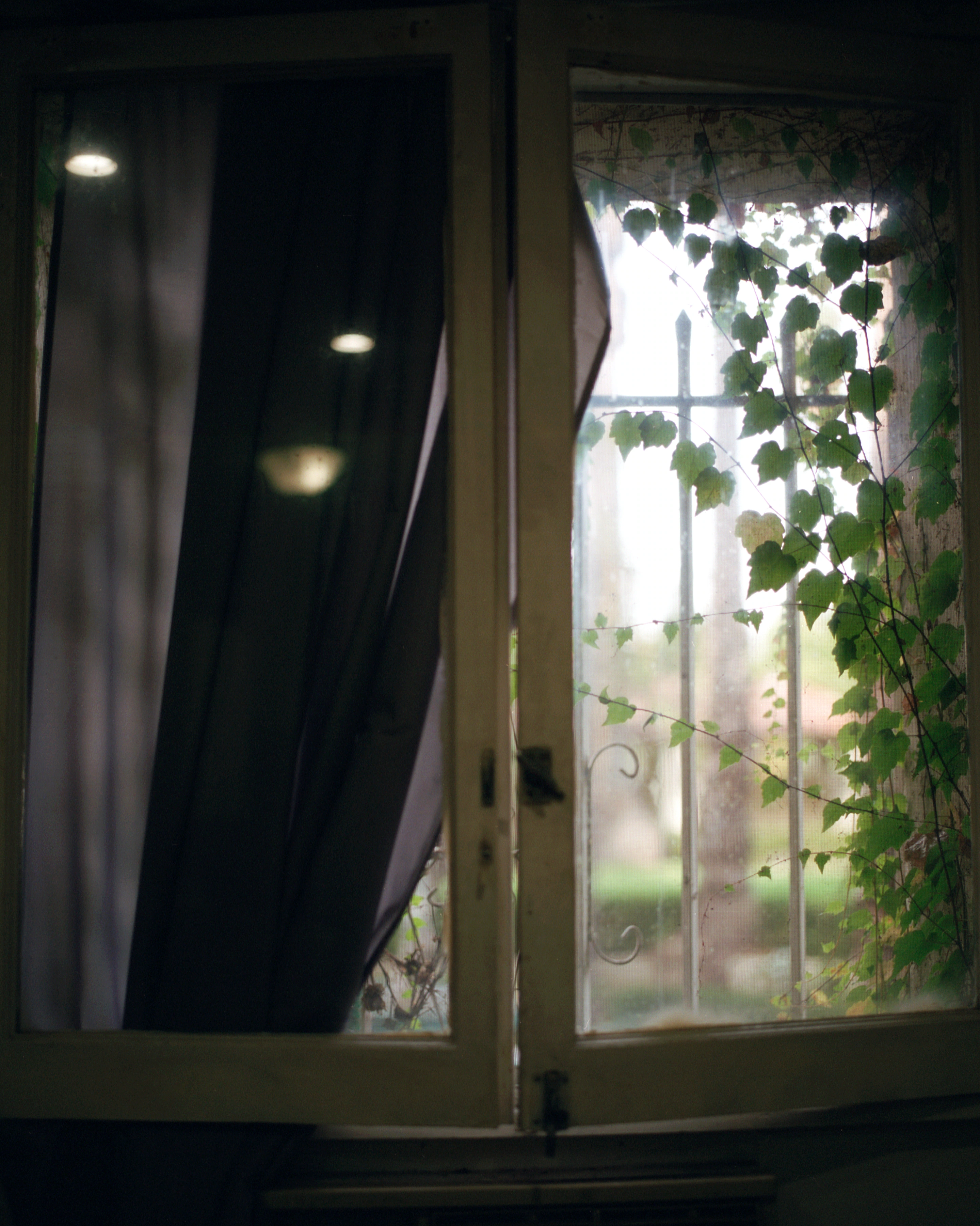
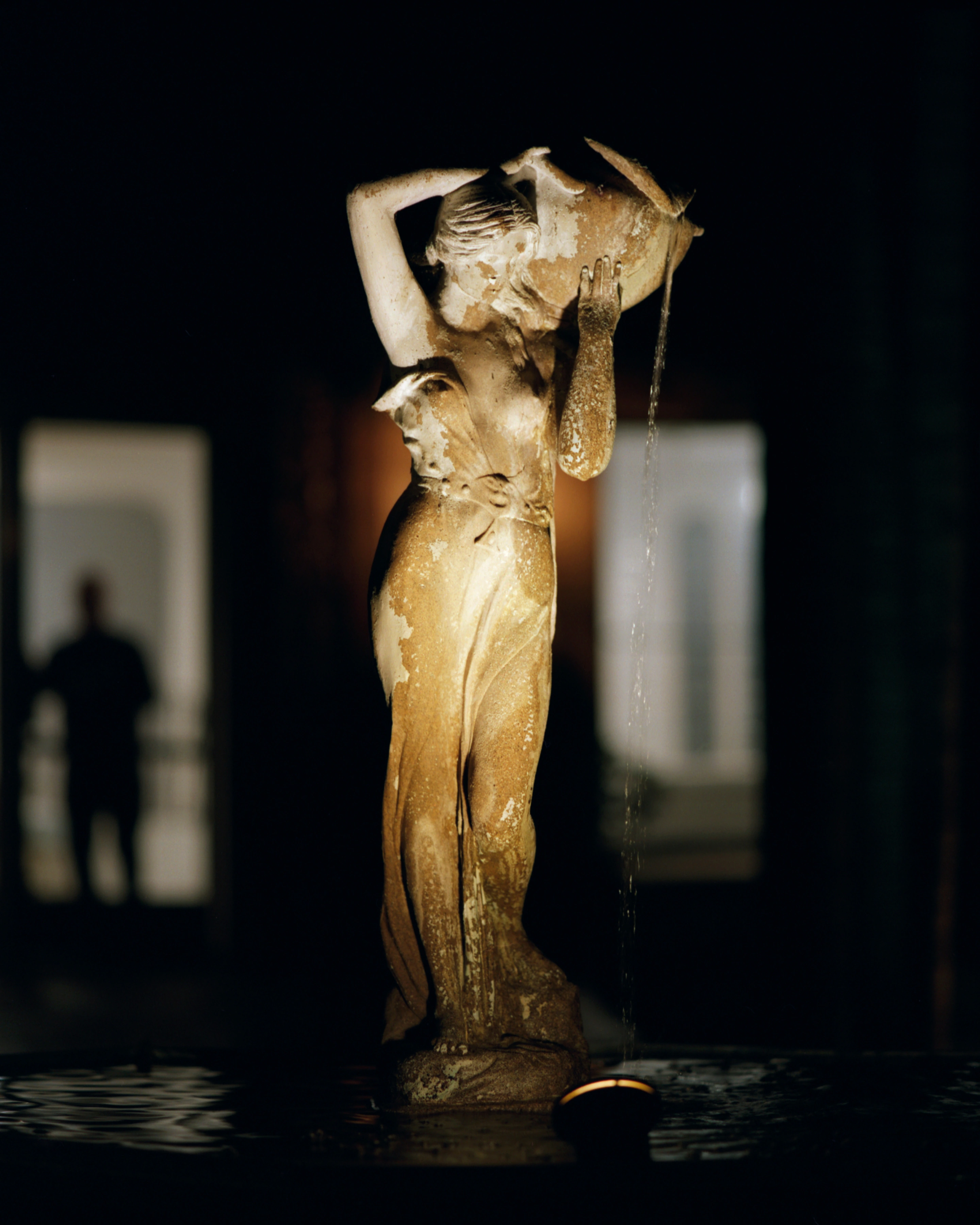
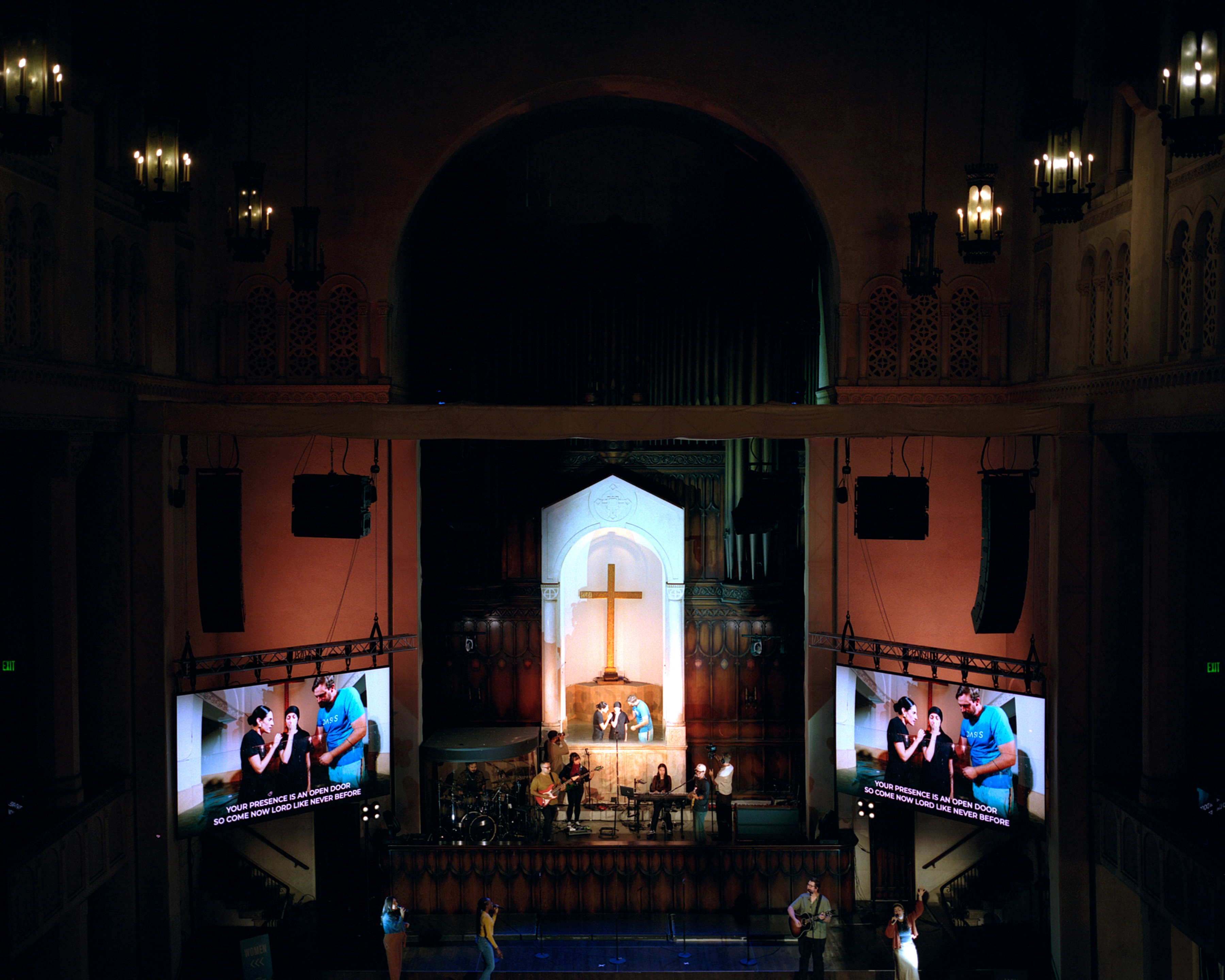
The Los Angeles of these pictures is not the city of aerial highways. It is a church interior with a lit cross and a congregation held between two blue projector screens reading your presence is an open door, so come now lord like never before. It is an ivy-smothered window boarded with plywood. It is a fountain statue at night pouring water from a broken jar into a dark basin. Kircher builds his Los Angeles out of small sacraments. Each image is a station on a passion that never resolves into redemption, only into the next morning, the next pregnancy, the next appointment, the next apartment.
This is a continuation, not a departure. Rotting from Within, kircher's debut monograph published by Loose Joints in 2024 on the occasion of his first solo show at carlier | gebauer, traced his estranged father and grandfather across Berlin and istanbul, an earlier inheritance, a different line of inherited damage. New Genesis crosses the ocean and the gender line and lands inside the country he immigrated to at eight, with a young mother of his own. The investigation is genealogical. The question kircher keeps asking, of his father's house in kreuzberg, of sierra's apartment in Los Angeles, is how trauma metabolises across a generation, what the state does or fails to do at the moment of the hand-off.
What the book makes visible is extractive, not redemptive. A shelter system that runs on chronic underfunding. A church that offers presence instead of housing. A welfare architecture that processes mothers as throughput and measures its success in compliance. Sierra is not its failure. She is its outcome. The distinction is the book's real politics. Not a plea for better services, but a record of what the current services actually produce. “i'm tired of being strong”, one of the stories reads. The photograph beside it shows a toddler asleep in a car seat on top of a half-broken dresser. The two sentences answer each other.
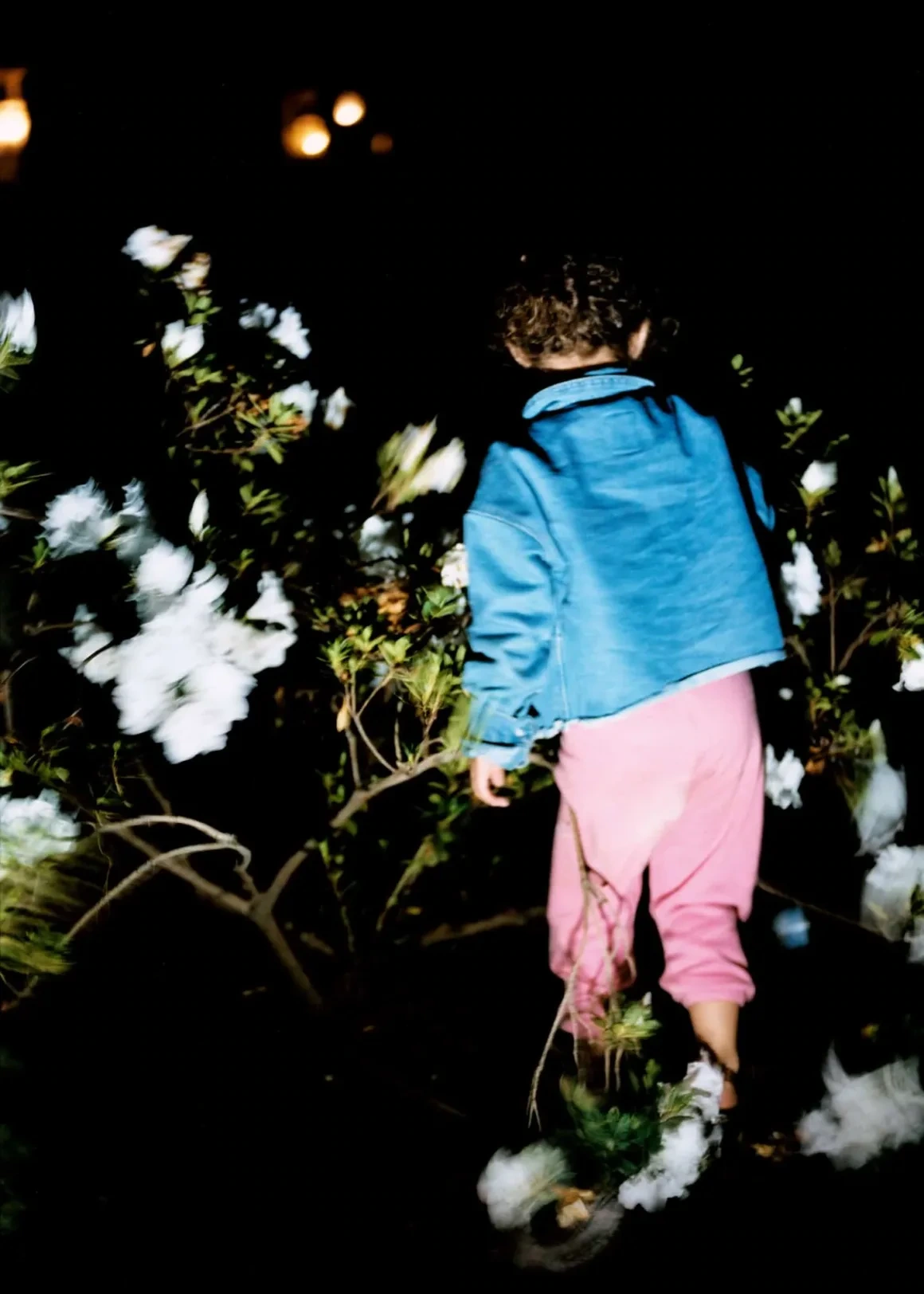
Kircher does not close the case. The final images open onto a child walking away through a dark garden of white blossoms, back turned, pink sweatpants and a denim jacket, balloon candles visible behind. The posture is an exit. The image does not say where to. Not a resolution, but a refusal to force one. Not a document of poverty, but a document of the system that requires it. Not a New Genesis at all, only the old one, bled into another generation, held in view long enough to be unforgettable.