.webp)
wWhat if intelligence has been mislocating itself? Strange Rules makes a bet, that cognition spills past the substrate we keep assigning it to, and that art is the right room to test it in. Mat Dryhurst and Holly Herndon convene the experiment with Hans Ulrich Obrist and Adriana Rispoli inside Palazzo Diedo.
The protocol is the work. Not the image it generates, not the object it describes, not the interaction it enables, but the rule structure underneath: the algorithm, the model, the infrastructure, the instruction set. Strange Rules opens with this proposition and refuses to let it go. Three floors of Palazzo Diedo, each a different register of the same claim: that the invisible architecture shaping how culture is produced, distributed, and perceived has become the most urgent material available to an artist today.
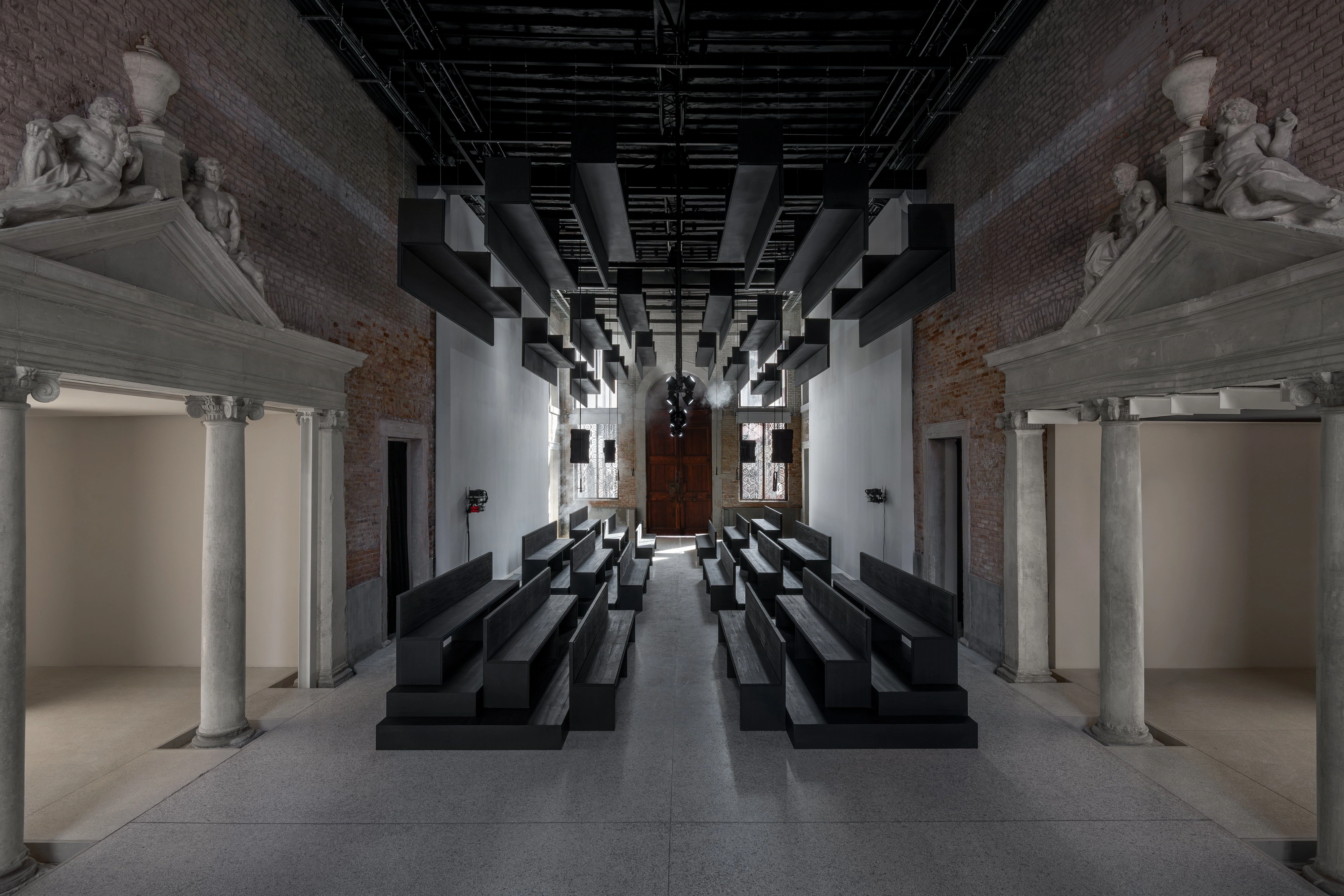
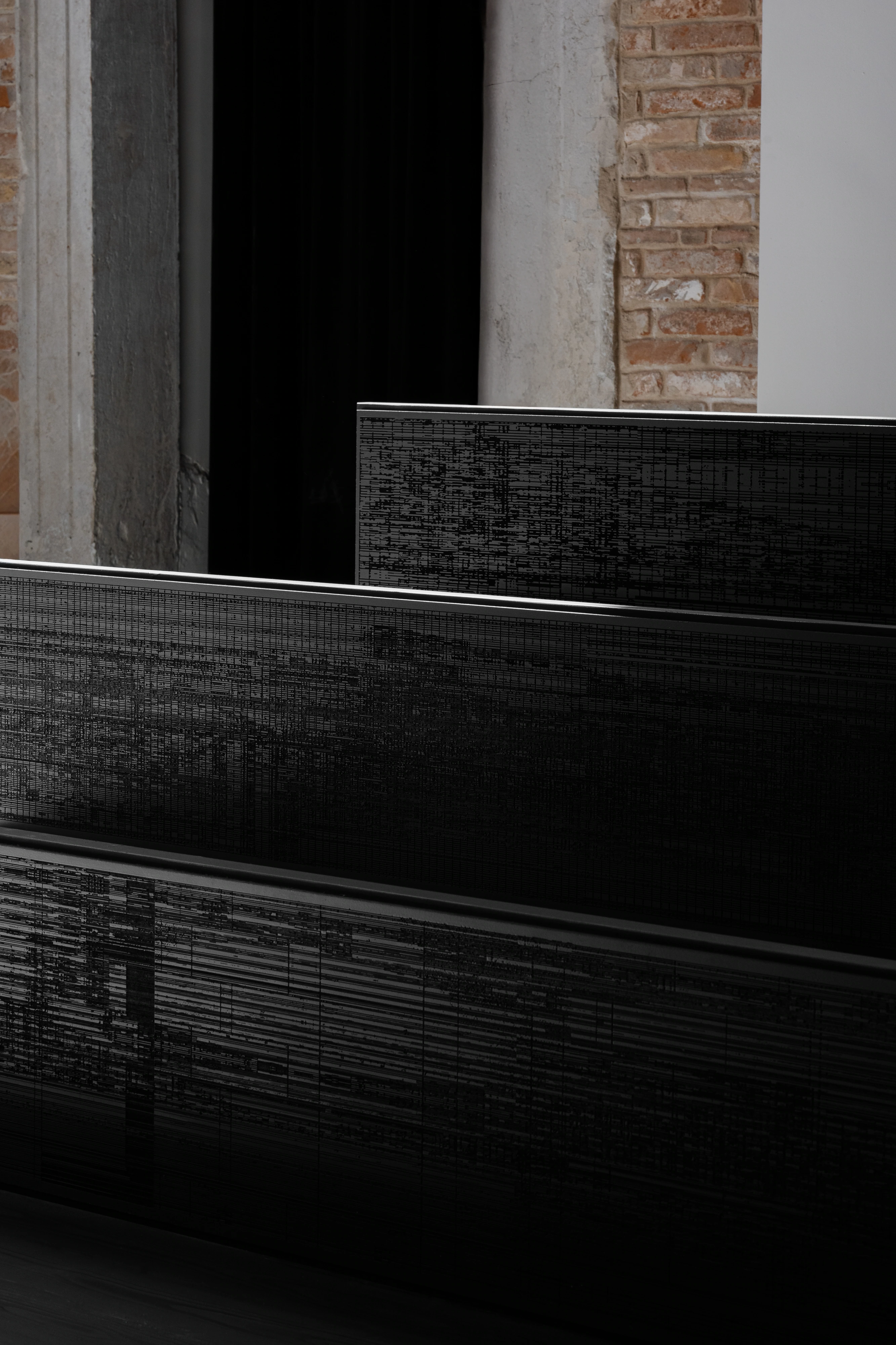
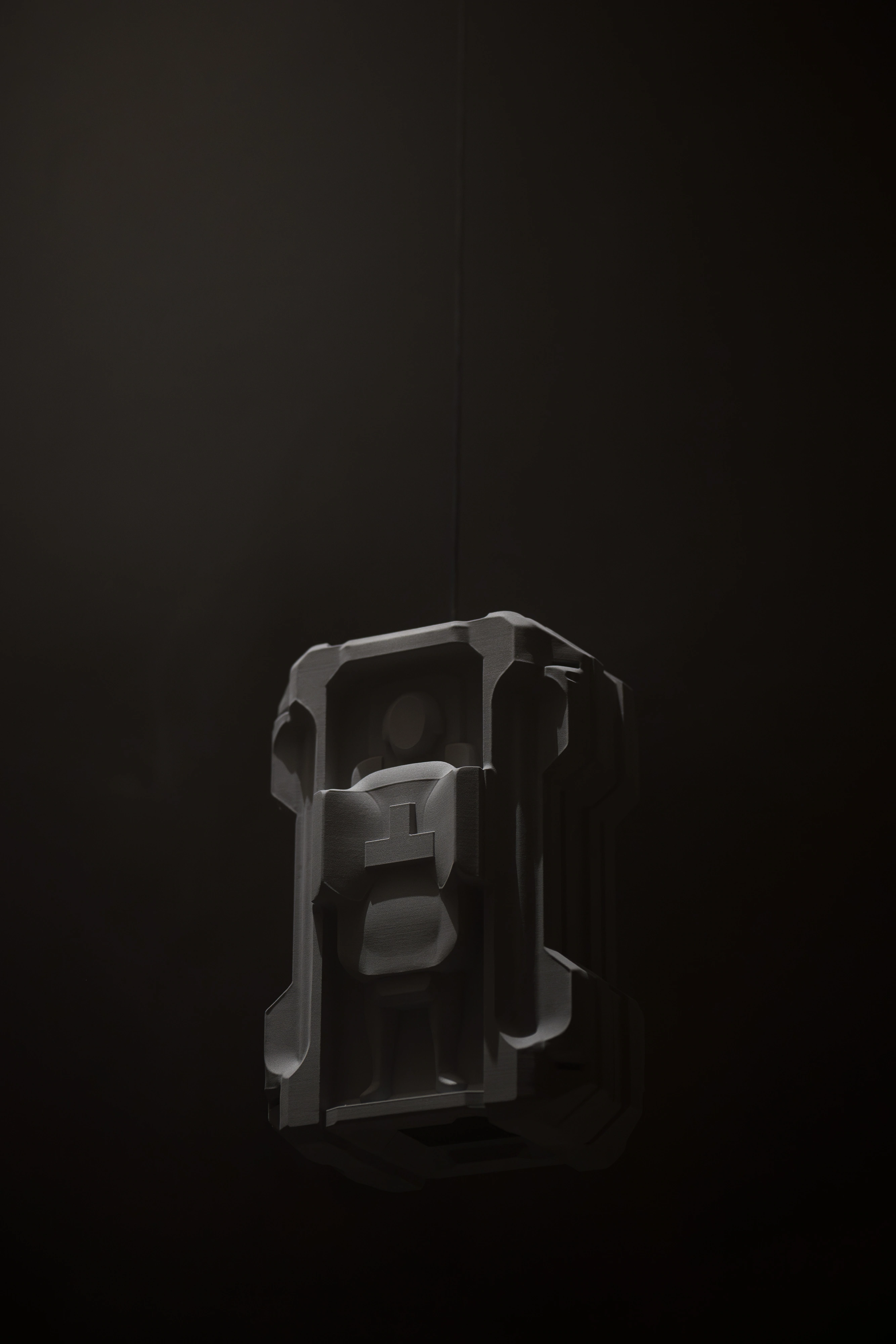
The ground floor commission, built by Dryhurst and Herndon in collaboration with the architectural practice SUB (led by Niklas Bildstein Zaar), converts the baroque hall into something between a laboratory and a chapel. Dark steel benches arranged in two facing rows fill the nave, their surfaces printed or etched with dense horizontal and vertical data-noise, thousands of fine lines compressed into the black, the trace of some process now rendered illegible and devotional simultaneously. Above, a grid of black steel beams overrides the ceiling, a second architecture imposed on the existing one. The baroque stone figures flanking the walls, reclining, reading, gesturing toward some transcendence, look on. What the installation proposes, as the press text puts it, is “the shift from the object to the system, and from the singular author to collaboration and ultimately human-machine co-creation.” The bench is the pew. The protocol is the scripture.
What SUB's architectural intervention achieves is not ornamentation but overwriting: a second syntax laid on top of the historic one. The steel grid ceiling sits just above head height, close enough to feel imposed rather than designed. It does not enclose so much as administer. The space below becomes a kind of chamber for the processing of something unnamed, and the dark benches face each other as if awaiting a dialogue that has not yet been initiated, or has been running the whole time, at a frequency below the human range.
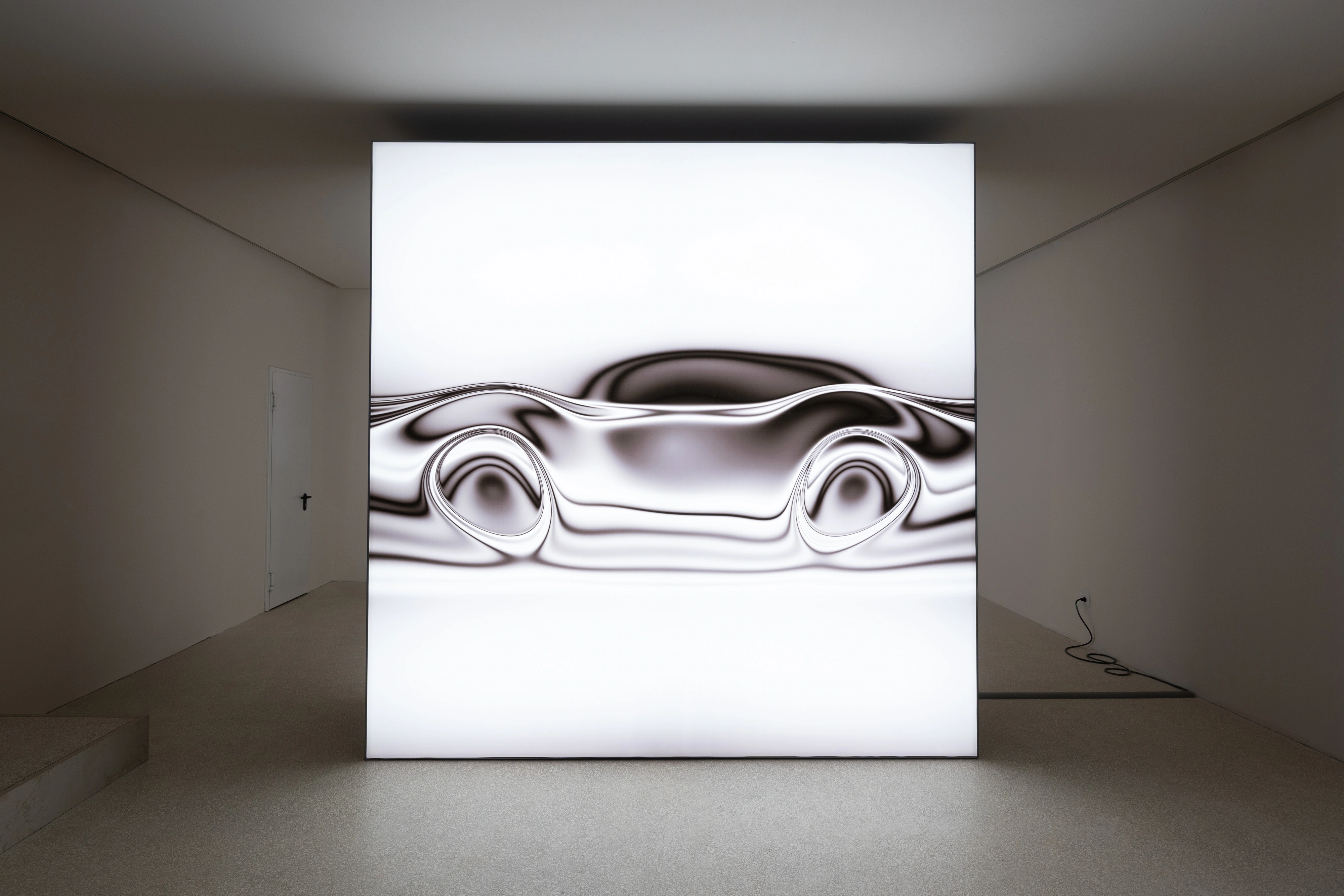
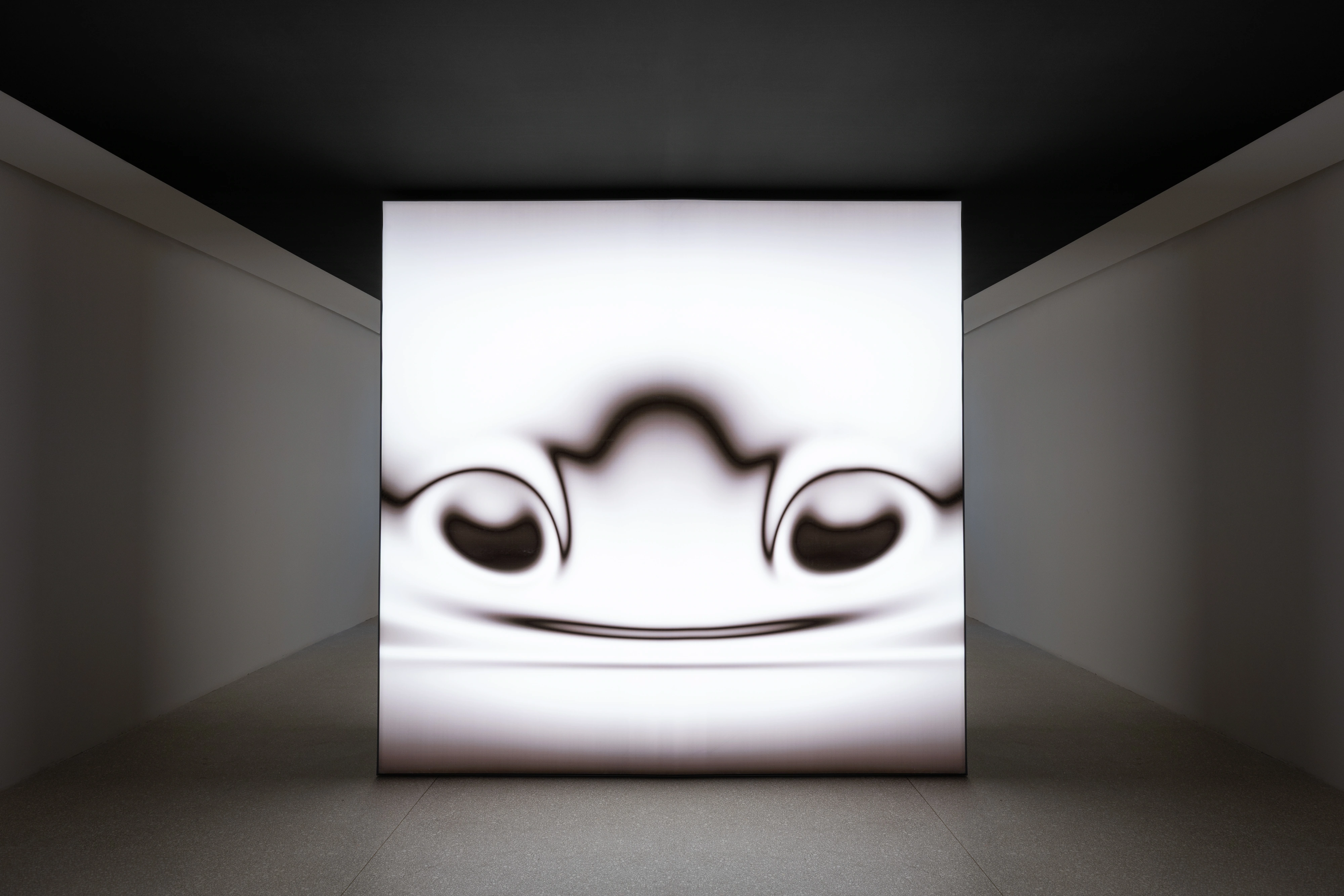
On the upper floors, the exhibition turns toward two specific research contexts that give Protocol Art its biological and computational underpinning. Kenneth Stanley's Picbreeder project, which allowed users to collaboratively evolve images through iterative selection from a shared gene pool, appears here as large-scale projection: creatures that emerged from no single intention, only from the accumulated pressure of human preference applied to algorithmic variation. They are soft, face-like, oddly familiar. A frog's eyes. A morphological blur that reads simultaneously as vehicle and organism. These are not images anyone made; they are images the protocol produced through the friction of human desire against a constrained possibility space. As the curatorial framing establishes, Strange Rules treats such processes not as tools for making art but as “a practice that engages with the underlying rules that dictate how culture is produced, distributed, and perceived.”
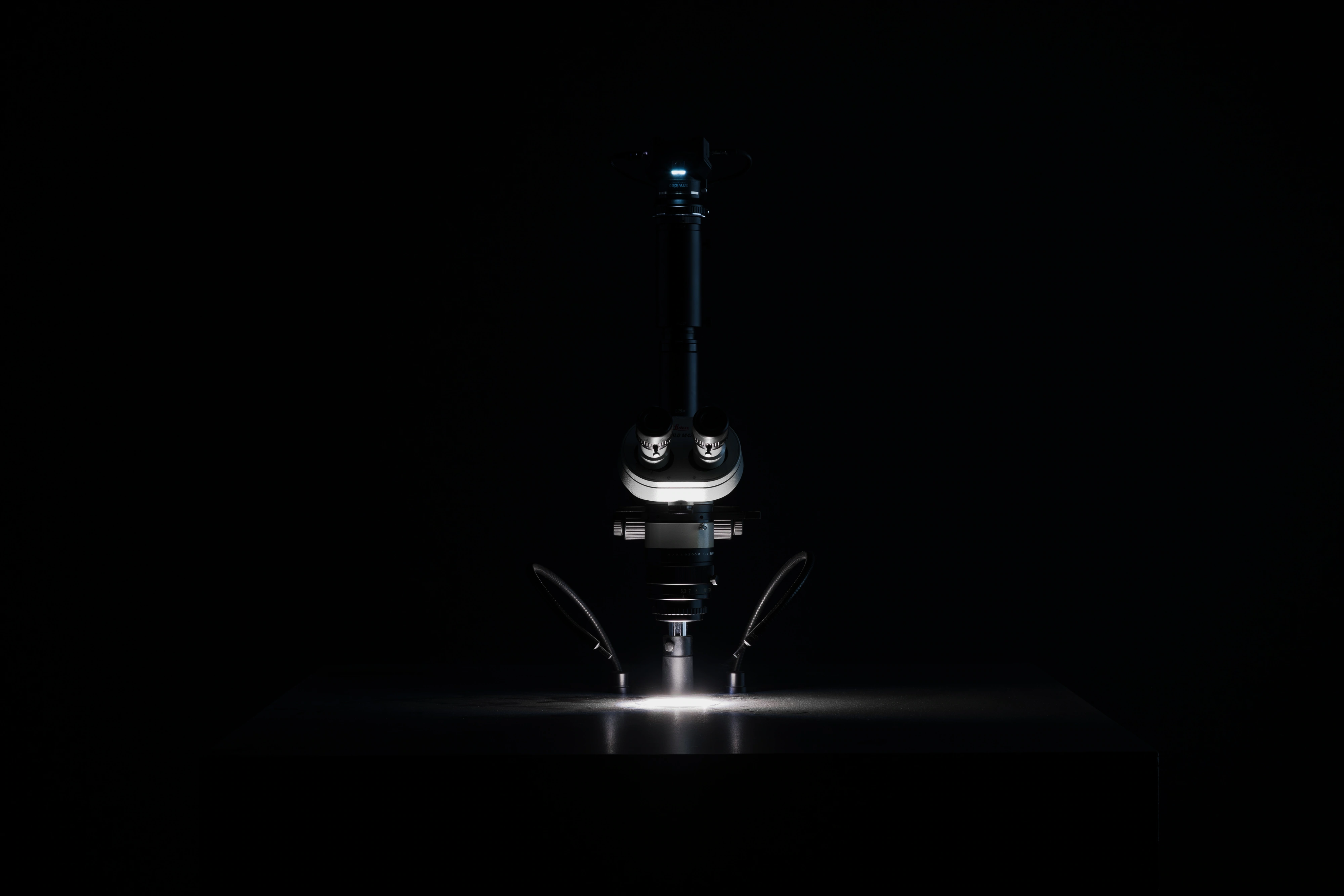
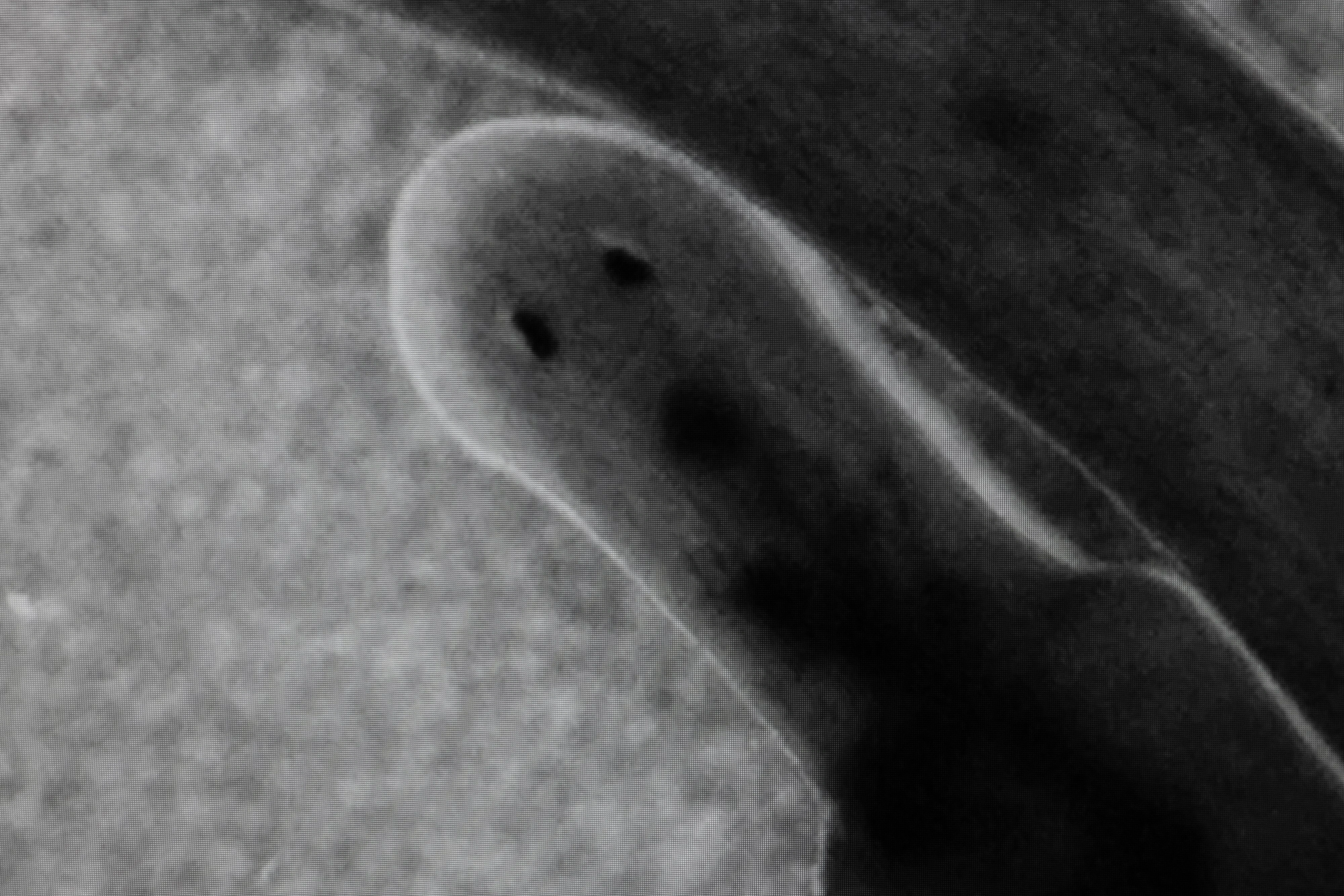
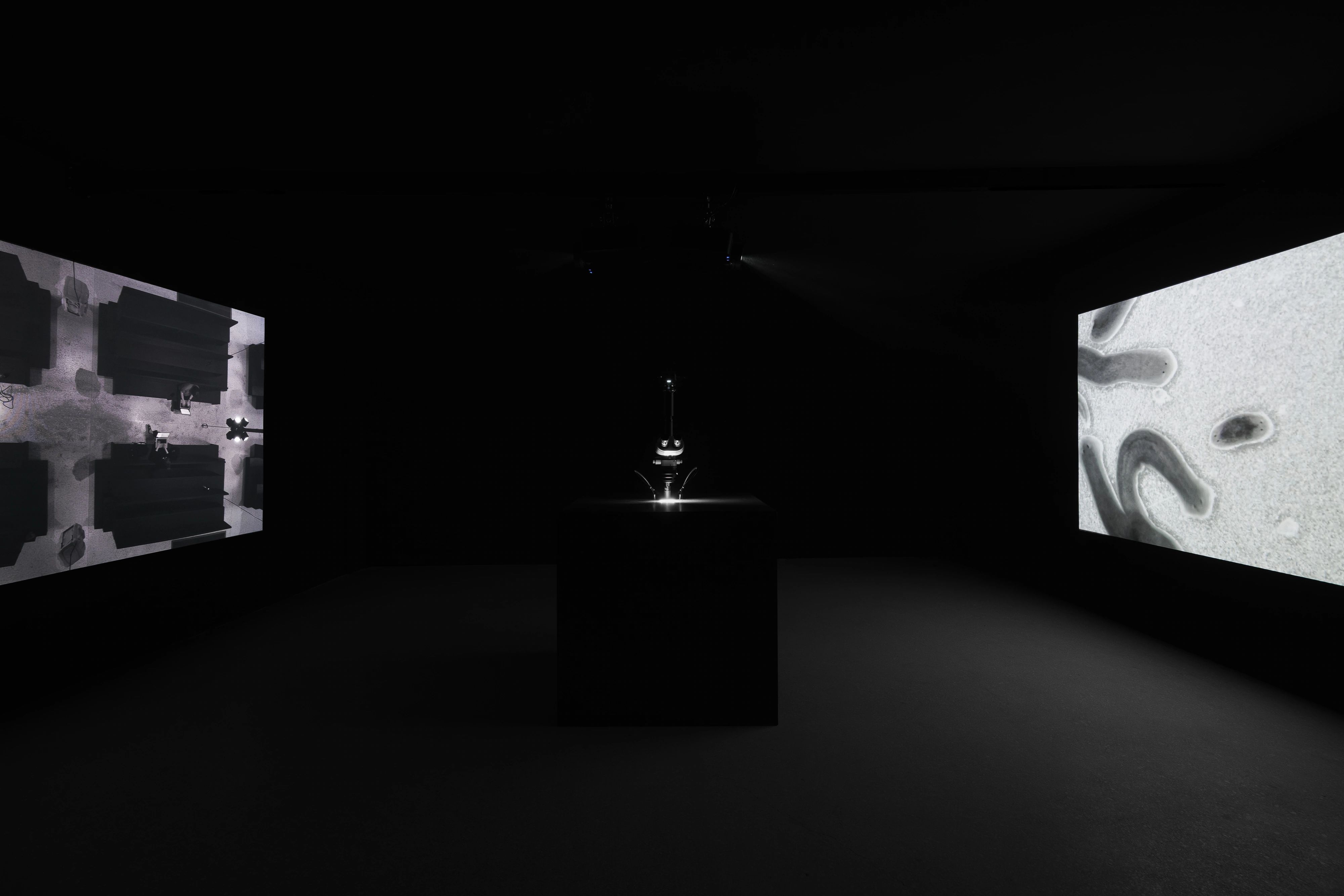
Michael Levin's planarian worm research forms the biological counterpoint. In the black box room on the second floor, a research microscope sits on a plinth at the center of a dark space, projections flanking it on two walls. One shows architectural fragments, figures in discontinuous space. The other shows planarian flatworms under magnification: forked bodies, regenerating tissue, each segment carrying two small eye-spots that read uncannily as faces. Levin's work concerns how organisms carry encoded information about their own form, how a planarian severed in two does not merely survive but regenerates the missing geometry from a kind of bioelectric memory. The worm knows what it should be. The protocol, Levin's research implies, is not only computational: it runs through tissue, through morphogenetic fields, through the very capacity of matter to remember a shape.
Strange Rules is not an exhibition about technology in the ordinary sense. It does not exhibit hardware or claim digital aesthetics as its visual language. What it does is harder and more necessary: it insists that the rules by which images, ideas, and cultural forms are allowed to exist are themselves artistic material. The publication being researched throughout the run aims to be the first comprehensive account of Protocol Art as a field, with Palazzo Diedo serving as both exhibition site and working environment for its production. The book will be, in that sense, also a protocol.
The question the show does not answer, and is right not to answer, is what it means to expose the protocol without escaping it. Every work here is also a product of the conditions it critiques: generated within platforms, distributed through networks, perceived through the very filters the artists describe. Strange Rules sits inside this contradiction without resolving it. That is, finally, the only honest position available.