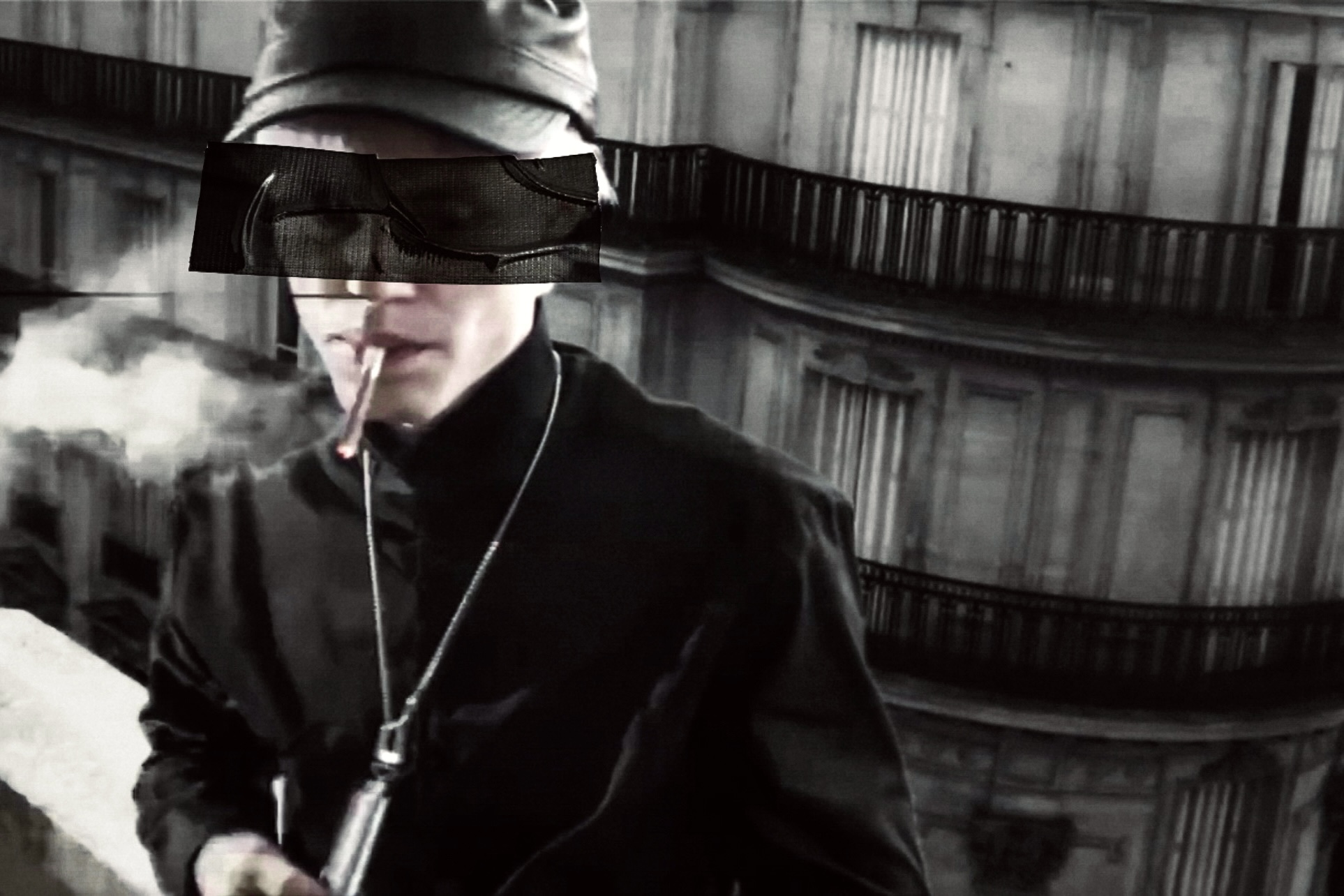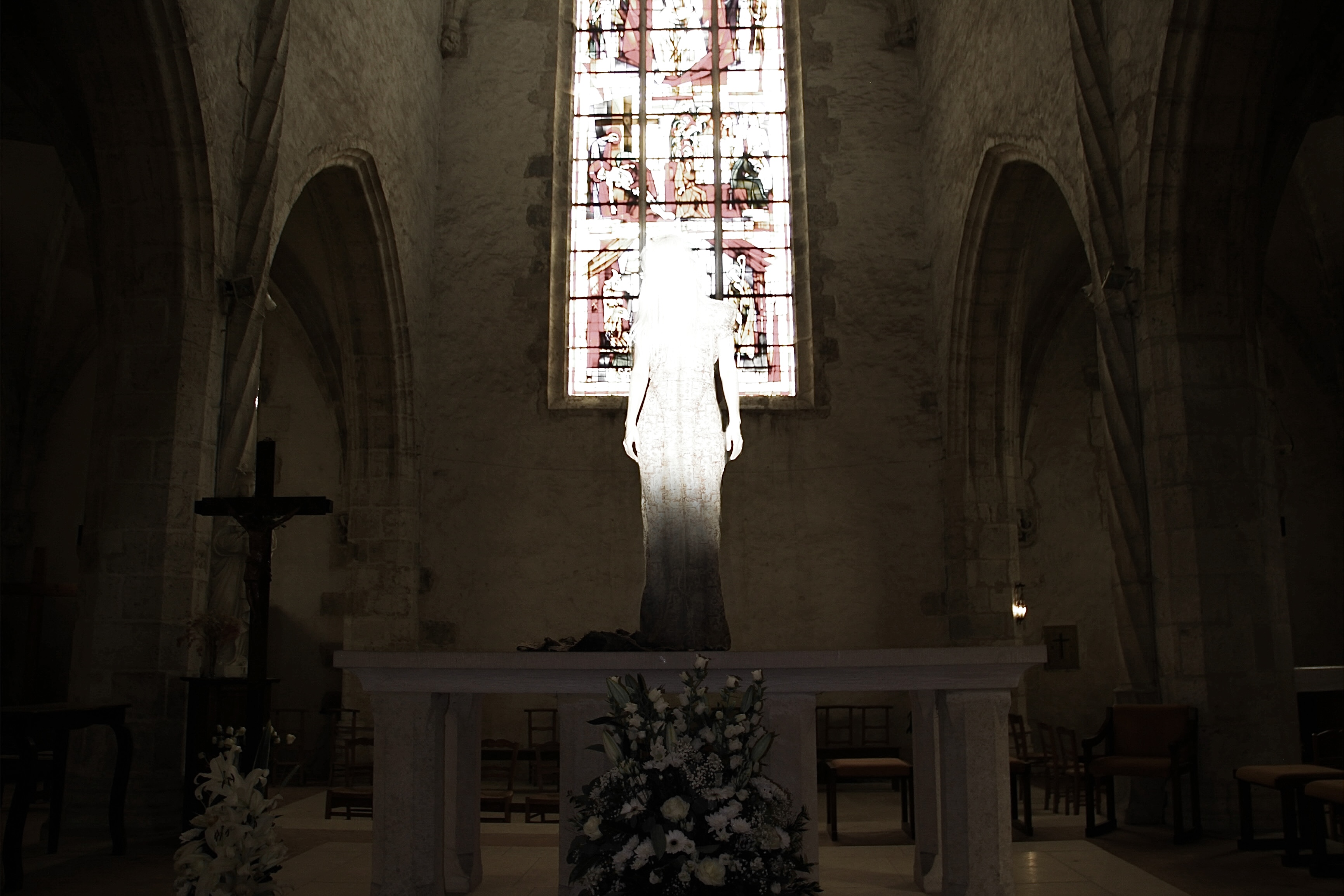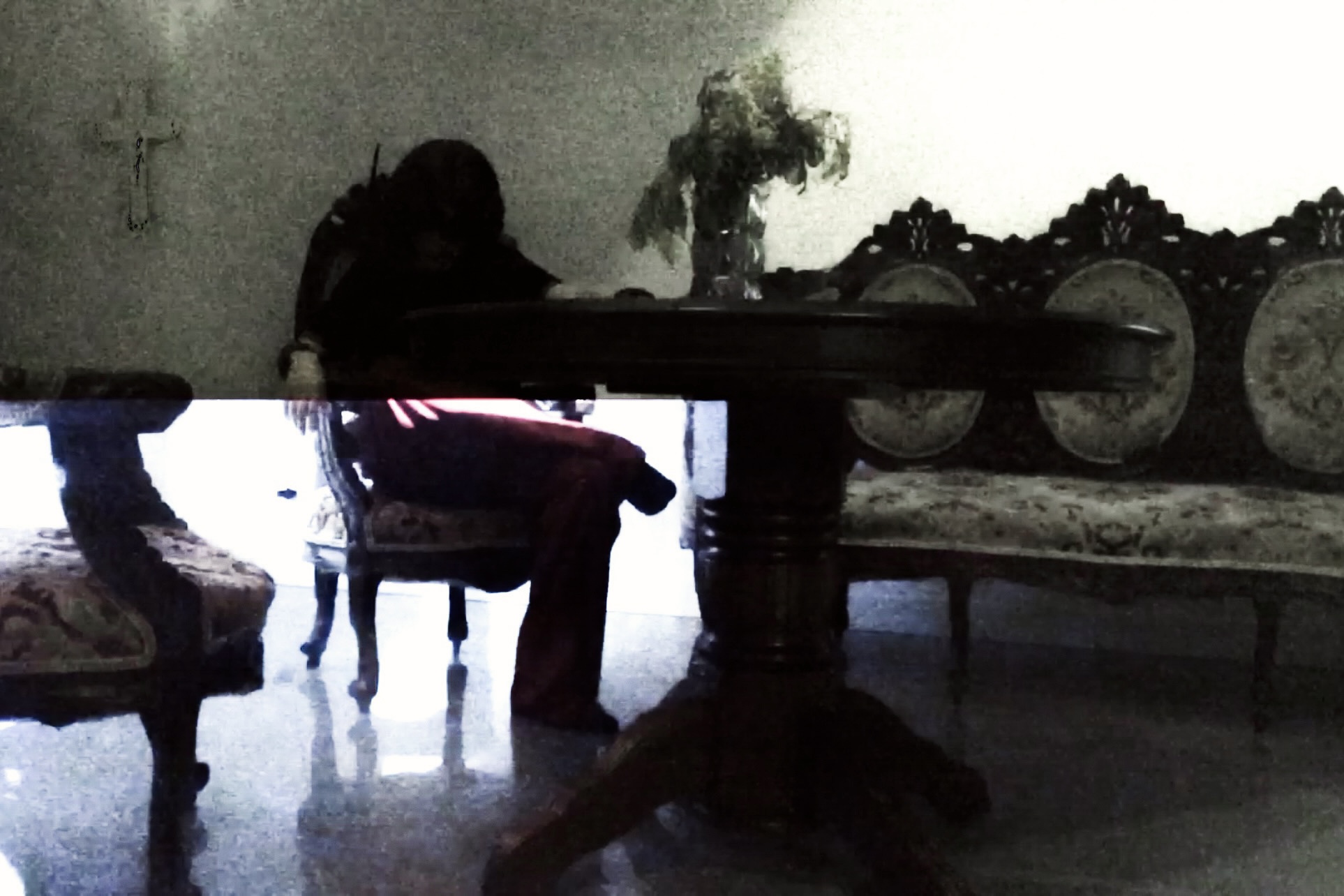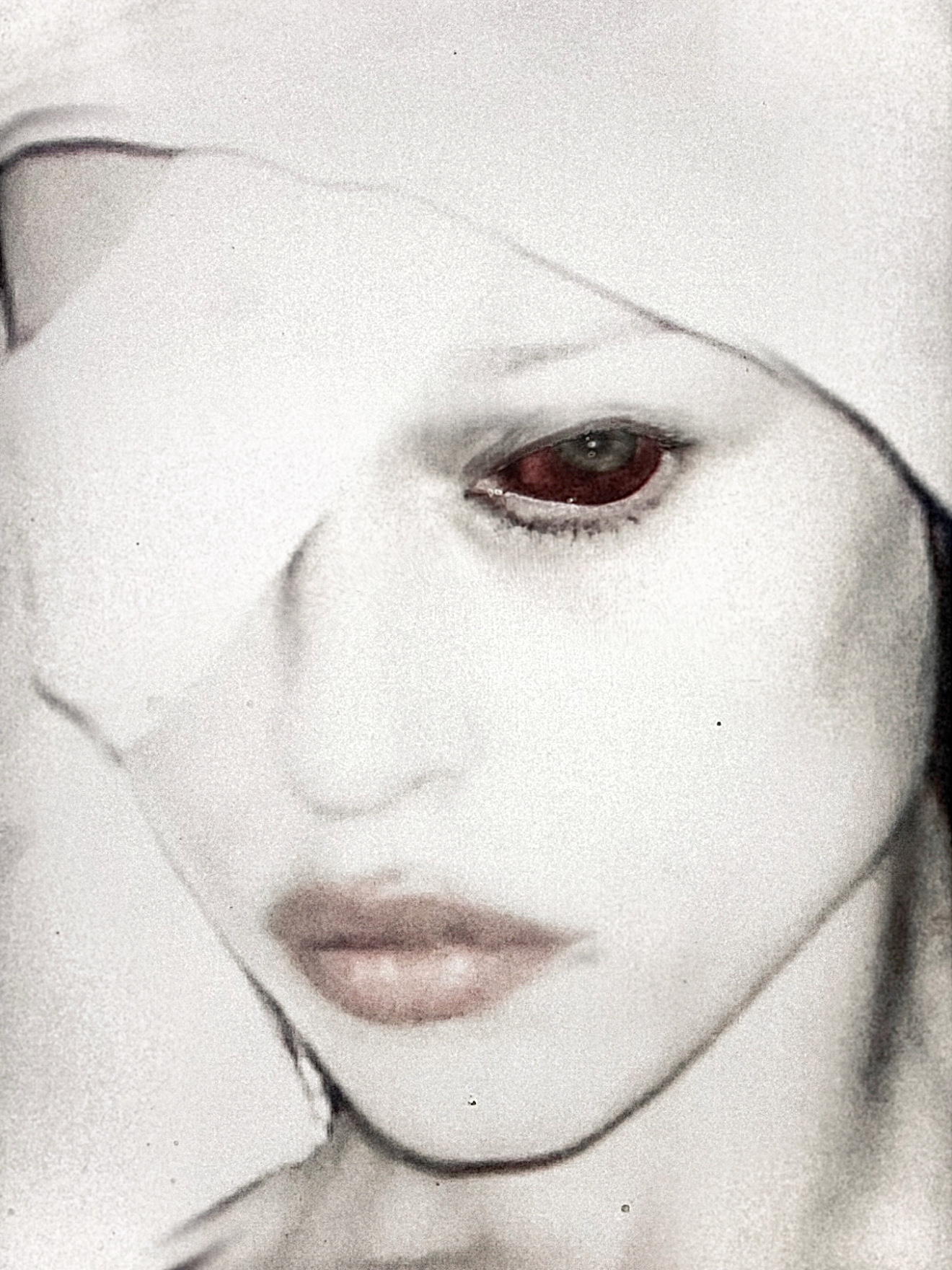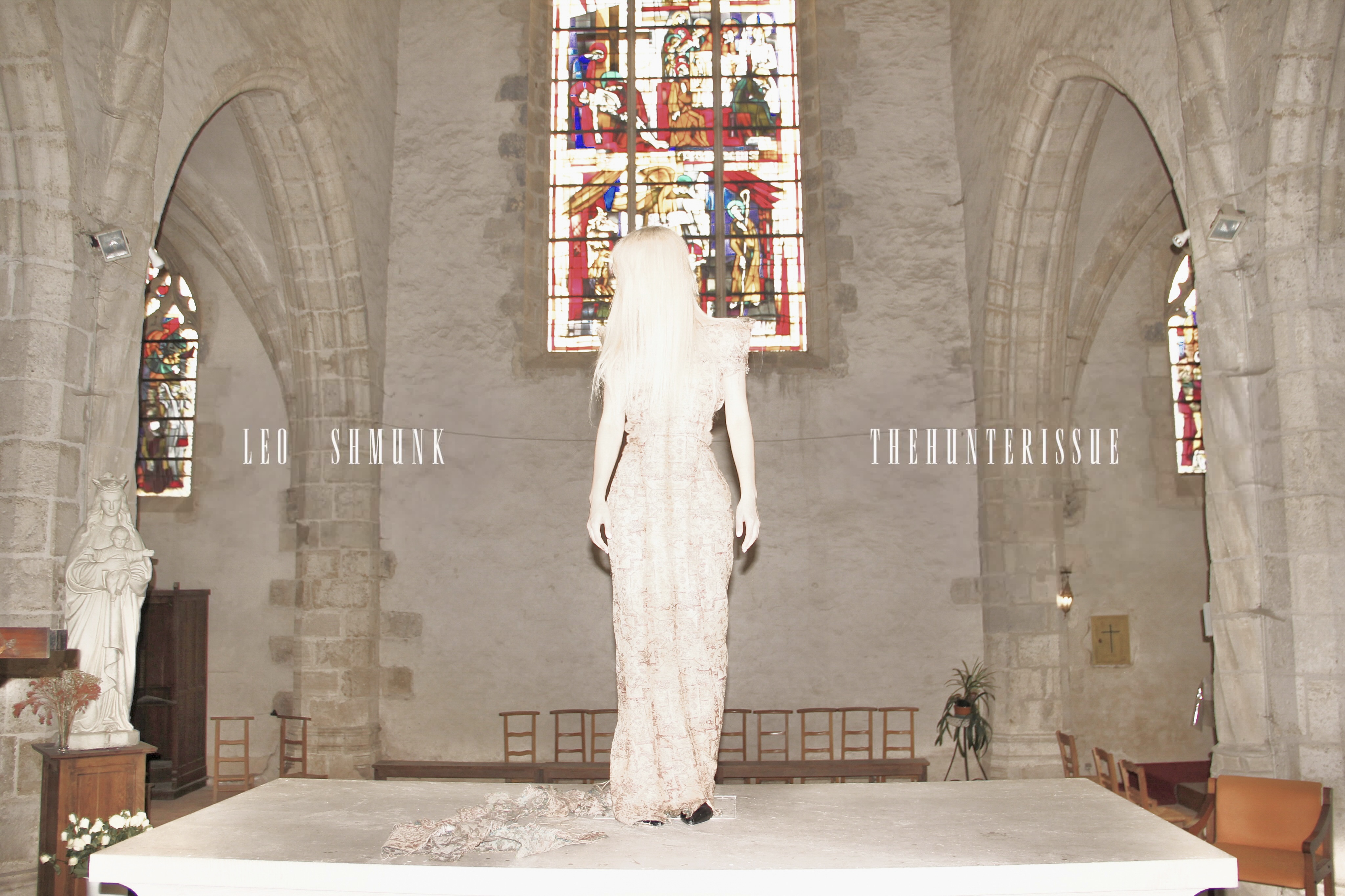
Announced in 2023 by Leo Shmunk as a hunting trophy from the front rows of fashion week, TheHunterIssue Vol.1 arrives in February 2026 as something stranger: an art book that has eaten itself, kept the bones, and refused to be a season.
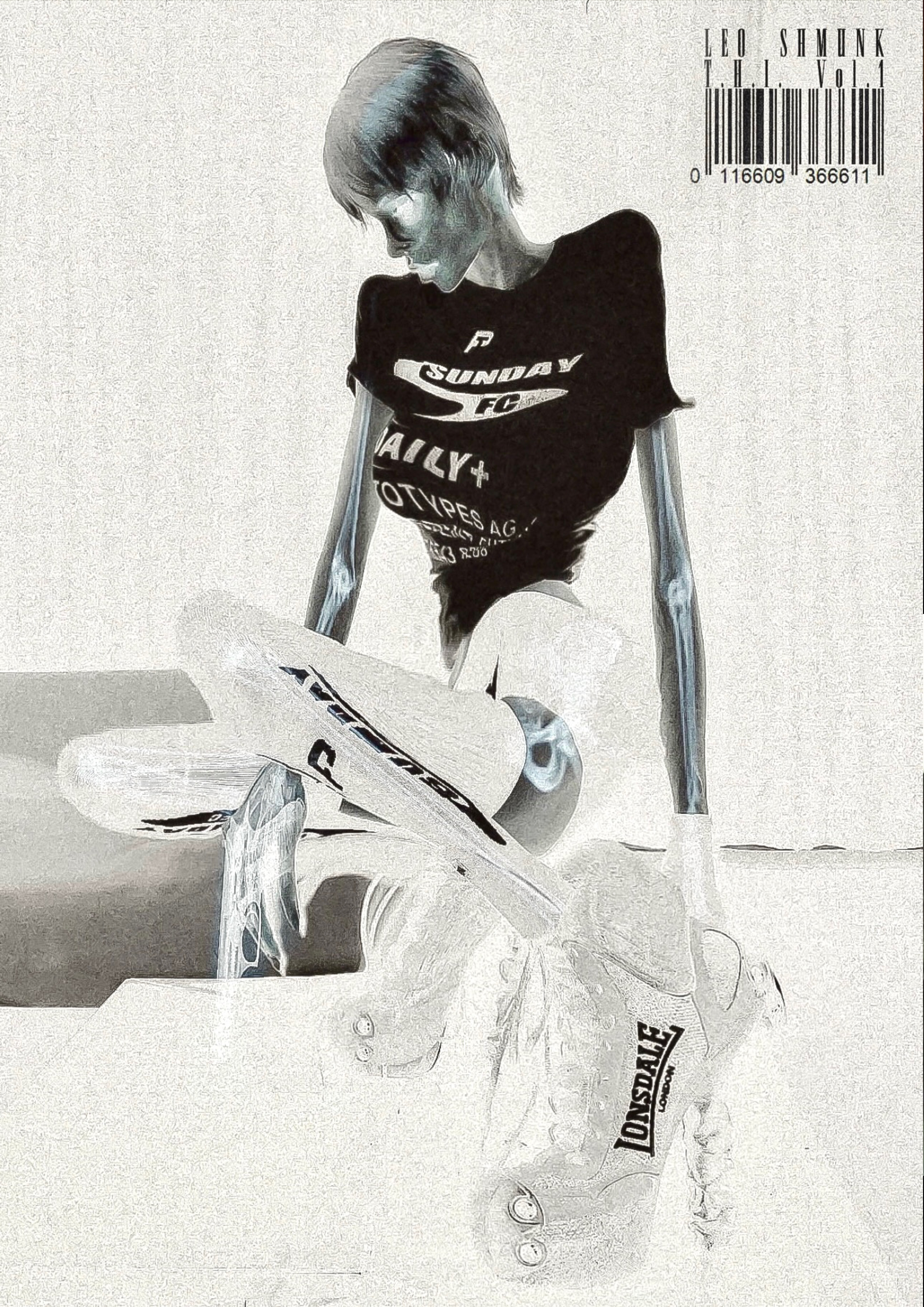
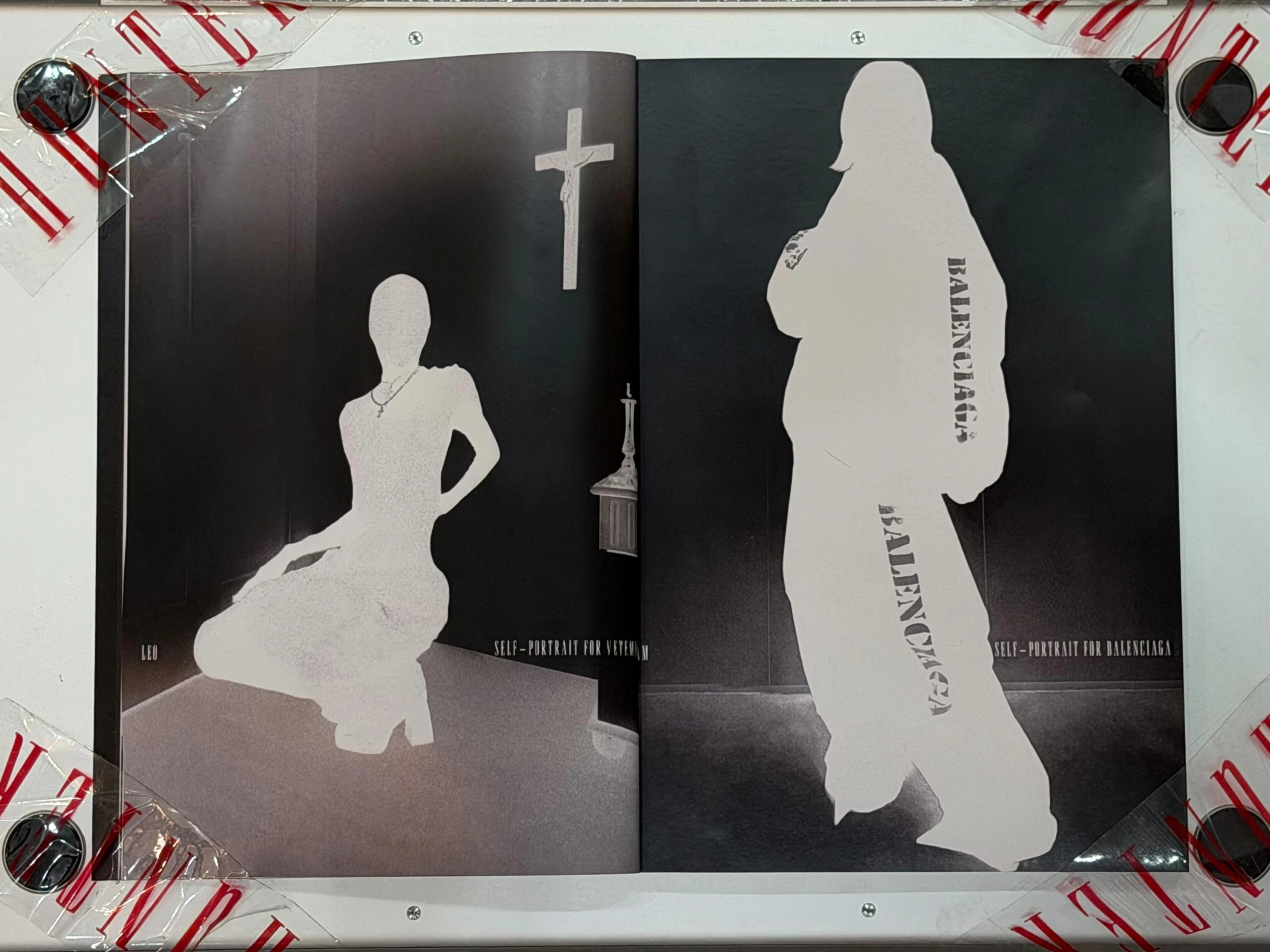
The cover is the first lie. A veiled figure, black-marked face under a white cross, the title THEHUNTERISSUE set across the chest, a barcode and the catalogue number 0 118809 366611 in the corner. It looks like an issue. It performs the syntax of the news-stand: branded, dated, urgent. Inside, every promise the cover makes is voided.
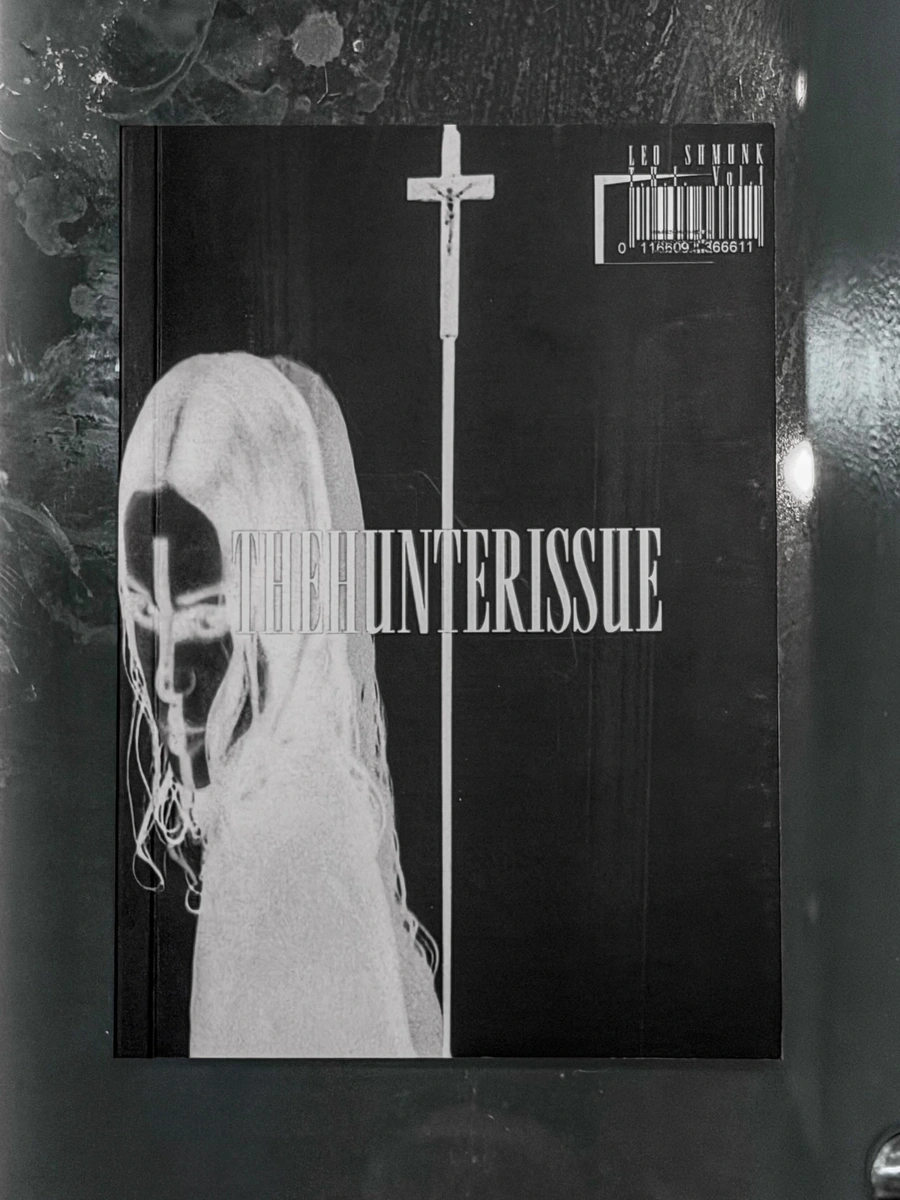
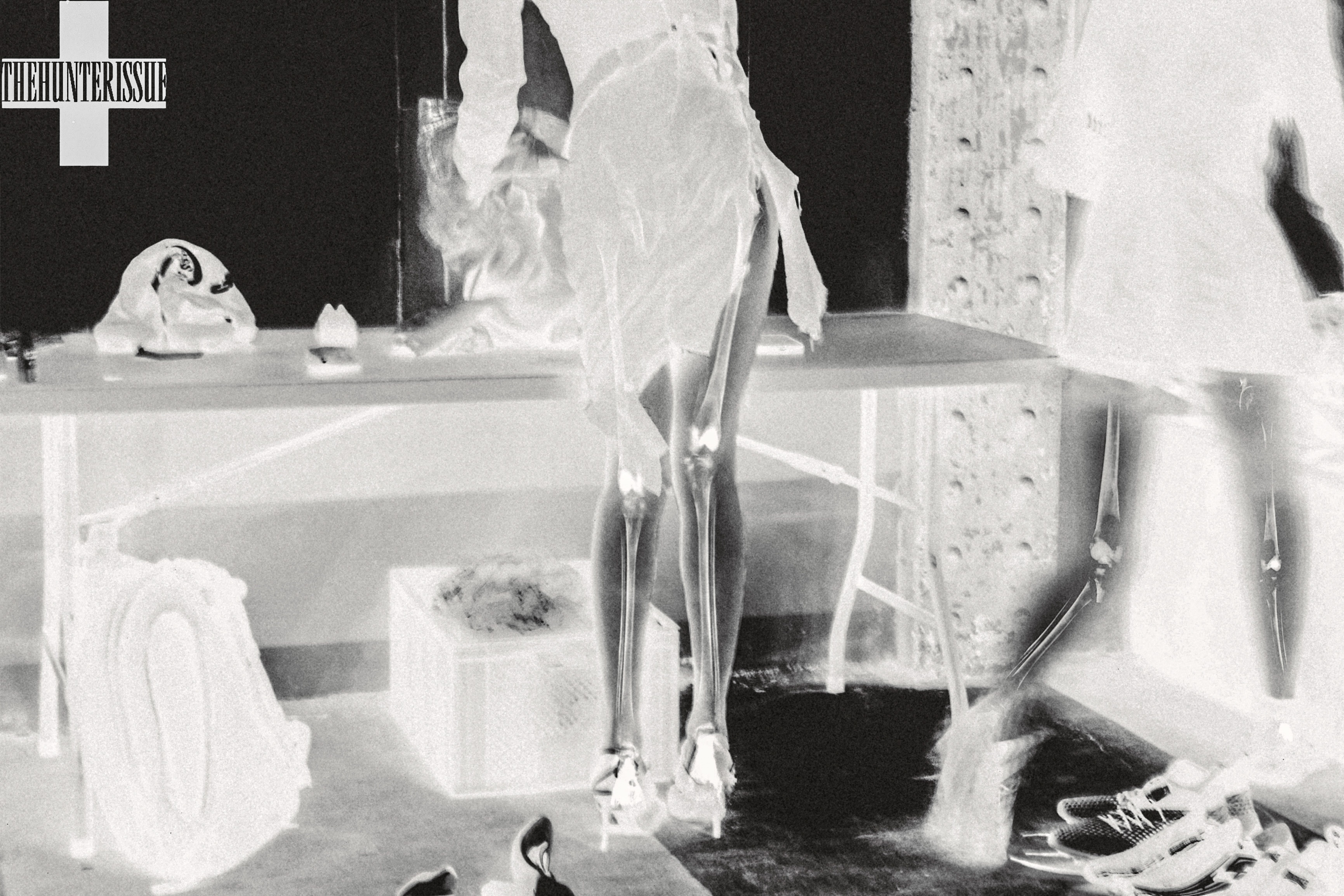
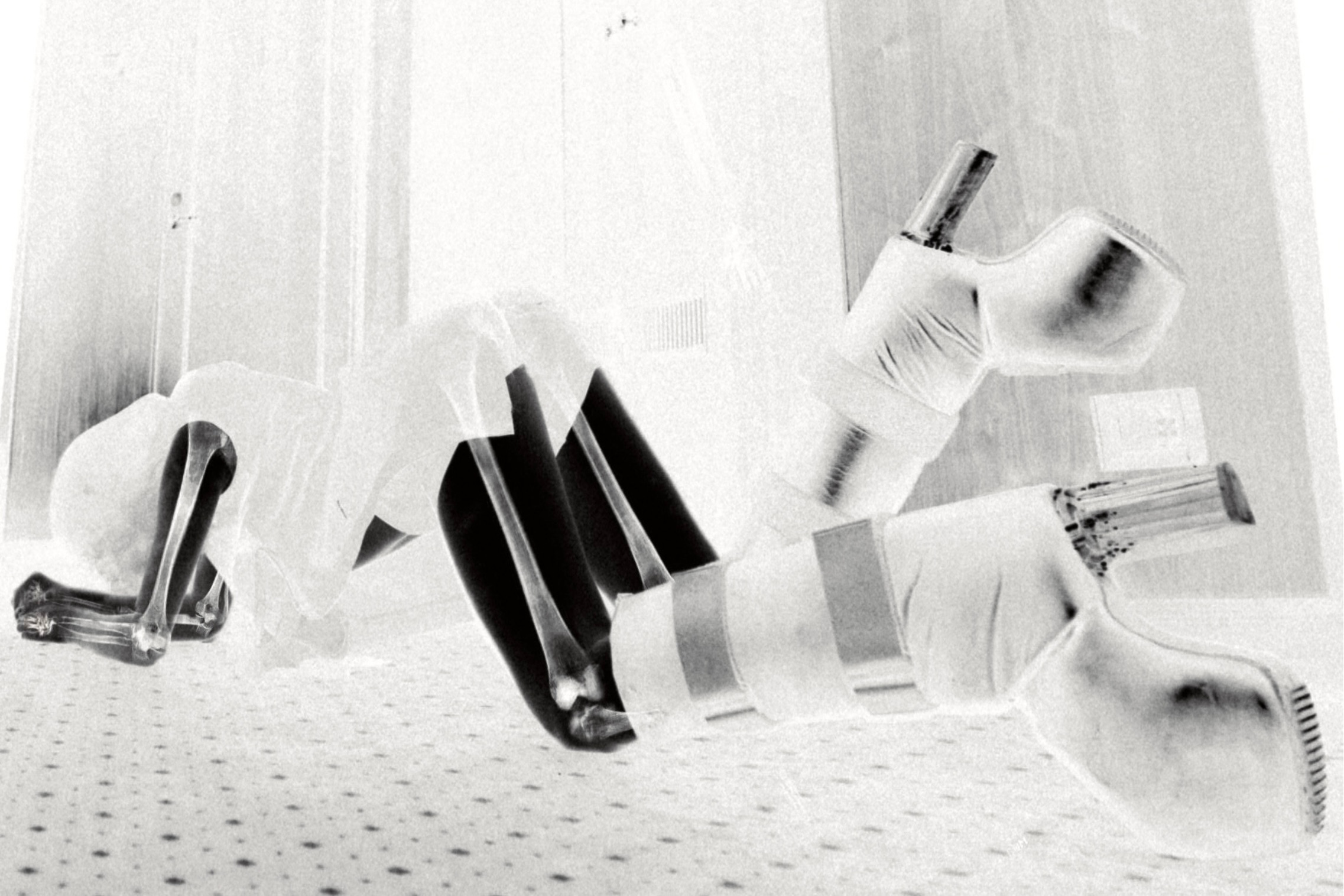
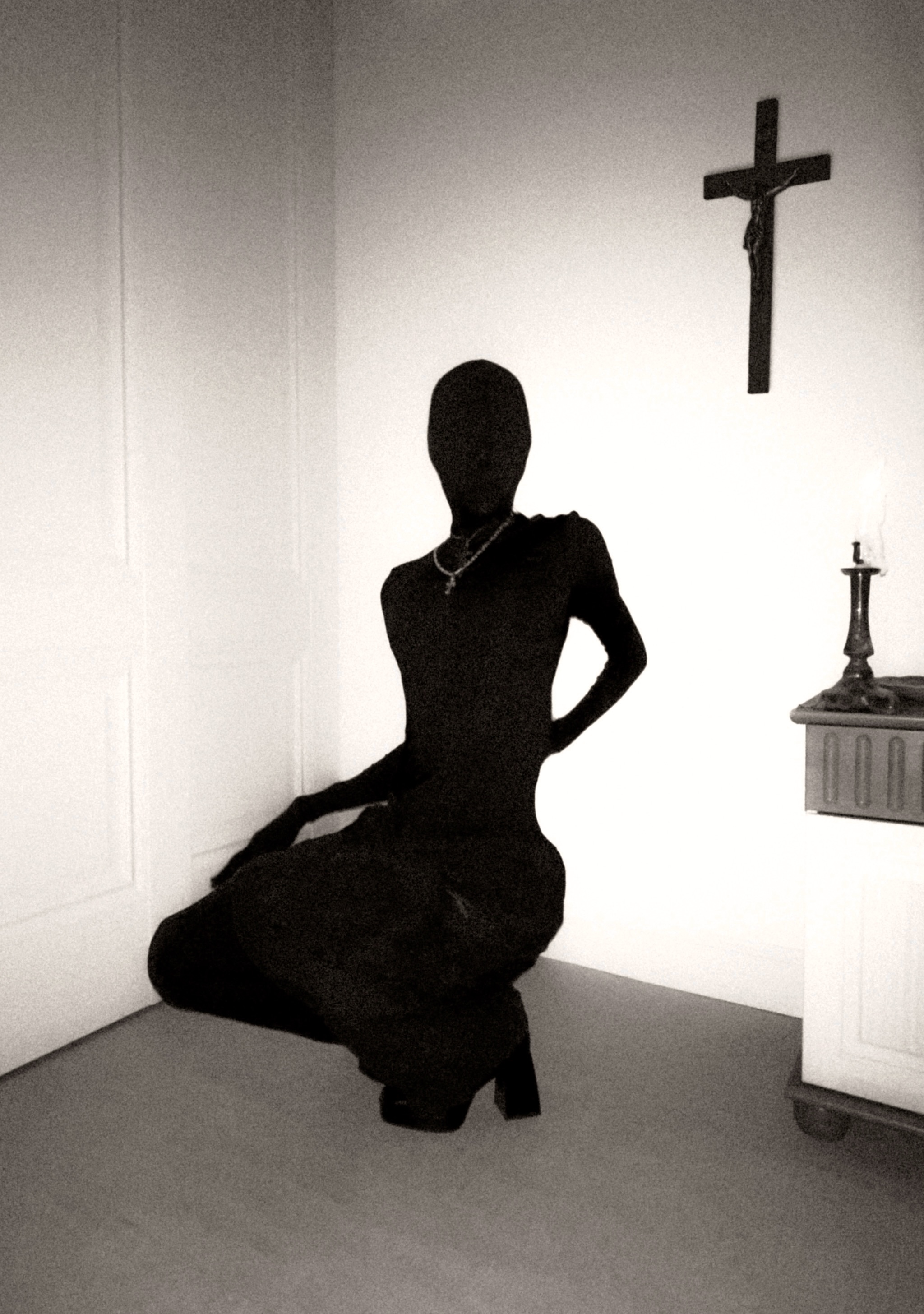
Open the spread and the body disappears. A kneeling figure, white silhouette against black, labelled SELF-PORTRAIT FOR VETEMENTS. Beside it a standing silhouette, the name BALENCIAGA stencilled into the cutout where the clothing should be. Not a portrait of the garment, not a portrait of the wearer: a hole the brand falls into. Whatever the process behind the image, the result is the same: the brand sits where the wearer was, a watermark on absence.
The work was supposed to ride a different wave. Shmunk had been booked back-to-back through 2023 and 2024, deals signed, creative autonomy negotiated, the fashion week machine churning. The book was announced as a marker of arrival. What arrived instead was doubt. In the artist's own description, the realization that fashion week content “has traded depth for speed,” that the message had been reduced to its delivery time, that being first had eaten being seen.
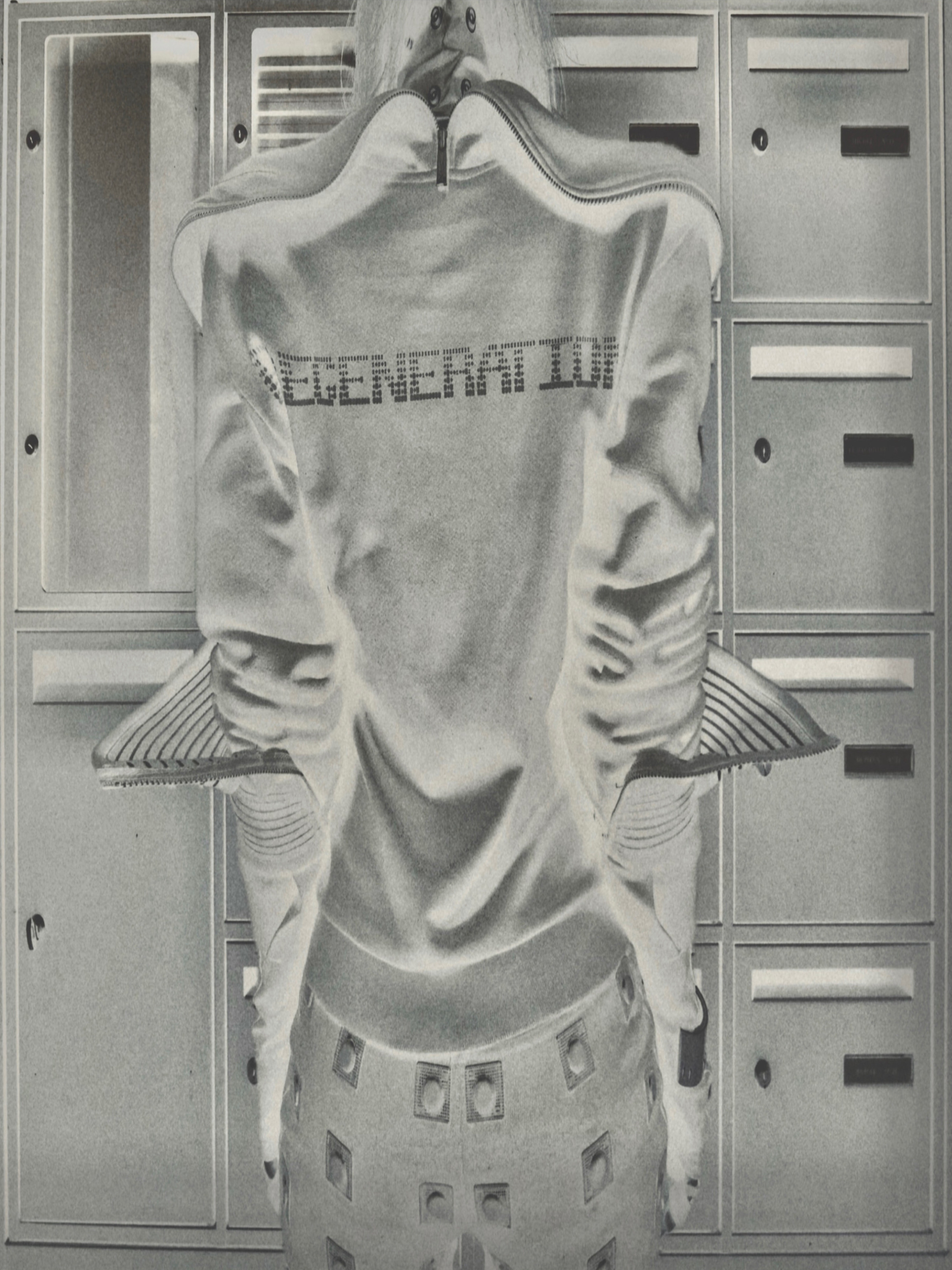
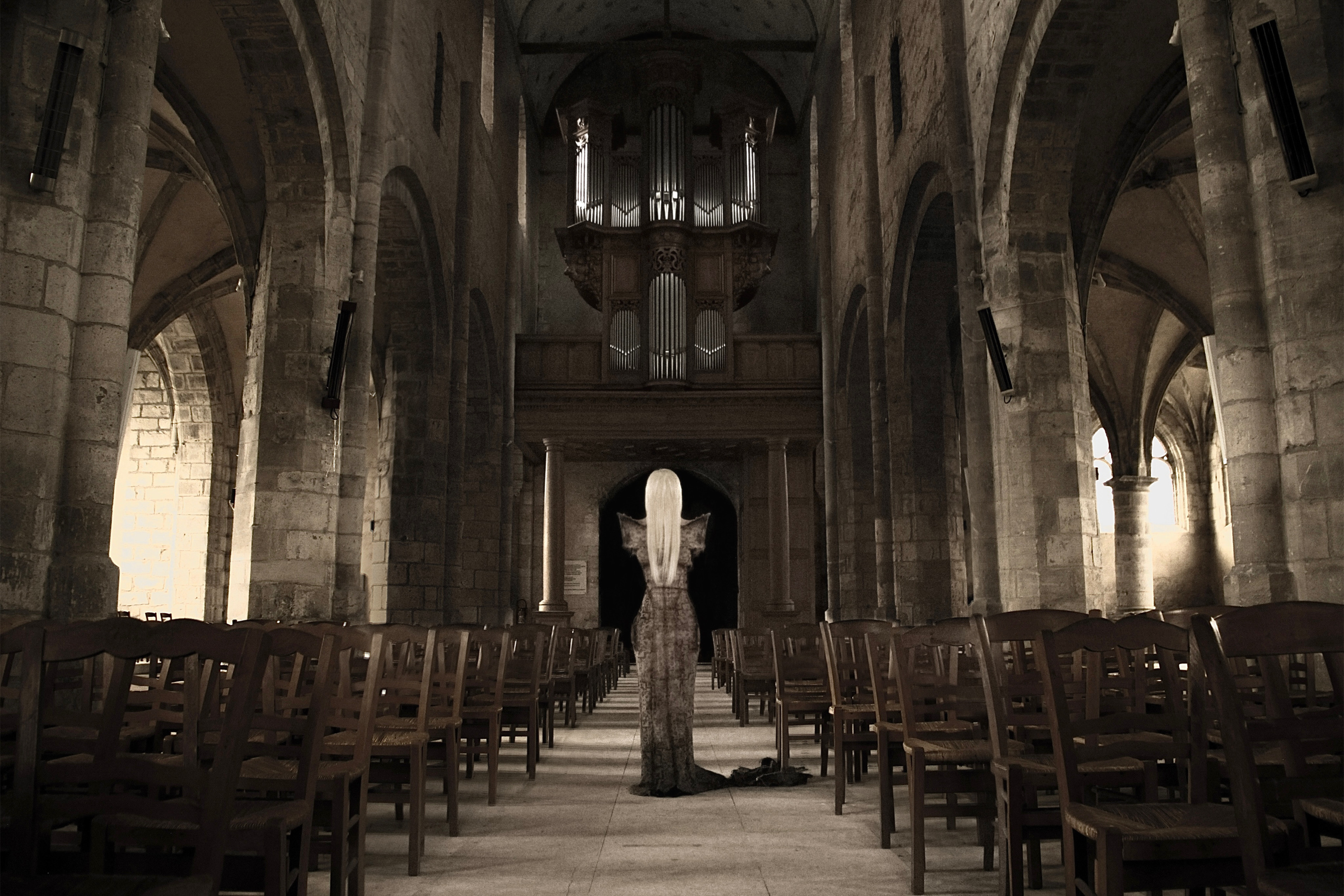
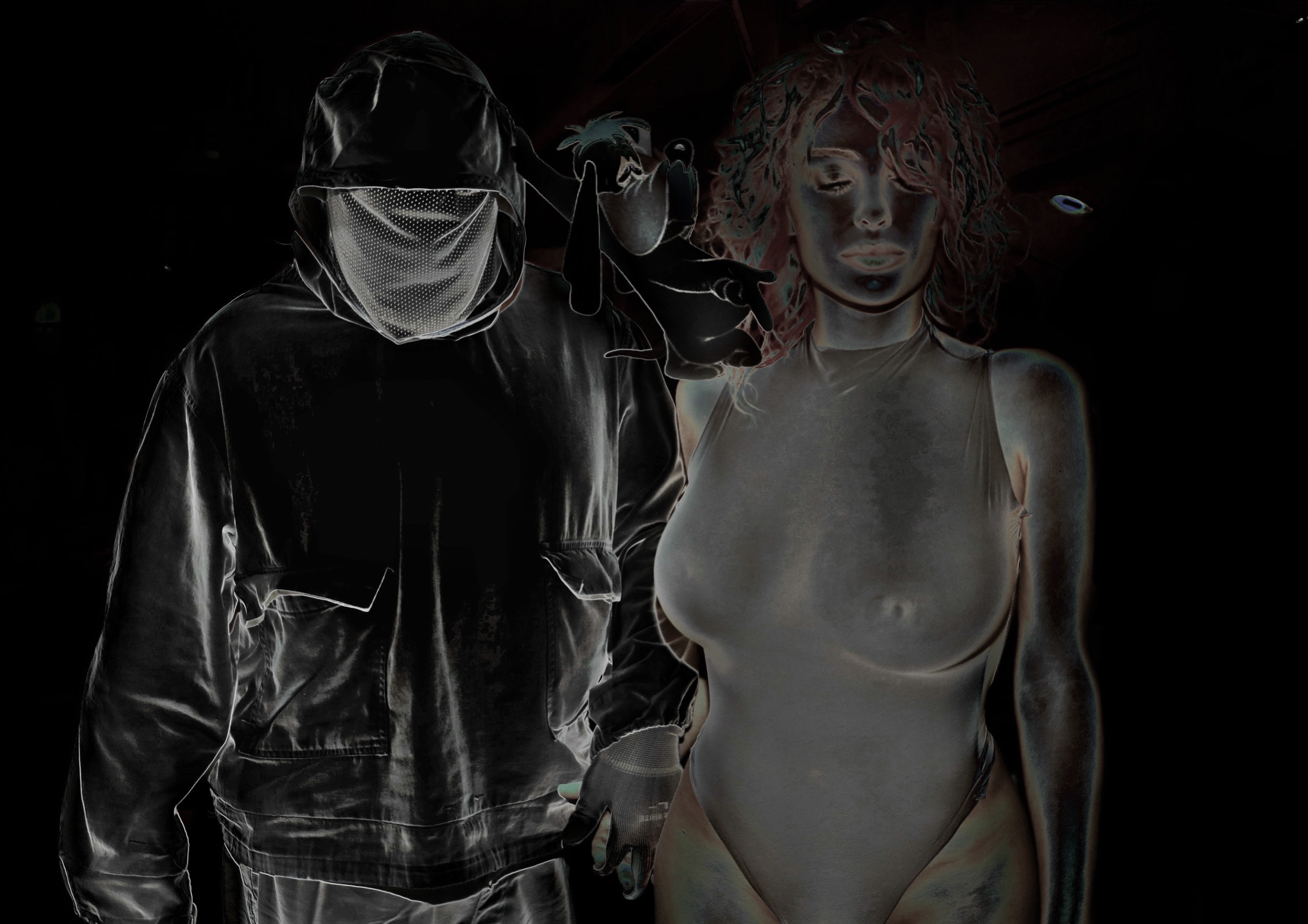
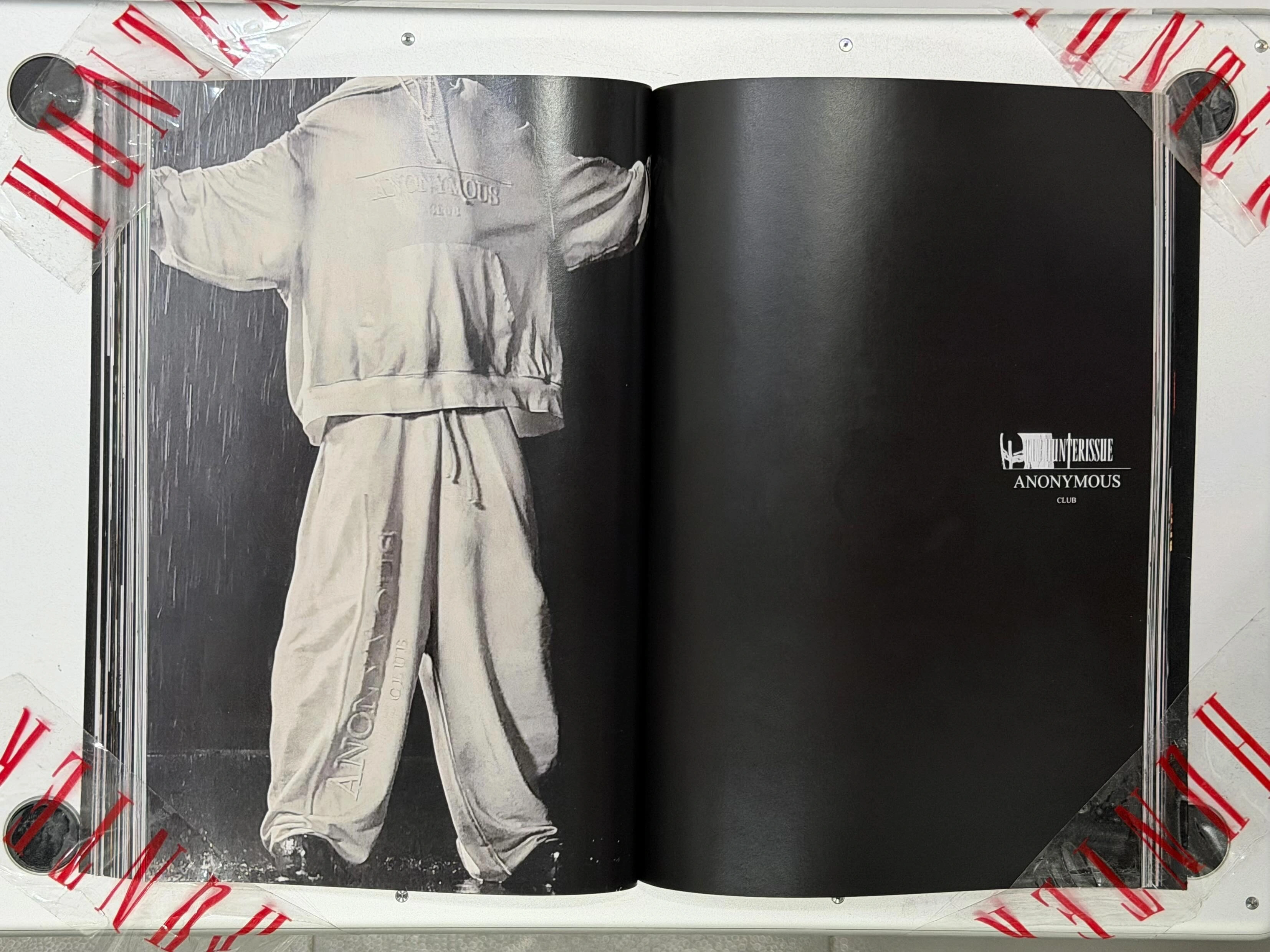
The response is conceptual corrosion. Shmunk starves the work of its commercial purpose. Logos vanish, faces vanish, colour vanishes. Paris becomes “the city of ghosts.” A photograph of a Vetements tracksuit hangs mid-page with water suspended around it, the garment grey-on-black, the body inside it emptied out. The opposite page is a black field with the debossed mark ANONYMOUS CLUB pressed faintly under the TheHunterIssue logo. The luxury index turns inward. The trademark is a phantom limb.
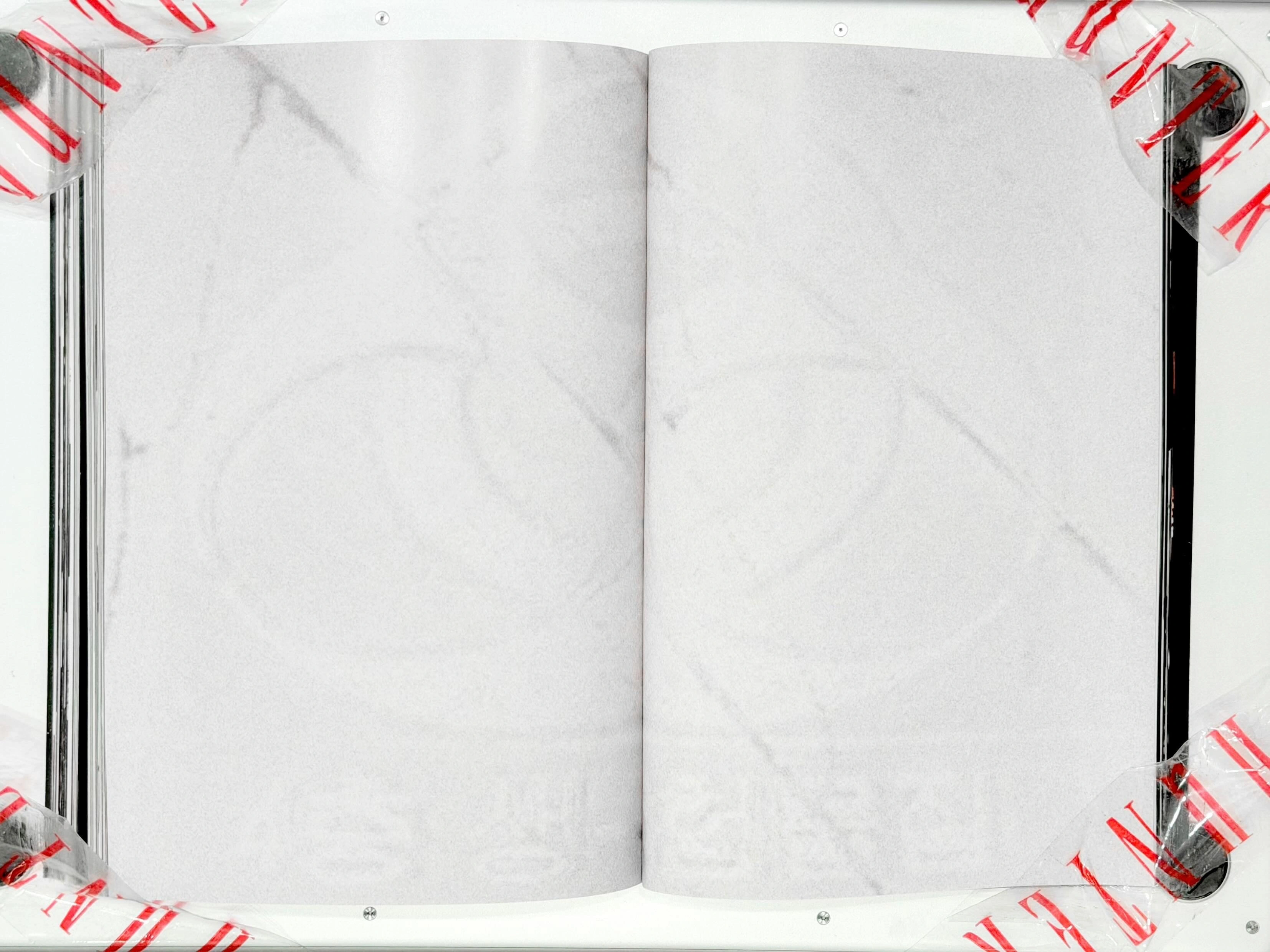
Two spreads later, the page becomes marble paper, the Chanel double-C surfacing as embossed pressure beneath the marbling, half watermark, half wound. Not a logo, not a citation: a residue. The brand as something the substrate remembers. The page does not represent luxury, it metabolises it.
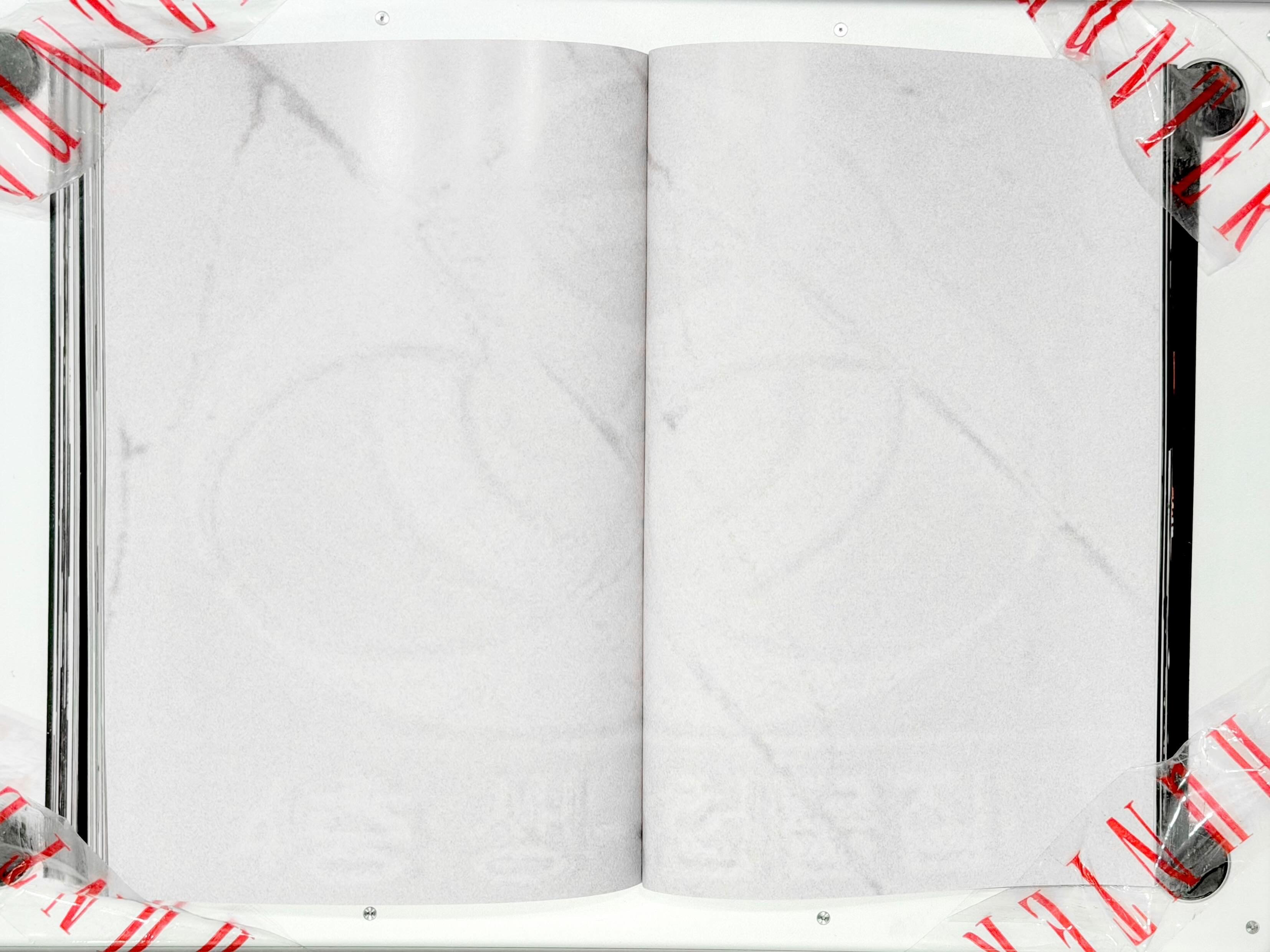
This is where the book turns from gesture into thesis. By stripping out everything that could be screenshotted, posted, reposted, made instantly legible, Shmunk produces a publication that operates against the metabolism of its industry. The fashion week feed survives on extraction. TheHunterIssue Vol.1 leaves nothing to extract. Its silhouettes do not crop well. Its embossings will not photograph. The marble paper resists the algorithm by being almost blank.
The final move is to make the format itself the argument. The book is print only. As the artist writes, “a digital image is inherently replicable since it hits the screen, not at the level of silhouettes but through its underlying pixel code. Physical publishing is the copyright against AI.” The sentence reads like a manifesto because it functions as one. Paper as enclosure. Paper as the last surface a model cannot ingest at full resolution.
What Shmunk hunts is not the next look but the conditions under which looking still means something. TheHunterIssue Vol.1 is a book made by refusing to be content. Not a withdrawal, but a counter-protocol: the silhouette as receipt, the embossing as oath, the page as the room the image gets to live in without being scraped.