.webp)
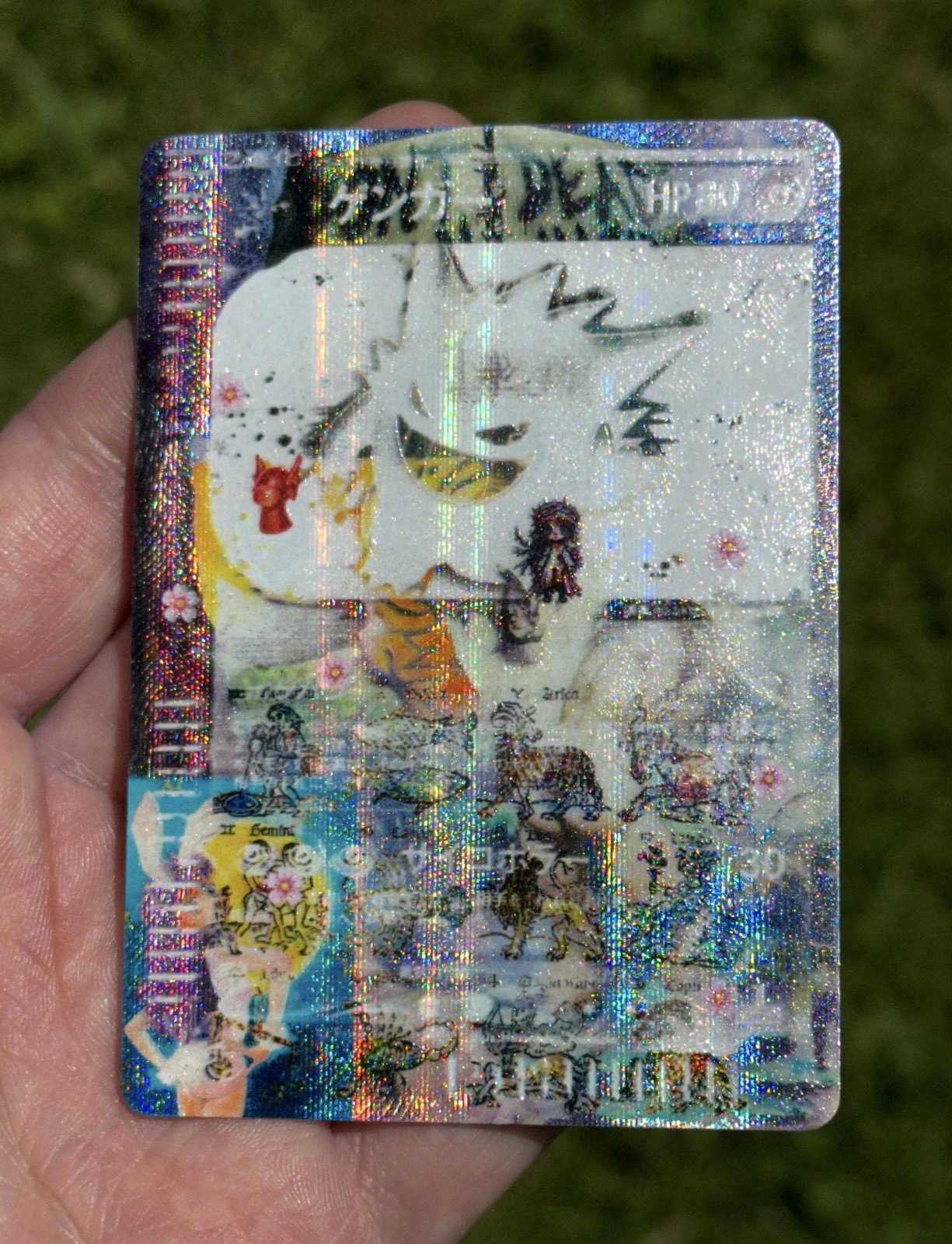
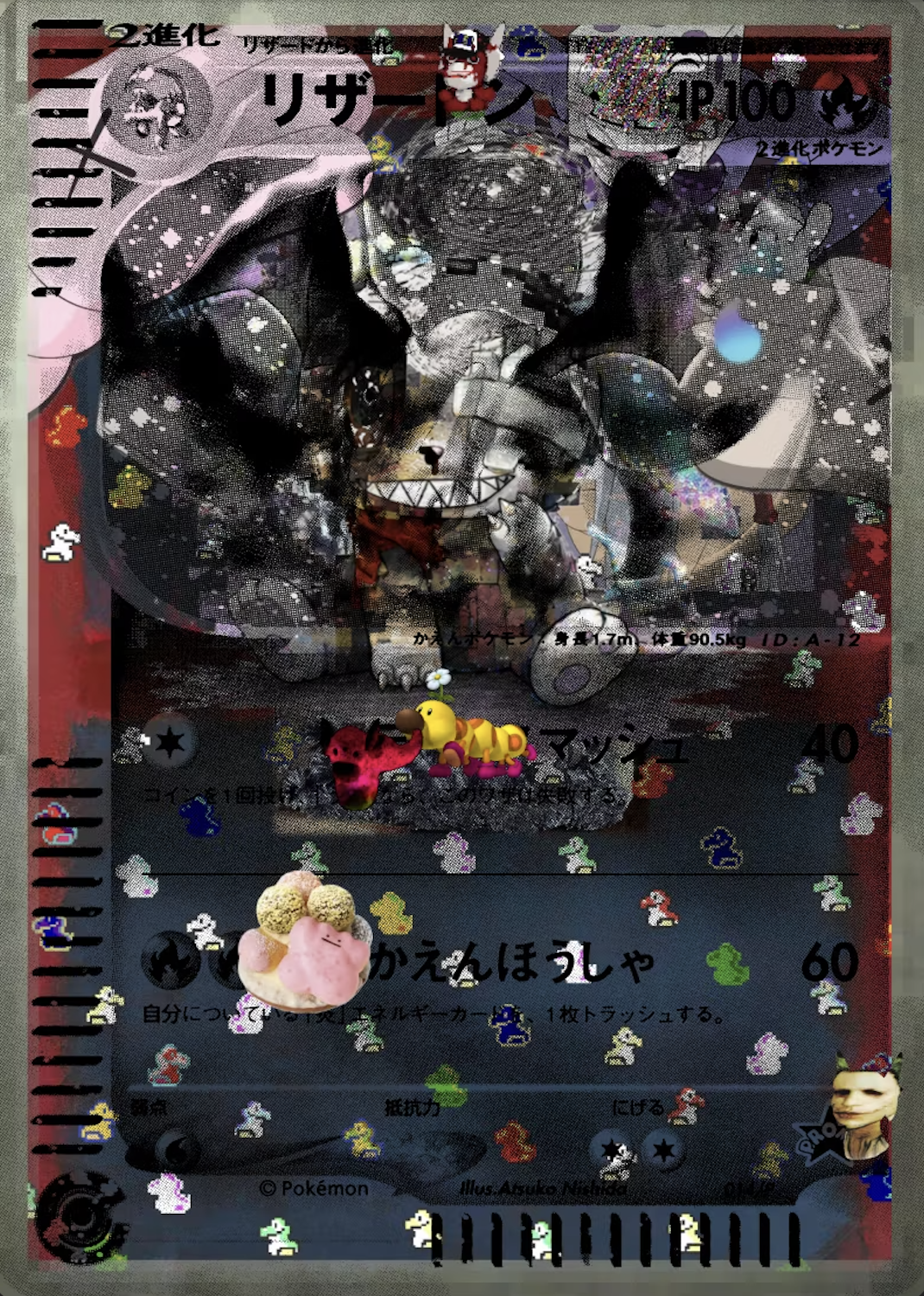
Acetone lifts the ink off a vintage holographic Pokémon card in a few passes of a cotton rag, leaving bare silver foil and a market value of nothing. Evil Biscuit begins there, and everything that follows, the collections, the lore, the packs, the burning, unfolds from that first act of ruin.
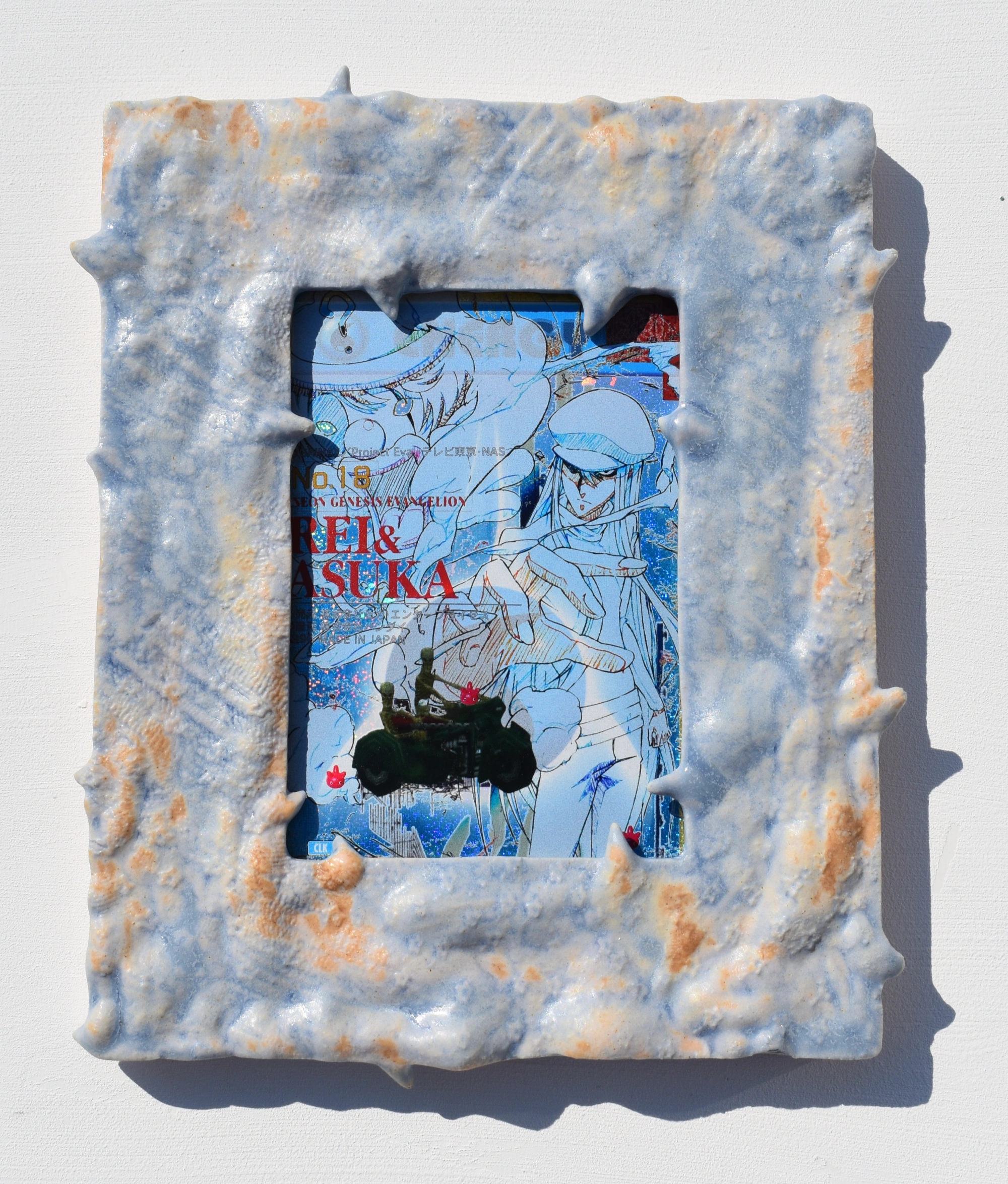
On a UV printer bought the year before, opaque white goes down first, transparency left in it so the hologram can still flare through, then colour, then a texture file of engraving or etched line, then clear ink that refracts across the whole surface. The artist recites the sequence with the flatness of someone reading out a recipe. The object that emerges is not a restored card. It is the same cardboard, the same foil, a different god. An entire industry of graders, slabs and sealed cases exists to protect condition; this practice is built on the opposite instinct, on the conviction that a thing has to be spoiled before it can be made.
Biscuit works near the centre of a scene that has named itself twice, both times as a joke. Super Metal Bosch coined the term Avant NFT in a post on 25 January 2022; the scene later adopted Gay NFT from a passing exchange about how calling anything avant had always been pretty gay, keeping the name partly as a filter against the easily offended. It is a movement closer to Fluxus than to a style, defined by conceptual approach and network, international, largely pseudonymous, a place where persona functions as medium and one artist can operate several. Its method has two names, traitmaxxing and schizocollage: take the layer system that produces ordinary avatar collections and push it hundreds of layers deep until the image verges on chaos. Dean Kissick has placed the results in the lineage of deliberately bad painting, the tradition Marcia Tucker institutionalised in 1978 with ‘Bad’ Painting at the New Museum, where wrongness, handled on purpose, becomes a kind of freedom.
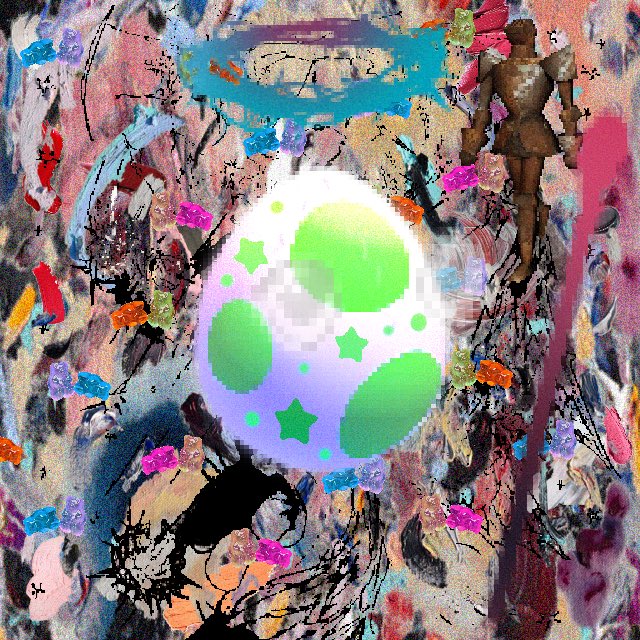
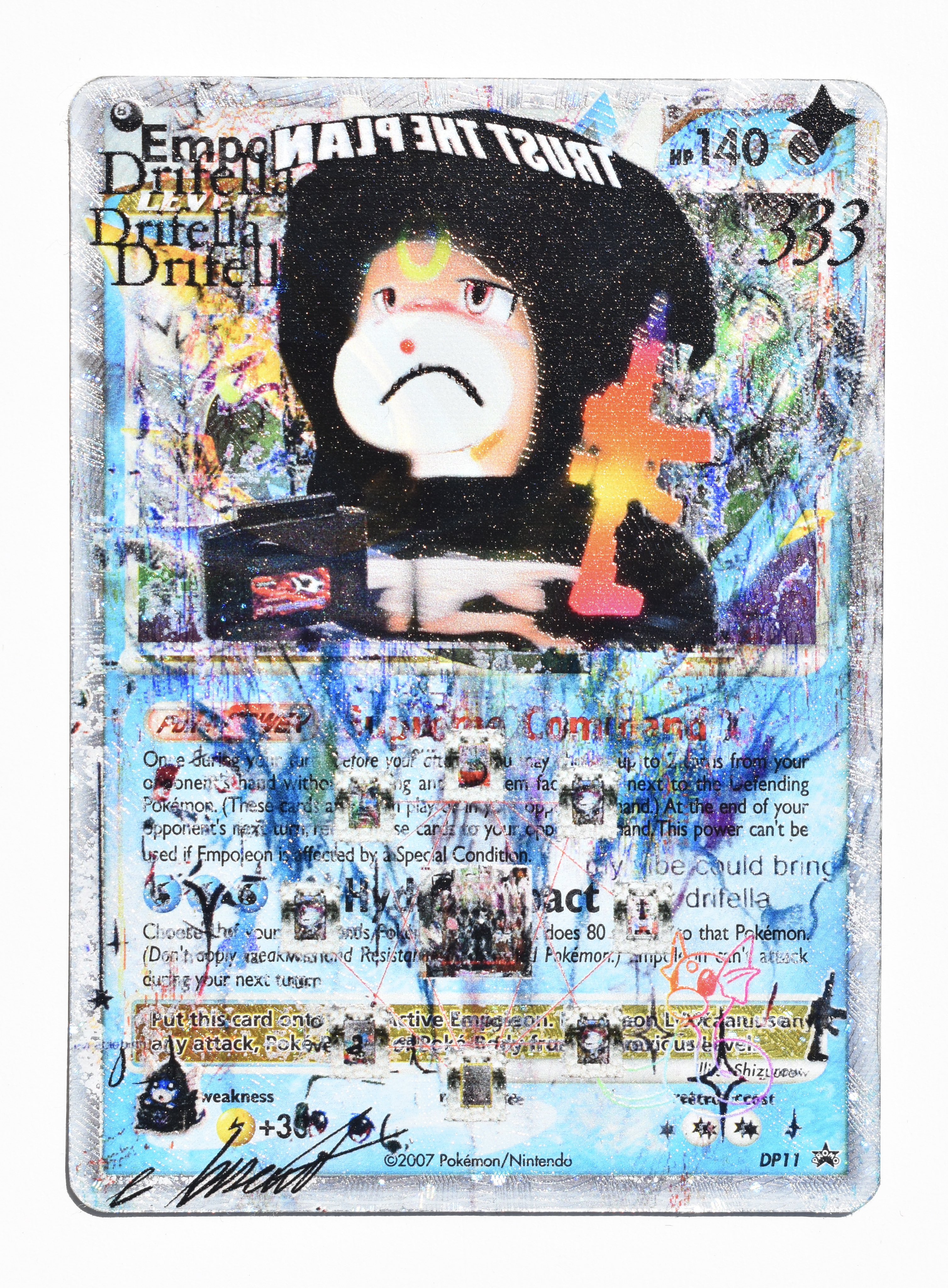
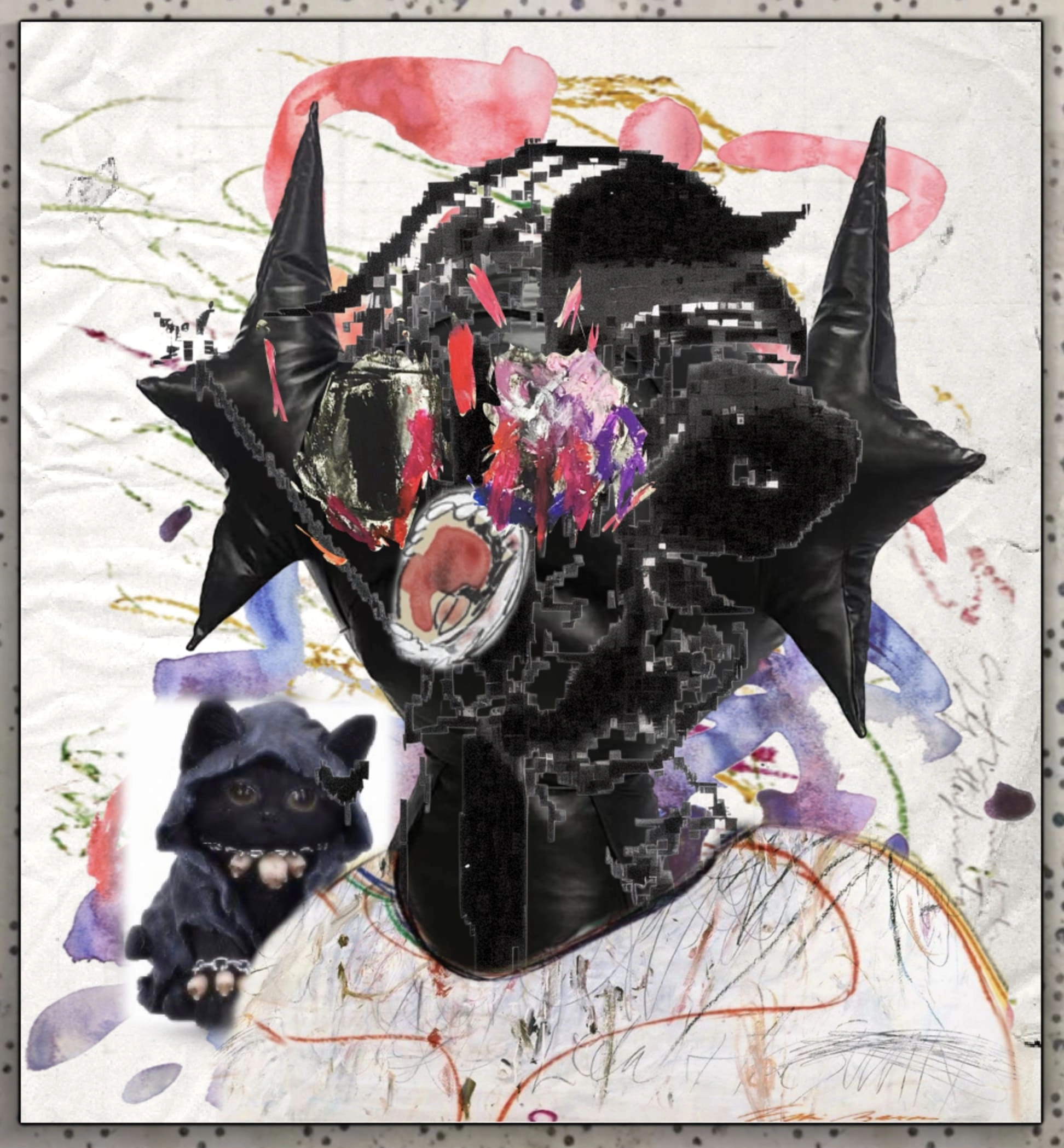
Drifella begins in March 2023 with an obstruction. MiFella’s overlays interested Biscuit because they could block the central figure until the picture stopped behaving like an avatar and started behaving like a painting. He asked MiFella for the assets, was given them and pointed toward HashLips, and combined that material with Dratini, Milady, memes and his own accumulated archive into 1,998 works on Ethereum. He later called the collection “a punk mash-up of milady, Mifella and Dratini.” The sources are not laundered, they are published: the genealogy is the image. And the lore arrives with the picture. A Dratini has died; a Mifella spends his own soul to revive it; what comes back through that transaction is not the friend but the dark jester, resurrection with the wrong ingredient.
"Dratini, your faithful companion and friend, has tragically passed away, leaving you heartbroken and desolate. Yet, in your darkest hour, you are visited by a Shinigami - a powerful being from the netherworld who holds the keys to the realm of the dead. Desperate to bring your beloved Dratini back to life, you strike a deal with this otherworldly entity - to inject the soul of Mifella, a local figure of great power and mystery, into your fallen friend's body. And thus, the legend of DriFella is born - a being of great ugliness and raw power, forged from the remnants of a fallen Dratini and the essence of Mifella's soul. Yet, this is not a simple tale of resurrection - for the true power of DriFella lies in the complex interplay between the base-cocoon-maturity structure, the Godhead-pilled take on the Dratini line, and the chaotic, punk-inspired art that defines its very essence. As you explore this collection, you will be transported to a post-apocalyptic world of chaos and destruction, where the forces of life and death, creation and destruction, swirl around you in a dizzying dance of cosmic proportions. You will witness the raw power of DriFella as it tears through hordes of zombies in its trusty destroyer car, fueled by the primal forces of the universe itself. But beyond the mere spectacle of its art and lore, DriFella is a testament to the human desire to overcome death and transcend the limitations of our mortal existence. It is a tribute to the power of imagination, the boundless potential of the human spirit, and the infinite mysteries that lie beyond the veil of our material reality. So come, step into the world of DriFella, and unlock the secrets of life and death that lie hidden within its esoteric depths."
Drifella 2, February 2024, moves to Solana, where the energy had gone and where a crashed chain was cheap enough to make things on. 9,677 works, an attempt to max out the collage entirely: plush fabric, ripped denim, leather, latex, painterly marks and overlays that divide and conceal the body rather than decorate it. The scene treats it as the formal break. Parker Ito credits it with establishing the aesthetic everyone else became known for; Jared Madere called it the most interesting conversation in painting in thirty years. This is the point at which a trait system stops imitating painting and starts being one.
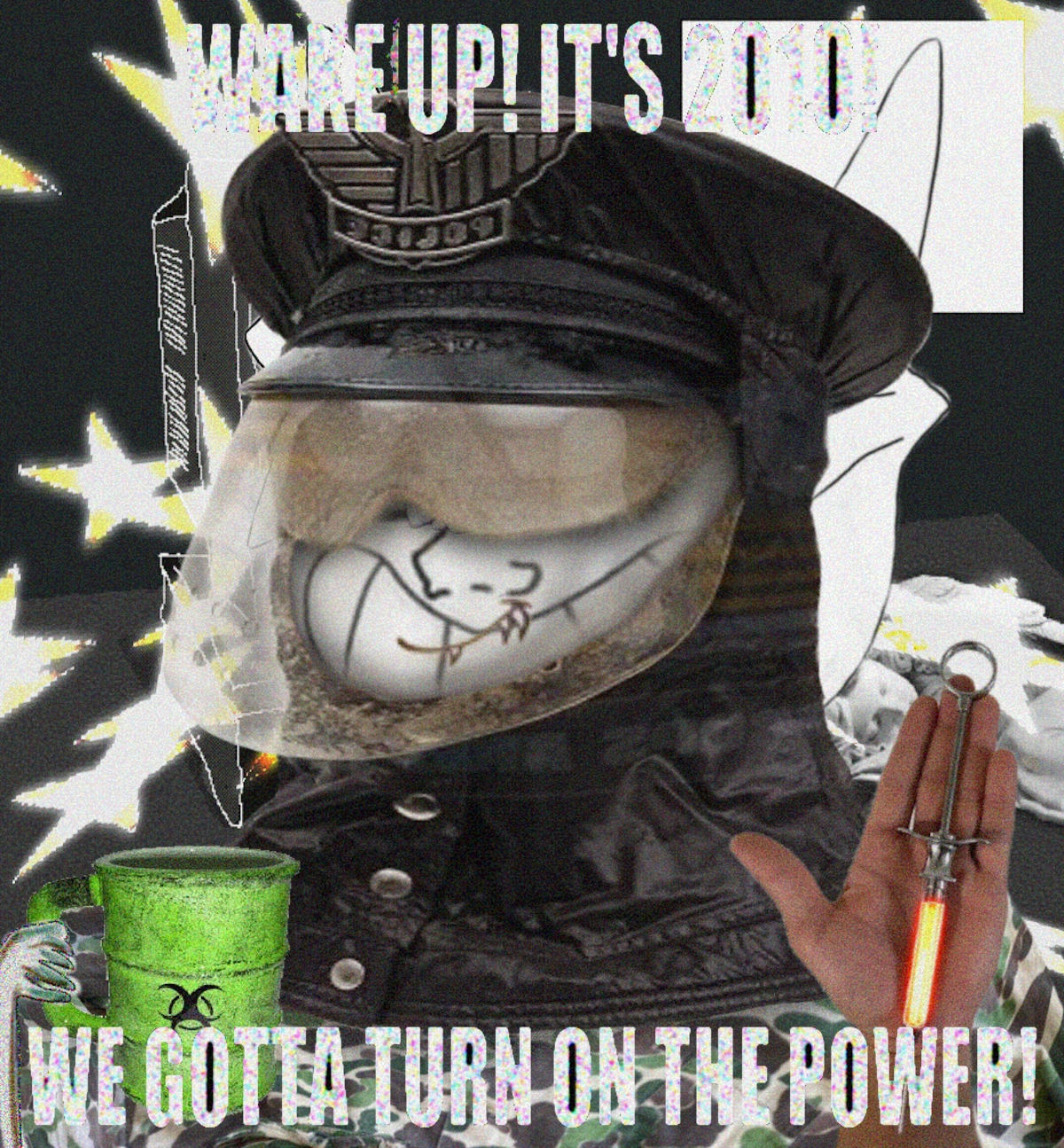
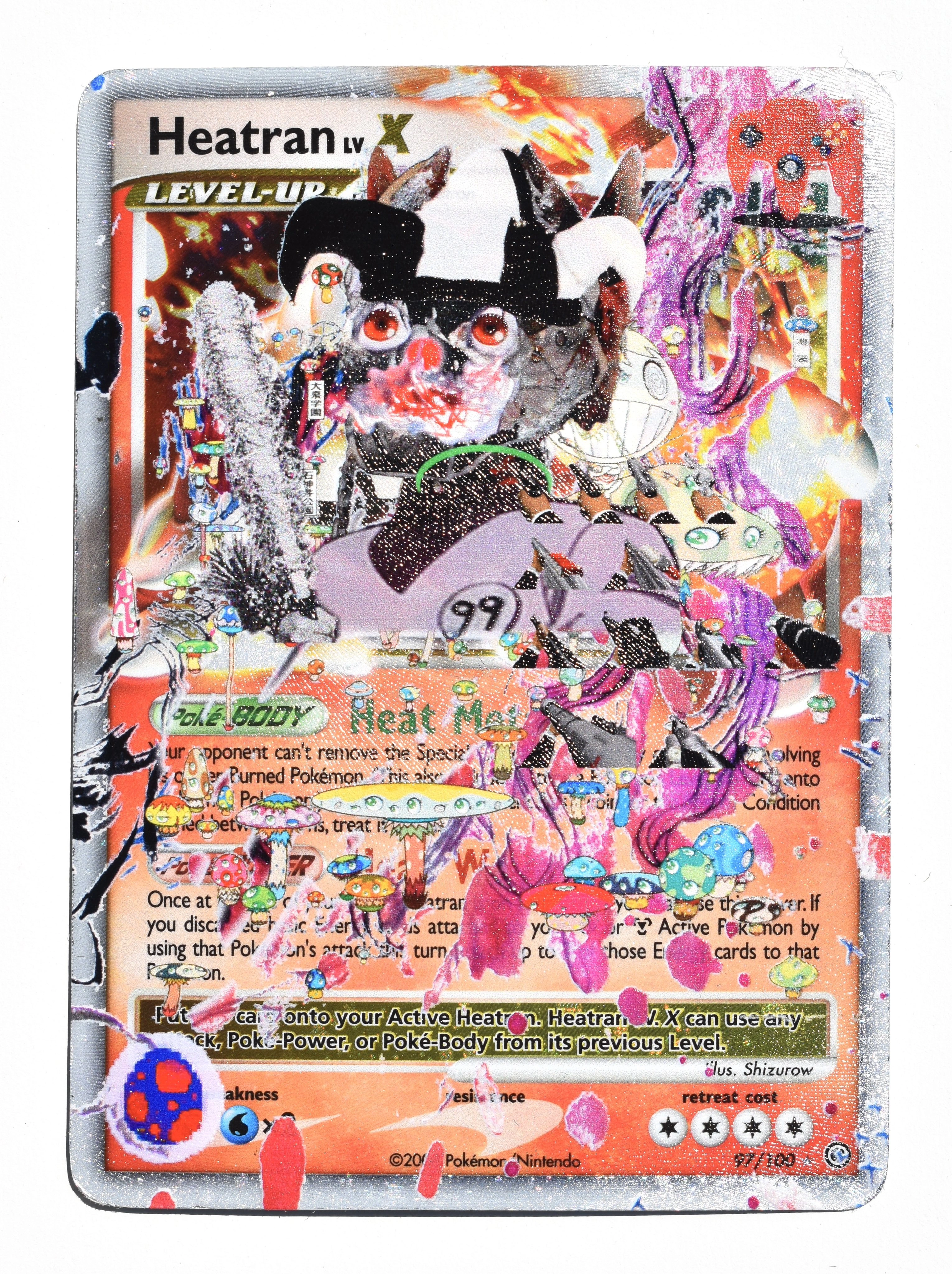
The other line of the practice is older than the work. Biscuit was born in 1996, the same year as Pokémon, and grew up inside his father’s comic shop and its boxes of fifty thousand cards, playing Yu-Gi-Oh tournaments as a shy kid against older teenagers, watching binders come out at church. What converted the card from memory into material was encountering terrorism’s altered holographic cards, work printed over existing holos, which “sort of flipped my mind in thinking of trading cards as artworks or objects.” Days after Drifella released, while it was still minting, he started altering physical cards. Drifella Card 1 was later auctioned through Exchange Art for $12,300. Card NFT followed in 2024, 7,739 works, screenshots and found imagery reorganised by generative collage, deliberately noisy, meme-grained, a low-resolution ancestor to everything the printer would later make crisp.
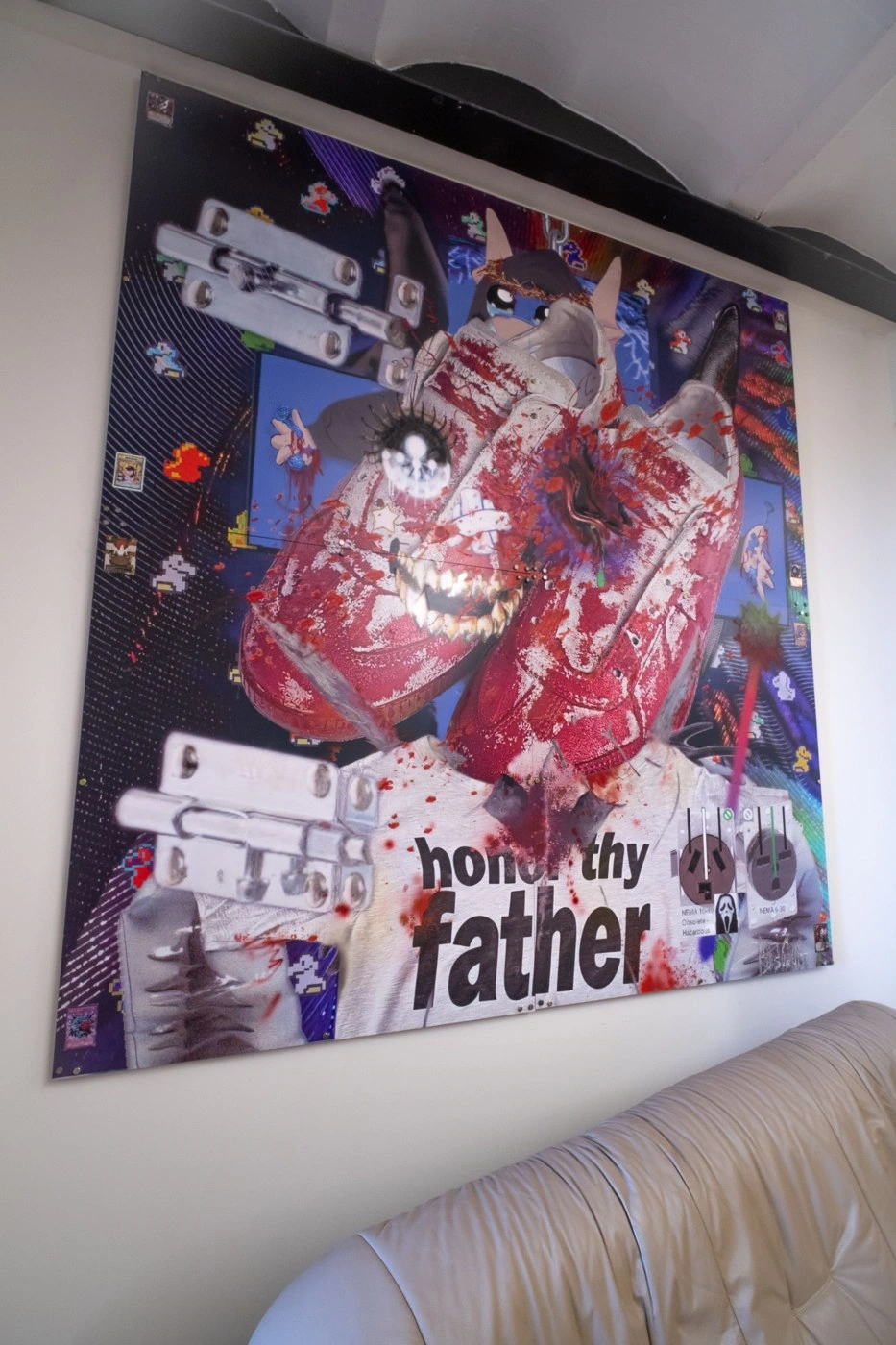
Painting and object converge in crucidrifella with bloody margielas, made in 2024 for Haircuts at Galerie Yeche Lange in New York, a large mixed-media composition with altered Drifella cards set directly into it. Yeche is the connective tissue of the whole scene: an online gallery from 2022, a physical New York space from 2024, then VVV, the Solana launchpad that hosted much of the work that followed. The industrial printer arrives after the painting rather than before it. Commercial print shops will not run oil paint through their machines because it destroys the head, which is precisely the reason to own one.
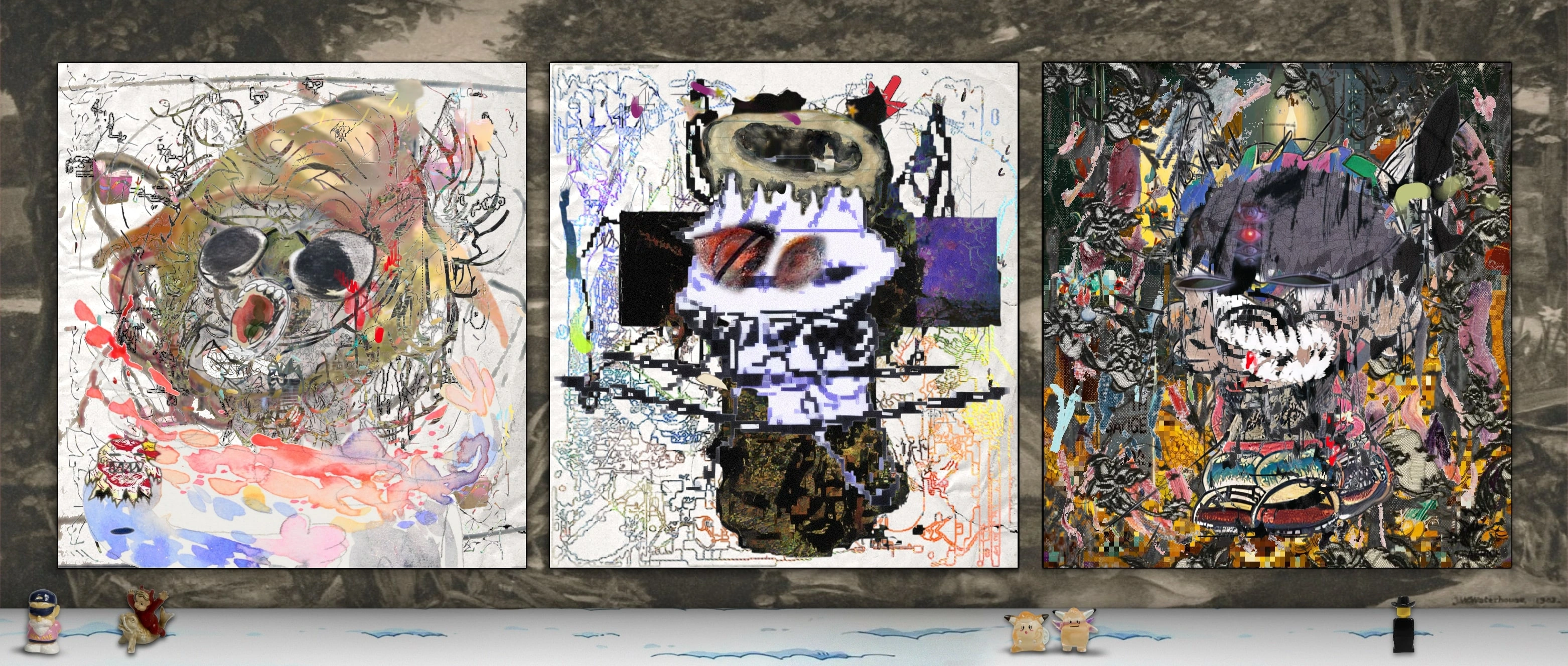
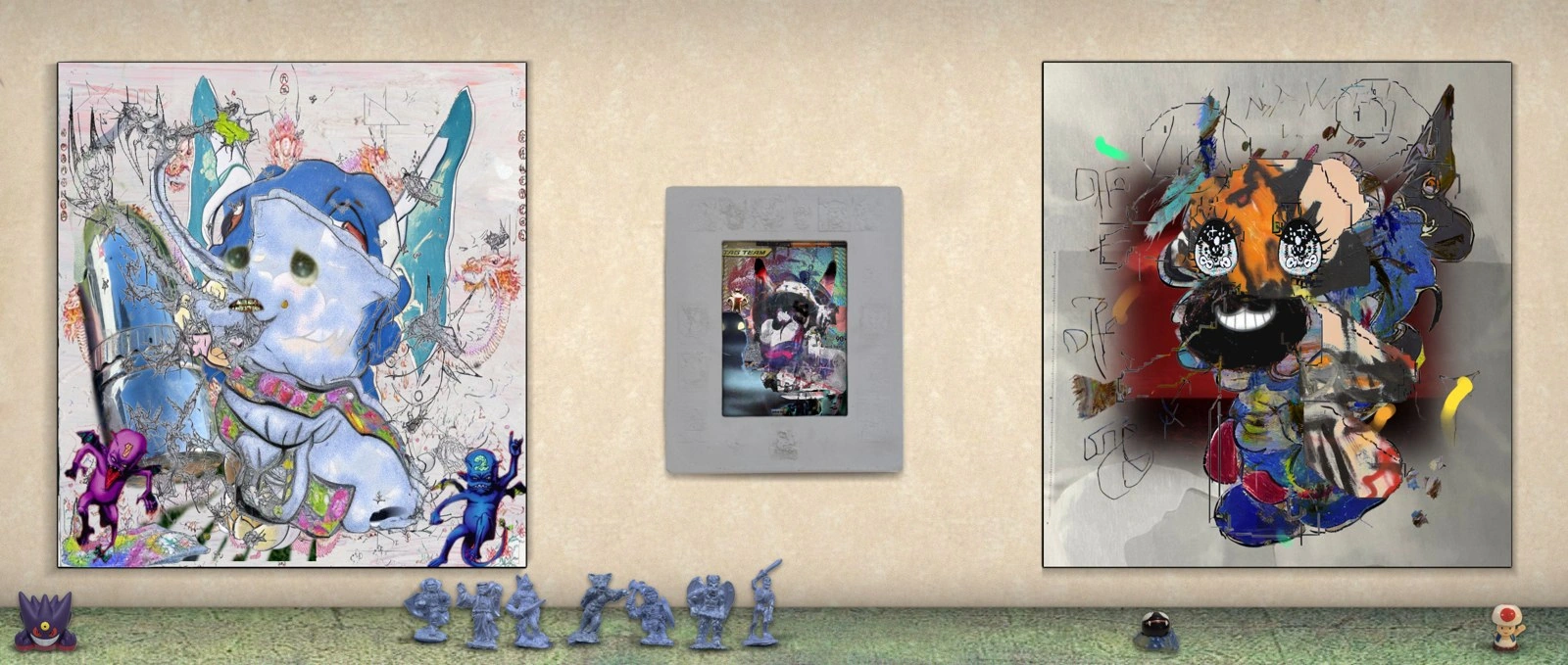
Then Drifella III, September 2025, which is where the wider art world starts paying attention. Not a picture but a place: 1,333 room-like triptychs holding 3,999 generated paintings, drawn from more than five thousand traits, against the eighty-seven traits CryptoPunks uses across its entire ten thousand. The change of format is the argument. A square avatar is built to be read in the half second the timeline allows it; a room with wall decor, a floor and toys scattered across it asks to be walked through, and gives up nothing until the eye has stopped scrolling. The triptych format does the rest of the work, importing the armature of religious painting, the thing Francis Bacon described as a magnificent structure on which any feeling can be hung. What hangs on it here is a teenage dragon dissolving. Earlier builds were thrown out for being too legible, the Dratini silhouette still reading too clearly, still too close to Drifella 2. The figure had to be buried under paint before the collection could be finished.
Masking runs through all of it, and not as metaphor. Biscuit has described the motif as being about “using masks for alt accounts and having a pfp like milady that replaces your identity completely,” which is an unusually honest account of how identity actually behaves in these communities: the mask is not worn over the face, it replaces it. The jester carries the same license the court jester carried, permission to say the unsayable so the culture can look at itself. The pseudonym is part of the apparatus, as are the other identities the artist keeps running in parallel, a habit he traces to MF Doom and his rotating personae. Consistency is not a virtue in this system. It is a limit on how many worlds one person can keep alive.
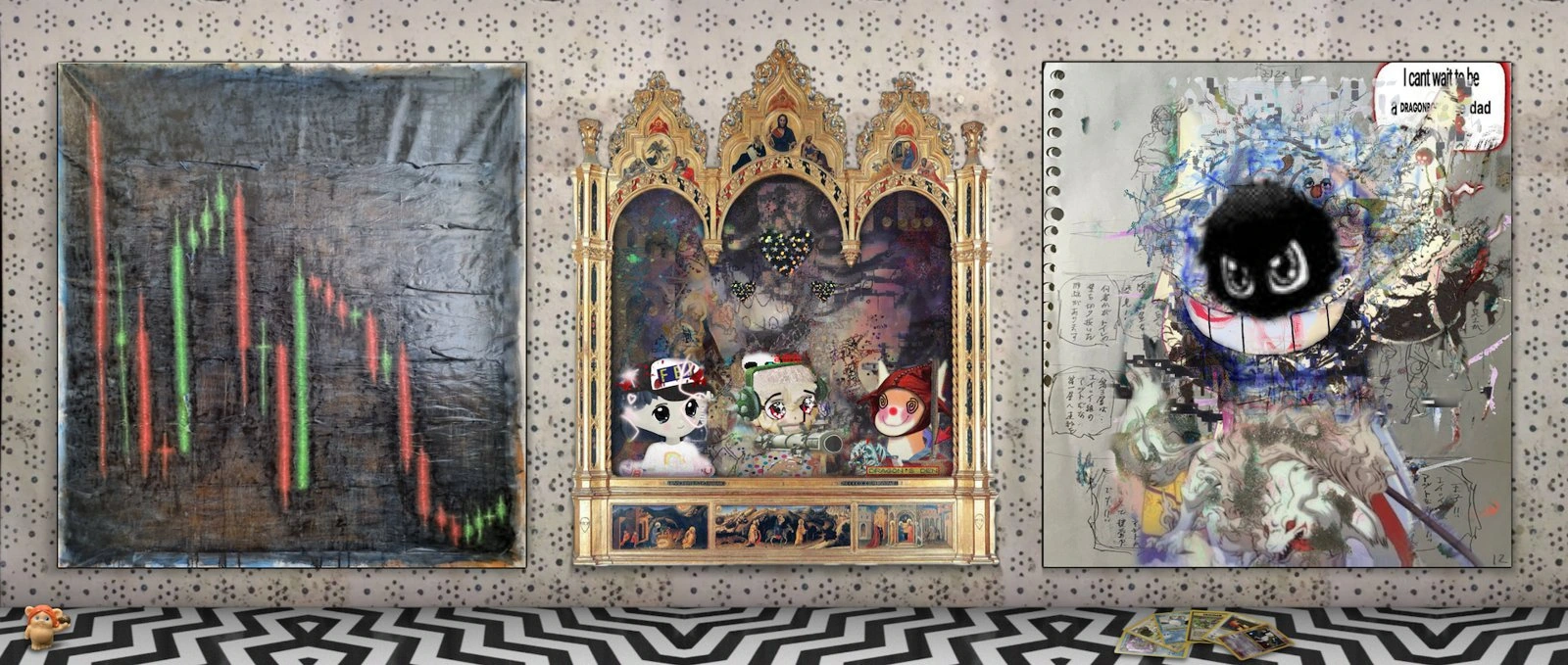
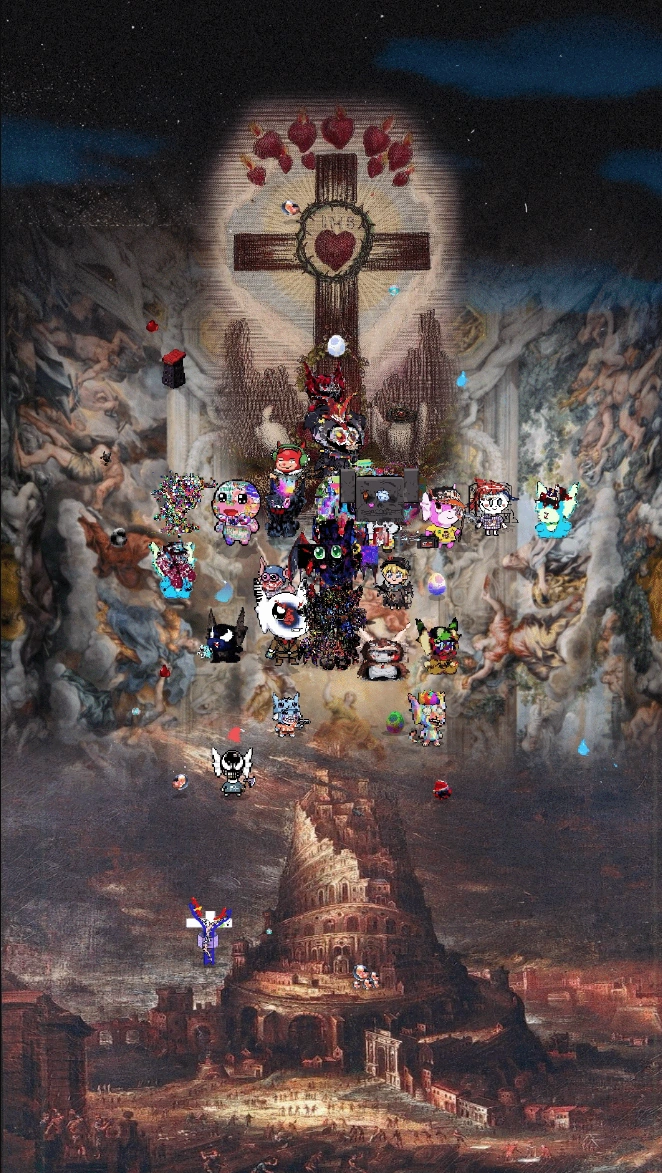
Those worlds compound. In The Constant Fella, rare Crucifella outputs were inserted by hand at particular token numbers, turning the mint itself into a small game of discovery. MILADY AURA 2 AFTER DEATH produced the aura eggs, made before the artist knew what they were, later folded back into the lore as the objects Drifella is born from. By blessing/curse in May 2026, an animated Ethereum work of twenty-three pieces, the mythology has become a functioning system: sprites hatch from eggs, grow from embryo to baby to teen, gain traits, evolve toward a champion stage and finally into CruciDrifella, who dies on the cross, returns to an egg and hatches again as a serpent demon jester embryo. The embryos entered the work when the artist and his wife saw their son on an ultrasound. Death, rebirth and mutation are not themes bolted onto the collections. They are the mechanism by which the character is allowed to keep reappearing.
Consistency is not a virtue in this system. It is a limit on how many worlds one person can keep alive.
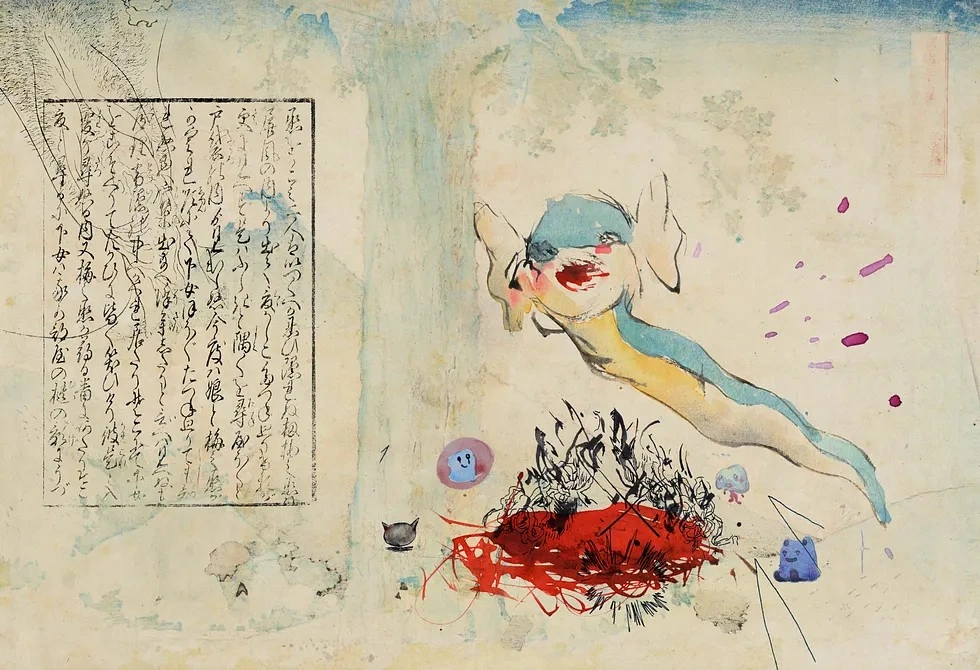
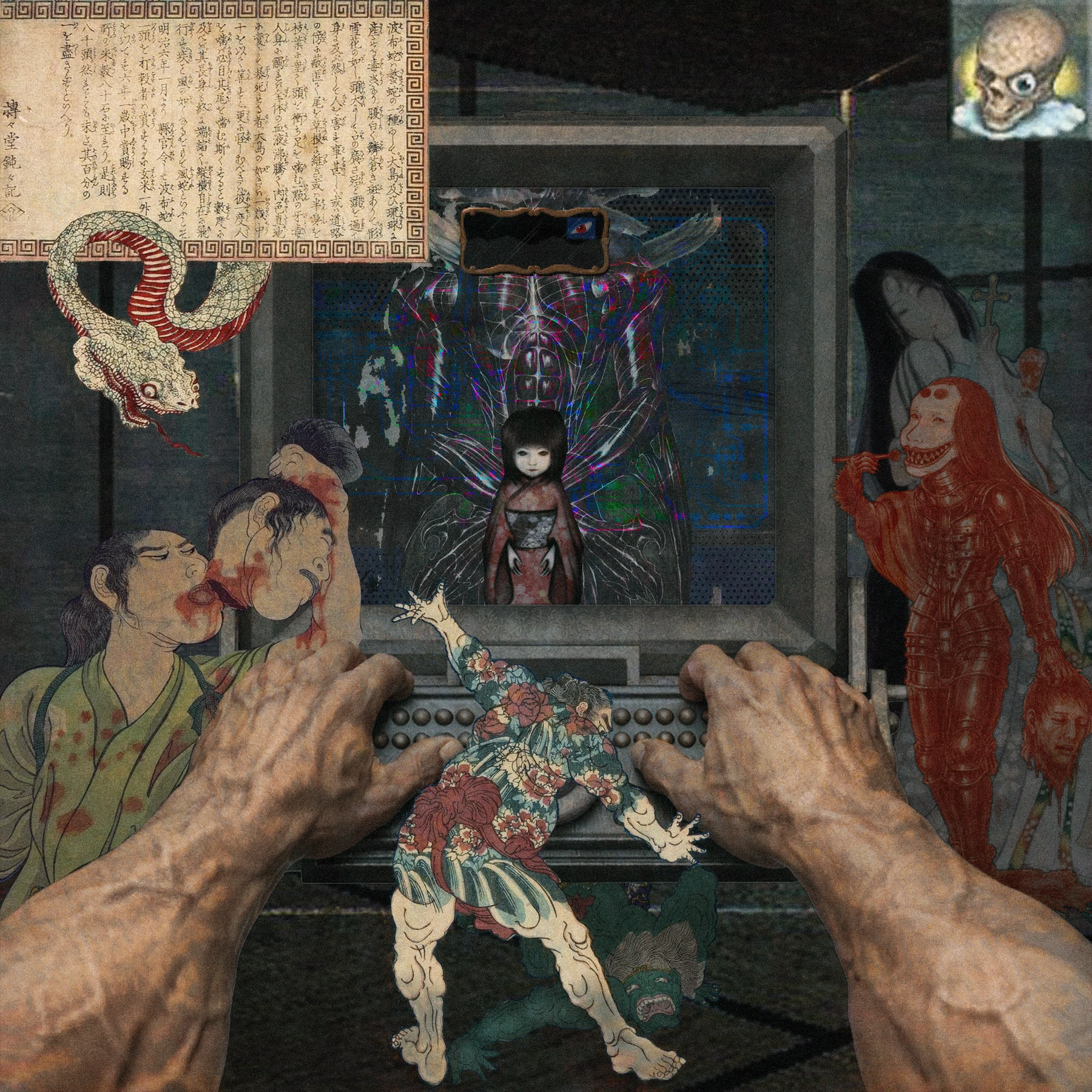
Collaboration works the same way, as exchange of material rather than credit. Biscuit had explained trait weighting to Parker Ito and handed over part of the Drifella 2 asset archive, which Ito printed, repainted and scanned into Drilady. That debt reversed on Halloween 2025 with Heavy Liquid Graphic, 999 works released on VVV, built outward from GAN-warped outlines that Ito notes were the starting point rather than the finish, the overlay being the thing that formally separates this scene from every other NFT. The source material came off eBay: vintage photographs, textures, strange circus material, a postmortem tintype of a child dressed for the picture, which the artist describes as haunting and beautiful at once. When a toy in his son’s room played music while switched off, the suspicion fell on the antique photo cases he had been collecting, and the response was incense, smoke and a banishment prayer. The Night Parade of 33 Demons followed in 2026, thirty-two items built around yôkai, shinigami and Japanese woodblock imagery, the two artists working in parallel and keeping their hands visibly separate.
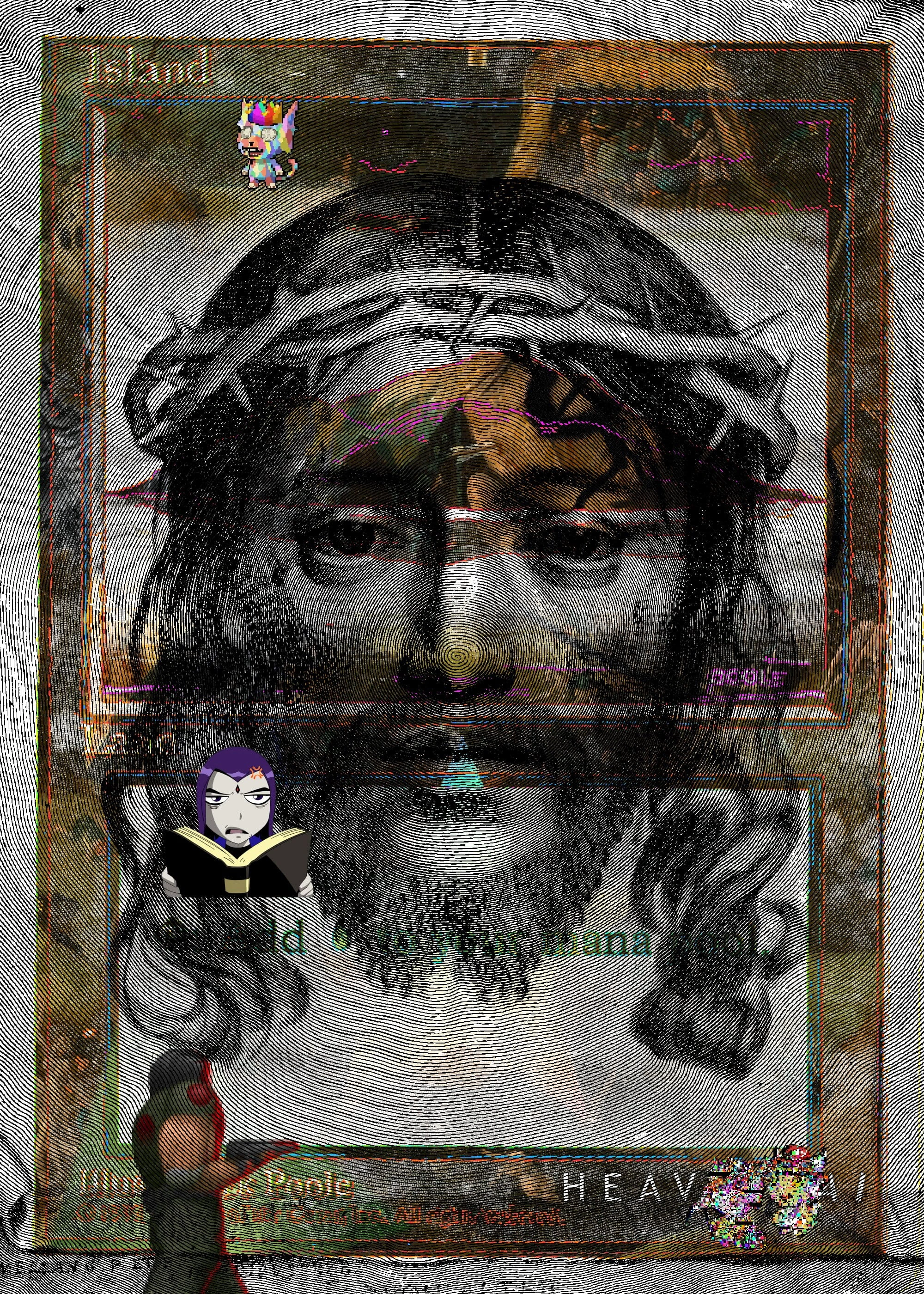
Card NFT 2 gathers all of it into one machine. The preliminary Framed Cards showed with SOLOS Gallery at Felix Art Fair in February 2026; by summer there were eleven thousand cards sold in more than three thousand packs. Half the collection is built on high-DPI scans of real cards, so that a redeemed card can be printed onto the exact object that was scanned, pulled by hand from organised stacks. The other half are printed onto acetone blanks, holographic and textured. Seven thousand are unique one-of-ones on original cards, nearly four thousand carry the holographic texture, a hundred and eleven are nothing but pixelated mosaic blocks of colour, and a rarer tier is printed front and back on metal. A selection was hand-painted in watercolour before scanning, an altered rarity that exists only because a brush touched cardboard. More than a hundred thousand candidates were generated and, as the artist puts it, every one of them was chosen by hand. He calls the project “an experiment in intellectual property, real world assets, card vault gacha gambling, painting & digital collage, printmaking and incidentally childhood trauma.”
The economics are a liturgy. To hold the physical card you must burn the token, and what returns is a receipt, provenance without possession. Roughly a third of collectors redeem, a third leave the pack sealed forever, a third open it online and keep the image. That middle third is the strangest and most revealing group. They are paying for a picture they have decided never to see, holding the possibility of the image in place of the image itself, the way a relic keeps its power by staying inside the reliquary. Rarity itself gets sabotaged from the inside, common cards weighted to hit as hard as chase cards, on the principle that a cheap object can carry the better image. Damage helps rather than hurts. The market’s hierarchy of condition is not argued with, it is simply used as a raw material and then dissolved.
Roughly a third of collectors redeem, a third leave the pack sealed forever, a third open it online and keep the image. That middle third is the strangest and most revealing group. They are paying for a picture they have decided never to see, holding the possibility of the image in place of the image itself, the way a relic keeps its power by staying inside the reliquary.
In 1956 Saburō Murakami ran through a row of paper screens at a Tokyo exhibition hall and left a human-shaped hole in each one. The audience heard the tearing; the wreckage was the work. Gutai painted with feet and fought with mud, and seventy years later the ripping continues in livestreams, Discord servers, grading queues and sealed foil. At the BMAG Card Expo in Hong Kong the cards sit in a pack alongside Ariamis, formerly Terrorism, who pours Renaissance devotional imagery into the same format. The hierarchy between artwork and collectible, which the twentieth century policed carefully, has stopped holding.
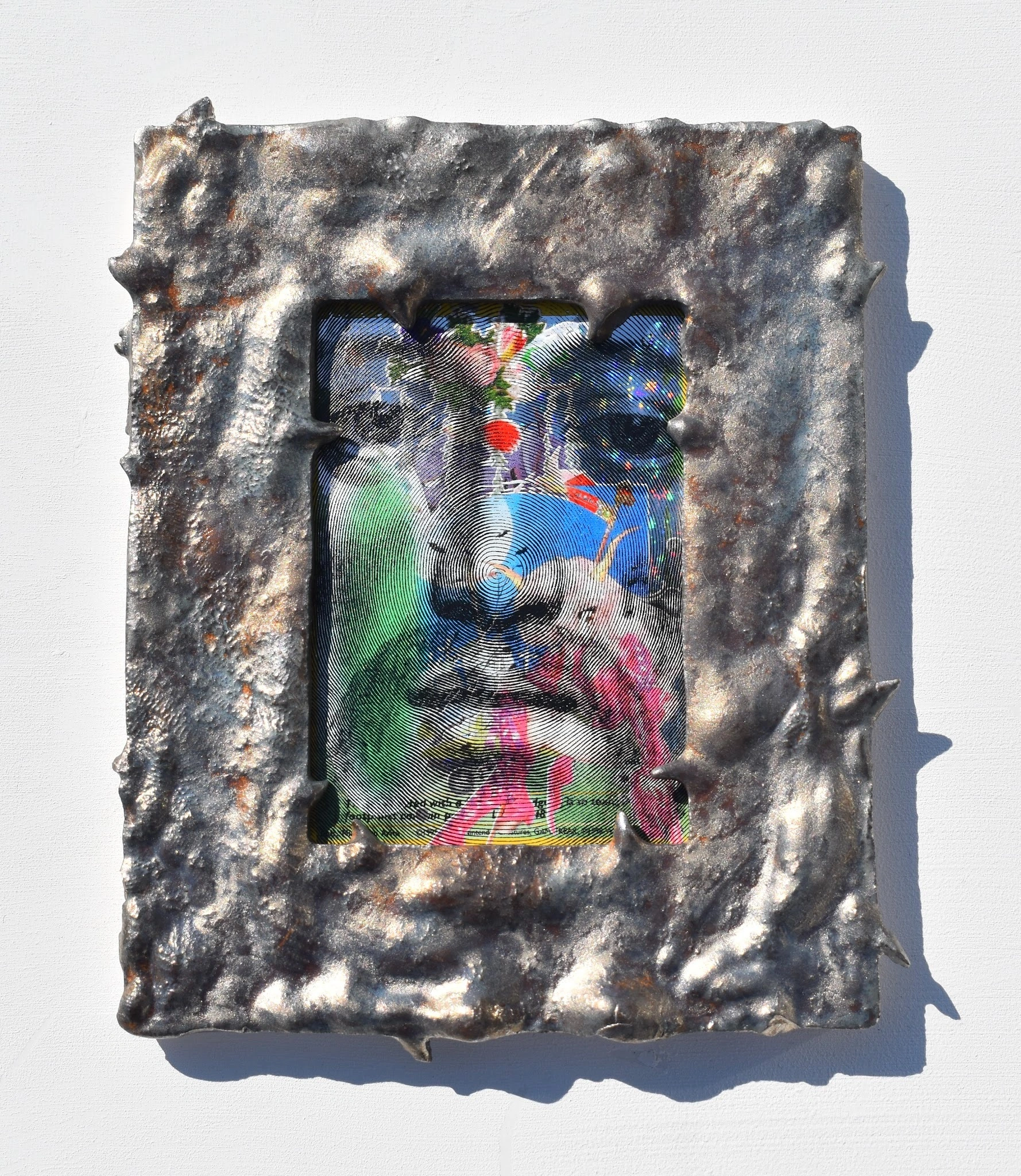
All of which returns to the theology, because the artist keeps returning to it. Every collection is organised around what he calls “destruction, death and rebirth, making something anew.” The crucifixion is not borrowed as an edgy graphic; it is the thing being wrestled with, the way it was for Bacon, whose paintings Biscuit went to look at closely in New York. Pokémon was itself accused of summoning monsters and staging occult battles by American Christians in the nineties, and something of that panic has been absorbed and inverted. Asked about the Gnostic thread, he answers with a whole cosmology: “Drifella is this beast who’s been bastardized, bred and trapped in the lower dimensions as a jester entity but he is still an innocent teenager attempting to invert what he was turned into, transforming himself into an emissary of light and dark for Jesus.” Not doctrine, and not irony either. A serpent in a card shop, working out whether it can be forgiven.
The boundary between artwork and collectible is usually called unstable, which is accurate and too polite. It is not unstable, it has been deliberately demolished, and the rubble is being printed on. Somewhere in a sealed pack a dragon is still deciding between light and darkness, and the only way to make it choose is to destroy something.