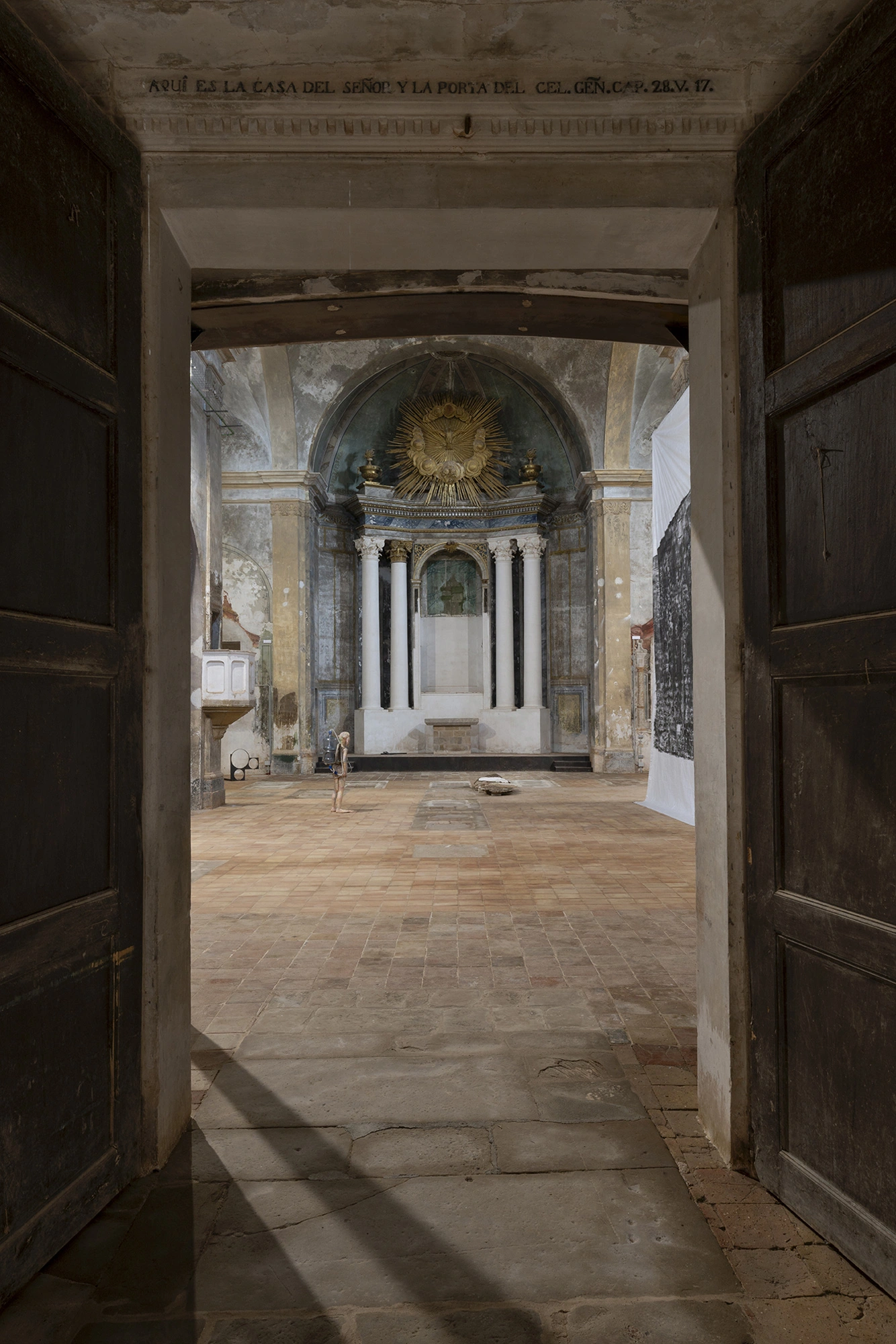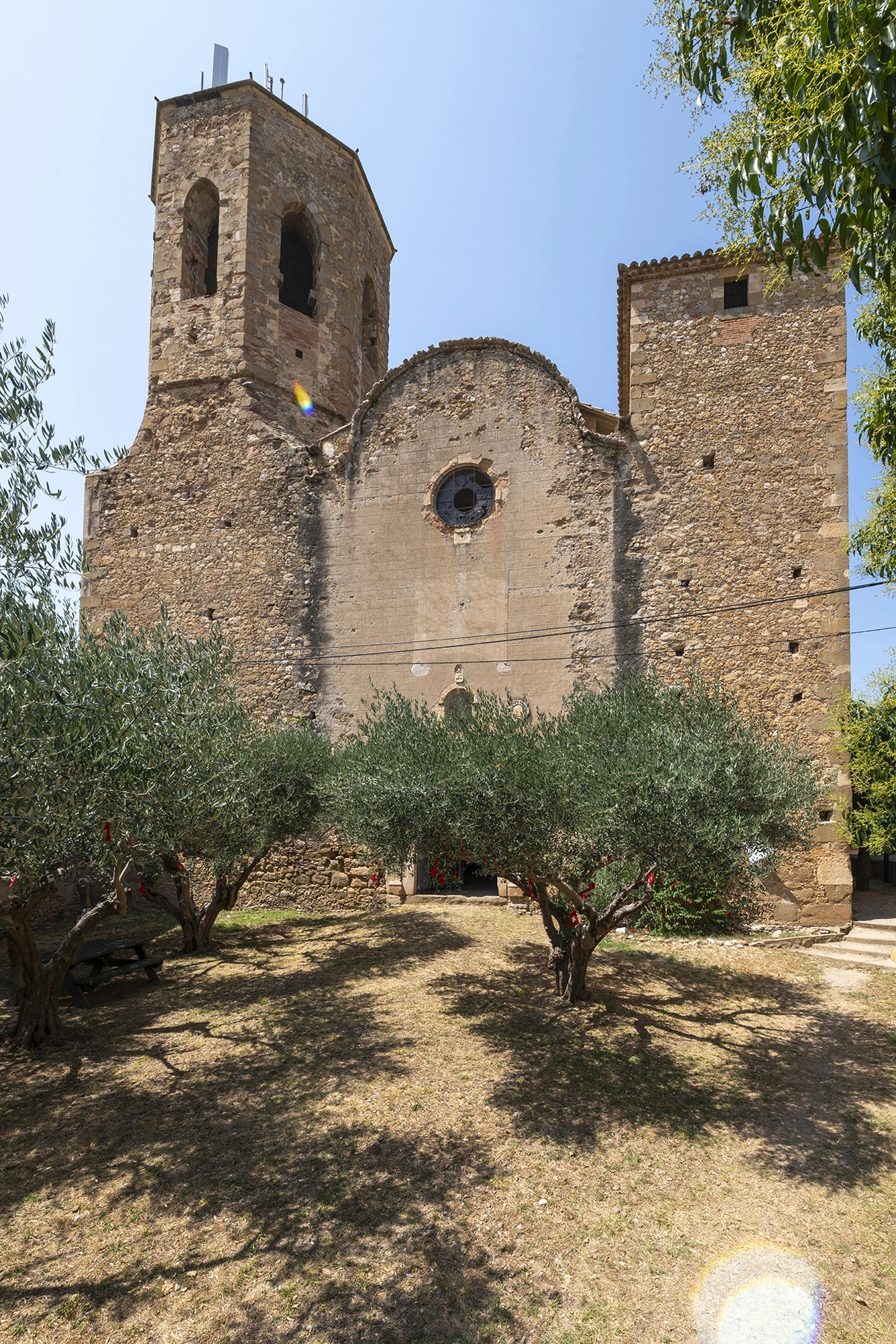
Five artists occupy a deconsecrated church in Lladó, and each arrives by subtraction: a cast lifted off a grave, a farmhouse rubbed onto cloth, a railing cut away until only the gaps between its bars stand.
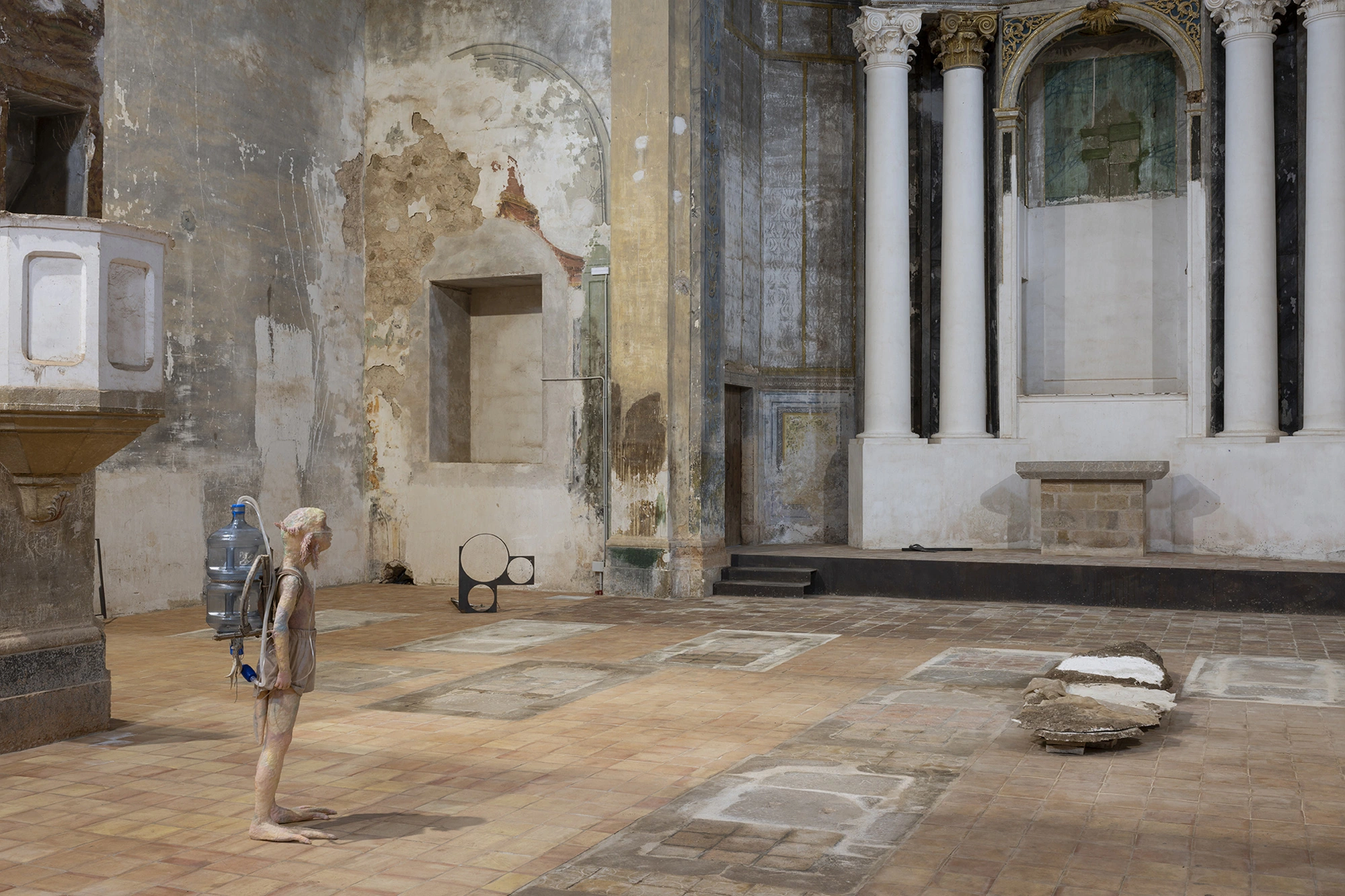
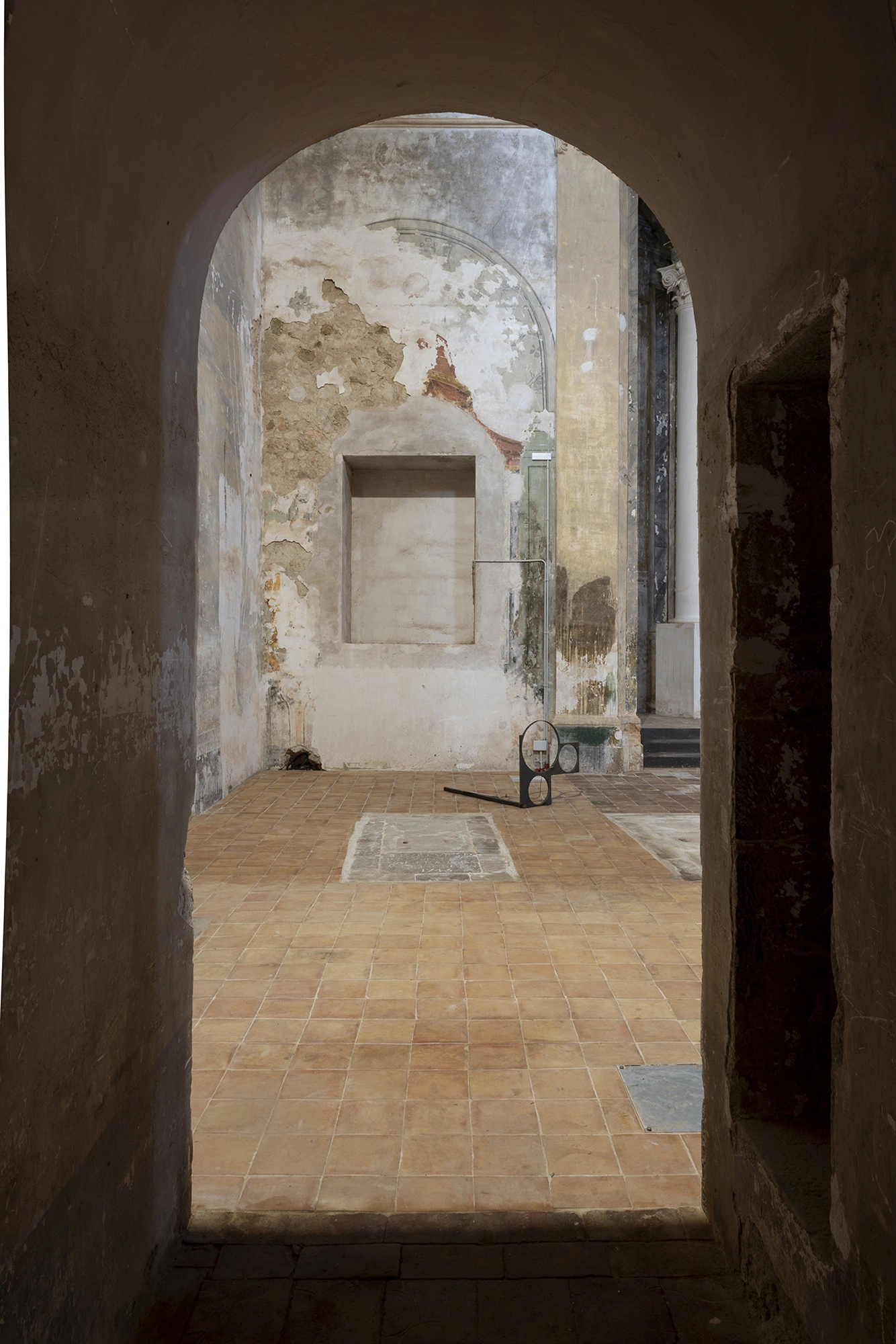
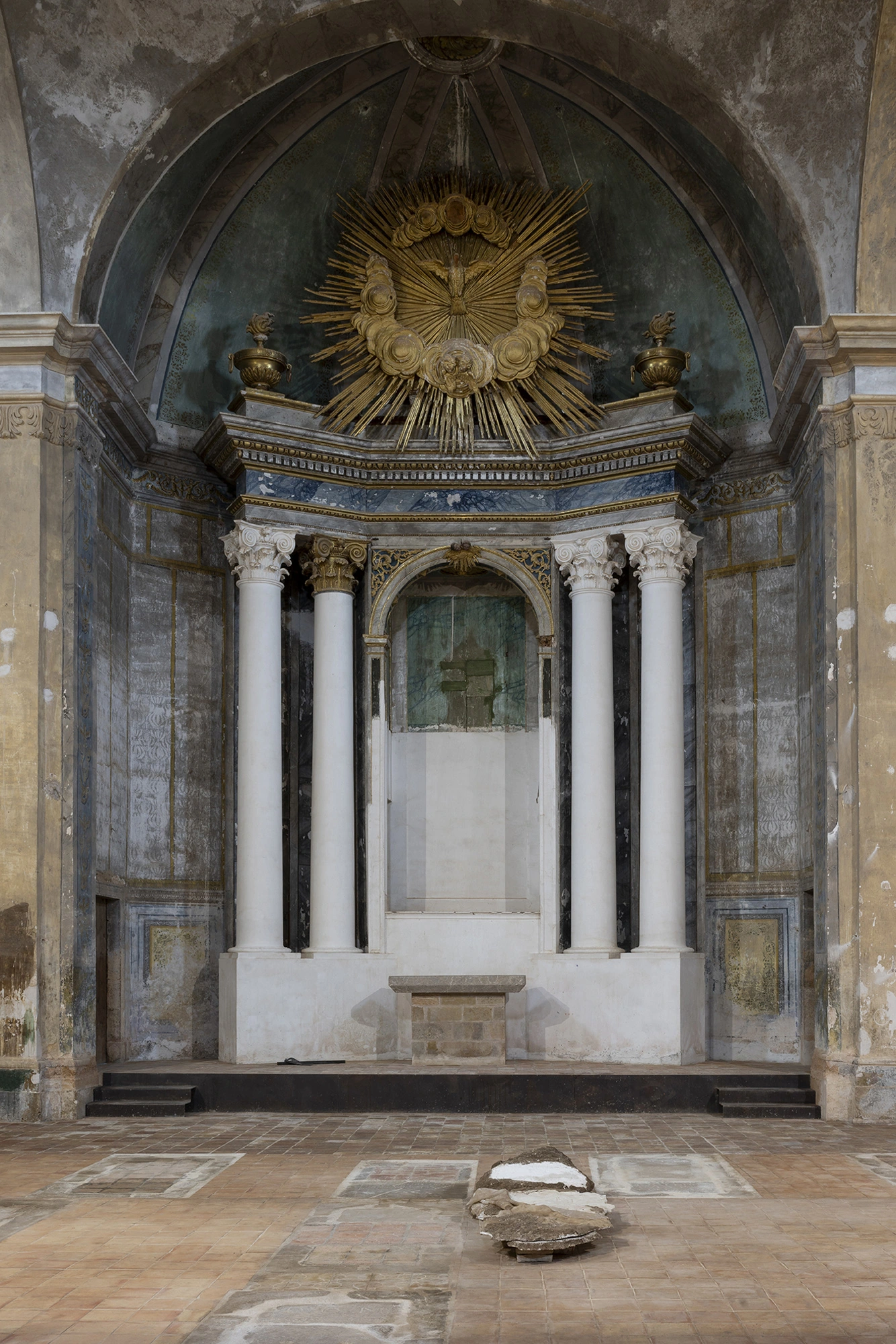
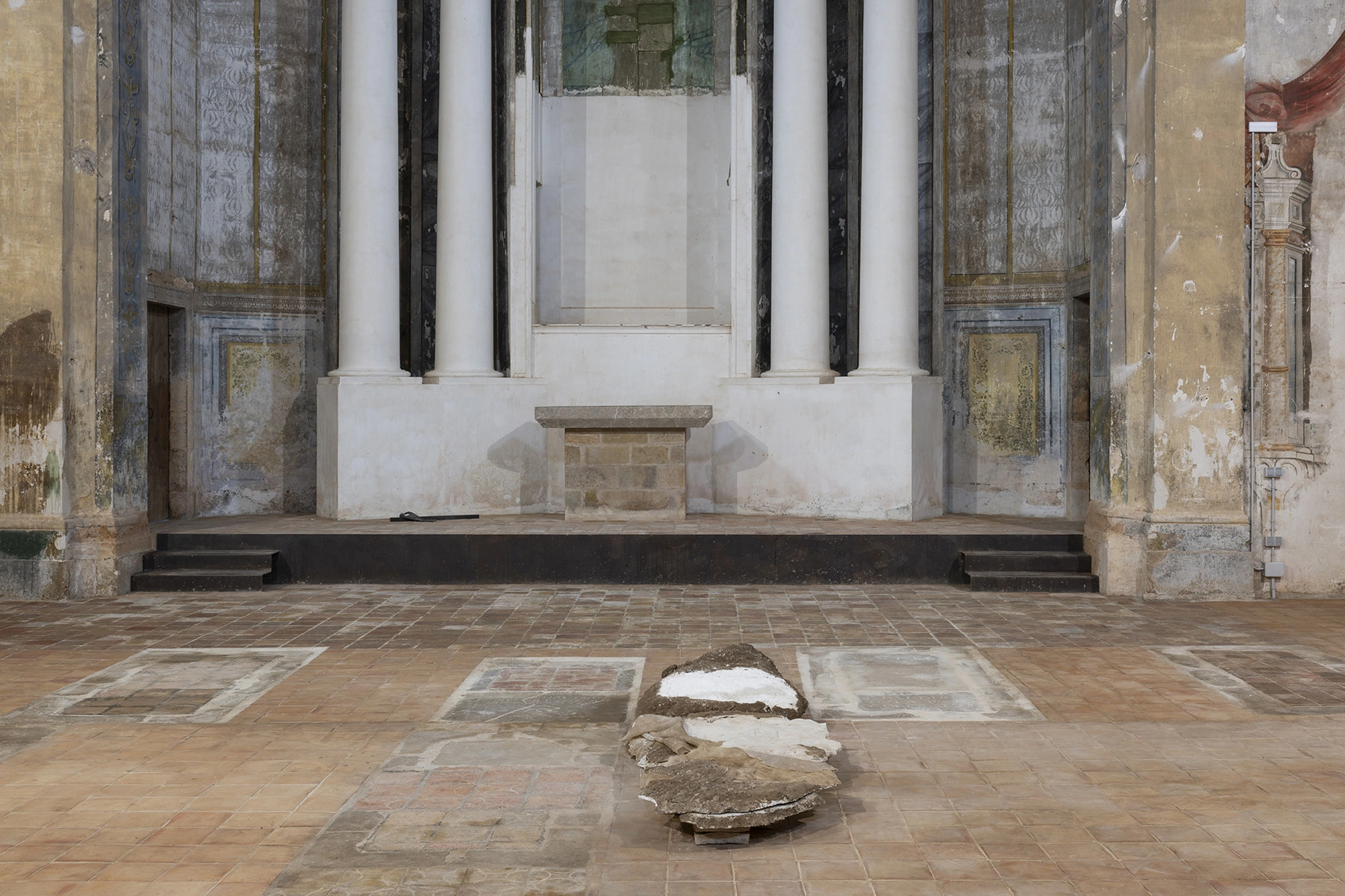
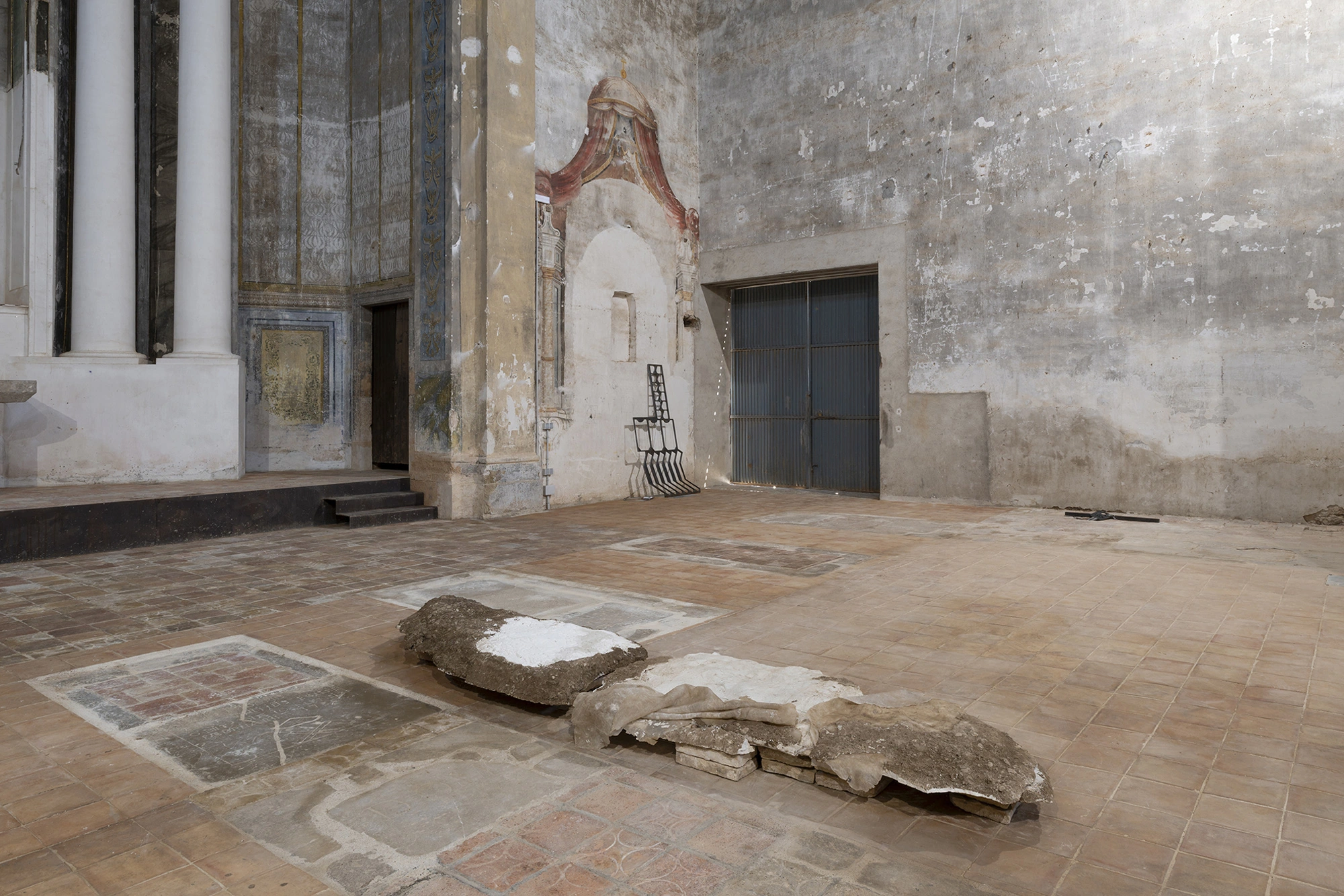
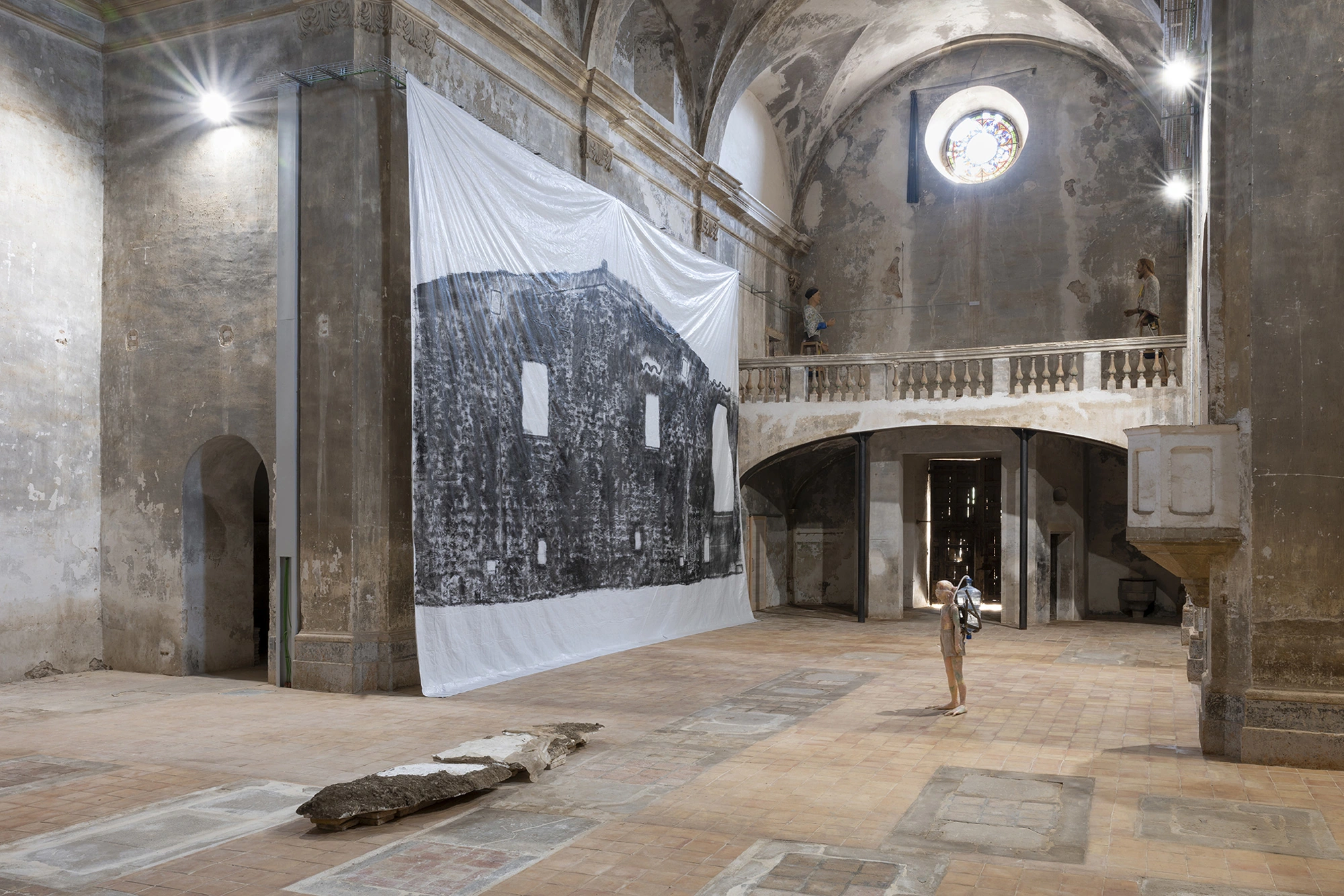
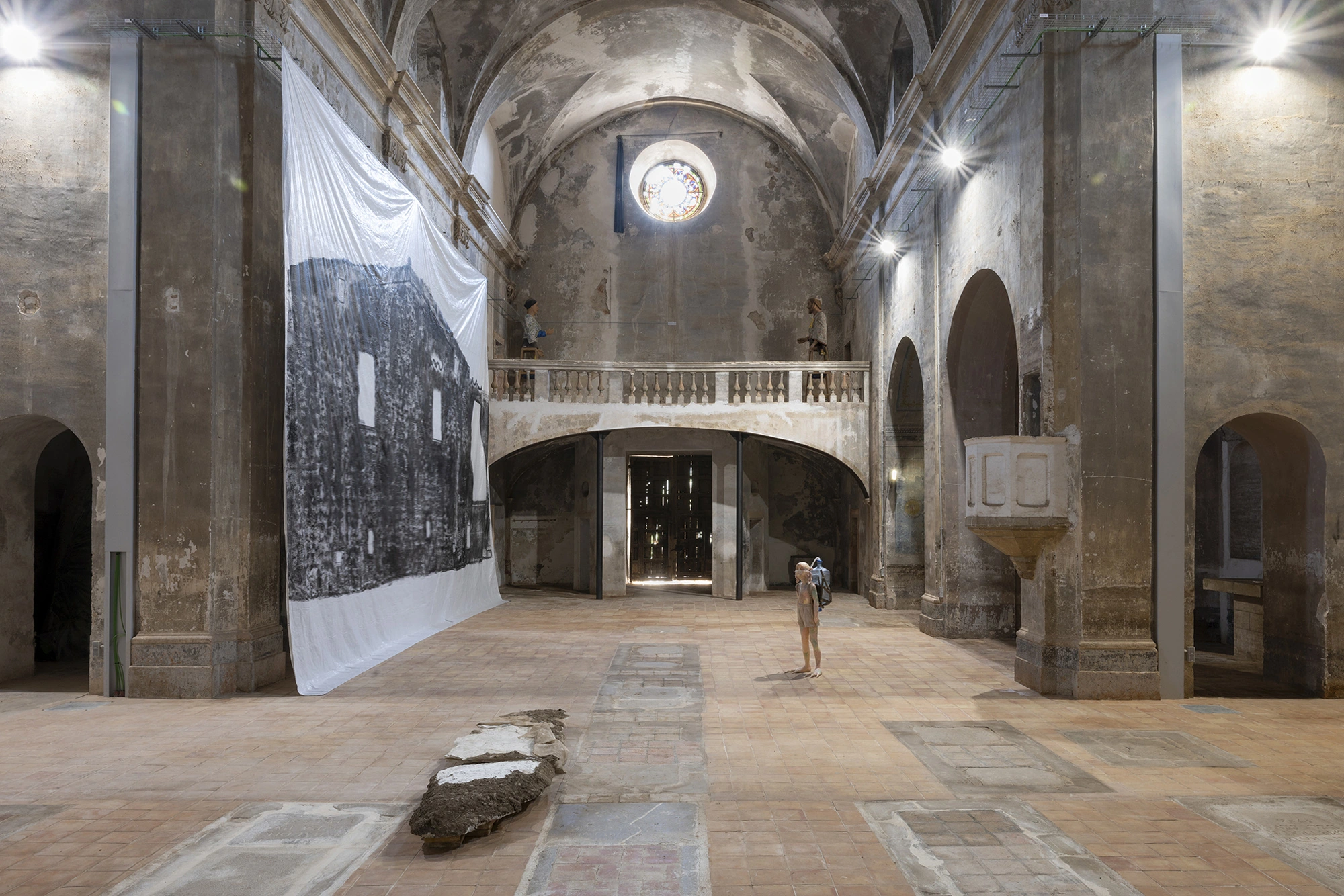
The floor is the first work, and it was already there. Terracotta tiles run the nave of the Church of Sant Feliu and part, at intervals, around flat stone slabs cut with the names of the parish dead: D.O.M., a mason's square, the date 1763 worn almost out of legibility. Monia Ben Hamouda poured plaster into two of them and lifted what came up.
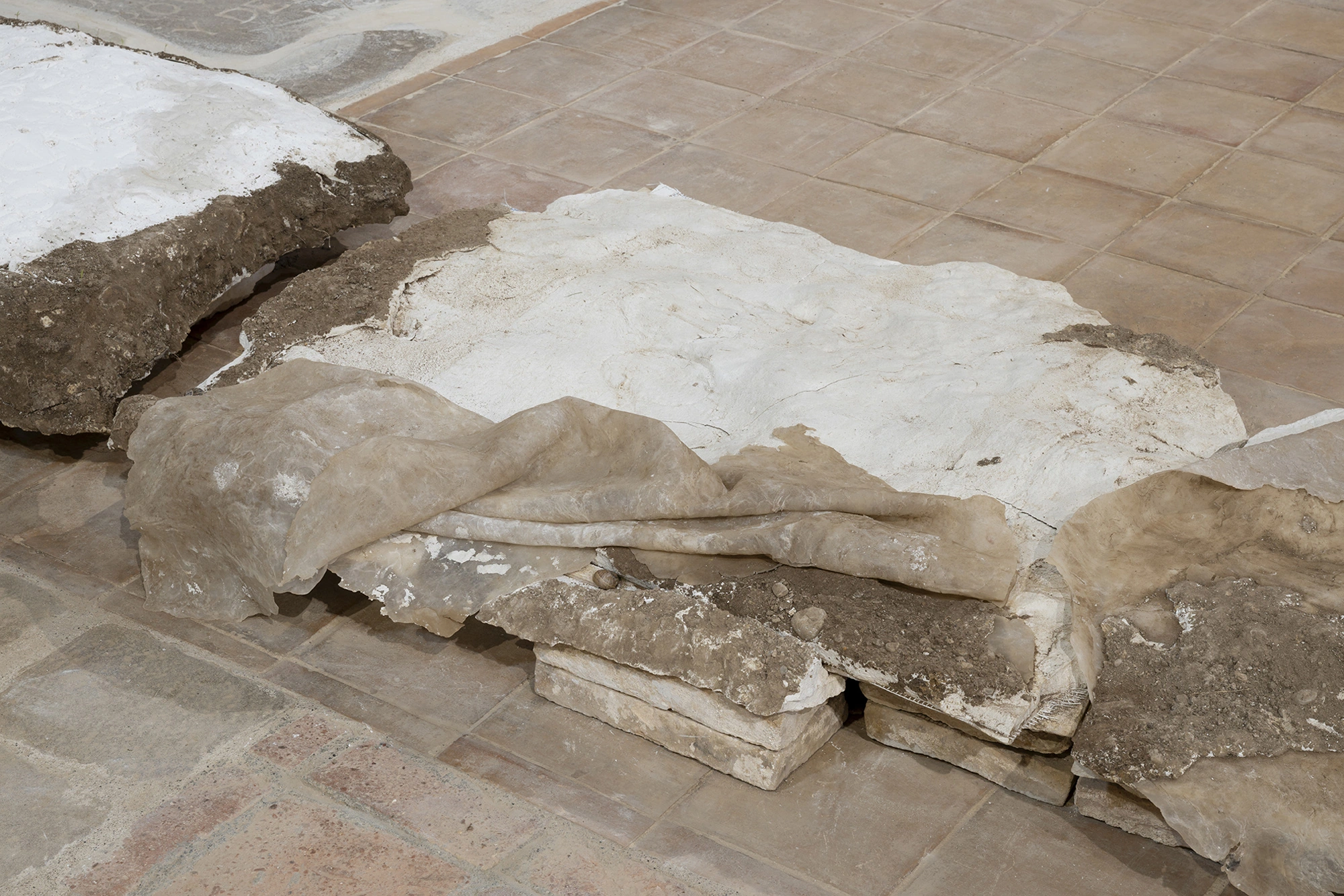
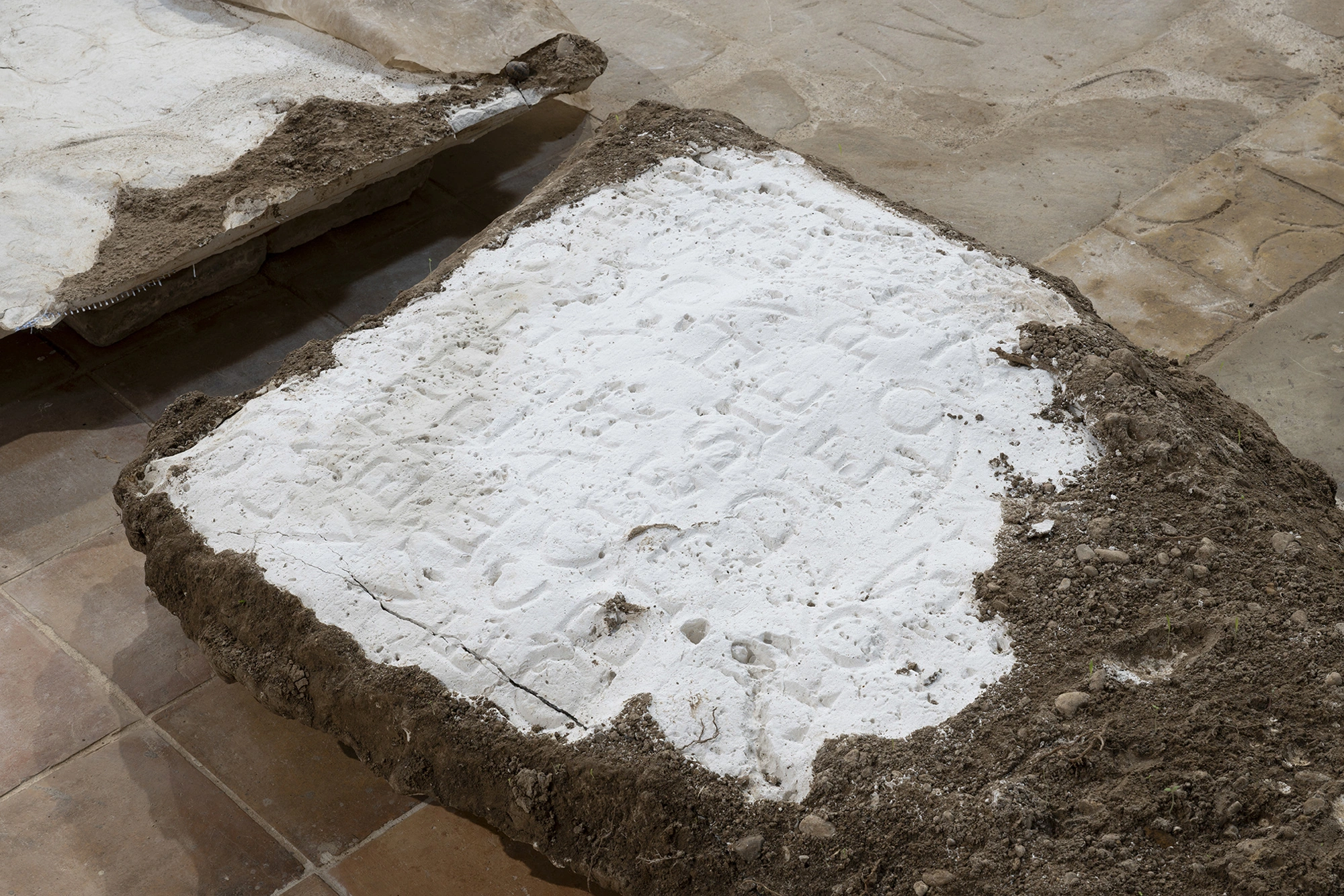
What comes up is the slab's opposite: letters standing in relief and running backwards, useless as writing, exact as contact. Ghost (Lladó) and Ghost (Espinavessa) lie a step from the graves that made them, their edges banked with soil that has begun to sprout. Over one, silicone the colour of old honey has been peeled off the stone and left folded like a shed skin. The soil is not a figure for burial. It is the burial.
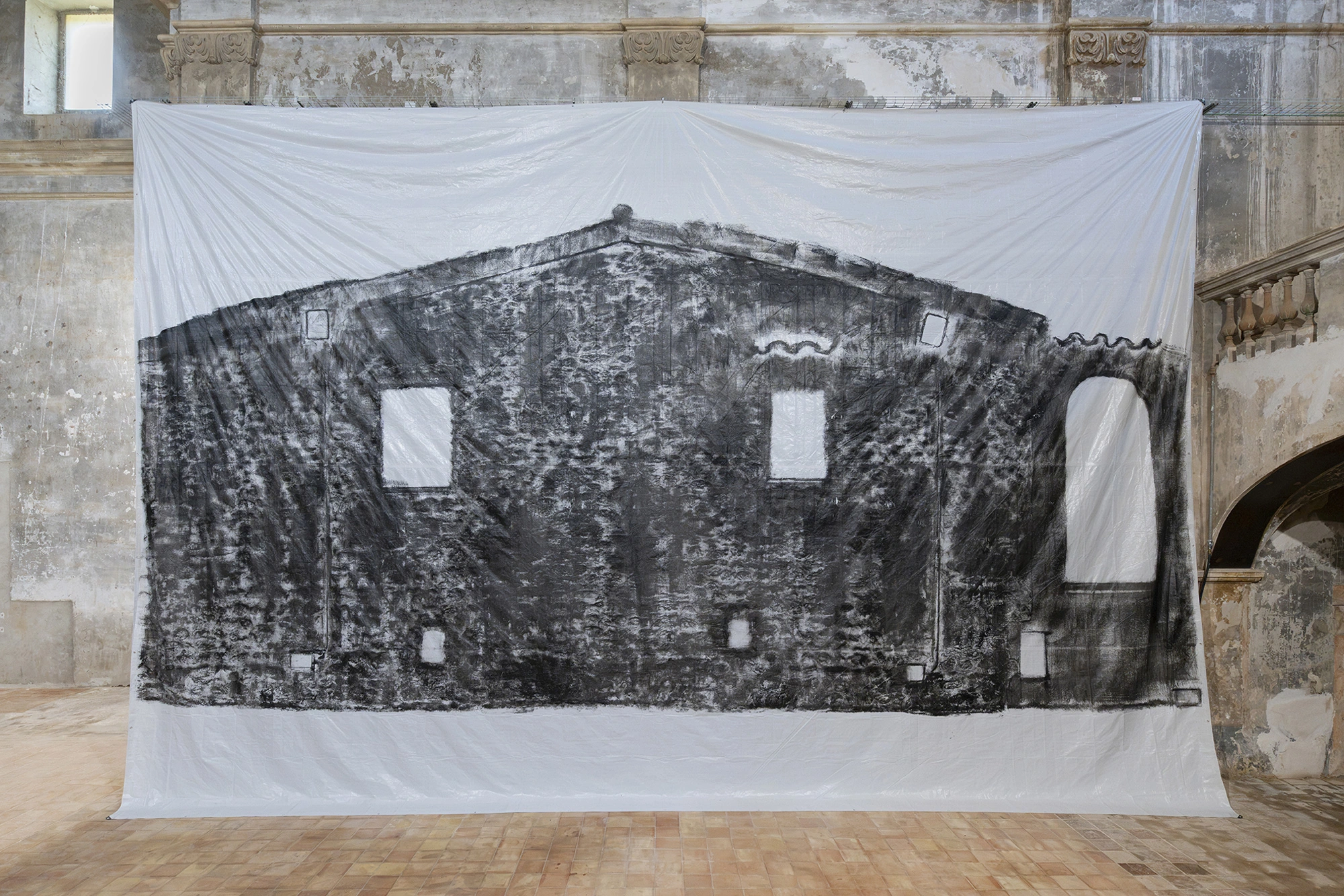
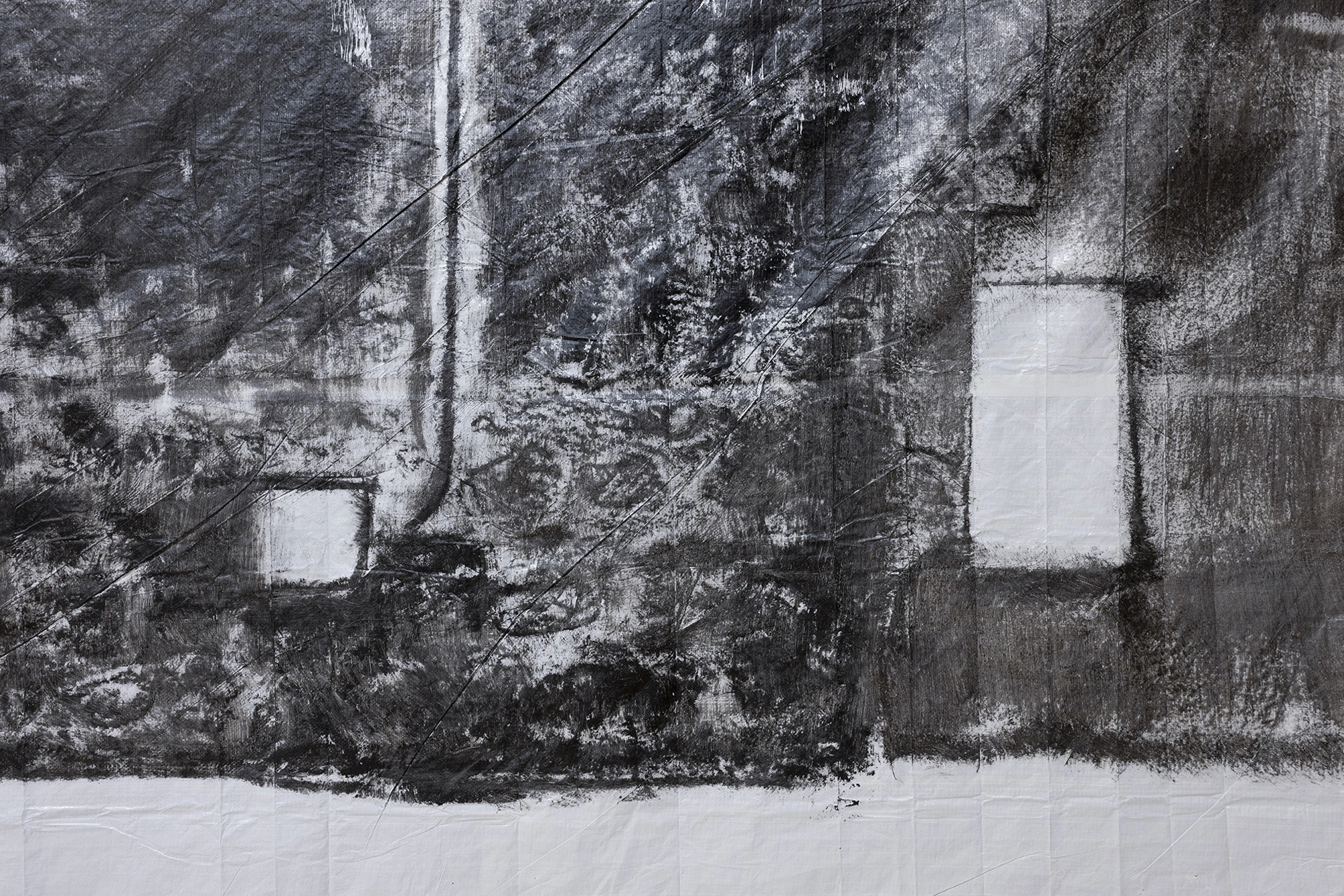
Across the nave, Andrew Birk has hung white polyethylene from cornice to tiles. On it, in charcoal black, is the gable end of a stone farmhouse. The windows are not drawn; they are where the black stops, raw white voids, which is what happens when you rub a wall and the wall has holes in it. Floating House is frottage at architectural scale, what Sira Pizà calls “a pictorial image of the original in a phantasmagorical trace.” Everything is transferred, nothing depicted.
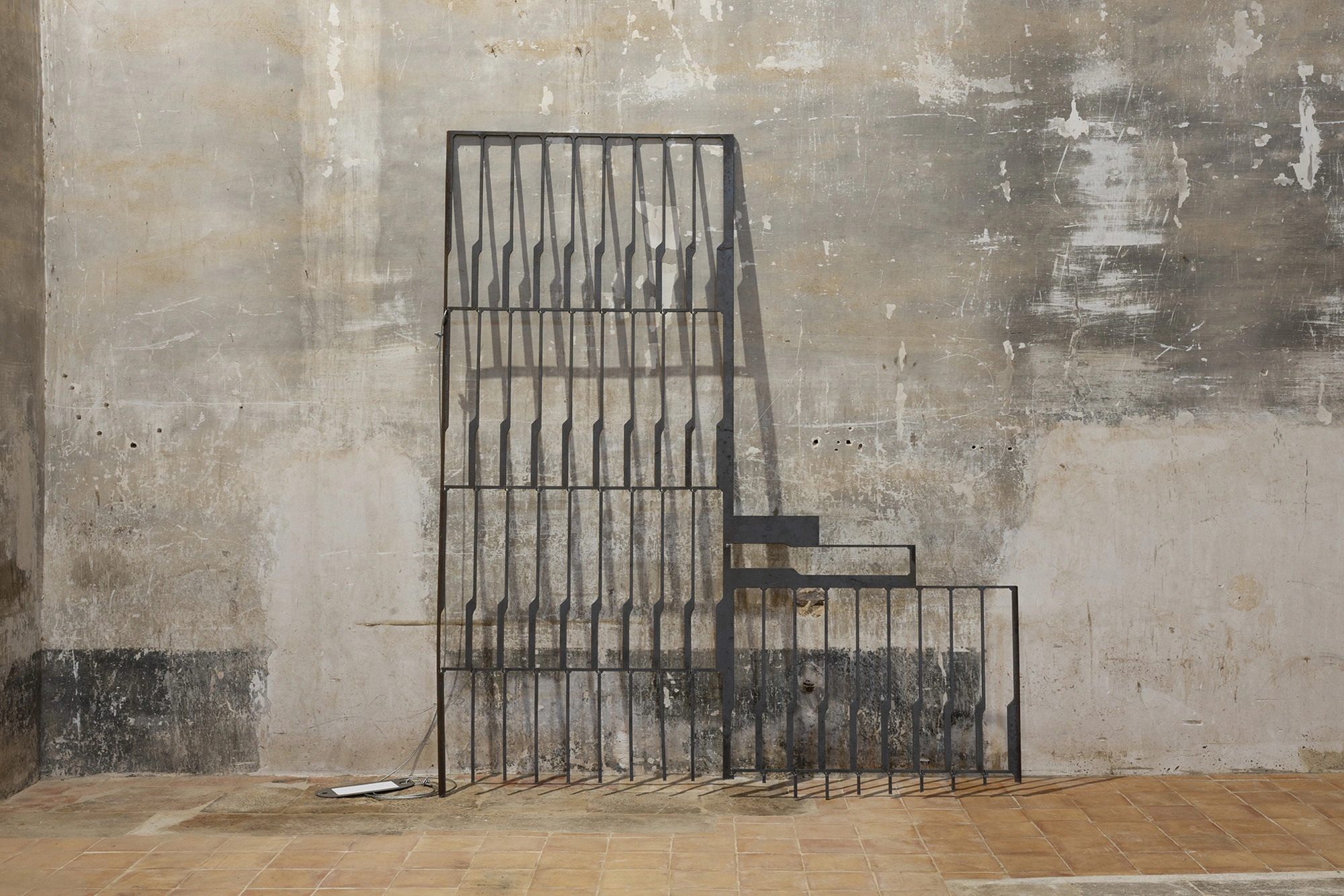
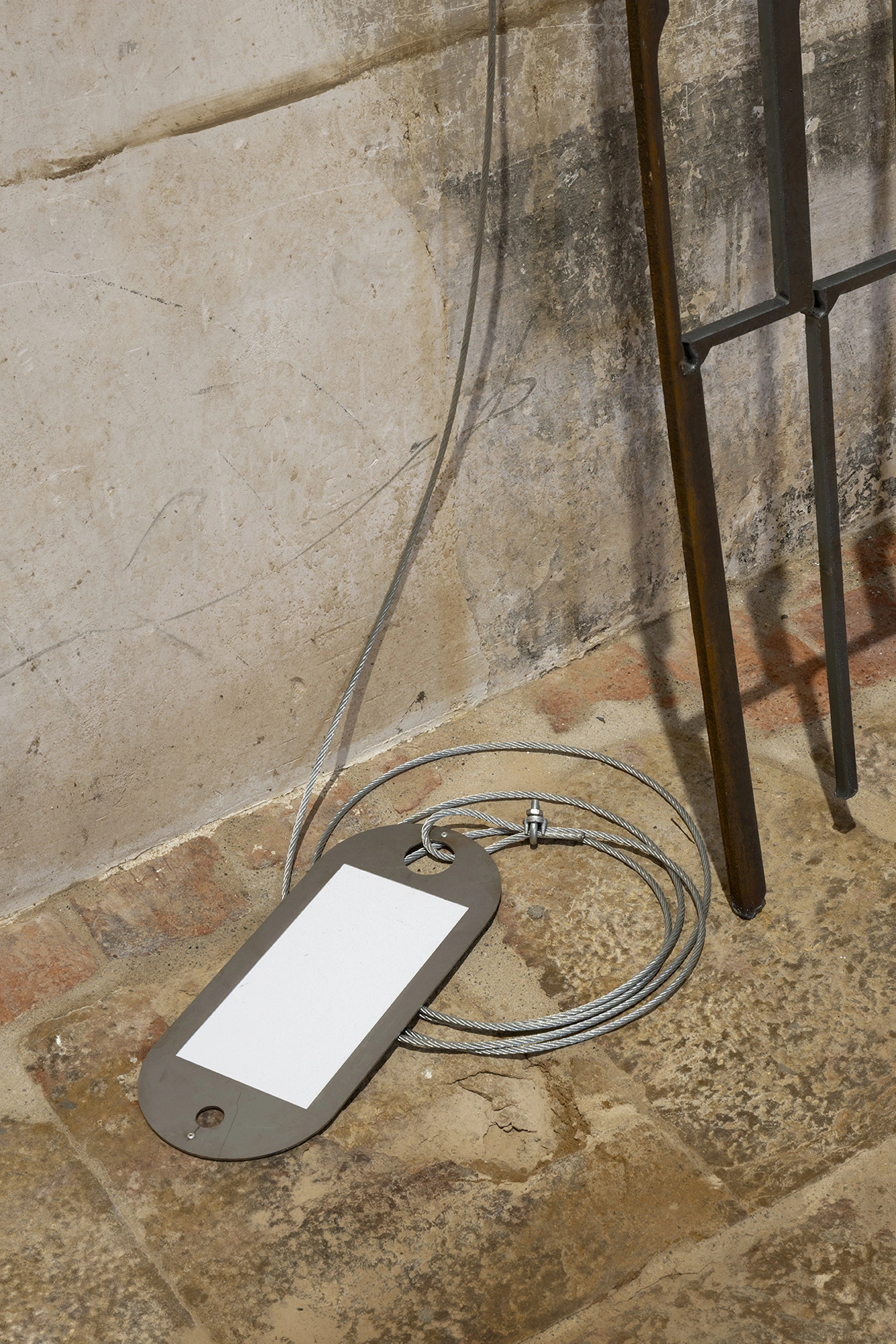
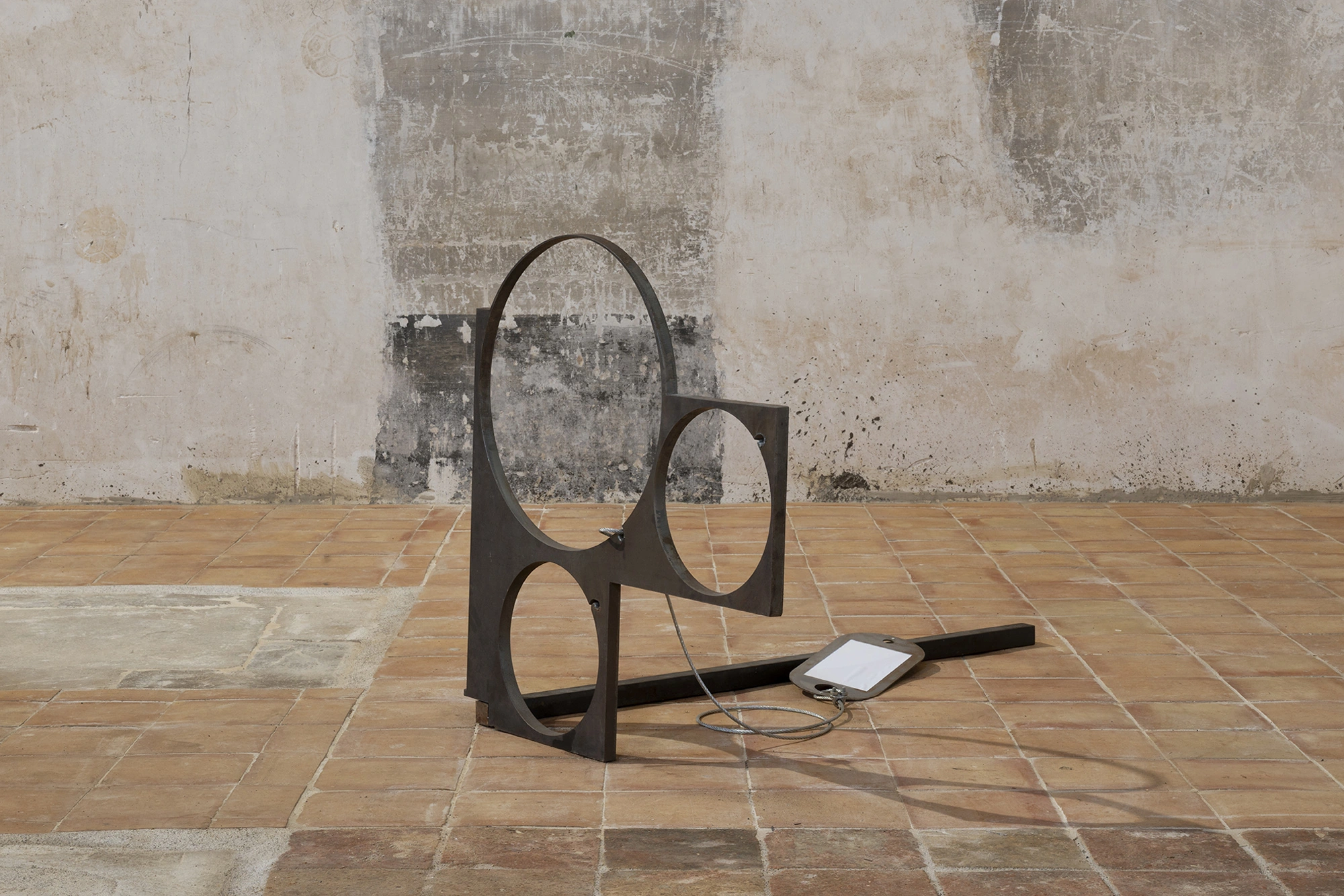
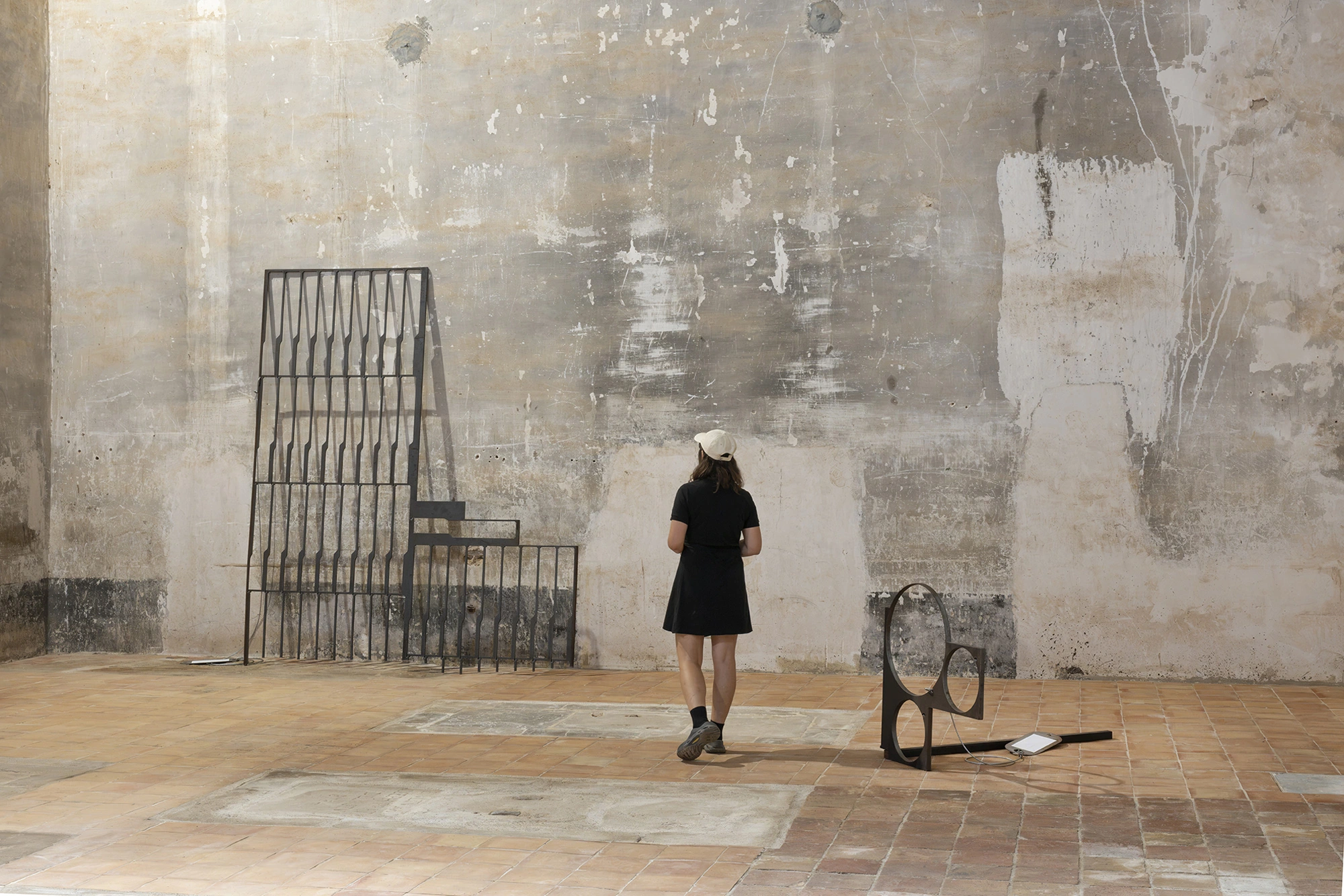
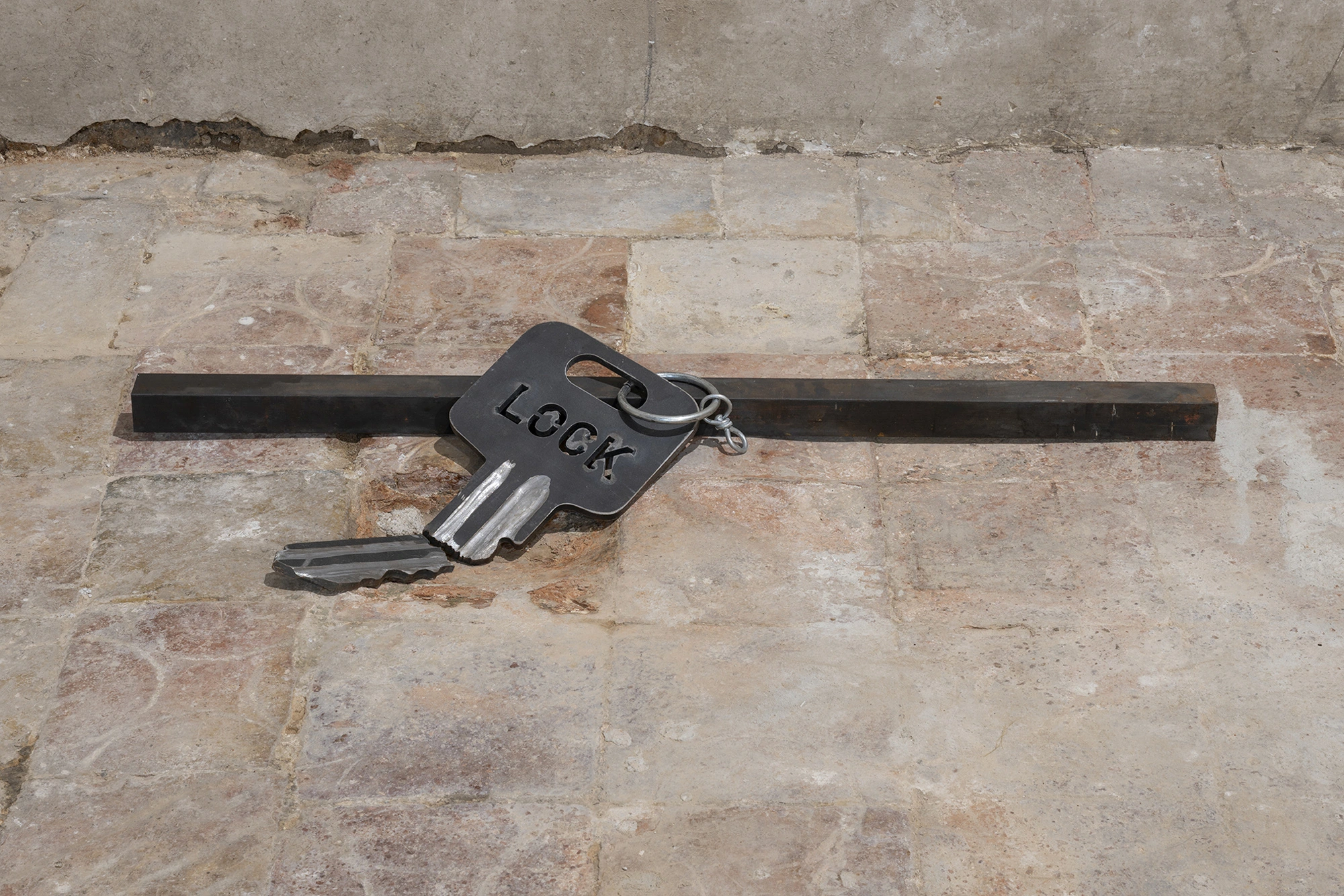
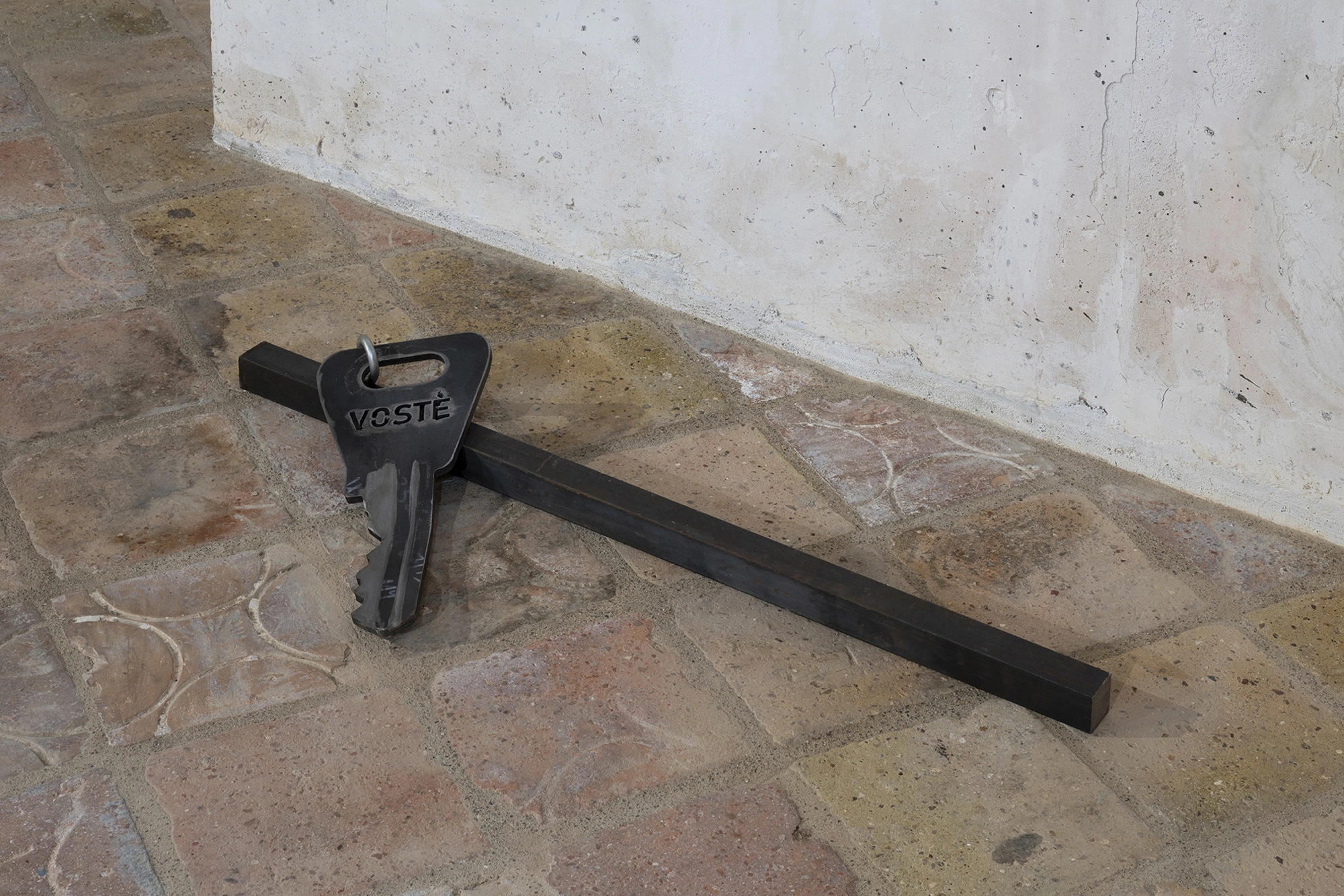
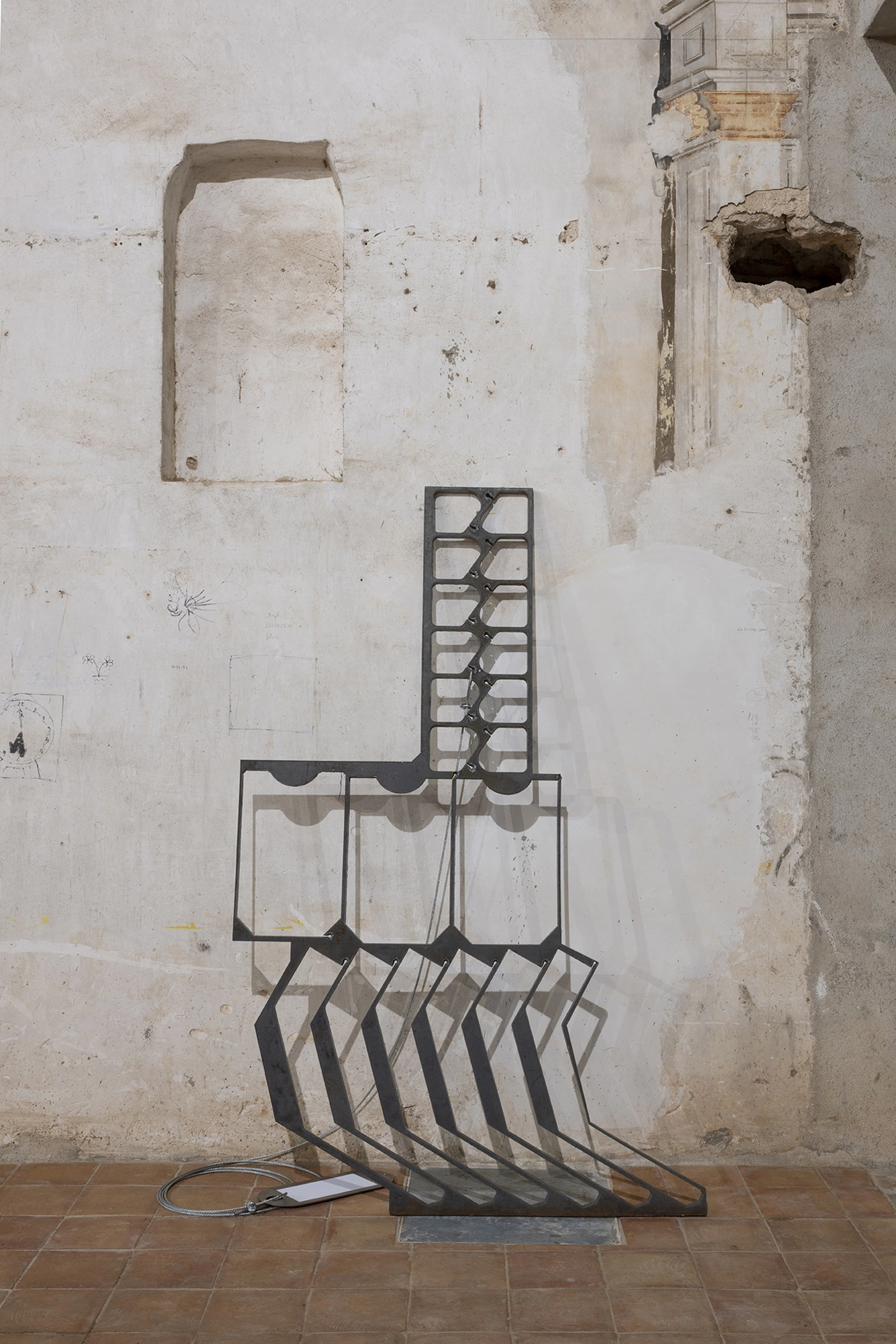
Jordi Mitjà runs the same logic through steel. The Negatiu Reconsiderat works are balustrades unmade: a wrought-iron railing rewelded into a stepped profile, leaning like a staircase with the stairs taken out; a plate carrying three circular voids, so the holes read as the sculpture and the metal as its surround. Then the keys, Clau Partida / Lock and Clau Doblegada per a vostè. Enlarged to a metre, a key stops being a tool and becomes a monument to an interior nobody can reach.
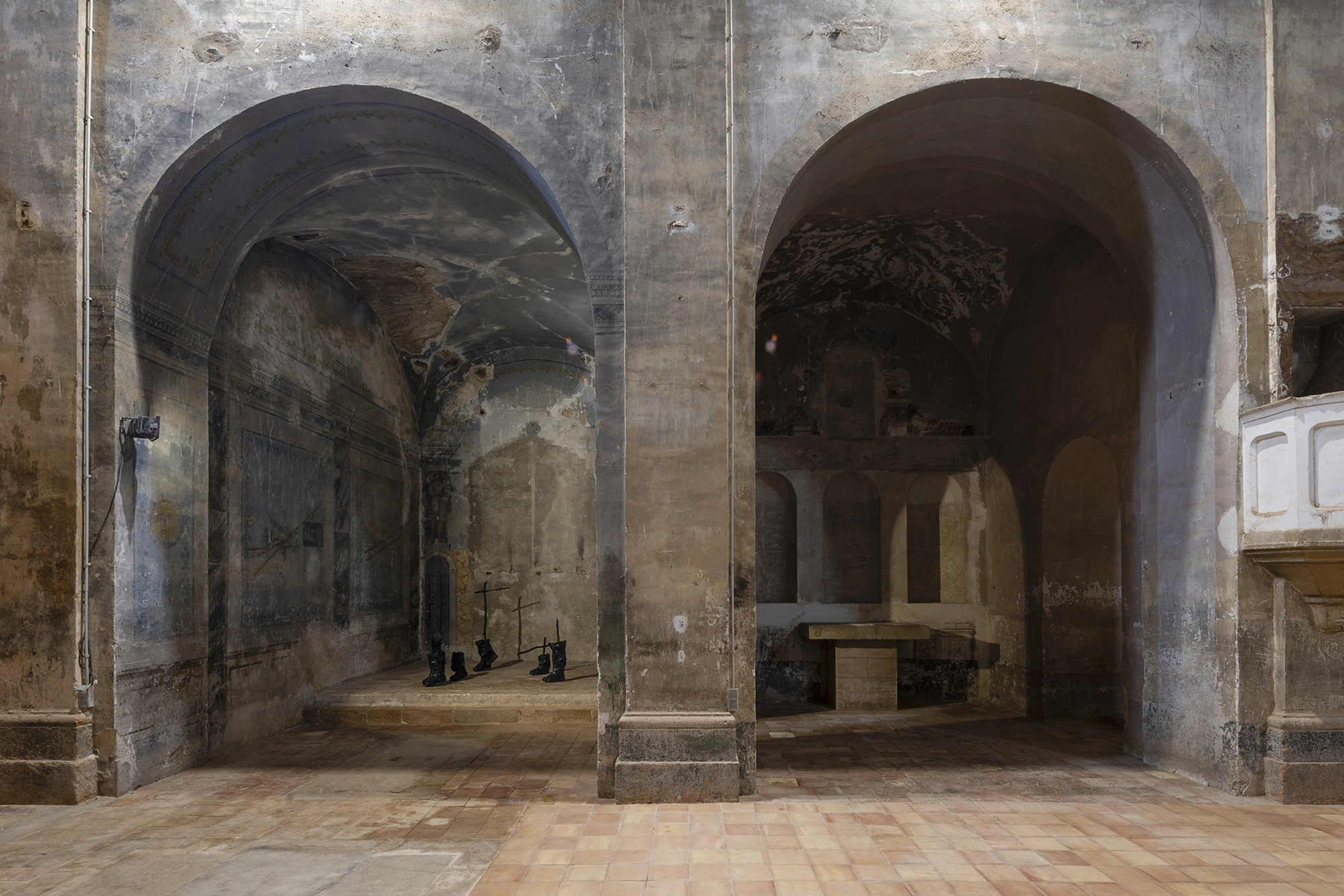
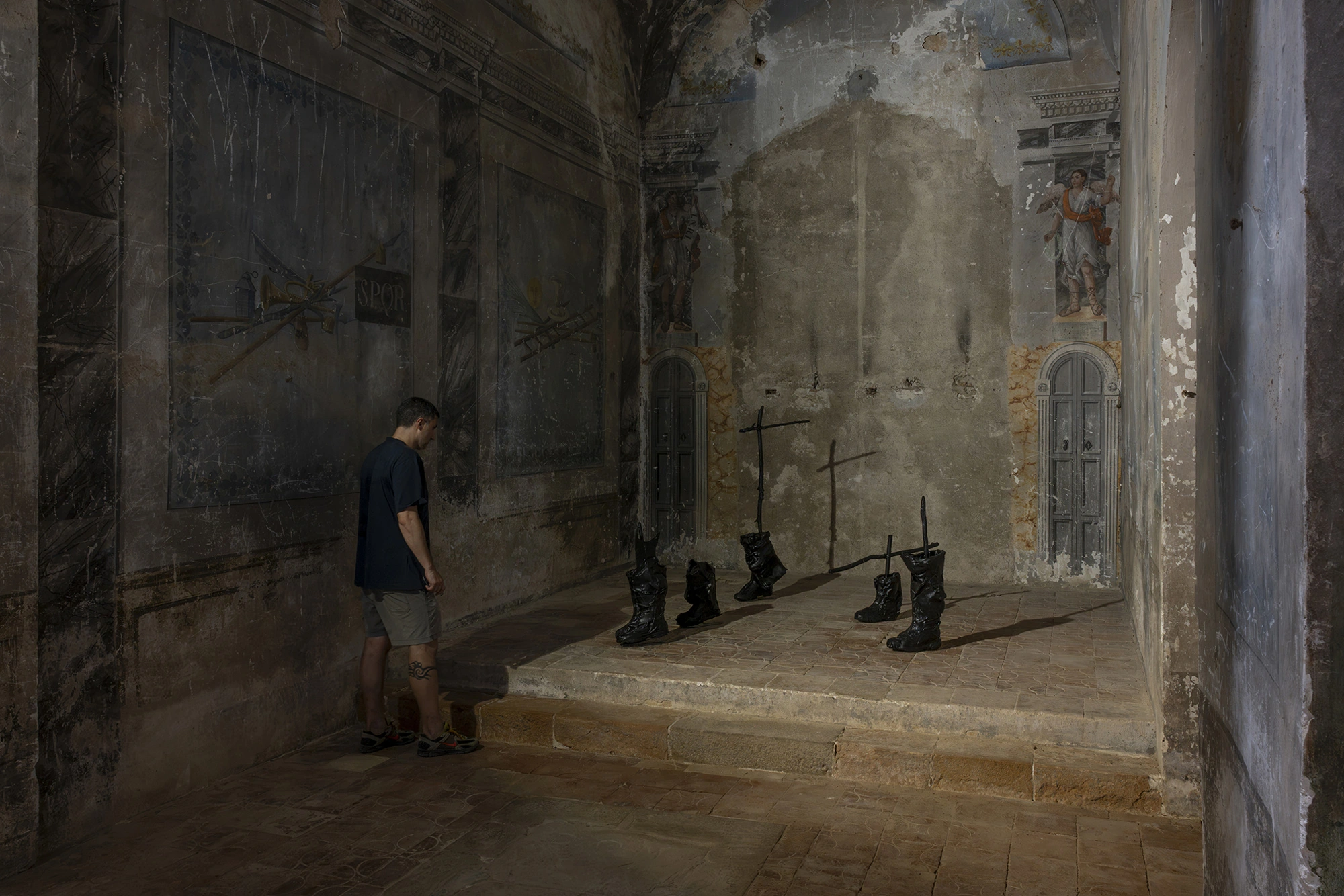
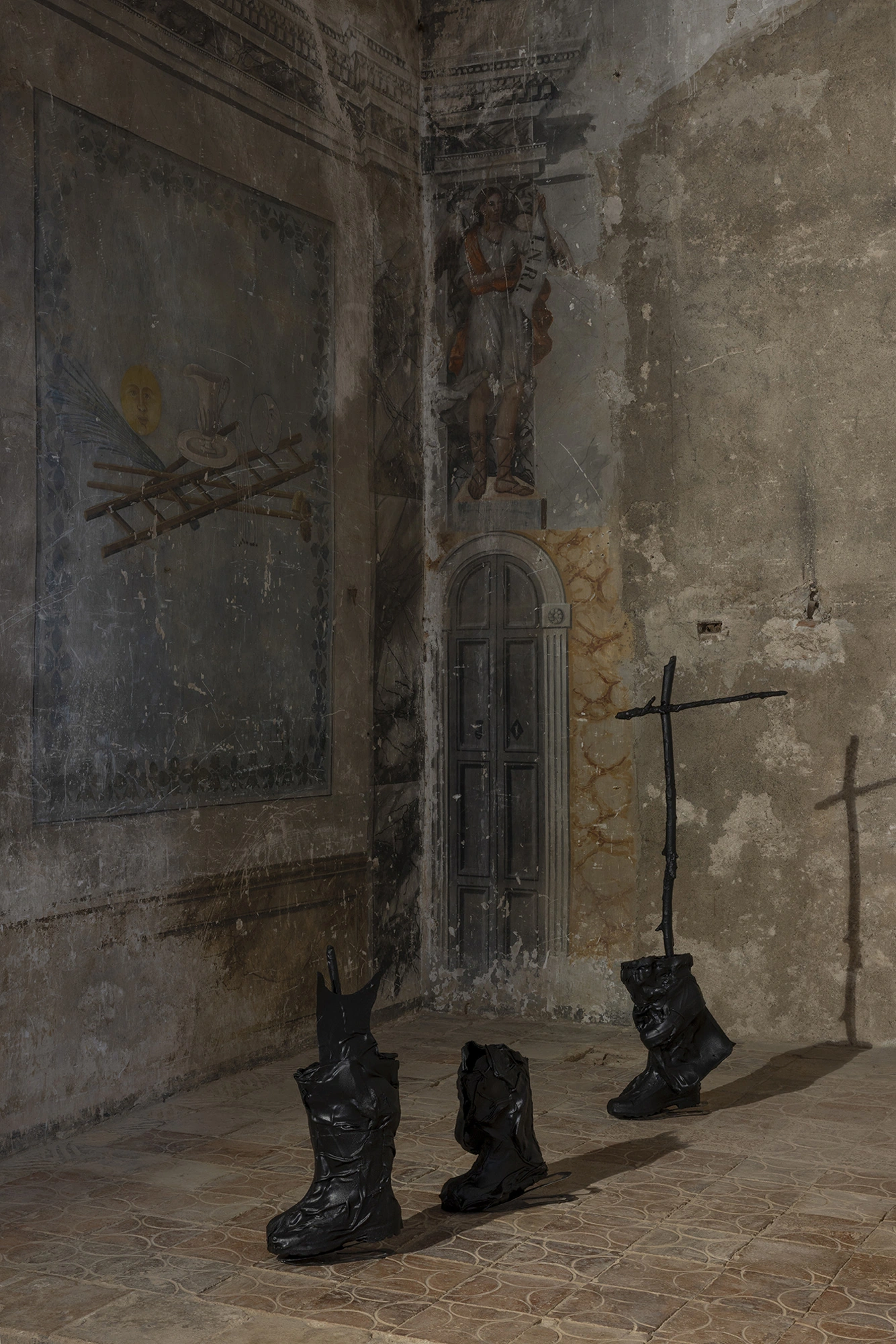
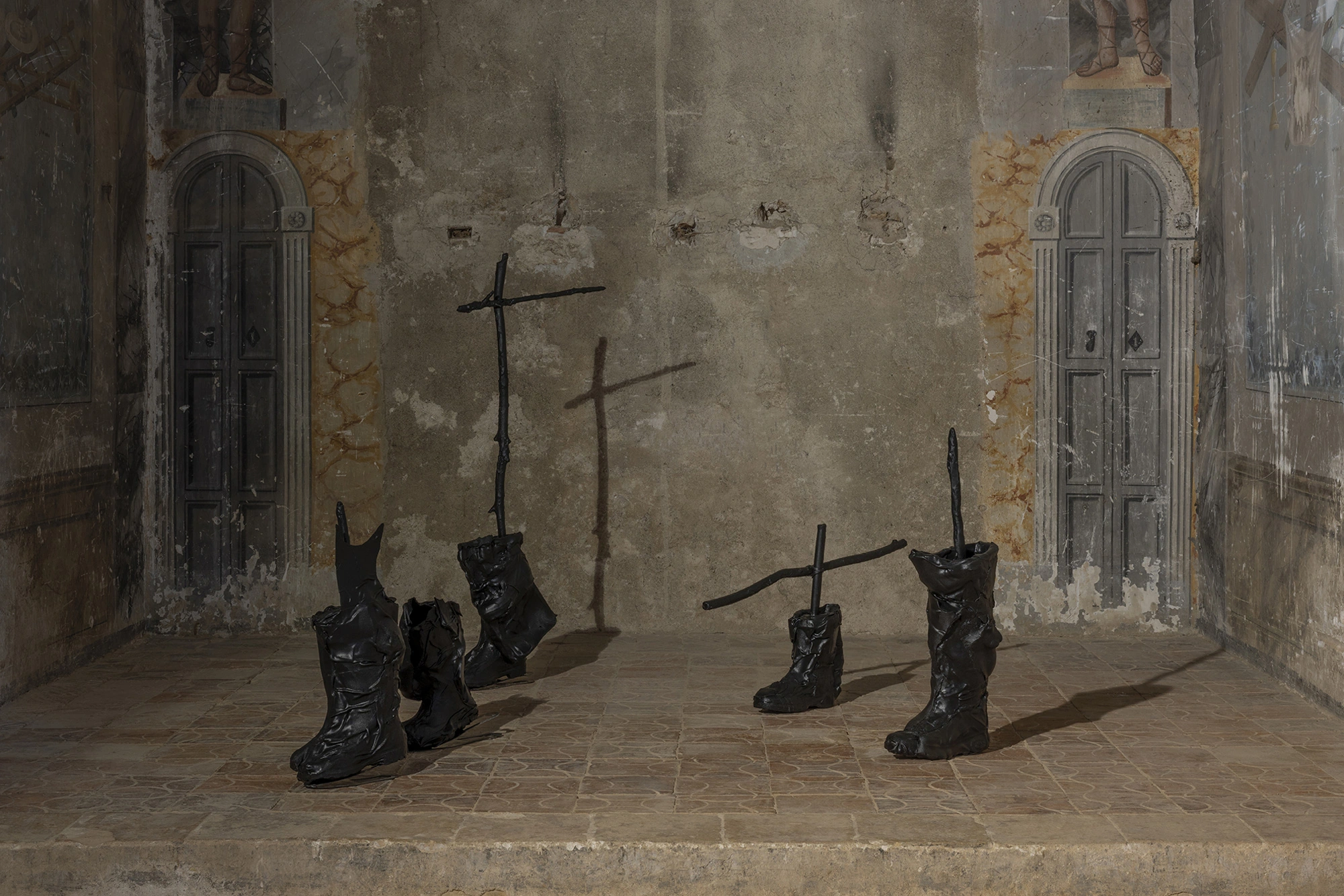
In a side chapel, Sahatsa Jauregi has stood five rubber boots on a raised platform, slumped and glossy black, branches of cut steel rising from their mouths and welded into crosses. Pájaros begins, in Pizà's phrase, from “the idea of the scarecrow as a figure imagined by humans of themselves to be seen through the eyes of animals.” Above them survives a Passion cycle of which only the sandalled feet remain. Painted feet above, emptied boots below, a real cross throwing a real shadow between them.
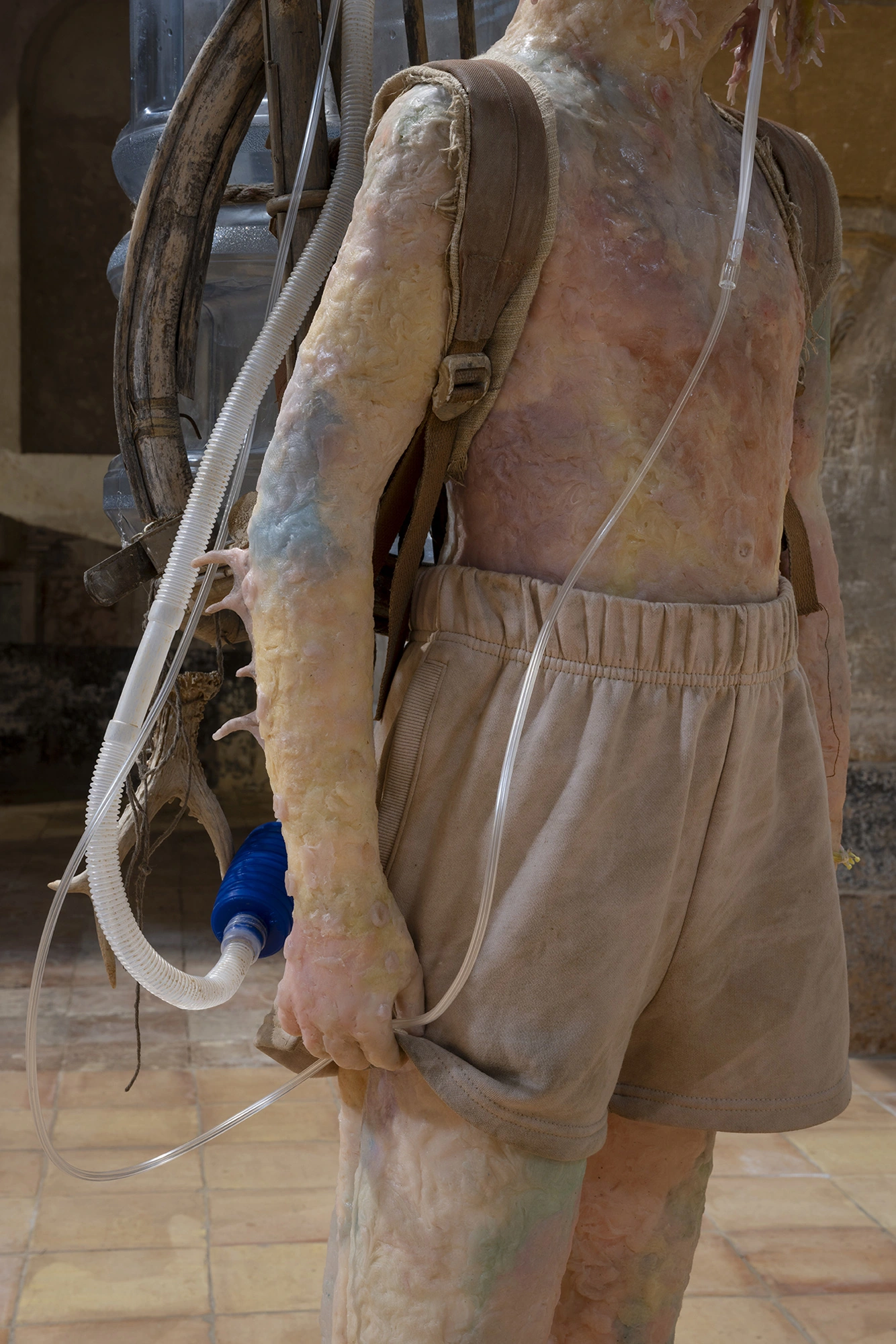
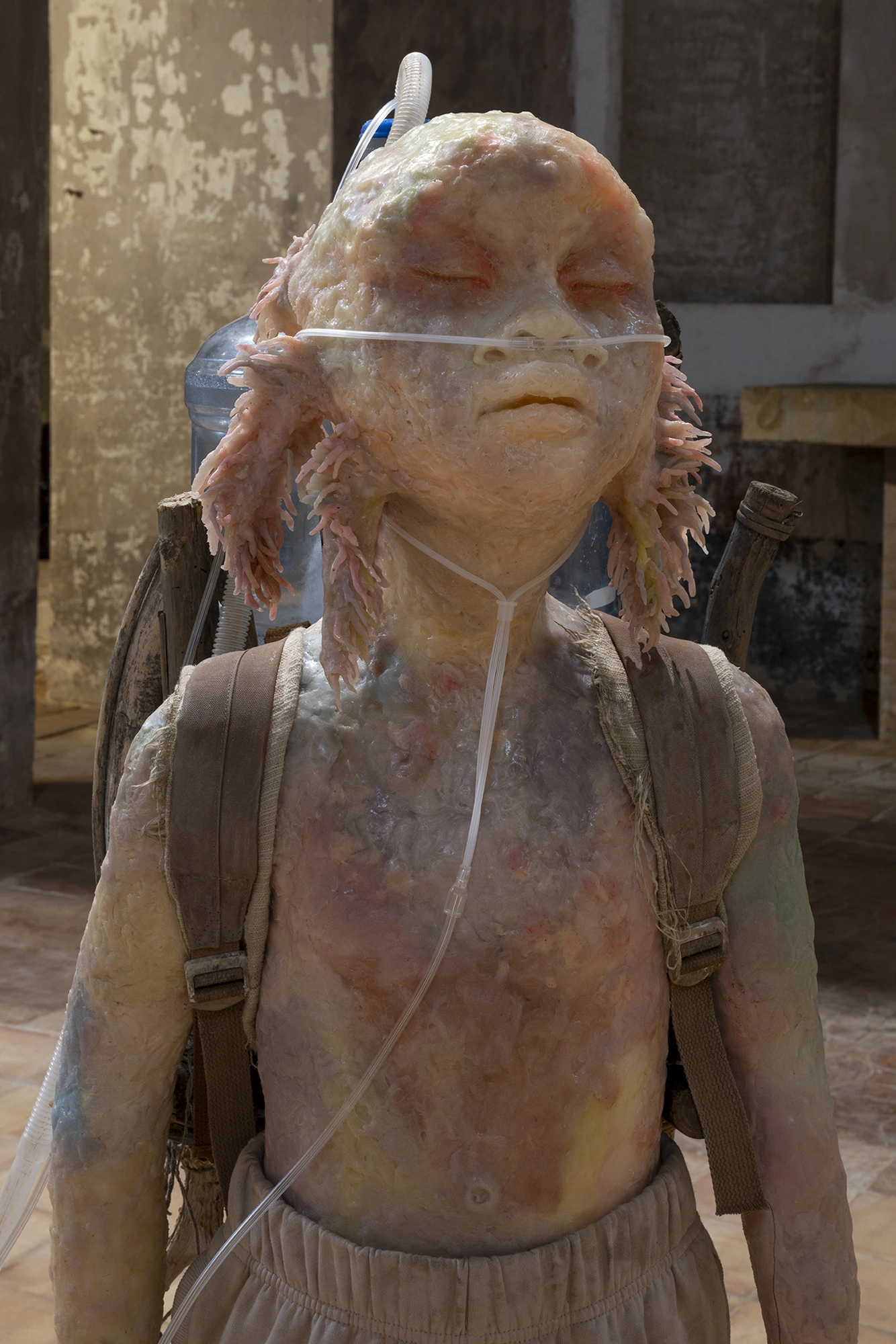
Michele Gabriele's July 2nd stands alone mid-nave, roughly the height of a nine-year-old. The body is silicone, translucent, marbled pink and yellow, curdled like something that set too fast. Its eyes are closed. A nasal cannula crosses the face and runs to a water carboy lashed to a wooden yoke on its back; where hair would be, coral-pink growths branch out in fronds. The moment it enters the room the church stops being a church and becomes weather.
A church is the original machine for making an image by contact: the relic, the veil pressed to a face and lifted away, the acheiropoieton, the image not made by hands. Sant Feliu has been deconsecrated and nothing here asks to be believed. What the show takes from the building is not faith but a method.
KIN TOO means both also and two. The first KIN gathered Ben Hamouda, Gabriele and Birk at Spiritvessel in Espinavessa in 2024; Jauregi and Mitjà, already inside the circle, join the second. What binds them is not style. “It is not a secret language but it is an understood language, which does not need explanations to reach the other in the precisely intended way.” They share a grammar rather than a vocabulary: each makes the thing by taking it away.
Not a copy of the world, then, but the shape the world leaves when it goes. The plaster keeps letters it cannot read. The sheet keeps a wall it cannot hold up. The boot keeps the leg. Everything here is a container built around an absence, and the church, emptied of its god and still standing, is the largest one in the building.