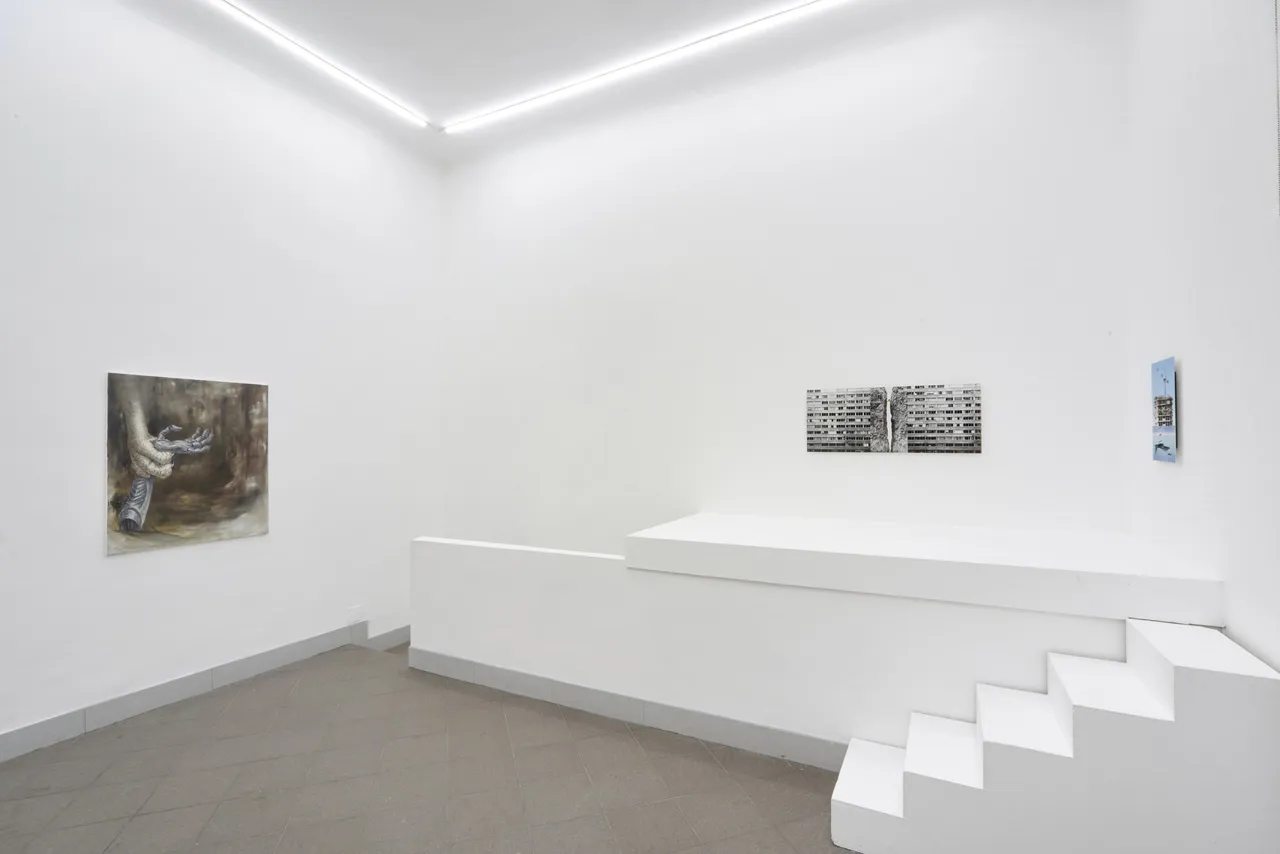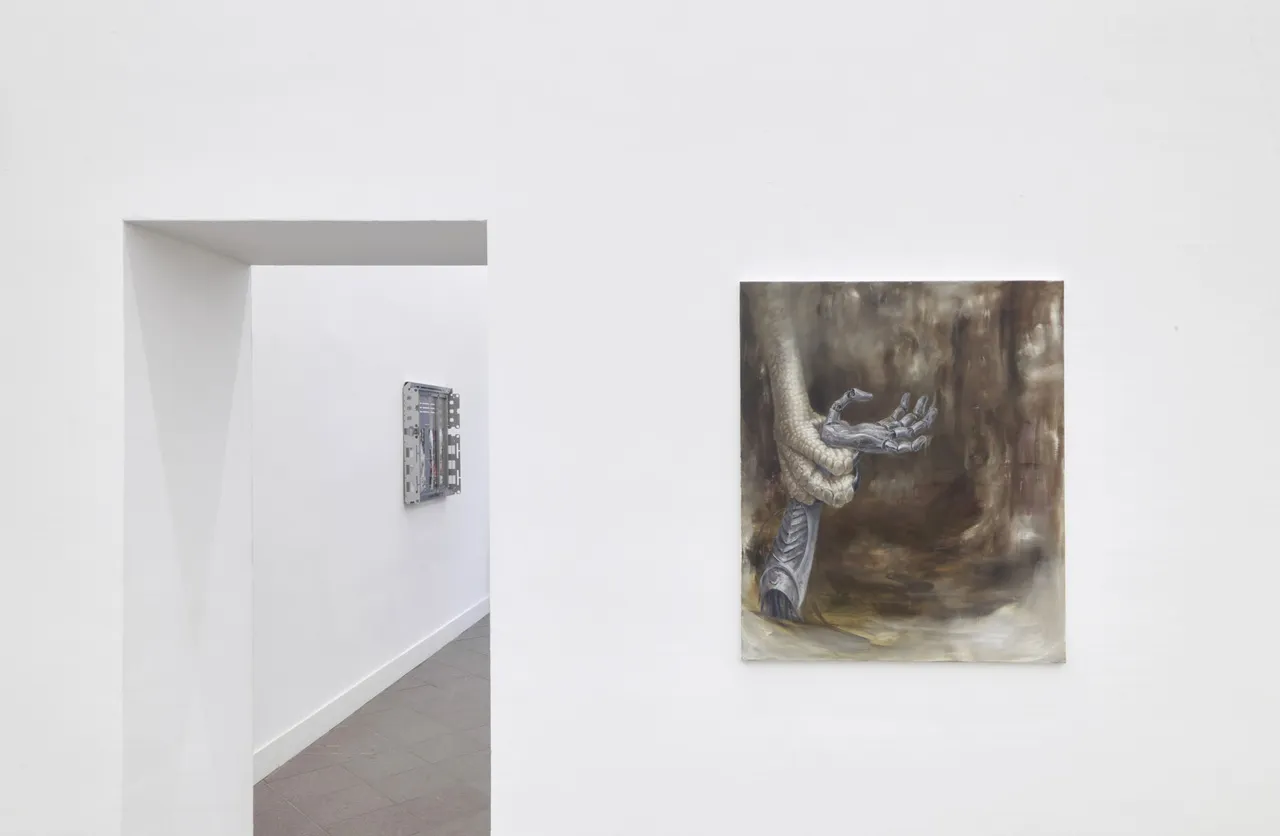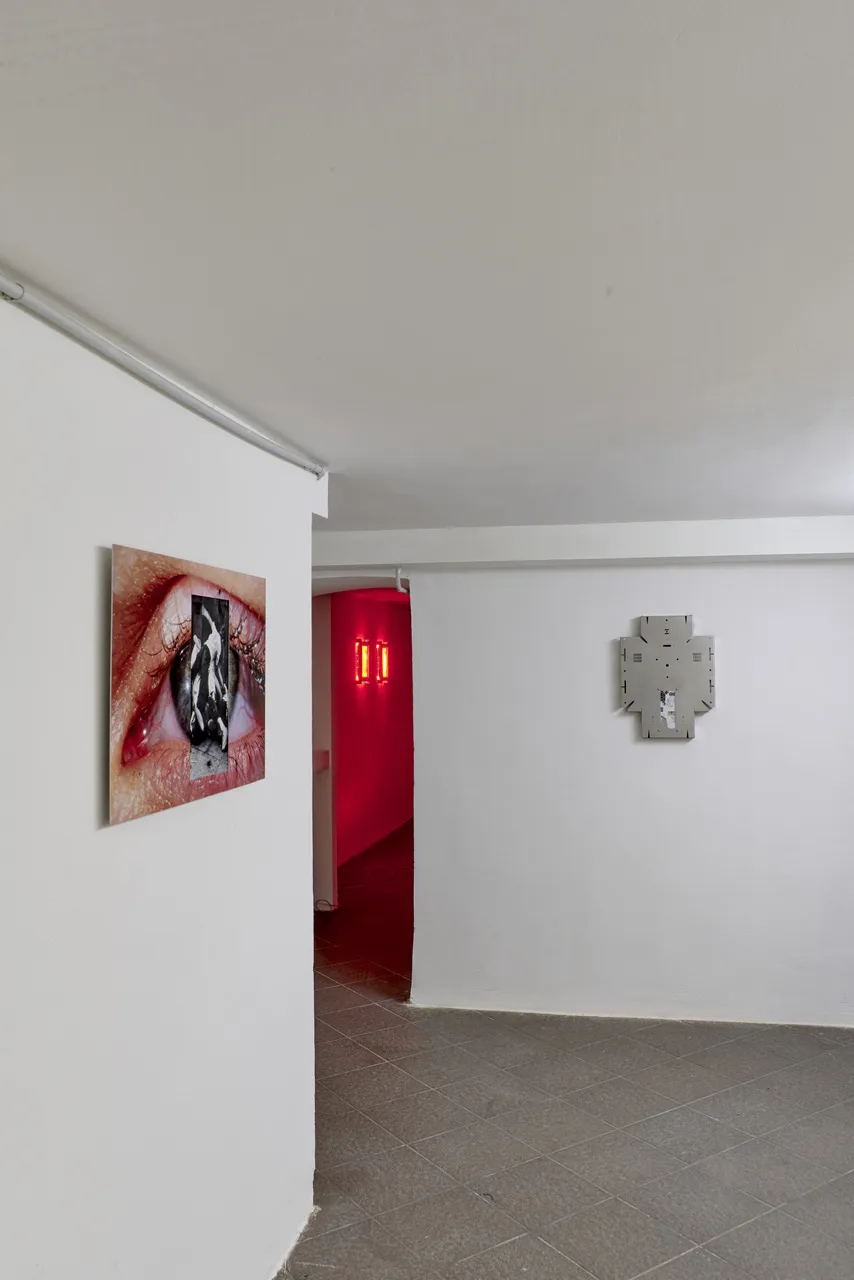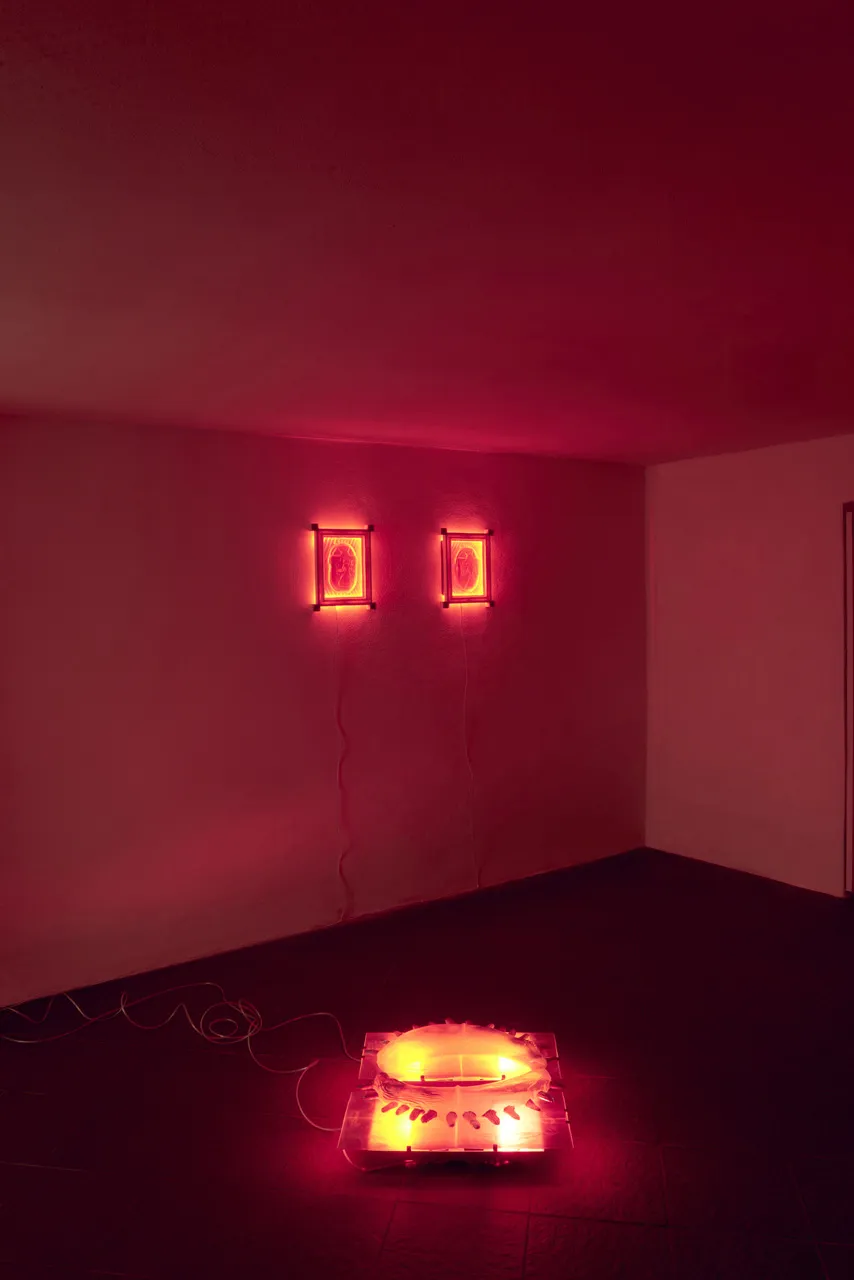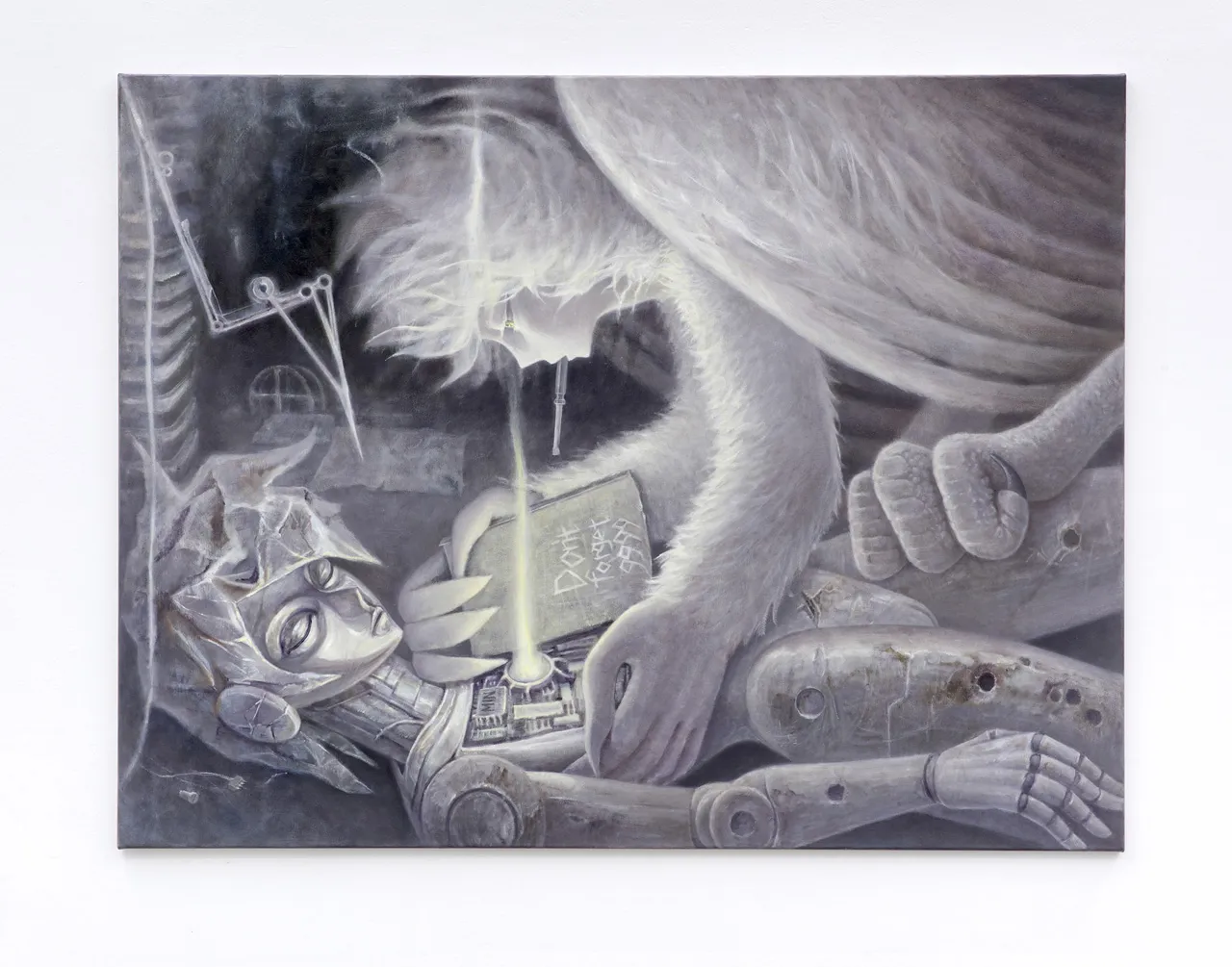
There’s a peculiar stillness hovering over Myths from Smoldering Skies, as if the exhibition at LIMBO were unfolding inside the afterglow of a world that has both ended and begun again. The four artists gathered here—Jung Min Lee, Leilei Wu, Sir Taki and Mattia Ragni—operate less like exhibitors and more like speculative archaeologists, each tracing the outlines of a future that feels uncomfortably proximate.
Their shared terrain is the residue of crisis, but what emerges is not lamentation; it’s a recalibration of myth at the threshold where destruction morphs into a new, unstable grammar of life.
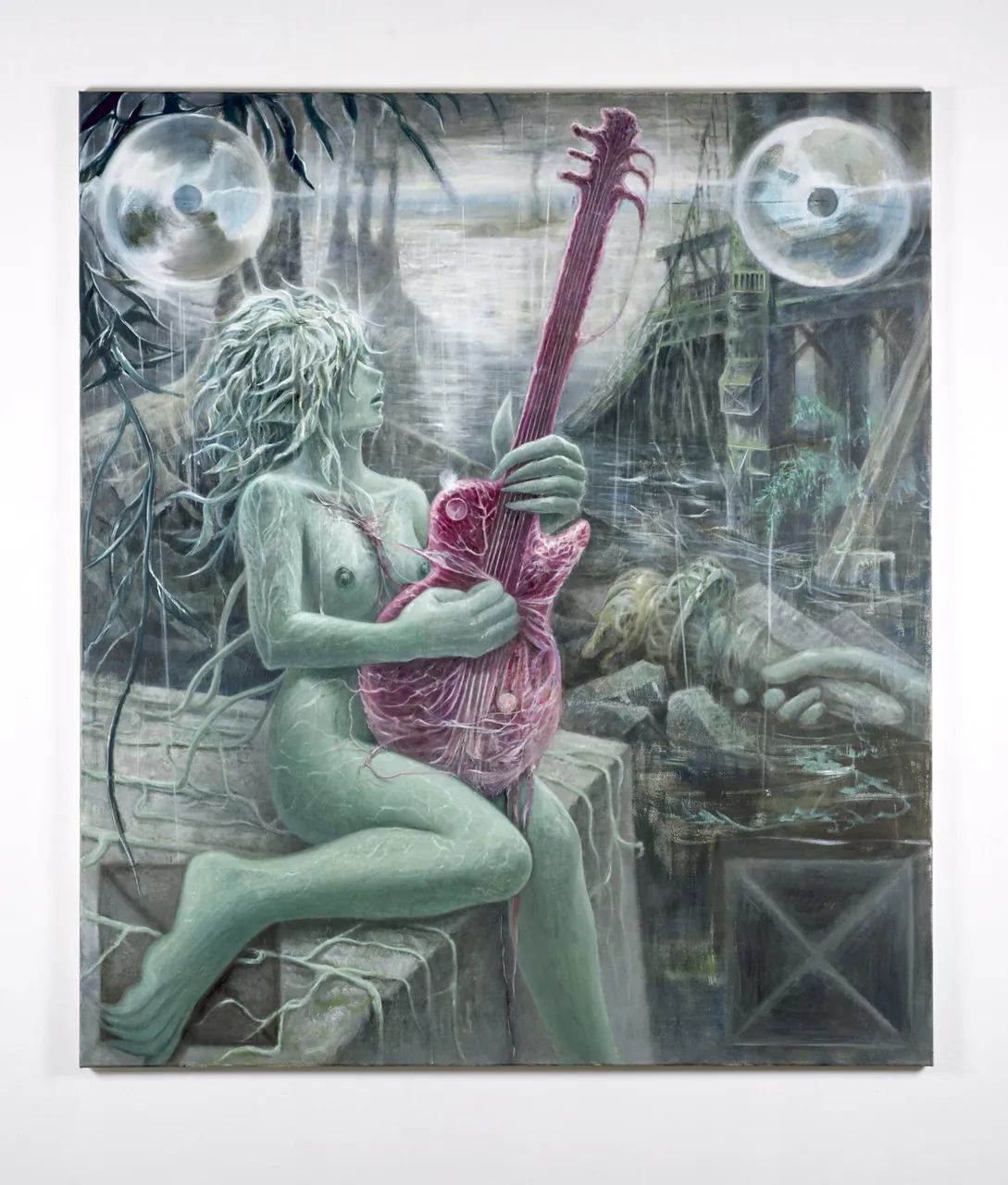
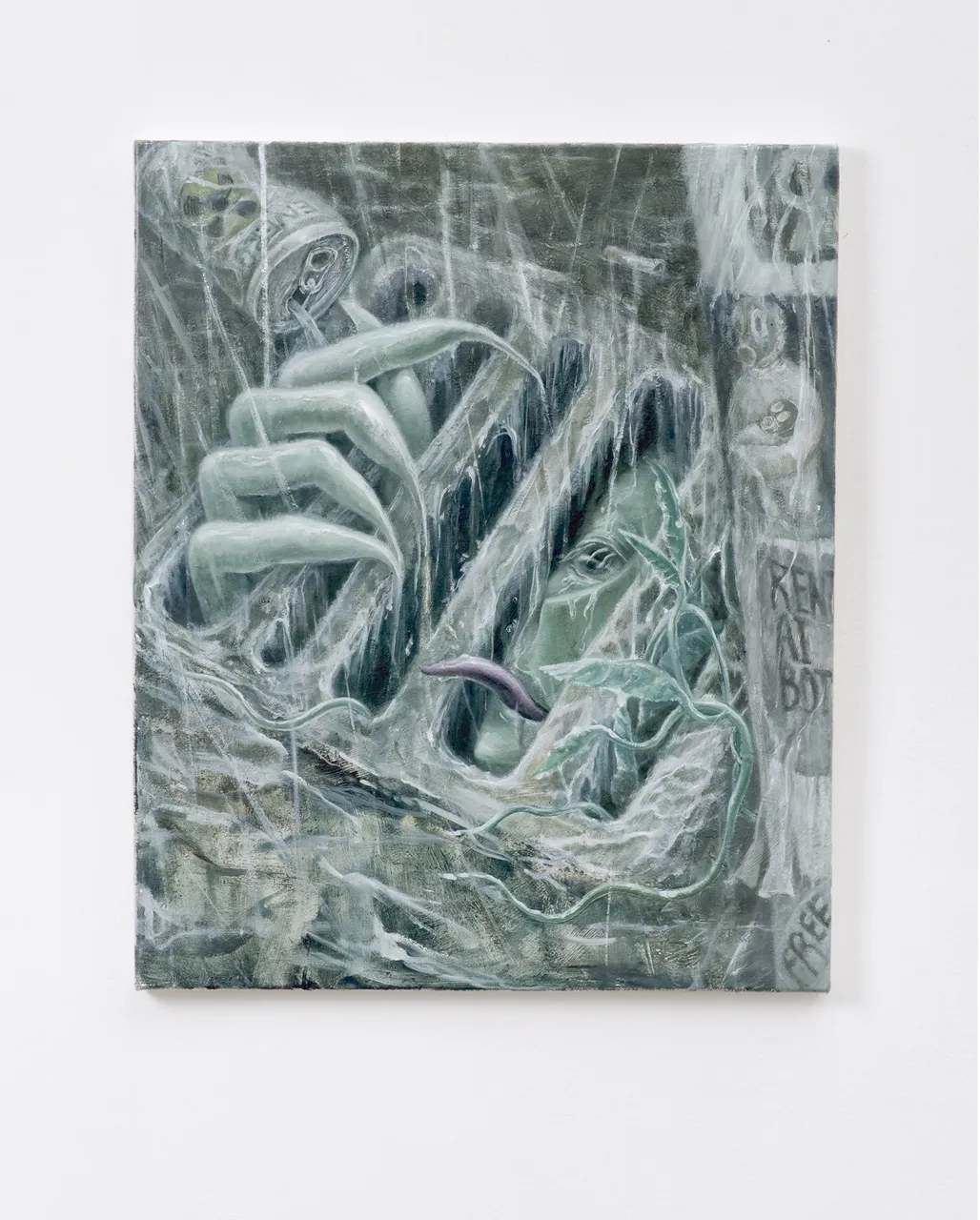
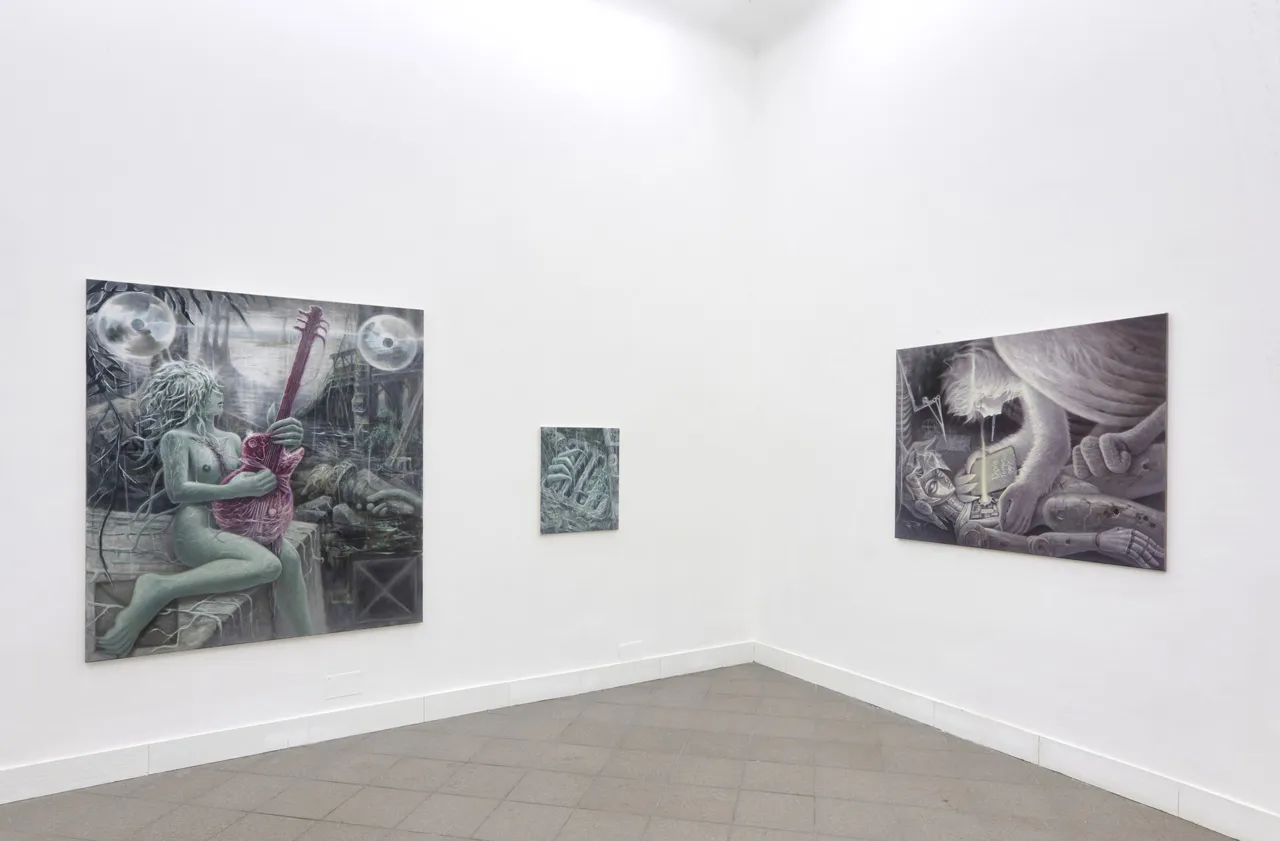
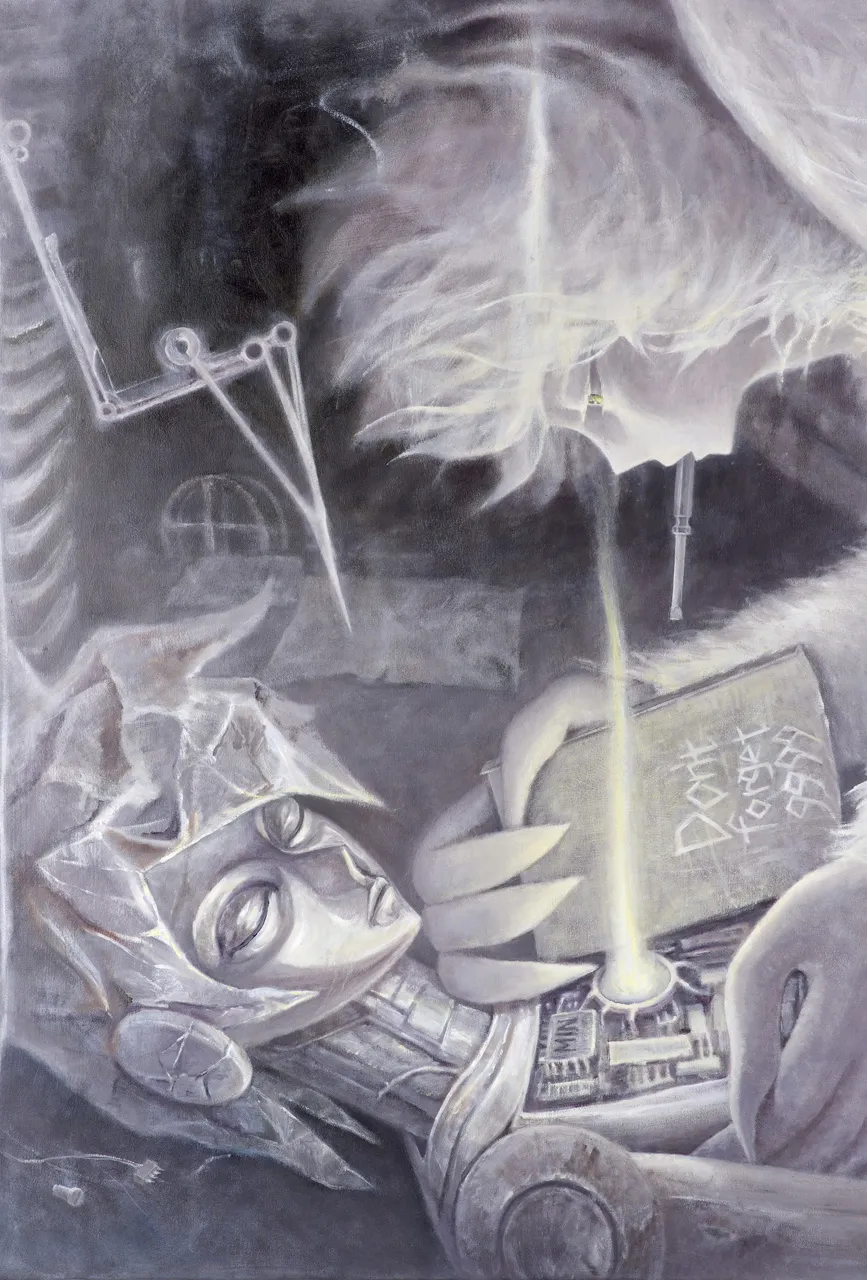
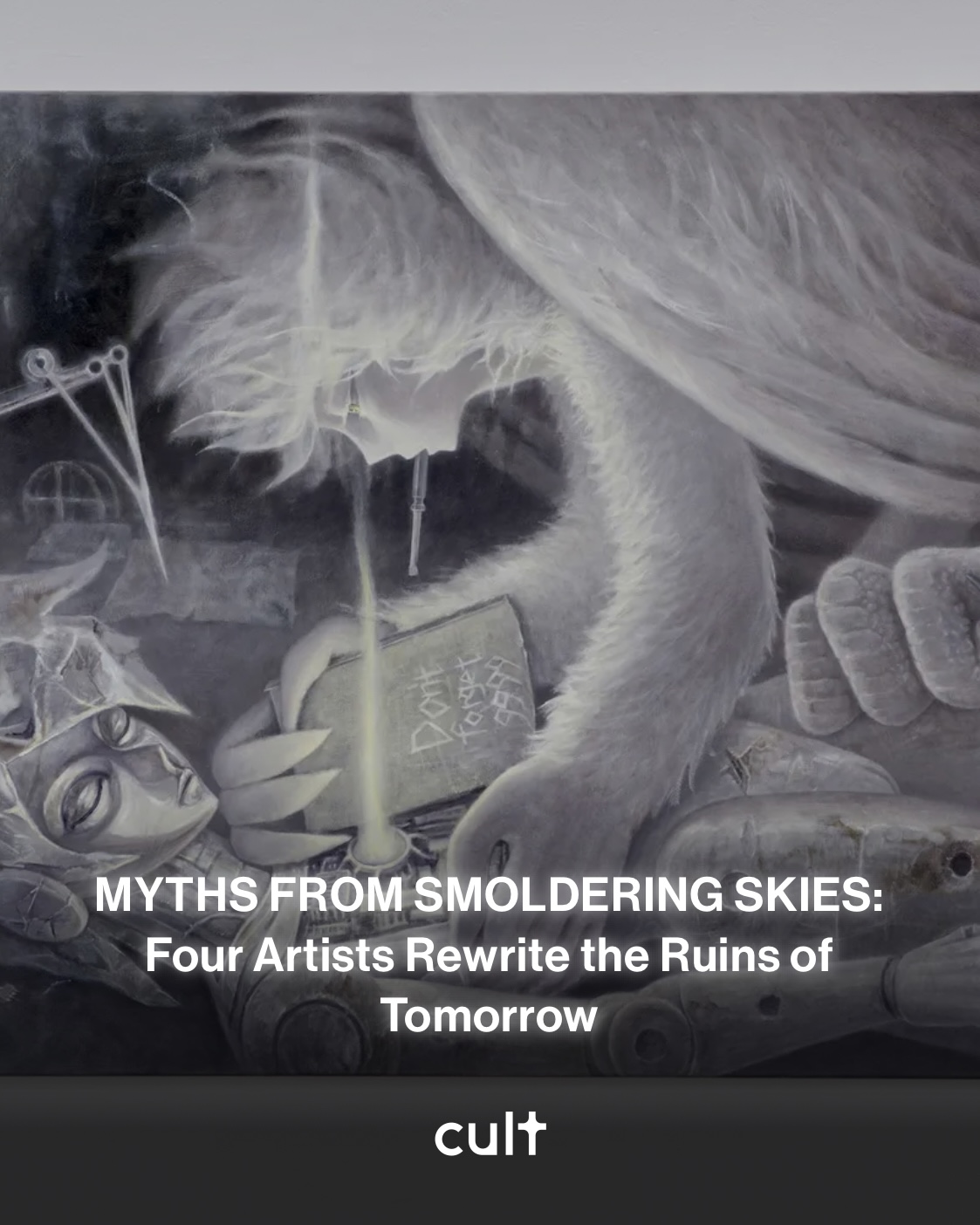
Jung Min Lee’s post-organic cosmologies enter the room like dispatches from a species that has already filed its final report on humanity. Her Tipping Point images, saturated with vegetal circuitry and irradiated topographies, imagine “a world devastated by war and radiation” where a hybrid bard wanders across a wounded planet. In Earth Song (2025)—named, with disarming sincerity, after Michael Jackson’s ecological lament—her protagonist plays not for an audience but for the soil itself, coaxing vitality from the debris. Lee’s future is not clean or utopian; it is fertile precisely because it refuses resolution. Her 9999 Days series extends this logic into a distant epoch where Harpies act as guardians of memory, performing a kind of ritual melancholia. A work like Don’t Forget 9999 reframes angelic iconography through a cyber-mythic filter, offering something closer to a liturgy for species death—yet without the luxury of despair.

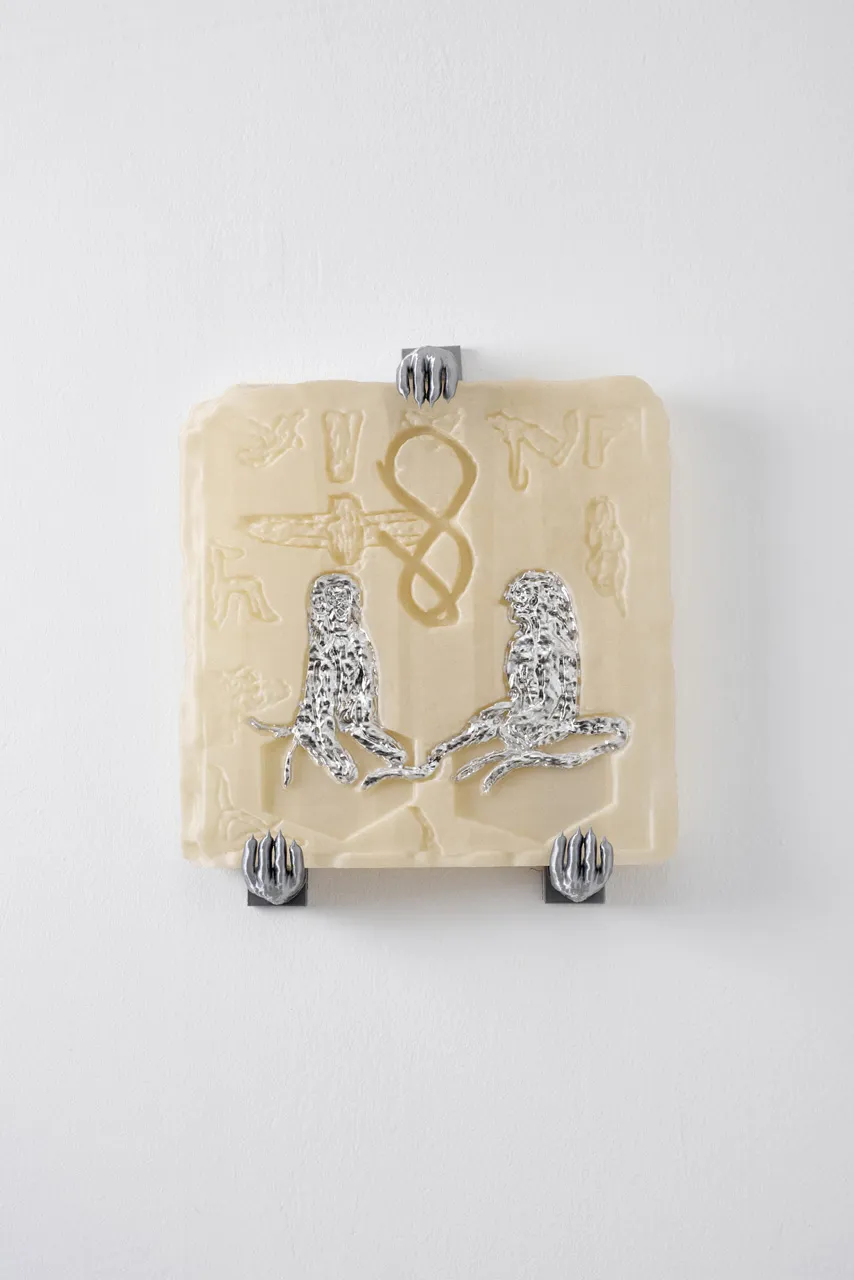
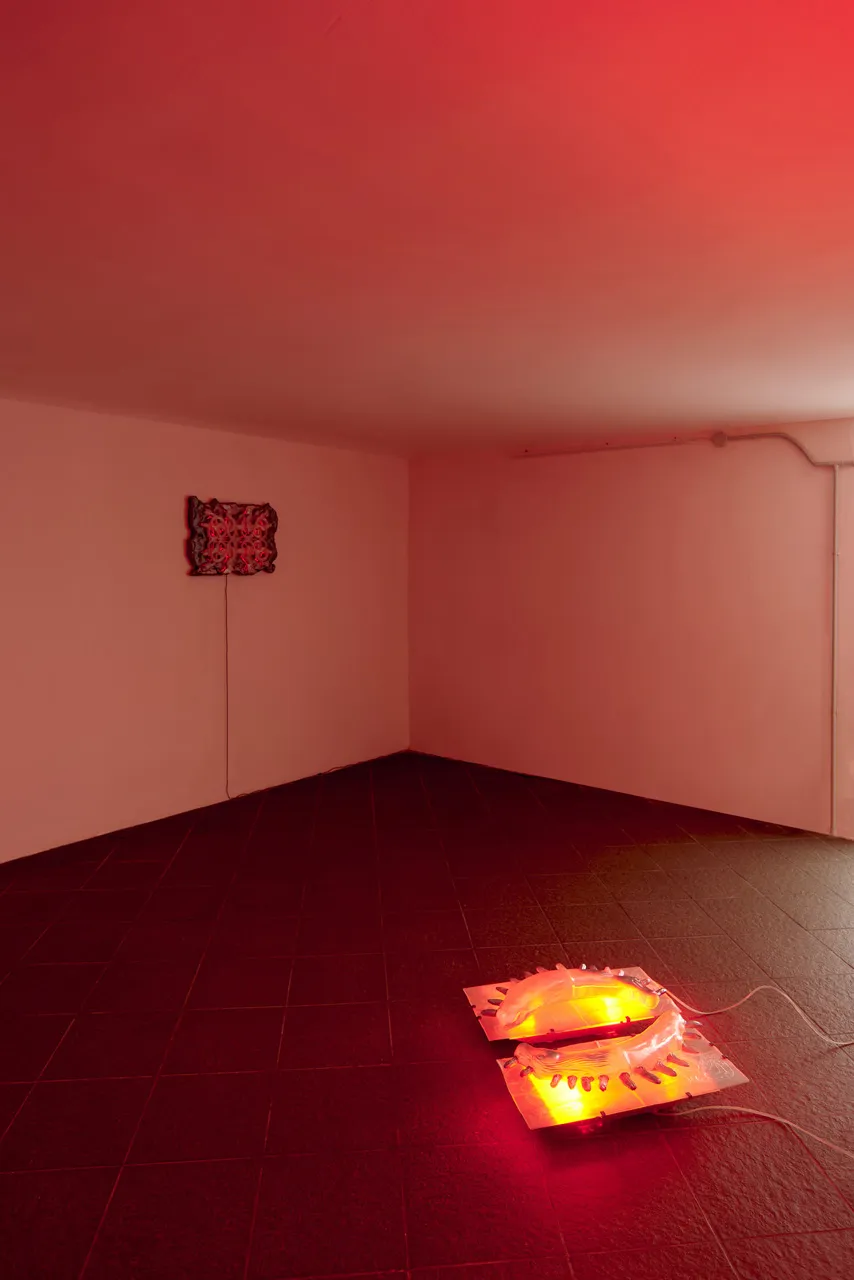
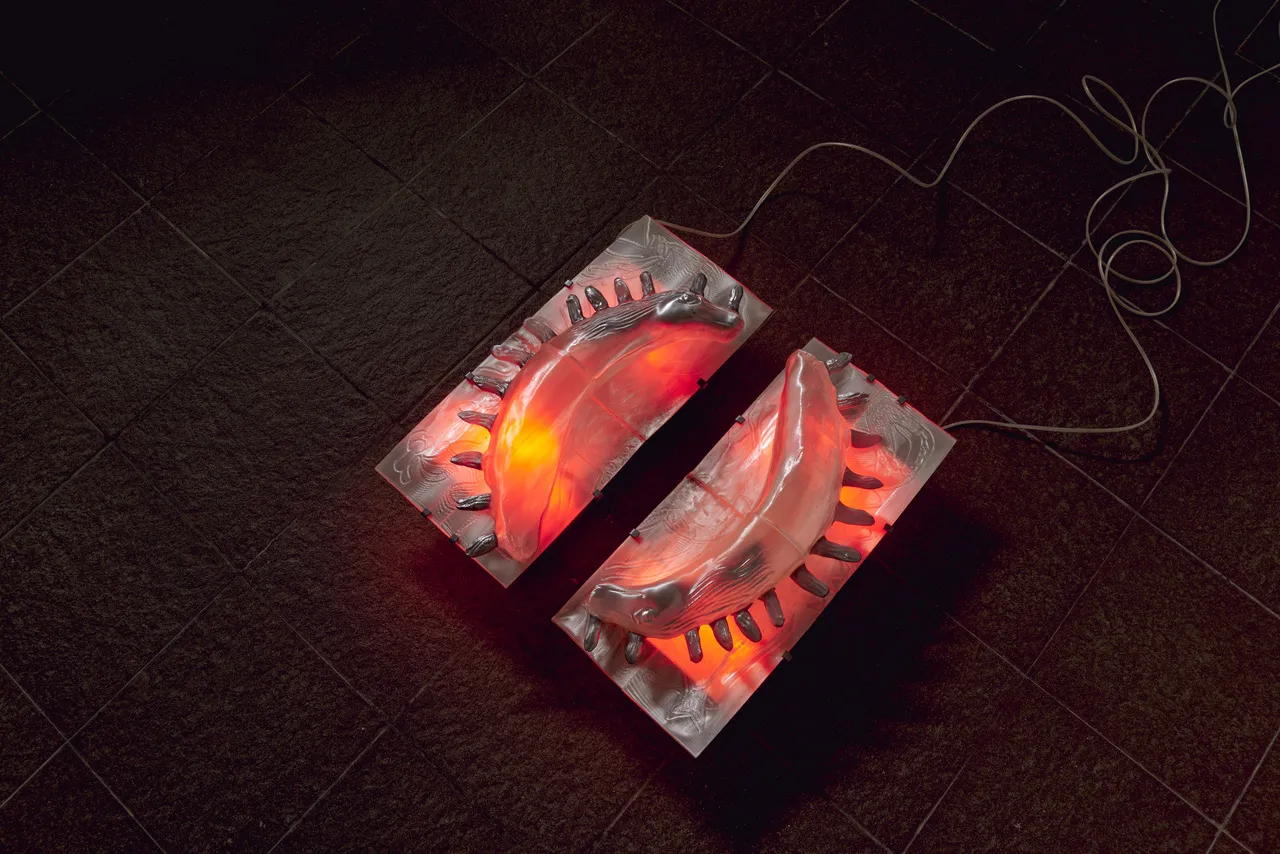
Where Lee renders myth through narrative, Leilei Wu materializes it as a luminous, hybrid geology. Her objects, glimmering like artifacts excavated from a post-digital ruin, merge LED circuitry with the poise of museum relics. She describes light not as illumination but as “a perceptible form and structure,” a claim that plays out in the way her sculptures breathe—slowly, with a kind of technological respiration. Wu’s pieces feel simultaneously prehistoric and hyper-contemporary, relics from a civilization that understood energy as a cultural organ. They resist categorization: part shrine, part motherboard, part speculative ecosystem.
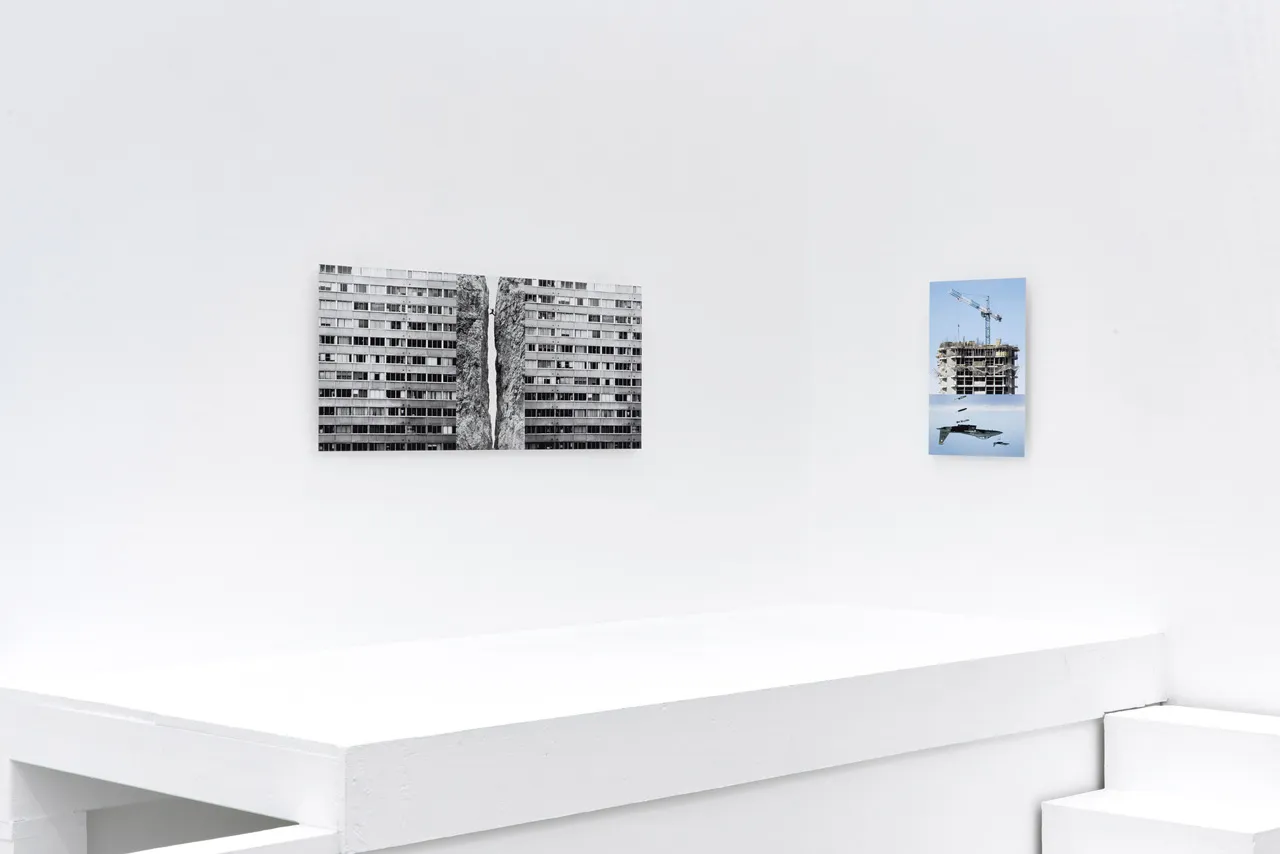
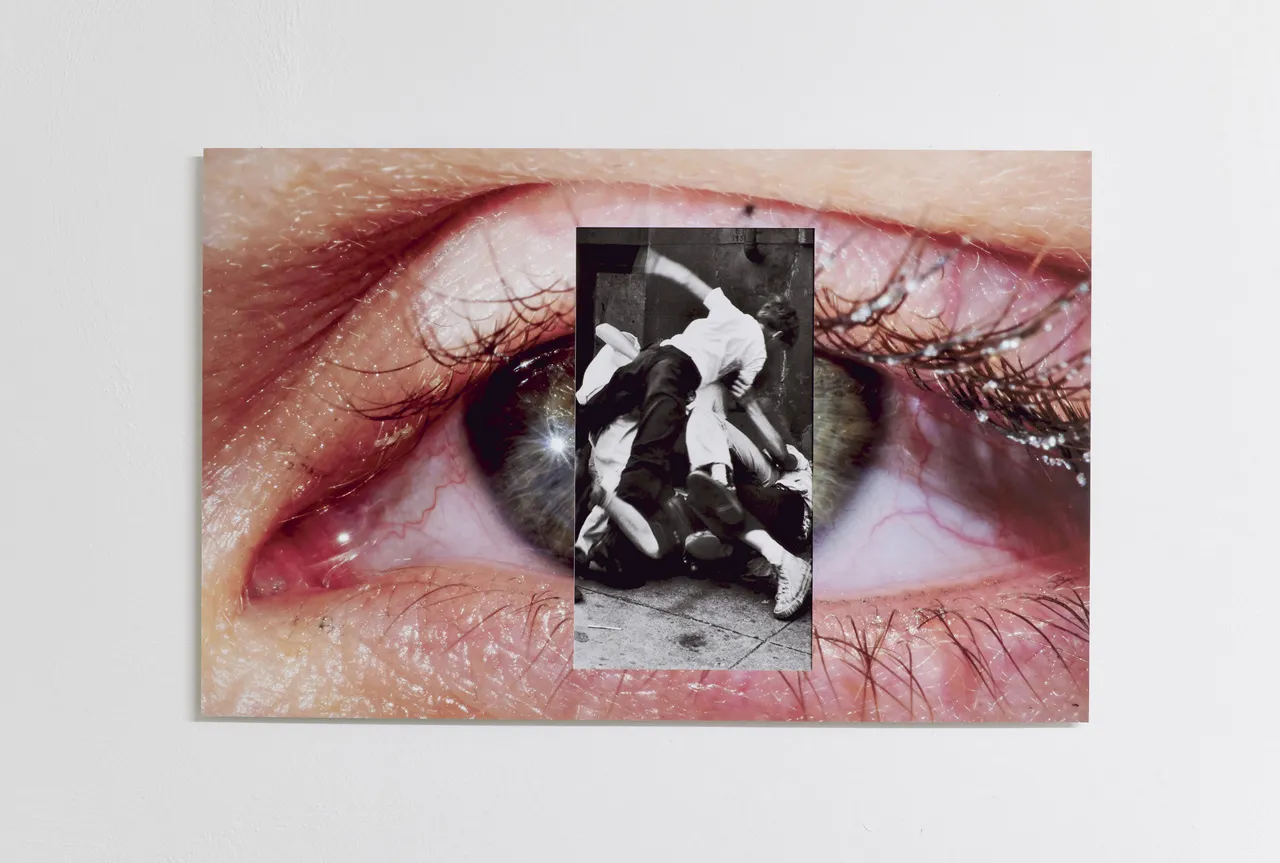
Sir Taki approaches mythology from yet another angle: the semiotics of looking itself. His composites—fragments of comics, photographs, archival scraps—interfere with each other in ways that refuse narrative cohesion. The process is anthropological, not documentary; images are not sources but interlocutors. A work like Roberto, which mutated from digital collage to Chiasso mural before landing in LIMBO, behaves like a migrant image that accumulates context with each displacement. His question lingers: what does it mean to “see” in an age when images multiply faster than the meanings they’re supposed to deliver?
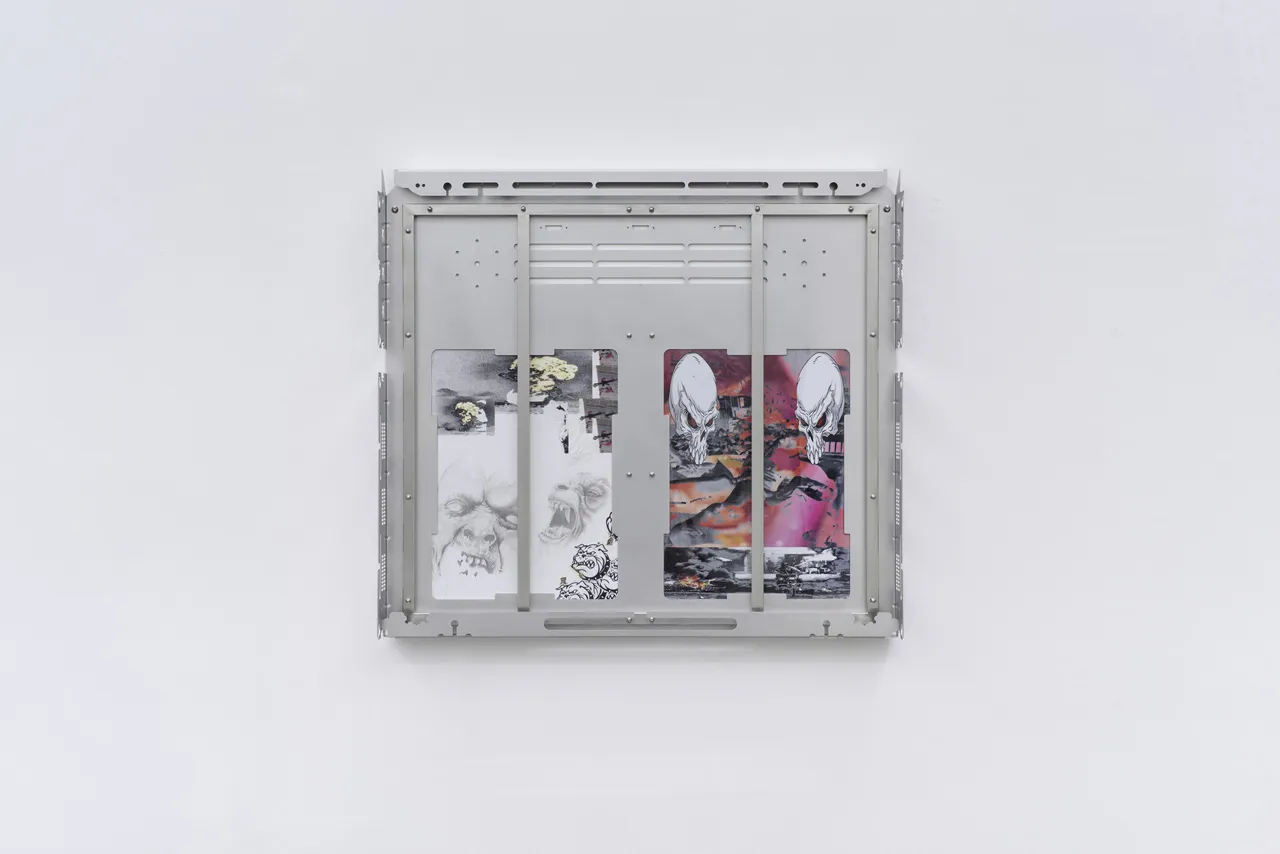
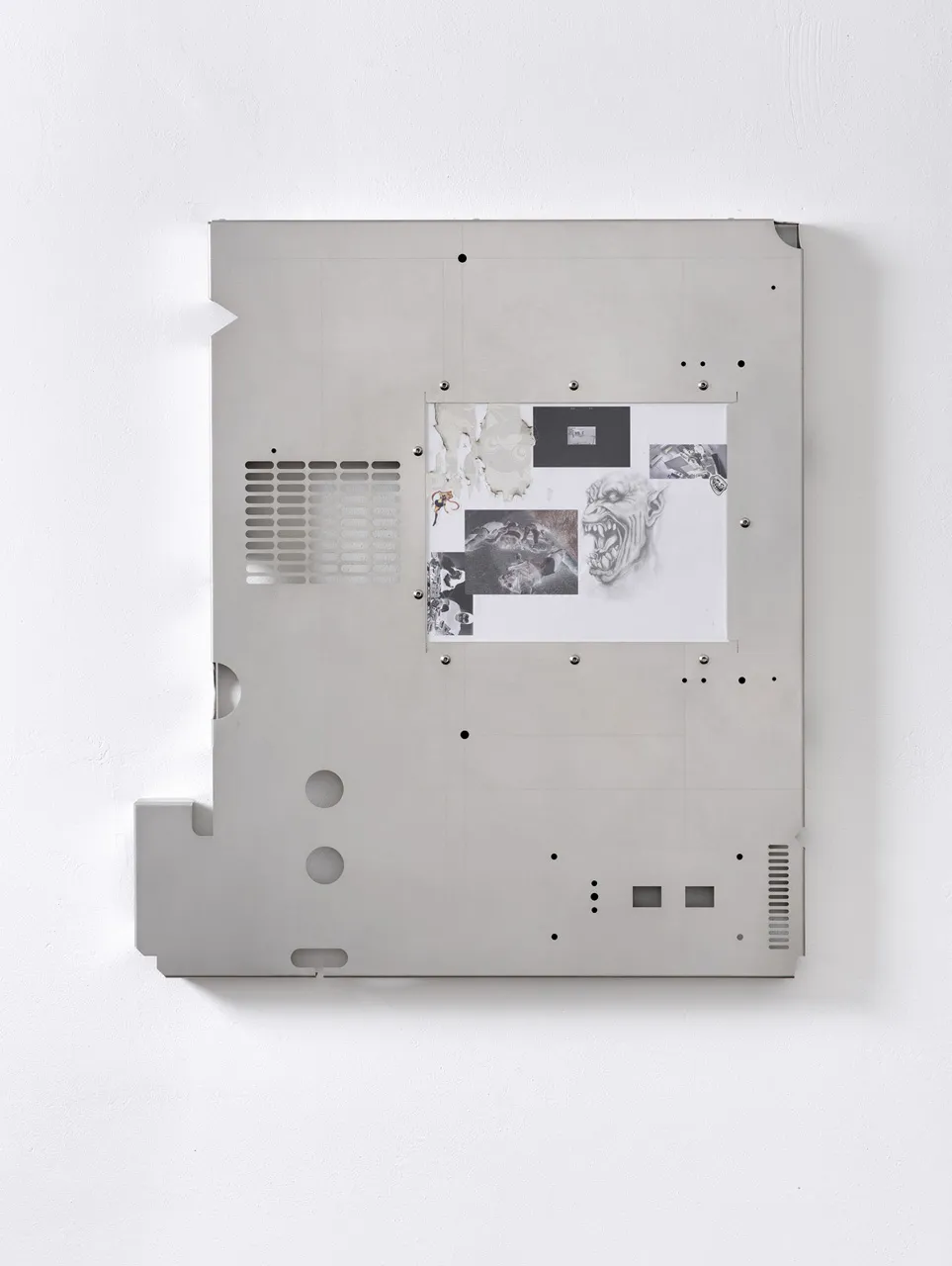
Enter Mattia Ragni, whose Drift series confronts that saturation head-on. His steel engravings and collaged surfaces read like exploded diagrams of contemporary visual culture—fractured, frenetic, barely containable. These “sci-fi microcosms,” as the exhibition text names them, turn the steel substrate into a kind of operating system for visual overstimulation. Ragni doesn’t moralize about entropy; he stages it. The result is a tension between machinic rigidity and the unruly fantasies that seep through its seams.
Taken together, the exhibition becomes an attunement to transformation as a cultural condition, not a metaphor. “Reality as an archive of residual visions,” as the curatorial statement puts it, is less a poetic flourish than a working method for four artists probing the failures and possibilities of our visual era. Their myths are not cautionary tales but working hypotheses—maps for navigating an atmosphere thick with collapse yet strangely generative.
What smolders over these skies is not simply ruin; it’s potential. And in that faint, flickering interval between endings and openings, the exhibition locates a new species of mythology—one calibrated for a world already living inside its own aftermath.